
| 1 | Hispaniola ground boa |
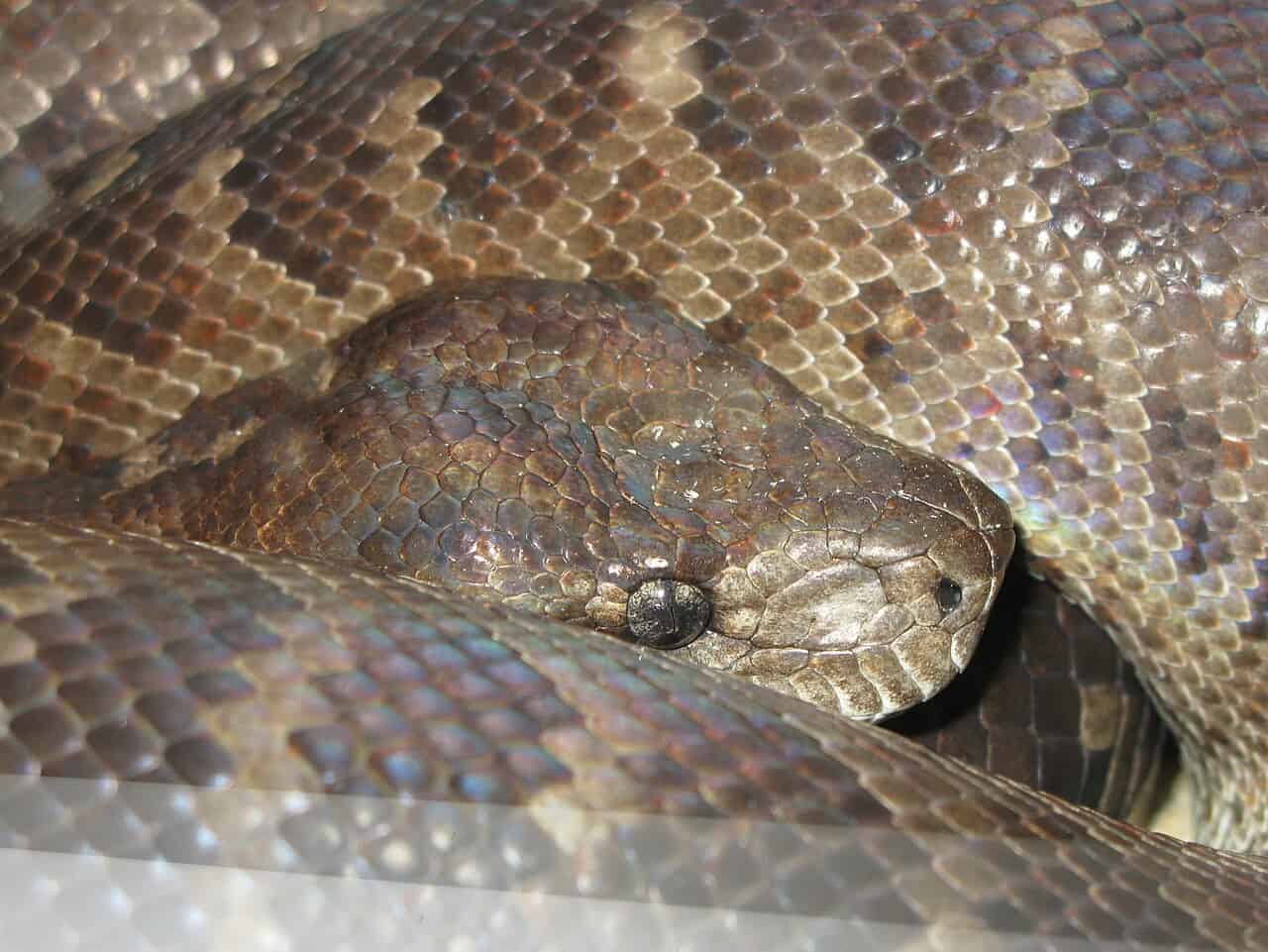
Maximum length: 250-300cm.
The common boa of Hispaniola, the large Caribbean island divided between Haiti in the west and Dominican Republic in the east. Hispaniola ground boas (Chilabothrus striatus) are believed to reach up to 3 metres, and hang out in forests both sparse and dense. They mainly dwell in forests, but can also be found in limestone areas, birds’ nests, slithering through undergrowth, in rotting logs, and even the straw roofing of houses.
This boa is able to climb extremely high, reaching tree branches 5 to 20 metres off the ground. This is a nocturnal snake, and night-time is when most locals encounter them. Chilabothrus striatus is plentiful on the Dominican side, but may be retreating in Haiti, where deforestation is rife.
Hispaniola ground boas almost entirely eat mice and rats. A study on adults discovered a diet of 2.1% reptiles, 5.2% birds, and 92.7% mammals. Before colonisation, they ate extinct native mammals such as Hispaniola edible rats and montane hutias. Slowly, these mammals were wiped out by civilisation, but the Hispaniola boa didn’t go with them – it effortlessly transitioned to introduced mice and rats instead, including the globally ubiquitous house mouse (Mus musculus) and black rat (Rattus rattus).
The longest Hispaniola ground boa of all time measured 248.9cm, but this individual was missing the tail. We’ll never know how long this brute would have been with the tail intact, so all we can say is that Hispaniola boas almost certainly reach 260cm, and most likely somewhat longer. The Hispaniola ground boa is the second longest Chilabothrus (Caribbean boa) member after the Cuban boa.
| 2 | Jamaica boa |
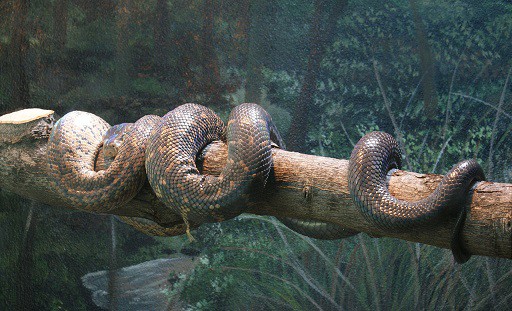
Maximum length: at least 218cm.
Jamaica’s resident boa is one of the shiest, dwelling in forests exclusively. Jamaican boas (Chilabothrus subflavus) love closed canopy forests, sometimes bathing in natural rain pools between tightly clustered trees. They sometimes appear in banana fields right on the outskirts of forests, rustling through them for rodent meals. However, they almost never appear in open pasture land. When they do, they’re usually slashed to death by fearful farmers wielding machetes.
Jamaican boas are one of the longer boas in the Caribbean, with older, unconfirmed reports putting them at 2.5 metres or longer. Their striking gold-black colours were remarked on with awe by early European explorers.
The appetite of this species is reportedly massive; a logbook from 1725 said that some were killed with 13 or 14 rats in their bellies at once. A Jamaican boa can slither into a rural chicken coop and grab 3 whole adults before retreating back to its forest home.
It’s estimated that Jamaican boas split from all others 11.2 million years ago. Unfortunately, their strict forest preferences are restricting their territory, and they now live in just 20 isolated pockets. They may be extinct on Goat Island, which lies to Jamaica’s southwest.
| 3 | Cuban boa |
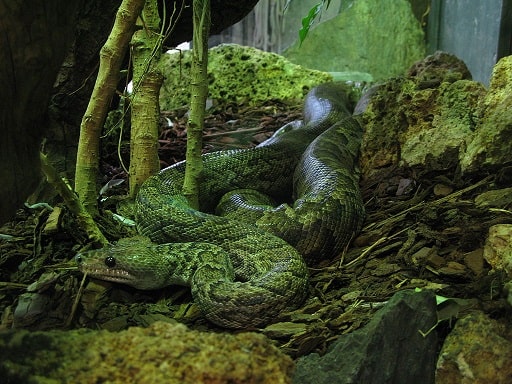
Maximum length: at least 485.1cm.
The longest boa species in the Caribbean, said to reach 6 metres in the early days of European exploration. These days, this boa averages at 2.5 metres, with a confirmed maximum of 485.1cm for a female run over near Guantanamo Bay in 1987. Cuban boas (Chilabothrus angulifer) are harmless to mankind, and mostly eat mammals for their fill. Rats and mice are on the menu, but their favourite prey of all is the Cuban hutia.
Another crazy feature of the Cuban boa is its bat-hunting habits, shared by the Puerto Rican boa. Cuban boas congregate in caves, where they ascend the cold stone walls, fasten tightly with their tail, and hang from the entrance. When the bats activate for the evening and fly out in their thousands, the Cuban boa swoops down with immense agility and grabs them. Like the Jamaican boa, this species is also notorious for invading chicken coops, and stealing the precious poultry inside.
Cuban boas have some of the best camouflage of any Caribbean boa. Their scales are a non-flashy beige and black, with very complex patterns, rather than bright neon patches. These shades are perfect for blending into ancient forest undergrowth.
| 4 | Turks Island boa |
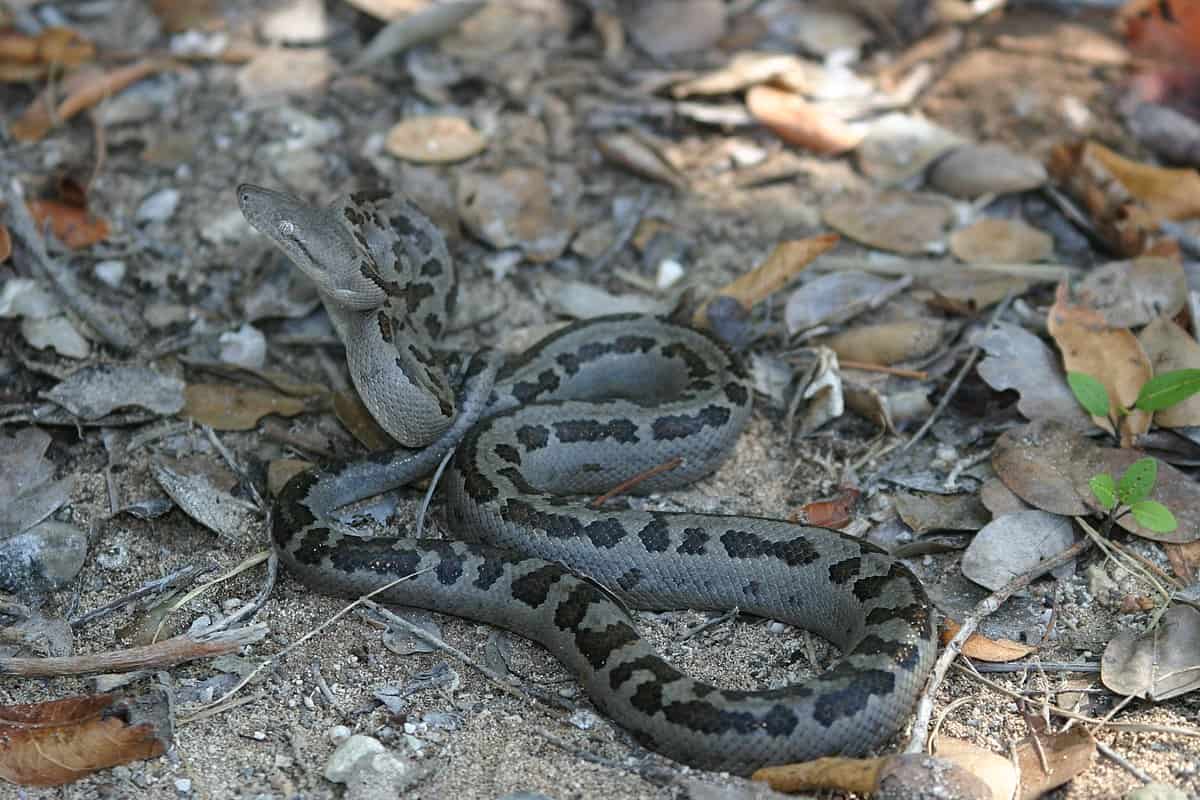
Maximum length: 176.8cm (captive), 154.9cm (wild).
The resident boa of the Turks and Caicos islands, and the far southern Bahamas. These islands are a small British protectorate, a tourist heavy region of sandy beaches and tropical roads lined with palm trees. The Turks Island boa (Chilabothrus chrysogaster) stands out with its massive pattern variation. The steel grey colours barely vary, but some snakes have a thin black stripe on each flank, while others are blotchy.
The Turks Island boa also has a long lifespan, as some scooped up in 1993 were still thriving in 2020. They’re less tree-dwelling than most Caribbean boas, and operate at night, hiding under rocks by day. Despite a colourful cast of boa neighbours, Chilabothrus chrysogaster has been isolated in evolution for 4.1 million years, including from the nearby Bahamian boa.
The Turks Island boa lives a charmed tropical life, but the forces of tourism development may be closing in. The species has disappeared from its former stronghold of Grand Turk, and the island of Providenciala saw 20 hotels constructed from 1995 to 2005.
| 5 | Conception Island silver boa |
Maximum length: 152.4cm.
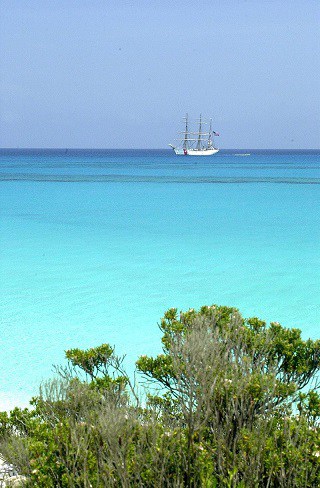
The most recently discovered boa, and the first new boa discovery for 73 years. Two silvery facts led to the name: that the boa is silver, and that the first was found in the branches of a silver palm.
The silver boa (Chilabothrus argentum) had actually been spotted in 1978, but was deemed to be a Hispaniola ground boa subspecies. A 1998 study surveyed Conception Island and failed to find any, but more references appeared in 1999 and 2011. Finally, a Harvard University team ventured out and answered the question for good, finding 6 of the silvery boas.
The 6th boa was spotted slithering along a beach, and across the expedition leader’s head while he slept. In October 2015, the team returned, in the immediate aftermath of Hurricane Joaquin. Despite the shredded trees and twisted landscapes, the team found 14 more.
The silver boa was rapidly categorised as “critically endangered” by IUCN. There’s estimated to be 1000 left in the wild, making it one of the rarest boas on Earth. Scientists are fearful about the legions of mice, rats and cats which have invaded Conception Island, although the first two may be beneficial (as it could become the fattest boa on Earth instead).
| 6 | Puerto Rican boa |
Maximum length: at least 241cm.
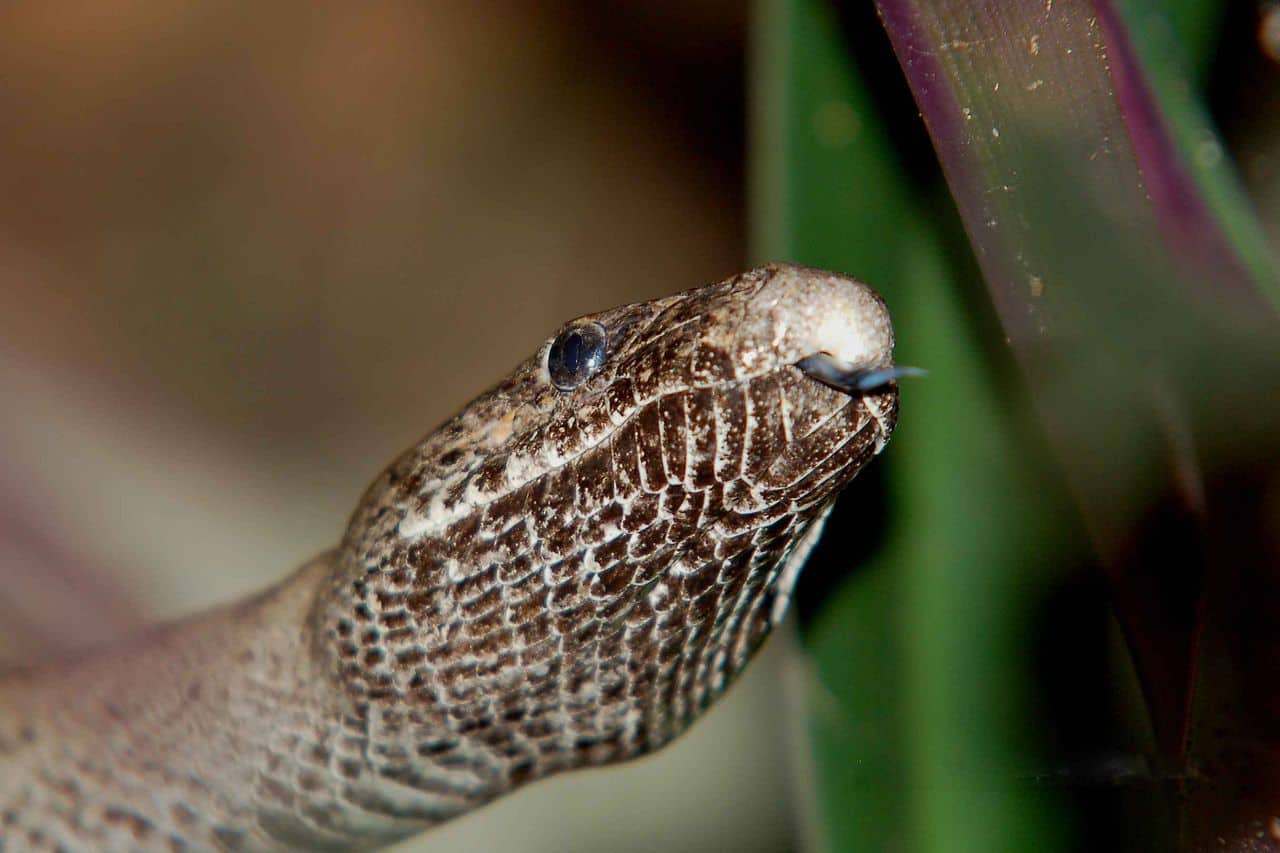
The Puerto Rican boa (Chilabothrus inornatus) was one of the originators of the snake oil craze, soon to become a byword for hype-fuelled scams. After Europeans docked in the 1700s, masses of oil were exported back to Europe, probably raided by a pirate vessel or two, and maybe sunk by the odd whirlpool.
The true facts are that Chilabothrus inornatus is officially the island’s longest snake, among a total of 11 species. Puerto Rican boas are longer than average among the Caribbean boa pack. ranging from 1.8 to 2.4 metres. Like all boas, they use crushing constriction rather than a deadly venom, and they prefer ambush to the prowling methods of the Turks Island boa.
Their diet consists of 60% mammals and 10% birds, with anoles mixed in as well. The Puerto Rico boa also has the claim to fame of choosing unusually large prey.
By 1904, this boa was already said to be severely endangered. Its existence was a mere rumour, with visitors from America sometimes spotting none. Deforestation was an equally big problem, as trees were slashed down to make way for profit-spouting sugar plantations. But in a rare success story, Puerto Rico’s forest cover has recovered significantly in recent decades, rising from 6% in 1940 to 50% in 2010. There are signs that the Puerto Rican boa is recovering with it, although the species still has a federal status of endangered.
| 7 | Abaco Island boa |
Maximum length: 85-90cm.
The second Caribbean boa of our list to inhabit the Bahamas. The Abaco Island boa (Chilabothrus exsul) is found in the northern Bahama fringes, while the Turks Island boa inhabits the far south.
Despite their close proximity, the two species are clearly different up close. The Abaco Island boa is beige with brown eyes, while the Turks Island boa is a steely grey metallic colour, with especially sharp vertical pupils. The latter has a black line extending backwards from each eye, while the Abaco Island boa has black markings surrounding each lip.
Chilabothrus exsul is the only boa to reside on Great Abaco Island, Little Abaco Island, and Grand Bahama. It’s smaller than its southerly neighbour, with the longest ever reaching 80.5cm without the tail included.
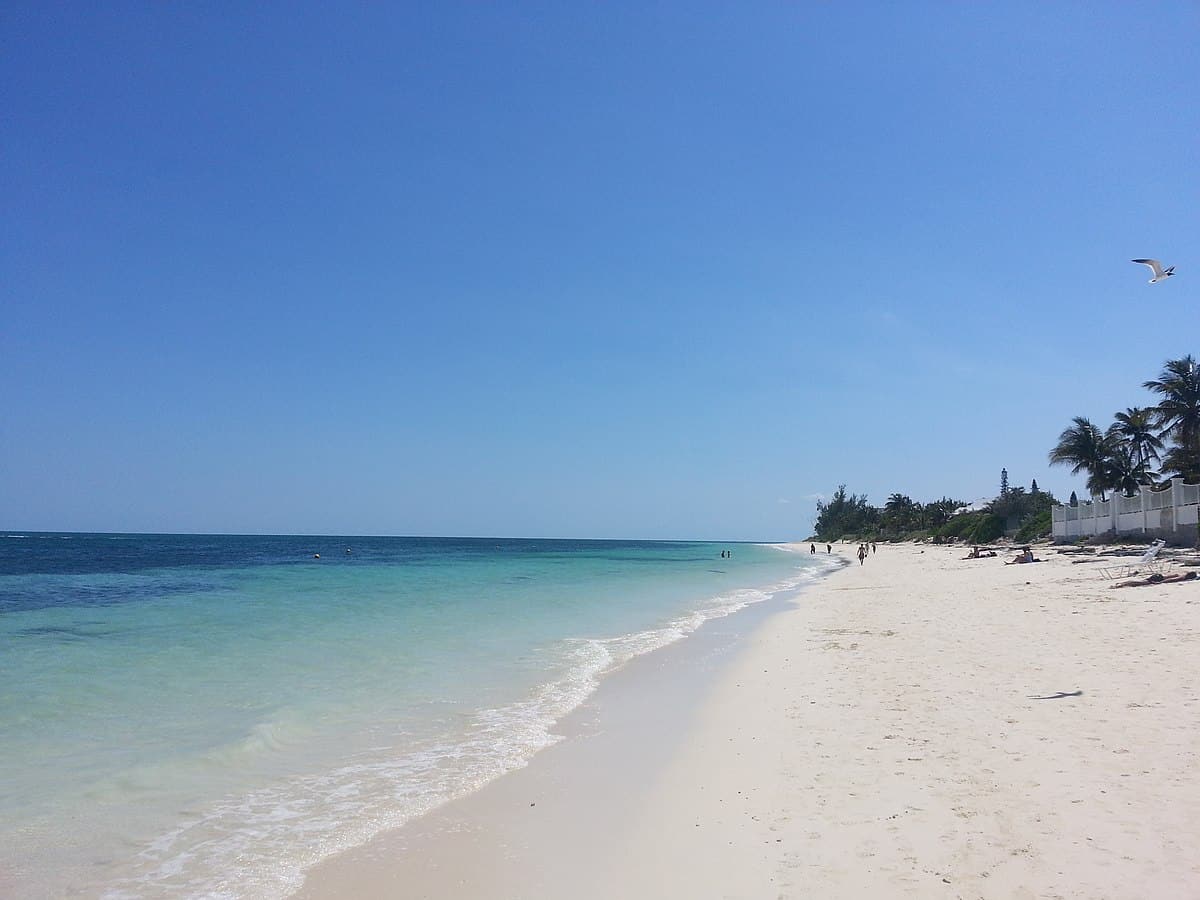
By far this species’ favourite habitat is coppice forests, which have been reduced to 10% of their old Bahama coverage. But coastal areas are fine too, and Marsh Harbour on Abaco is one hotspot for this boa species. Sometimes, you can walk along an Abaco Island beach and see these small boas poking their heads out from rocky holes, attempting to warm themselves in the sun.
The diet of the Abaco Island boa is fairly normal for the Chilabothrus clan: anoles for youths and rodents for adults.
| 8 | Grenada tree boa |
Maximum length: 188cm.
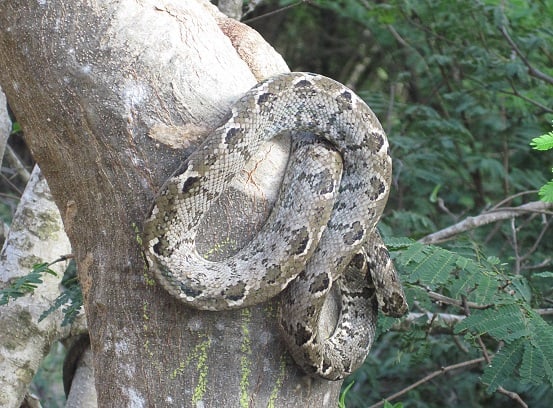
One of the thinnest Caribbean boas, with a particularly slender head. The Grenada tree boa (Chilabothrus grenadensis) lives mainly on Grenada, but also outlying islands in the Grenadine chain such as Mustique, Carriacou, Bequia, Union and Canouan.
Grenada boas are closely related to Amazon tree boas, and spend almost all their time in trees themselves. Precisely which tree, they couldn’t care less about. Grenada is an island of mountain peaks, with deep, narrow valleys and steep ridges, covered with greenery. Grenada boas are comfortable in native rainforests, but also agricultural areas with trees such as banana, mango, cacao, and coconut plantations.
Consequently, their numbers remain strong, with an estimated population of 7000-8000. It’s believed that Grenada tree boas haven’t declined at all since Europeans first arrived in the 17th century. In the 1980s, a western scientist named Henderson arrived to research the Grenada tree boa, and was able to catch 6 per hour.
Grenada tree boas eat lizards more heavily than other boas, particularly the Grenada tree anole and Grenada bush anole, but have never once been spotted eating a gecko. This species varies massively in colour, as in some spots, they’re yellow, with a light tongue and yellow irises. At higher altitudes, they have a tendency to be brown, with a darker tongue and eyes to match.
| 9 | Bahamian boa |
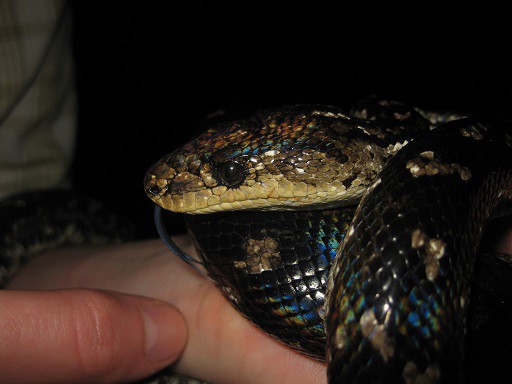
Maximum length: around 250cm.
For decades, this boa was thought to be the same species as the Hispaniola ground boa, but in 2013, it ascended to official species-hood. The Bahamian boa (Chilabothrus strigilatus) is the main boa of the Bahamas. It skips the far north such as Grand Bahama and Abaco Island, but inhabits many islands around the nation’s core, including Eleuthra, Long Island, New Providence and Rose Island.
Rather than staying in trees for hours while barely moving, the Bahamian boa is an active and alert snake which is always exploring. Its camouflage isn’t amazing, not like an Arabian sand boa, but the Bahamian boa is an expert tree climber, which can coil around a thin tree branch and float upwards in defiance of all known gravity laws. Bahamian boas have been spotted 5 metres high in trees before, and are much more tolerant of dry conditions than the Hispaniola ground boa.
The Bahamian boa has one cool record: the highest birth count of the Caribbean boa genus. A clutch from 1988 contained 53, while a 2016 batch numbered 63.
Chilabothrus strigilatus is believed to be declining slightly, partly due to road crossing deaths. It’s estimated that 62 are killed on the roads of New Providence each year. However, they remain plentiful in the wild, simply because they were the most common Bahamian boa to start with.
| 10 | Haitian vine boa |
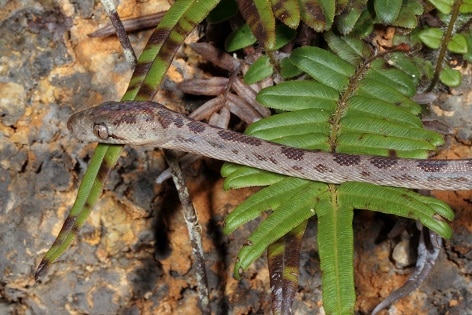
Maximum length: around 100cm.
Another boa living on Hispaniola, the island encompassing Haiti and the Dominican Republic. The Haitian vine boa (Chilabothrus gracilis) is a completely different species to the Hispaniola ground boa, with a much thinner body and unusually large eyes. It’s a forest-loving snake, but particularly favours forests along the edges of streams. Haiti is massively deforested, but these streamside copses have survived on the edges of fields and villages, and therefore this boa has managed to cling on.
Haitian vine boas have the most unusual diet of the Caribbean boa clan. They’re reptile-eaters which primarily eat two species of anole: the bark anole (Anolis distichus) and Tiburon stout anole (Anolis cybotes). The former reaches 8cm and has an unusually large head, while the latter is jungle green and reaches 12cm.
Most young boas eat anoles, but graduate to rodents as they age (like the Grenada tree boa). Meanwhile, Haitian vine boas barely accept rodents even in captivity; they practically have to be forcefed mice.
There’s a logical reason for this diet, as the Hispaniola ground boa they coexist with almost exclusively eats rodents, forcing the Haitian vine boa to move into the reptile niche. Is there room for two boas in one town? There is – if they make a solemn vow not to compete with each other.
| 11 | Virgin Islands tree boa |
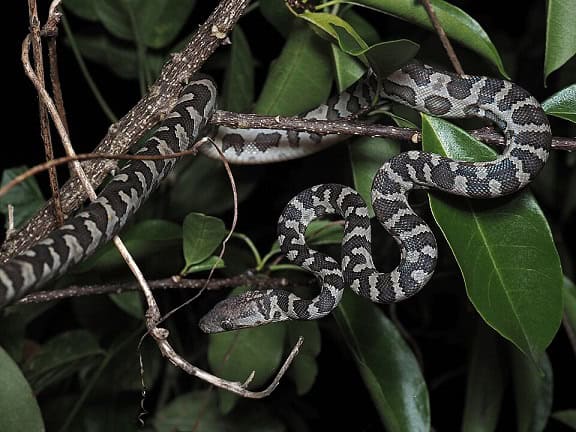
Maximum length: 134.9cm.
This species is native to the British Virgin Islands as well as eastern Puerto Rico. It’s a much more arboreal (tree-dwelling) species than others in the Caribbean, with strong similarities to the Haitian vine boa, including a smaller body size, both in thickness and length.
Virgin Islands tree boas (Chilabothrus granti) are mainly found in dry forests, at low altitudes, almost always below 150 metres above sea level. Like the Haitian vine boa again, they’re heavily reliant on reptiles, and particularly one species: the common Puerto Rican anole (Anolis cristatellus), which also lives on the Virgin Islands.
Virgin Islands tree boas are able to climb incredibly thin branches, which is one of their strengths, but have also have a great weakness: rats. This species is severely vulnerable to invasive rats, to the extent that they can vanish completely in heavily infested areas. Feral cats also a threat to this endangered boa species.
The Virgin Islands tree boa was placed on the endangered list in 1970. Fortunately, this was slightly too pessimistic, as at the two time, just two populations were known. By 2009, 7 populations were officially in existence, and the Virgin Islands tree boa was proposed to be downgraded to “threatened”. However, one reintroduced population (on the island of Cayo Ratones) was decimated after 10 years, when rats took hold once more. Being a tree boa, this species is also more vulnerable to deforestation than the likes of the Hispaniola ground boa.