
| 1 | Green anaconda |
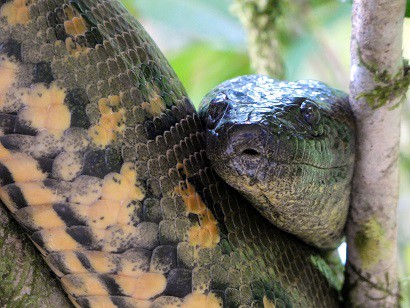
Record length: 5.21 metres (wild), 6.27 metres (captivity).
The green anaconda of South America regularly exceeds 20 years old in captivity. Whispers circulated for years of pet anacondas reaching 30 years, until Guinness made it official in 2021. Annie the anaconda was owned by Paul Swire from 1989 to 2004, in the South African town of Vryheid. He eventually donated her to Montecasino Bird and Reptile Park in Johannesburg, where she had her own enclosure with a heated pond.
It was Swire who applied to Guinness for the record, triggering an avalanche of paperwork and interviews, in order to gain iron-clad verification. Finally, it became official – Annie was the oldest living anaconda, at 37 years and 317 days old.
As of 1975, the oldest anaconda on record was 29.0, and in the wild, they may reach 20 years. The green anaconda also ranks among the top 10 longest snakes worldwide, with an all-time wild record of 5.21 metres, according to a study on 1000 wild anacondas.
The older they become, the longer they grow, even if it’s only by mere centimetres each year. Annie the anaconda apparently measured 5 metres in 2020, at age 36, growing from 4 metres at age 8 in 1992, when she was well into adulthood.
| 2 | Mexican burrowing python |
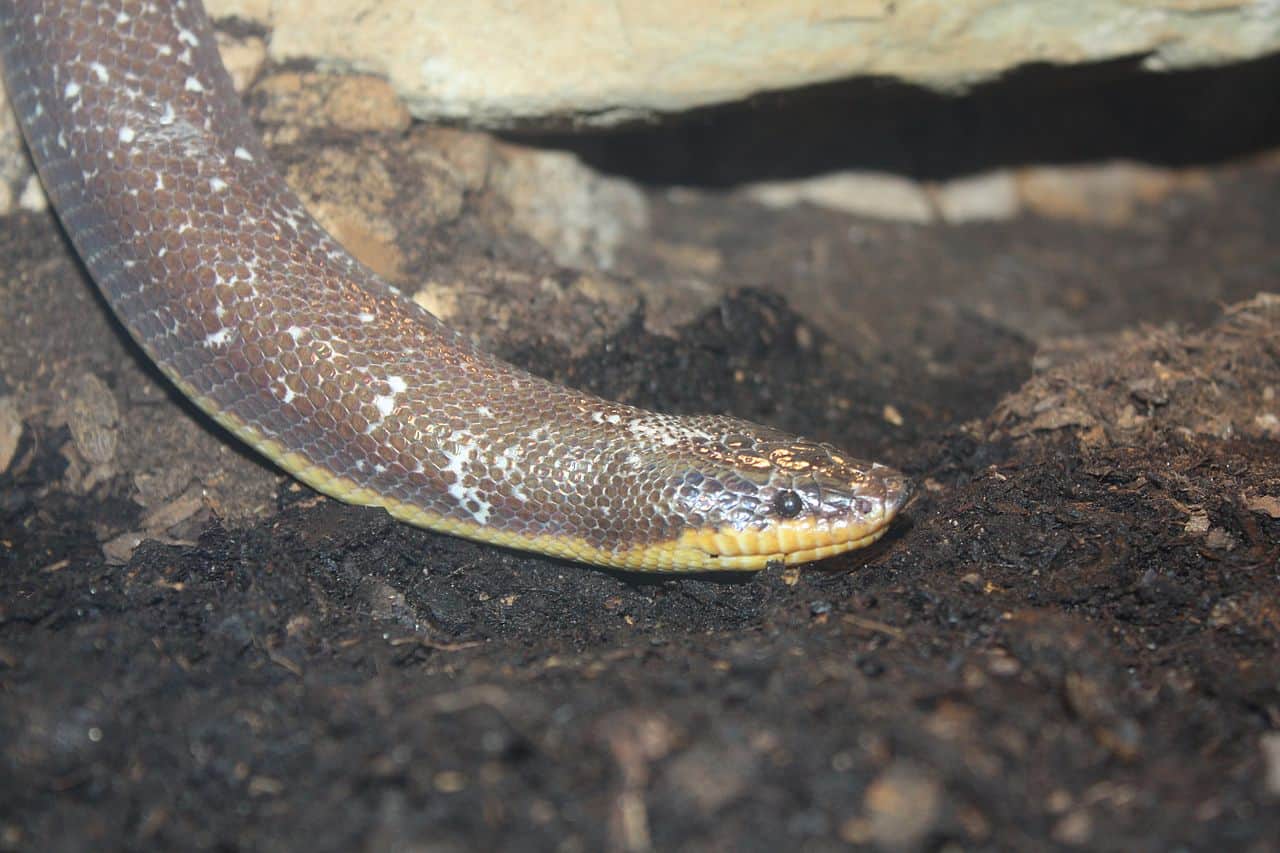
Maximum length: 157cm.
This species is one of the most isolated snakes on the evolutionary tree. It belongs not just to its own genus, but its own family. It isn’t a python at all; its closest living relative is the iridescent sunbeam snake of Thailand, thousands of miles away.
Mexican burrowing pythons are completely harmless, and are common in southern Mexico, Guatemala and Costa Rica. They appear along the Pacific coastline, where they’re often found on beaches. They’re expert burrowers, with a modified snout, and one of their strange habits is living for over 4 decades. As of 1975, the record was 32.8 years, but Utah’s Hogle Zoo reports that 40 years is possible in captivity, without the pressure of predators such as birds.
Mexican burrowing pythons reach a maximum of 157cm, and have a strong tendency to wrestle other males. Another strange skill is secreting fatty acids from their scales to ward off ant pests.
This is a slow, shy snake, which spends its time digging soil tunnels and searching for turtle eggs. Mexican burrowing pythons are equally shy in captivity – they might live for decades in a comfortable terrarium, but don’t expect to see them much.
| 3 | Northern Pacific rattlesnake |
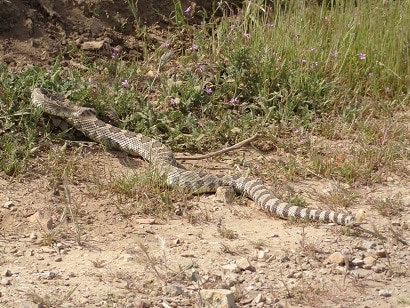
Maximum length: 162.6cm.
The tiger rattlesnake has the deadliest venom of any rattler, at an LD50 rating of 0.6mg, but it might be jealous of its neighbour, the Pacific rattlesnake (Crotalus oreganus), which boasts an extremely long lifespan instead.
According to an article in the Herpetological Review journal, the longest-lived captive Pacific rattlesnake was Striker, who died in 2015 at the age of 34. This snake was scooped up in Auburn, California in 1982, as a tiny juvenile which would have been born in winter 1981. He was brought to biology teacher Doug Stryker, an employee of Placer High School, who kept him as a pet in his classroom. Striker remained there for 31 years, mesmerising generation after generation of schoolkids.
Eventually, Doug retired, and the new principal decided not to keep Striker. So he was adopted by the nature reserve Sacramento Splash instead, who kept him until he finally died in 2015.
Pacific rattlesnakes inhabit a large swathe of the western USA, spilling into northern Mexico and southern Canada. It’s perfectly normal for this species to reach 15-20 years in captivity, though be warned – they’re venomous at all ages.
| 4 | Sumatran short-tailed python |
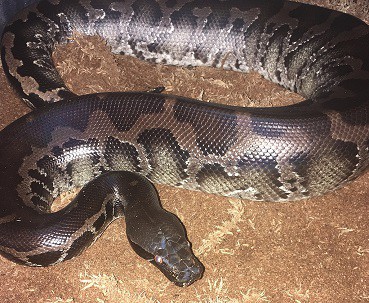
Maximum length: 200cm.
A endemic species to the large island of Sumatra, Indonesia. The Sumatran short-tailed python (Python curtus) is closely related to the blood python, a popular captive species, but has duller grey and black scales instead of striking blood red.
Sumatran short-tailed pythons are normally found relaxing by riverbanks, marshes or along overgrown swamp edges. They often create an illusion of shortness in their photos, due to their enormously thick bodies. In reality, they average at a respectable 1.5-1.8 metres.
This species is extremely lazy, spending days barely moving, and like a tortoise, this slow, steady nature helps it to grind on for year after year. Sumatran short-tailed pythons easily reach 20 years, and the oldest confirmed individual reached 27.8 years. Many captive snakes are given to their new owners when they’re several years old as well, making determining the exact age difficult, so it’s possible that many have been even older.
As an ambush predator which doesn’t travel much, each Sumatran short-tailed python could have its own boggy swamp which it rules over for decades. It’s possible that local villagers and fishermen in Sumatra are walking past the exact same python every day for years.
| 5 | Ball python |
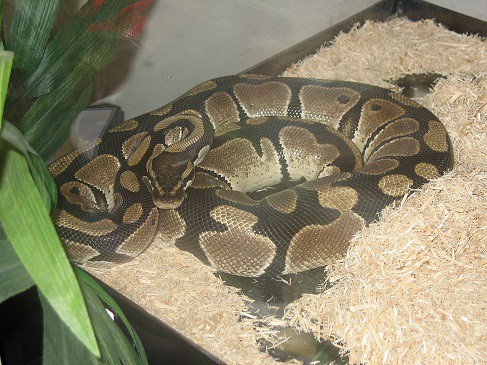
Maximum length: 182cm.
Around the world, there’s over 4000 species of snake, with new species being discovered every year. One of them, somewhere, has to have the longest lifespan, and that happy honour has been granted to the ball python (Python regius), a harmless species of West Africa.
This smallish python is most common in Nigeria and Ghana, where it’s worshipped as a local deity, supposedly watching over villagers and protecting their harvests. There are even shrines and temples devoted to ball pythons. Again, those happy farmers might be encountering the exact same ball pythons for decades on end, as this snake regularly reaches 30 years old.
In captivity, this species holds the official record for oldest snake. This was a female who was still laying eggs at 62 years old, despite having not encountered a male for 15 years. The snake was donated to St Louis Zoo in 1961, and only died in 2021. Another record ball python reached 47 years old in Philadelphia Zoo.
The funny thing is that the ball python is the shortest true python species in Africa, scuppering any exact length correlation. It reaches a record of 182cm, whereas the African rock python measures up to 6 metres, yet has only reached 27.3 years old. Nature is mysterious sometimes – who knows why the honour fell to the ball python, of all species.
| 6 | Indian python |
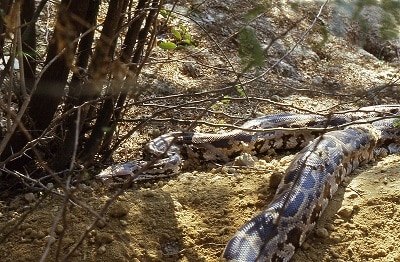
Maximum length: 4.6 metres.
The Indian python lives all over India and Sri Lanka, as well as western Bangladesh, and sometimes exceeds 4 metres. It’s a crushing constrictor with the ability to lunge suddenly at prey, with inward pointing, saw-like teeth designed to prevent prey from escaping its mouth.
Another of this species’ powers is immense longevity. The average age in captivity was reported at 15.8, but the oldest of all time was a wise old 34.2. In a similar vein, Indian pythons can go months without eating, with the longest gap on record being 2 years. Their metabolism is very slow, and slow metabolisms are believed to be why primates (including humans) live longer than other mammals.
Indian pythons are particularly slow and lethargic, and rarely bother to attack humans. India is not as jungled as it once was, with towns and rice paddies taking over more and more of the countryside. But there are plenty of wild places where snakes still reign supreme, and who knows how old (and massive) some of the Indian pythons within may be.
| 7 | Forest cobra |
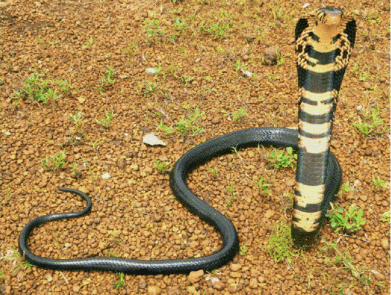
Maximum length: 320cm.
The forest cobra (Naja melanoleuca) may be the most underrated of Africa’s nightmare snakes. This species is the longest true cobra worldwide, sometimes exceeding 3 metres, and produces a gargantuan venom total of up to 571mg. Forest cobras appear in forested areas at high altitudes, and laugh at the concept of stealth. They prefer to charge across the forest floor at high speeds, with their fangs bared, making no attempt at disguise.
Their other claim to fame is longevity. At 28 years, the forest cobra once held the record for oldest venomous snake of all time. Sadly, this was beaten – by another forest cobra.
The new record holder was Cosby, who officially reached 35 years old. The dates were all correct and confirmed, as Cosby was born in Bronx Zoo on August 31st 1979, and shipped off to Melbourne Zoo, Australia in 1982. He was still alive on September 1st 2014, when he reached the grand old age of 35.
Despite his lethal neurotoxic venom, Cosby was a relaxed forest cobra with a “cruisy” attitude. He was so comfortable in his home that after his regularly scheduled exercise, he often slithered back to his exhibit enclosure on his own. In the wild, forest cobras are believed to reach 20 years.
| 8 | Brown rainbow boa |
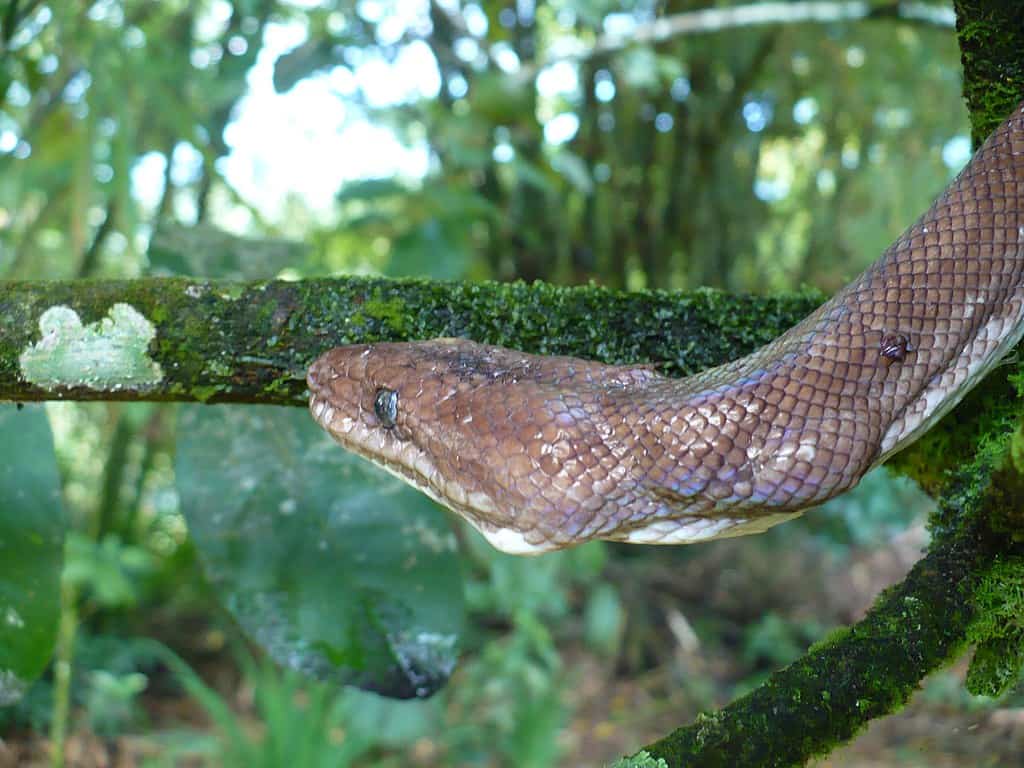
Maximum length: 180cm.
The most northerly of the rainbow boa genus. The brown rainbow boa (Epicrates maurus) ranges from Costa Rica and Panama to French Guiana, unlike the Brazilian rainbow boa (Epicrates cenchria), which has flashier colours and lives further south. Both species are popular in captivity, due to their docile nature, and the brown rainbow boa once held the Guinness World Record for longest-lived captive snake ever.
The snake in question was Ben, purchased by Dennis and Andrew Hatterman at an Illinois Pet World in 1974. For much of his life, Ben the boa resided in Valdosa, Georgia. Nobody expected that Ben would reach the grand old age of 42, before finally passing away on June 6th 2016.
Most brown rainbow boas on the market are born in captivity, and consequently, we know Ben’s exact birthday: May 31st 1974. Keeping them alive is no manic science lab project either. Tossing them mice is more than sufficient for their diet, and they don’t require vast open spaces to roam in. They’re said to be nippy and feisty initially in captivity, before rapidly calming down.
| 9 | Timber rattlesnake |
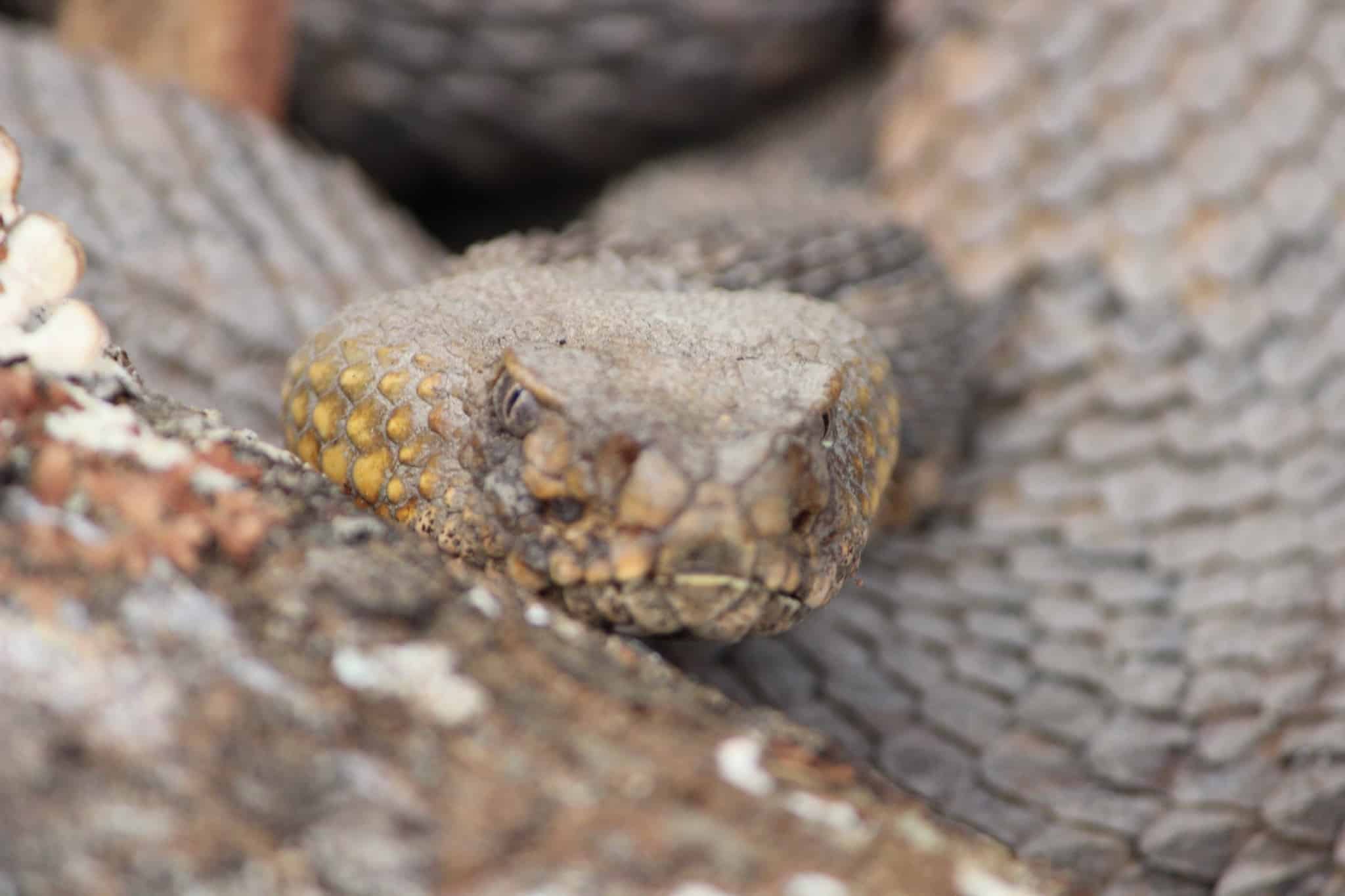
Maximum length: 189.2cm.
A snake’s length is a decent hint as to its lifespan, as the reticulated python and green anaconda both have long lives. But the likes of Mexican burrowing pythons and ball pythons break the rules by being just average.
The timber rattlesnake is also part of this relatively short club. Its average adult length is just 100-150cm, yet it commonly reaches 25 years old in captivity. There are even whispers among reptile enthusiasts of 50 year old timber rattlesnakes.
This species inhabits a swathe of the eastern USA, including Tennessee, Georgia, South Carolina and northern Florida. As of 1975, the record lifespan was 30.2 years, but that has since been superseded by the official oldest rattlesnake on record: a 36.5 year old timber rattlesnake documented in Herpetological Review in 1994. Its story made for grim reading, as the snake was unable to hunt its own food from age 25 onwards (unlike the other old snakes on our list).
This rattlesnake was found on October 6th 1954, and finally died on June 2nd 1991. In all those years, the snake only ate 125 times, averaging at 3-4 meals per year, including 230 hooded rats and 76 white rats. All signs suggest then, that the timber rattlesnake lives a long life because of a relatively slow metabolism, like pythons and boas.
| 10 | Boa constrictor |
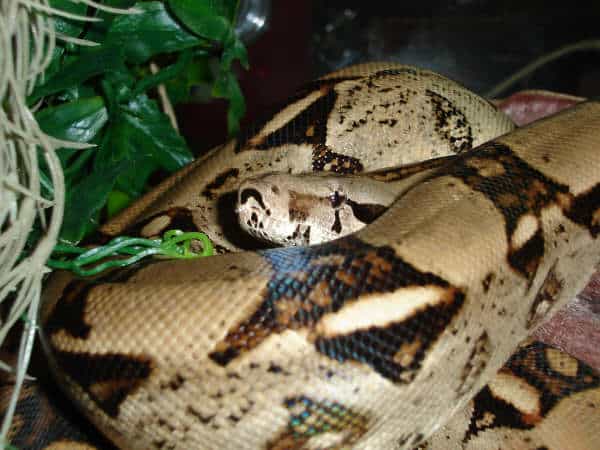
Maximum length: just above 4 metres.
It’s believed that boa constrictors routinely exceed 20 years even in the big bad wild, with no pet owners to lovingly protect them. In captivity, they reach 30 years old with ease, with a steady supply of mice and rats, and no threat of bird predators.
The oldest boa constrictor on reliable record was Popeye the boa, who was purchased from a London dealer in 1936. For the next 34 years, Popeye lived in the home of a private individual, before being donated to the Philadelphia Zoological Gardens. He was finally euthanised on April 15th 1977, after suffering health problems related to old age. Nevertheless, Popeye had achieved a record of 40 years, 3 months and 14 days on Planet Earth – 40 had surely been a target in his mind.
Being such a popular captive pet, we have a much clearer picture of the boa constrictor’s longevity compared to most snakes. The flipside is that with so many existing as pets, freakishly long-lived ones are more likely to be recorded. Other species could also achieve 40 years if the sample sizes were larger.
Nevertheless, scientists agree that boa constrictors reach unusually old ages. Again, they have a slow metabolism, occasionally going months without eating.