
| 1 | Fossils dug up in Tanzania |
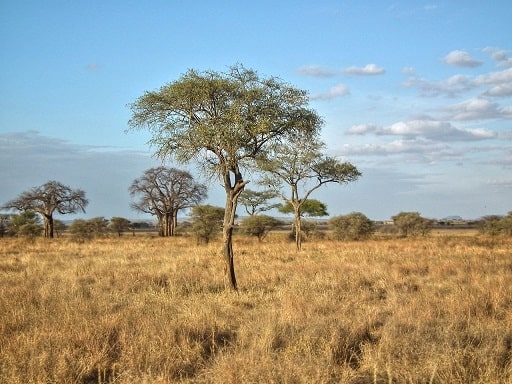
In 2014, archeologists flew home from Tanzania and published a study revealing the country’s exact snake makeup 25 million years ago. The subject was Tanzania’s rift basin, and it revealed a far more venomous picture than scientists expected.
On the snake family tree, the booids are the thick-bodied pythons and boas, the constricting ambushers which can wait patiently for days at a time. These were some of the earliest snakes to evolve, coexisting with deadly T-rexes and velociraptors. The elapids, meanwhile, consist of venomous groups like cobras, kraits and sea snakes.
Generally, these venomous terrors are thought to have only emerged relatively recently. Yet the scientists found that the ancestors of modern cobras were clearly detectable in the ancient rift basin fossils.
Furthermore, the entire composition of the snake flora differed. The scientists expected the Tanzanian snake fauna of 25 million years ago to be dominated by booides, but instead found far more colubroides. These made up 75% of Tanzania’s ancient snake fauna. This is a superfamily consisting of elapids, but also hundreds of mildly venomous colubrid species like sand racers, catsnakes, tree snakes and emerald snakes.
In the process, the scientists identified a new snake species dating back 25 million years: Rukwanyoka holmai, which was thick and wide similarly to modern pythons. This was one of the oldest prehistoric snakes yet discovered in Africa.
| 2 | The hype train derails |
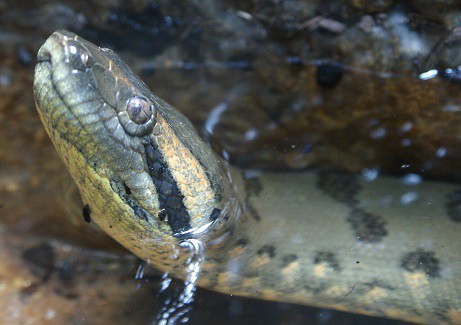
In November 2014, the Discovery Channel revealed that it would soon take snake broadcasting to a whole new level. On December 7th, they would broadcast daredevil Paul Rosolie being swallowed by a Brazilian anaconda live on film.
Using a state of the art armoured suit, Rosolie would film the snake’s insides, and reveal to viewers the exact sensations and sights when someone is being digested by a monster serpent.
The hype train built and built, and it was shaping up to be the defining television event of a generation. But the real thing turned out to be a damp squib. Rosolie donned the black suit, which was slathered in tempting pig’s blood. An inquisitive 20 foot anaconda showed up, liking what it smelt. It wrapped itself around Rosolie’s arm, who informed viewers that his bones were now breaking.
Finally, the anaconda opened wide, but the television crew suddenly wrested Rosolie free, when its jaws had covered nothing more than his forehead. Enraged viewers were met with defenders, who argued that truly being swallowed was unfeasible. Then again, the producers did title the program “Eaten Alive”.
| 3 | Wooden sign sparks panic |
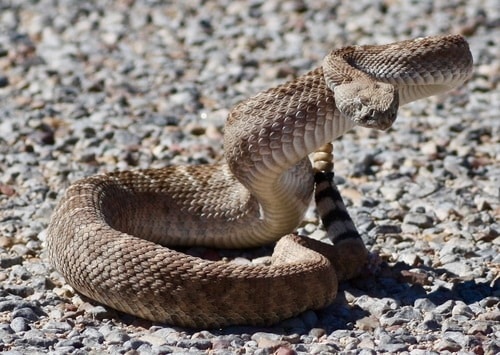
The Ancaster Diamondbacks were a junior baseball league based in Ontario, Canada. The Little League field was one of their main training grounds, but over time, the team began to jokingly call the field the Snake Pit in their internal communications.
The name seemed to fit, so one day, the Ancaster Diamondbacks hammered a bright yellow sign into the edge of the field. The funny sign added to the team spirit, but unfortunately, the local residents took the message literally.
People walking past with their dogs gulped with fear as a huge sign reading “Caution, snake pit ahead!” greeted them. A wave of panic spread across the town, and the innocent field was soon full of determined residents poking around with long sticks.
At one point, the snakepit sign was stolen by hooligans, so the Ancaster Diamondbacks did the logical thing and installed an even bigger sign. Residents were soon ringing up the president of the baseball league, threatening to call the city councillor if they didn’t deal with the snake infestation.
As of 2023, the snake pit name is still being used, but the final twist would be if actual snakes read the sign, and started flocking there in their thousands.
| 4 | Python pizza hits restaurants |

By 2014, invasive Burmese pythons had already been plaguing the Florida Everglades for 20 years. A month long hunt in 2013 failed to capture more than 68. So the latest scheme was simple: turn them into pizza.
The ingenious idea came courtesy of Evan’s Neighbourhood Pizza, of Fort Myers, Florida. The restaurant had already been selling alligator sausage and frog’s legs, and Burmese python pizzas were now available for $45.
The owners took care with their pizzas, ensuring that every slice had its own piece of python. They noted how the python’s flesh had pink tinges originally, which faded completely to white with cooking, much like a chicken’s. Customers taking the python plunge confirmed that it tasted like chicken too, except chewier. Owner Evan Daniell stated that the meat “can be gamier”.
Most importantly, the Burmese python flesh was marinated for several hours beforehand for tenderisation, before being cut into thin “snake slivers”, which could be conveniently draped on as toppings. Not surprisingly, the python pizzas worked wonders as a marketing tool, riding the viral wave.
| 5 | Snakes terrorise London? |
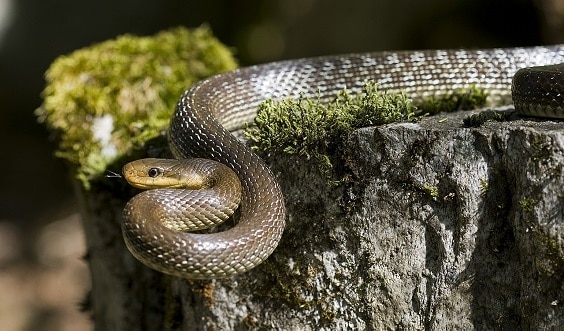
A story that took a nugget of real information, and inflated and distorted it beyond recognition. The summary was that London was facing a new crisis on the level of the 1940 Blitz or Great Smog of 1952 – a rising invasion of snakes determined to squeeze people.
The invaders were Aesculapian snakes, ordinarily a resident of Italy, and one of Europe’s longest species, reaching over 2 metres. The Daily Star reported that the snakes were more than capable of killing fully grown dogs. They interviewed a frightened local mother, who argued that small children were barely bigger than dogs.
The killer snakes had been spotted in trees, on roofs, and climbing drainpipes. Panic rose on the streets of London – hysteria wasn’t far away.
The truth was that Camden Lock, north London did host a small colony of Aesculapian snakes. But this was estimated at just 30 individuals. According to venom expert Dr Wolfgang Wuster, the snakes were only a threat if your child was the size of a small rat, in which case you would have much bigger problems anyway. “As far as I am concerned this has been atrocious, sensationalist media reporting,” he said.
The Aesculapian snakes were thought to have escaped from London Zoo. Normally, invasive species would be culled, but there was no proof that the Aesculapian snake colony was negatively impacting the ecosystem, or achieving anything apart from humbly existing.
| 6 | Snake-loving preacher dies from bite |
Jamie Coots was a preacher, and a famous American snake handler who had appeared on the National Geographic TV show Snake Salvation. He was based in Middlesboro, Kentucky, at the Full Gospel Tabernacle in Jesus Name church, and believed that it was his duty to handle snakes, as instructed by a Bible passage in Mark’s gospel: “They will pick up serpents, and if they drink any deadly poison, it will not hurt them“.
As of 2014, he had already been bitten 9 times, always recovering. Coots attributed his apparent immunity to his strong faith in God. In 2013, he had been caught smuggling 3 rattlesnakes and 2 copperheads through Tennessee, and convicted of illegal wildlife possession.
In February 2014, Coots’ luck finally ran out. He was grasping a rattlesnake firmly in his hand, when the snake curled its head round and bit him, directly on the back of the hand.
When an ambulance arrived at the church, they were informed that Coots had gone home. His family assumed that he would recover as usual, but Coots later died in hospital.
Yet this wasn’t the end of the snake-obsessed church. His son Cody Coots took over as head preacher, aged 23. He too was hospitalised in August 2014, as he held a venomous snake high before his enraptured audience, which was chanting, praising the lord, and speaking in tongues as usual.
| 7 | The secrets of snake climbing revealed |
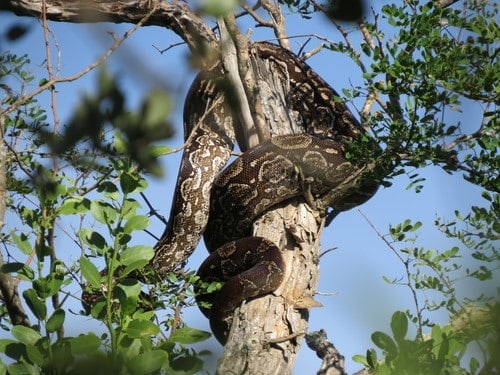
2014 saw scientists explore another previously murky area of the snake universe – their climbing skills. The team installed a 2.4 metre high pole, with the thickness of a human wrist. This was covered with tennis racket tape to give the snakes sufficient purchase, and sensors to give the scientists their data. 10 snakes across 5 species were involved, including the common Australian carpet python.
It turned out that the snakes took no chances, gripping the pole 3 times harder than necessary to counteract gravity. Snakes have finer muscle control than you’d expect, with the ability to adjust their squeezing force by minuscule levels, so this was completely intentional.
The study also included boa constrictors and the brown tree snake, the notorious invasive species of Guam. These snakes used a concertina movement – where one section of the body clenched its muscles firmly for grip, while a separate section dragged the rest upwards.
The theory was that as carpet pythons and boas are ambush predators, they expend little energy for most of the day anyway. Consequently, they have no fear of wasting a large amount by squeezing a tree trunk extra firmly, if it gives them reassuring security when climbing.
| 8 | Boko Haram defeated by snakes |

2014 was the year when the Islamic insurgency in northeast Nigeria reached vicious new heights. Innocent villages were terrorised, and the entire world was shocked when 276 innocent schoolgirls were kidnapped and held hostage. As the army moved in, the cunning Boko Haram terrorists hid out in the forest.
But it didn’t take long before they were fleeing with their tails between their legs. It turned out that nature was doing its bit, and sending venomous snakes and swarms of bees after them. The most dangerous was reportedly Sambisa Forest in Borno state, with the fighters suffering “incessant snake bites”, with many dropping dead, as their guns clattered to the ground.
Superstitions abounded that Boko Haram’s victims were being reincarnated as snakes using juju, and biting the terrorists in revenge. The snakes were so abundant that Boko Haram abandoned the entire forest, preferring to run the risk of being arrested on country roads rather than remain in the slithering nightmare woods.
Foot soldiers were caught attempting to sneak back into town, with some claiming that Boko Haram had forced the local youths to fight (which was possible). Other terrorists were lured into traps and killed as they fled the forest.
| 9 | Man suffers snakebite, grabs a beer |
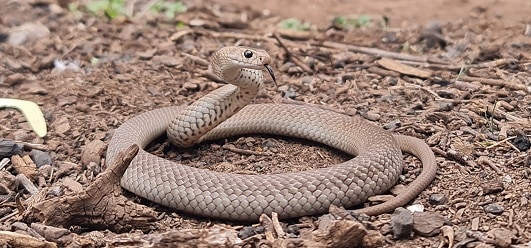
54 year old Rod Somerville was a resident of Yepoon, Queensland. In March 2014, he was moving potted plants in his backgarden, when a pair of fangs randomly sank into his finger.
The culprit turned out to be a 2.5 foot eastern brown snake, in full raging aggression mode. Sommerville whacked the snake on the head with a shovel, and dialled the emergency services.
The eastern brown snake is the second deadliest land serpent in the world. Knowing his time on Earth could be short, Sommerville decided to make the most of his remaining minutes, and opened the fridge to grab a beer. He chose an XXXX Gold, sat down and began drinking calmly. He had a sound strategic reason too: “If you panic, you make it worse“.
Somerville didn’t bother to wake his teenage son, preferring to let him sleep soundly on the sofa. He eventually reached hospital, where they injected him with healing antivenom.
His life was saved, but unfortunately, Somerville proved to be allergic to the serum, and spent a further 3 days in intensive care. He spent over 3 weeks in hospital, with the reaction particularly affecting his kidneys. “The reaction nearly killed me as well, so it was a double whammy,” he said.
| 10 | Snakes cause runway chaos |
It was May 2014, and Delta Airlines Flight 1859 was waiting patiently at San Francisco International Airport. The plane was all set to fly to John F. Kennedy airport in New York, but as the crew prepared to blast down the runway at 400mph and take off, the plane suddenly ground to a halt. The pilot had spotted a snake on the tarmac, and refused to move an inch.
It turned out to be a San Francisco garter snake, an endangered subspecies of the common garter snake. The snake only measured 6 inches, yet this was enough to grind the entire plane to a halt.
The flight passengers were soon posting updates on Twitter, including the crew’s efforts to bag the harmless snake. The pilot had acted not just out of compassion, but legality, as federal law prevents pilots from squishing animals on the runway.
The San Francisco garter snake numbers just 2000 nowadays. One of its hotspots is an overgrown stretch of land directly adjacent to the San Francisco terminal, and owned by the airport as a nature reserve. A spokesman confirmed that the snake had been set free in a “grassy area“.