
| 1 | Mexican west coast rattlesnake |
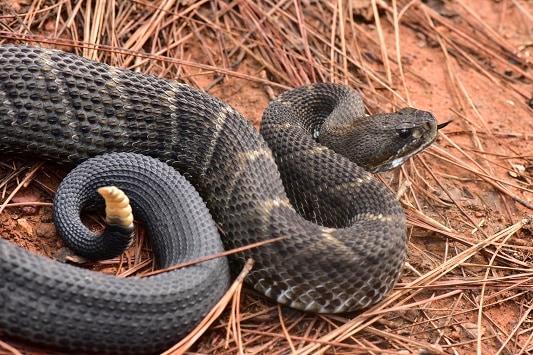
Maximum length: 204.5cm.
This species does exactly what it says on the label. The Mexican west coast rattlesnake (Crotalus basiliscus) resides solely in Mexico, never coming close to the US border. It’s found only along the western coast of central Mexico, primarily in dry open areas with an abundance of thorny shrubs.
This species has one major claim to fame: being the official 3rd longest rattlesnake worldwide. The longest ever measured a jumbo 204.5cm, which is over twice the record for a tiger rattlesnake (91.2cm). In 1st and 2nd place are the eastern diamondback (251.5cm) and western diamondback rattlesnake (233.7cm) of the USA.
With this brute size comes a generous splashing of venom, as Crotalus basiliscus injects an average of 297mg per bite. Luckily, this venom is relatively mild. It requires 4 times the dosage of a fer-de-lance to begin causing necrosis, and four times the dosage of a western diamondback to kill a human.
The main symptoms of Mexican west coast rattlesnake venom are blood clotting disorders (coagulopathy) and life-threatening arrhythmia, i.e. a heart beating unsustainably fast. One 57 year old victim developed a heartbeat of 136BPM. His blood pressure also plummeted, within just one hour of being bitten. Ultimately, he was saved with ease by a helping injection of antivenom.
| 2 | Tancitaran dusky rattlesnake |
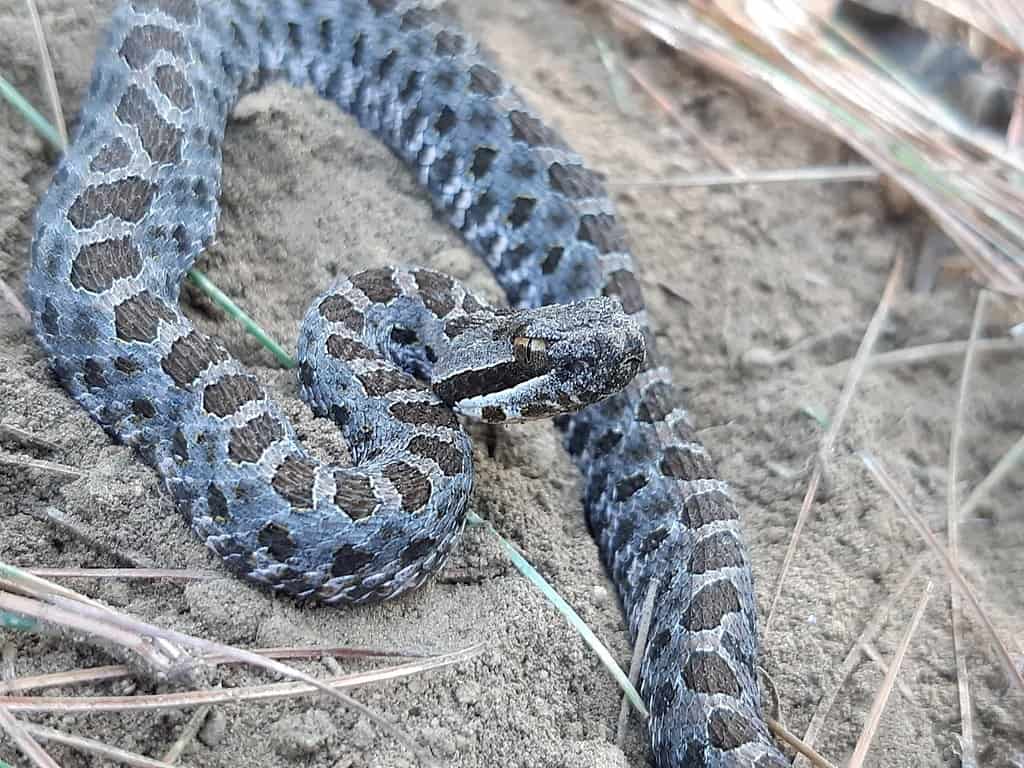
Maximum length: 68.2cm.
One of the more vicious rattlesnakes in Mexico. Tancitaran dusky rattlesnakes (Crotalus pusillus) are found at altitudes of 1525-2830 metres, particularly in grassy clearings adjacent to forests. They appear exclusively in the high mountains of southern Mexico, west of Mexico City.
This species begins shaking its rattle furiously the moment humans first approach. It has no qualms about biting, whether the target is a thick leather shoe or a scientist’s steel tongs.
Tancitaran dusky rattlesnakes can be hard to notice, as they have a particular liking for shelter. Fallen logs, rocks, the shade of agave plants, and even corn rows in agricultural fields are all common places for them to lurk.
Despite its aggression, this species has one of the weakest venoms of any rattlesnake. In a study comparing its toxin soup to red diamond, twin-spotted, ridge-nosed and Mexican pygmy rattlesnakes, Crotalus pusillus ranked in last for lethality.
This is mainly a day-faring rattlesnake. Tancitaran dusky rattlesnakes are most commonly sighted at 12:00pm, once the sun has burnt off the early morning mountain mist. Reports also mention an unusual attraction to volcanic rock formations. At an average of 50cm, Crotalus pusillus is one of Mexico’s smaller rattlesnake species, so its high aggression levels are most likely a way to compensate.
| 3 | Baja California rattlesnake |
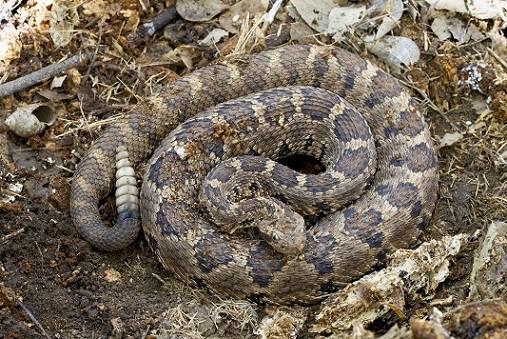
Maximum length: 89.9cm.
This rattlesnake is found exclusively in Baja California, the finger-like peninsular that extends southwards from US California. This is a fairly a short species, never reaching 1 metre, and its venom yield is also unusually low. Its toxin mixture sticks to the rattlesnake standards, disabling blood clotting and triggering spontaneous haemorrhaging around the body.
Baja California rattlesnakes (Crotalus enyo) are 100% nocturnal, and are very difficult to find in the wild, except when crossing roads. They prefer drier spots, and their favourites are proven to be dry shrubland, where they can hide themselves from roving predators. According to a study on 113 Baja California rattlesnakes, their diet consisted of 60.3% mammals, 33.3% reptiles and 6.4% centipedes.
Crotalus enyo is far from the deadliest rattlesnake, but a study compared its venom toxicity to 3 other Baja California species. The southwestern speckled rattlesnake had the strongest LD50 toxicity rating at 0.35mg, while the Baja California rattlesnake came in second at 1.56mg, outstripping a cottonmouth. The Santa Catalina rattlesnake came third (2.98mg), while the weakest by far was the red diamond rattlesnake (9.21mg).
| 4 | Querétaro dusky rattlesnake |
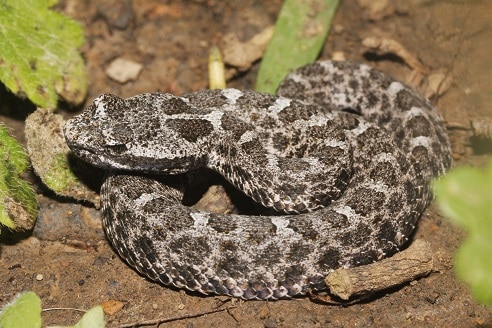
Maximum length: 69.4cm.
One of Mexico’s smallest rattlesnakes. This species has an average length of just 50cm, although it compensates with a proportionately thick body. This is also a rare rattlesnake to prey on other snakes, as well as mammals and lizards. Confirmed prey in its diet include Mexican bullsnakes, an unidentified garter snake, crevice swifts (Sceloporus torquatus), and Mexican voles.
Querétaro dusky rattlesnakes (Crotalus aquilus) avoid coastlines, and stick to the rolling central Mexican plateau instead. Their main habitats are pine-oak forests, and within those forests, they’re particularly common in rocky outcrops, where they bask in the sun’s warm glow to heat their cold-blooded reptilian bodies. This is a high altitude rattlesnake, which can climb to 3310 metres above sea level.
Querétaro rattlesnakes also appear in grassy mountain meadows. This is a relatively calm rattlesnake, which is usually reluctant to bite, but one population in El Chico National Park is said to be unusually aggressive.
This species adapts well to manmade habitats, often appearing in pasture land and on the borders of crop fields. Another tendency is for males to duel each other in warring combat, most likely to win the attention of females. Whether these battles happen on mountaintops in a raging storm hasn’t been confirmed.
| 5 | Totonacan rattlesnake |
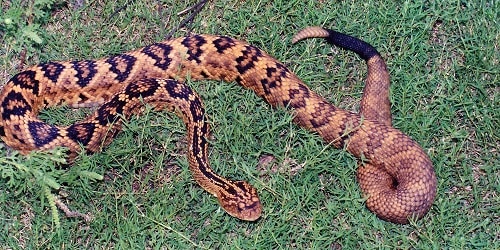
Maximum length: 166.5cm.
One of Mexico’s larger rattlesnakes. The Totonacan rattlesnake lives in central Mexico, and regularly reaches lengths of 150cm.
This is a highly flexible rattlesnake, with a durable serpent body equipped for survival in many different habitats. Totonacan rattlesnakes appear in scrub desert, cloud forests, dry thorn forests, deciduous forests, and pine-oak forests alike, at altitudes ranging from 450 to 1925 metres. Their one preference is for slightly drier habitats, like most rattlesnakes.
Totonacan rattlesnakes mainly eat mammals, and are cursed with an eternal hunger for squirrels that they can barely satisfy. Species confirmed in their diet include Allen’s tree squirrels and rock squirrels (Otospermophilus variegatus).
Totonacan rattlesnakes are recognisable by a particularly sharp contrast between their pale and dark scales. The pale scales vary from beige to orange, while the dark scales can be almost black. As the tail approaches, the colours gradually fade, before suddenly switching to dark black when the tail arrives. Their rattle scales (which they bash together musically) are light beige, except the first one after the tail, where the black colour leaches in slightly.
| 6 | Mexican pygmy rattlesnake |
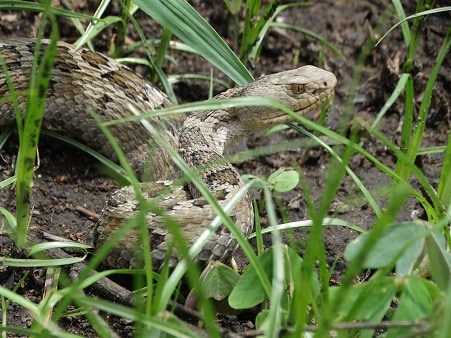
Maximum length: 70cm.
One of the most social Mexican rattlesnakes. The Mexican pygmy rattlesnake (Crotalus ravus) has been witnessed gathering together in groups of 100. This is another high altitude species, which has a mainly hemolytic venom, destroying red blood cells and causing their contents to leach.
Crotalus ravus is a relatively short rattlesnake, but has flexible habitats, ranging from pine-oak forests to dry landscapes of agave and cacti. Within its territory, which lies in south central Mexico, this is a commonly encountered snake.
One of this species’ bases is the countryside surrounding the Mexican city of Huitzilac, which lies at 2560 metres above sea level. Certain fields here are so swarming with this rattlesnake that the locals don’t dream of entering them. Mexican pygmy rattlesnakes are also found at lower elevations, but become rarer and spread out, more dispersed.
Crotalus ravus was originally placed in the Sistrurus genus, the same as the pygmy rattlesnake of Florida. However, recent analysis reveals that its closest relative in the USA is actually the rock rattlesnake. Recently, an antibacterial chemical was discovered in Mexican pygmy rattlesnake venom, which destroyed the stubborn microorganism Pseudomonas aeruginosa.
| 7 | Mexican lance-headed rattlesnake |
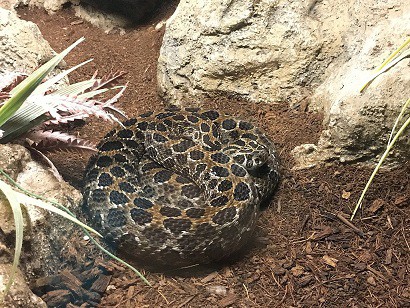
Maximum length: 100cm.
This 60-70cm rattlesnake lives in central Mexico, inhabiting a wide swathe of territory. Rather than deserts, its preferred habitats are grassy highlands, ranging from 1450 to 2600 metres above sea level.
The Mexican lance-headed rattlesnake (Crotalus polystictus) has unusually long fangs relative to its body length. Its venom is nasty, but not a patch on the tiger rattlesnake’s. A bite case from 1982 saw a man experience twitching muscles, swelling, and a small patch of necrotic flesh, which healed after being injected with antivenom.
This is also one of the most heavily mammal-eating rattlesnakes, as a large study analysing 545 food items found that 87.9% were mammals. Many individual mammal prey have been spotted, including Buller’s pocket gopher, southern pocket gophers, northern pygmy mice, and Mexican voles.
Crotalus polystictus is a rare rattlesnake in that its venom becomes less deadly with age. As a newborn, the main ingredient is neurotoxic PLA2s, which are gradually replaced with metalloproteinases in adulthood. These cause more physical skin tissue destruction, but are less fatal. This higher lethality is probably to compensate for the younglings’ smaller size.
| 8 | Northwestern neotropical rattlesnake |
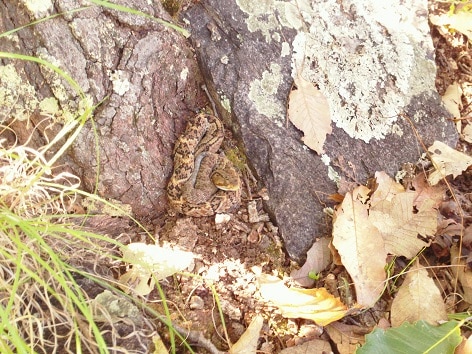
Maximum length: 180cm.
This species is misleadingly named, as it actually lives in southern Mexico, where it occupies a large swathe of territory. Northwestern neotropical rattlesnakes (Crotalus culminatus) are mainly nocturnal, moving under cloak of darkness when nobody can see them. This rattlesnake is one of the most forest-loving, hiding on the forest floor amidst rotting leaves and loose rocks. Its favourite habitats include thorn woodland, arid scrub forest, dry tropical forests and nearby limestone outcrops.
Crotalus culminatus is particularly common along Mexico’s southern Pacific coast, just fizzling out before reaching the Guatemalan border. This is one of the least neurotoxic rattlesnakes, completely lacking the brain-busting crotoxin possessed by several of its relatives.
Instead, northwestern neotropical rattlesnake venom contains crotamine, a myotoxin which attacks muscle cells, and can fully paralyse the hind legs of mice. Crotamine makes up 6% of the venom mixture as an adult and 1% as a youth. The diet of Crotalus culminatus is mysterious, but most sightings so far have been of rodents, including the spiny pocket mouse.
| 9 | Mexican small-headed rattlesnake |
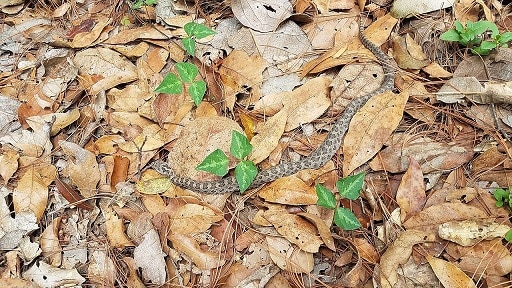
Maximum length: 57cm.
This rattlesnake is a lover of pine-oak forests at high altitudes, with some being observed at 3200 metres. Its heartlands are central southern Mexico, where it’s commonly observed on steep hillsides, resting under rocks after a heavy rain. High altitude desert areas at 2000 metres are also possibilities, surrounded by cacti, yucca and agave plants. The Mexican small-headed rattlesnake (Crotalus intermedius) is able to live on particularly steep mountain slopes, interspersed with rocky ridges.
This species has a dietary speciality of lizards, particularly those of the spiny lizard (Sceloporus) genus. With other rattlesnakes muscling in on the rodent niche, this species went in a freer direction, with more spoils to choose from.
Its venom, meanwhile, mostly consists of metalloproteinases, shock and awe weapons which digest skin cells and cause massive tissue chaos. Neurotoxins are few and far between. Its name is the small-headed rattlesnake, but this species also has a short body length, with 40-50cm being the norm, with a maximum of 57cm in the wild (sometimes longer in captivity).
Crotalus intermedius is believed to reproduce at a very slow rate. Fortunately, this rattlesnake is quite widespread, and is assigned to the “Least Concern” bracket by the IUCN, with a stable population trend.
| 10 | Cross-banded mountain rattlesnake |
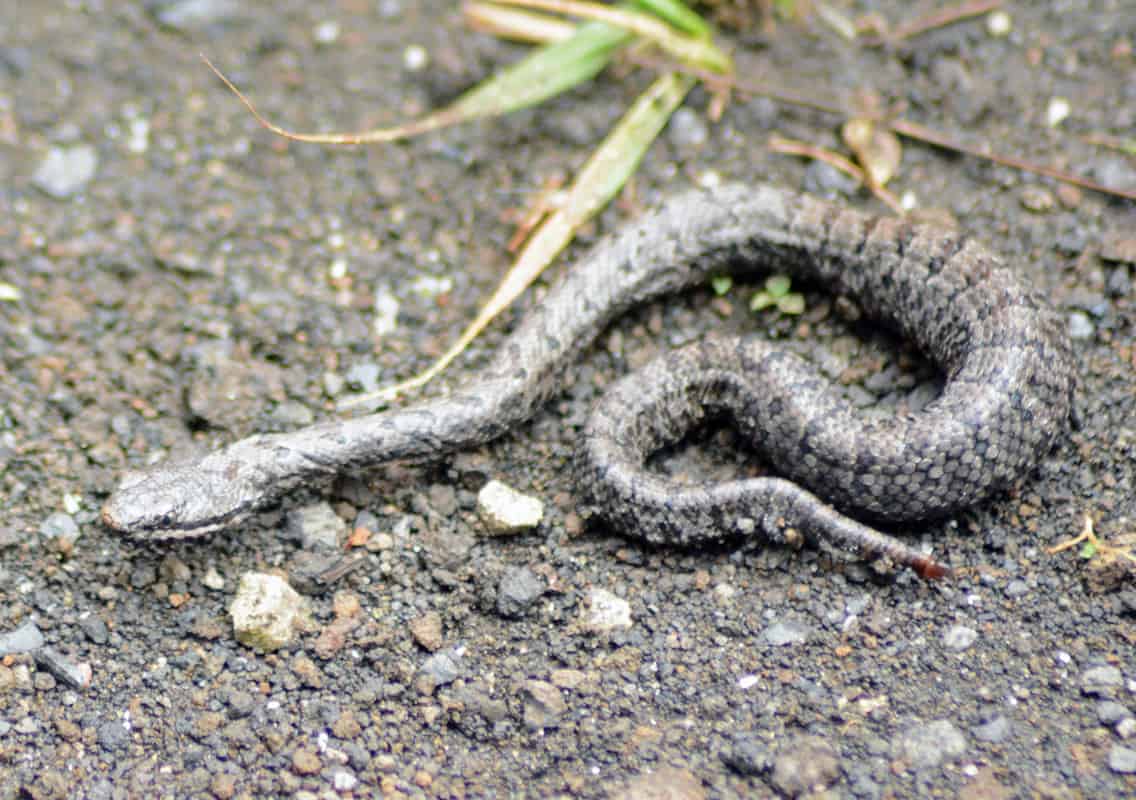
Maximum length: 46.5cm.
One of Mexico’s most obscure rattlesnake species. From its discovery in 1942 until 1971, just three were found, and less than 20 have been found overall. This is another high altitude species, inhabiting two mountain ranges of southern Mexico: the Sierra de Monte Alto and Sierra Ajusco. Its closest relative is the Mexican small-headed rattlesnake, with the two species diverging an estimated 5.33 and 3.6 million years ago.
The cross-banded mountain rattlesnake (Crotalus transversus) is a fairly calm species, which is reluctant to rattle its tail even when cornered. This rattlesnake defaults to fleeing over intimidation, despite its segmented rattle scales being as well developed as ever. So far, the longest recorded female measured just 46.5cm (although the sample size is still small).
Cross-banded mountain rattlesnakes live in pine-oak forests with a moderately thick understory, the sort of scenic place you’d love to explore if it wasn’t for rumours of venomous snakes lurking. They eat a healthy mixture of rodents and lizards, including Sceloporus aeneus, the southern bunchgrass lizard.