
| 1 | Fer-de-lance |
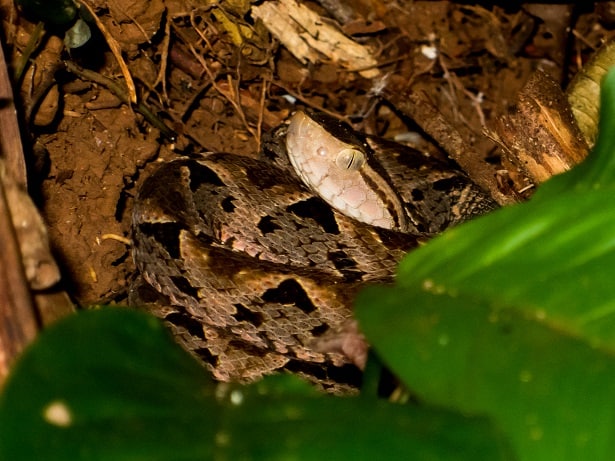
Maximum length: 250.1cm.
Known as Bothrops asper in Latin, the fer-de-lance is the most dangerous venomous snake in Central America, and Guatemala is crawling with them. This snake is so feared that the Mayan civilisations of old positioned their settlements directly behind jungles, to force their warring enemies to walk past the snakes within.
Fer-de-lances average at 100-120cm, but the largest brutes can reach 2.5 metres. Their most infamous characteristic isn’t just their venom potency, but their sheer unpredictability. It’s possible for this species to remain as still as a statue while you back off slowly, heart pounding like a jackhammer. But it’s also possible that you’ll be treated to a vicious lunge. The fer-de-lance’s accuracy rate while striking is near 100%, aided by heat-sensitive IR pits in its face. It can strike multiple times at a human target, with no need to coil up tightly and spring.
Fer-de-lances are strongly nocturnal in nature, almost never moving during the day. In their average nighttime session, they move less than 10 metres, between their resting spot and ambush position. Every so often though, they’ll move 50 metres at once, searching for more bountiful hunting grounds. Their diet consists heavily of mammals, which often draws them into banana plantations, with their high numbers of rats.
Bothrops asper inhabits a variety of forest types: tropical coniferous forests, rainforests, and cloudforests at elevations of up to 2600 metres. During the day, this viper is commonly found sleeping beneath thick layers of leaves.
| 2 | Guatemalan milk snake |
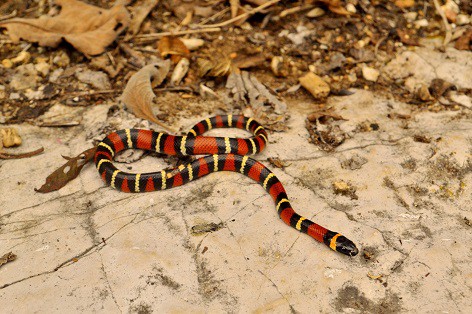
Maximum length: 184cm.
A relative of the US milk snake, which was split into its own species in 2014. The Guatemalan milksnake (Lampropeltis abnorma) lives in densely forested areas, and sticks to the ground. It’s also a naturally rare snake, which would be spread about in low numbers even if humanity had never existed.
Guatemalan milk snakes are typically 100-150cm, and are naturally shy, hiding in rotten logs and hollows in the bases of trees. Consequently, this species is rarely sighted by people. Most sightings occur when they stray into agricultural areas directly adjacent to forests.
This snake is a constrictor, and has powerful squeezing abilities even as a 50cm newborn. One of its ID signs is a narrow, V-shaped band draped over its snout.
Guatemalan milk snakes dine on mammals, with one confirmed prey being the Mexican deer mouse. This species is particularly easy to confuse with the venomous coral snakes it mimics, as its face is pure black. Guatemalan milk snakes share the alternating band patterns of most milk snakes: red, black, pale, black, red and repeat, with the red and pale never touching. The pale bands are normally orange with the Guatemalan milk snake, darker than the Ecuadorian milk snake further south.
| 3 | Guatemalan palm-pit viper |
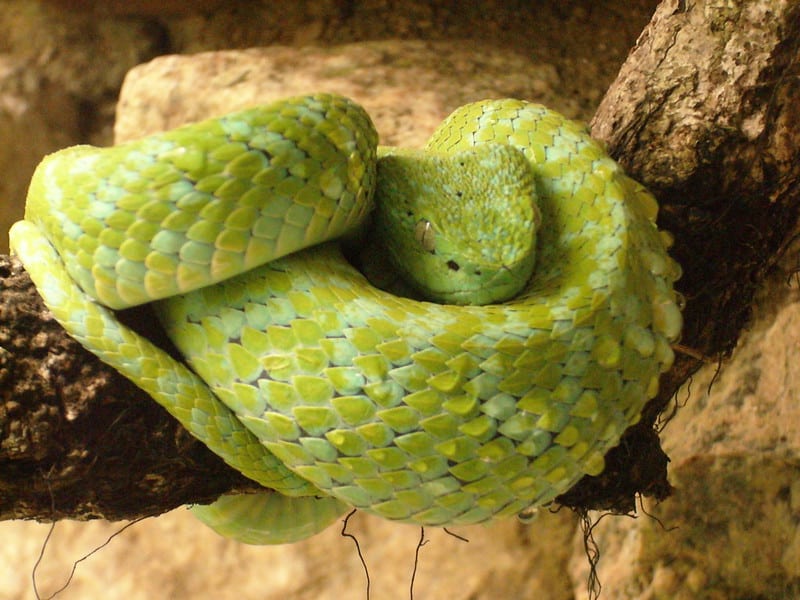
Maximum length: 100cm.
A venomous snake with a narrow, mountainous territory. Guatemalan palm pitvipers (Bothriechis bicolor) exist in just two countries: extreme southern Mexico and western Guatemala. They’re strongly reliant on forests, and average at 60-70cm. Compared to other pitvipers, they have a slender build, allowing them to easily climb trees. This is a bright green serpent, with some scales almost having blue tinges.
Bothriechis bicolor was once believed to live in isolated pockets in Honduras, but the sightings probably belonged to a different Bothriechis species. Instead, this species solely exists in a narrow finger of mountain range in far southern Mexico, stretching over the border into south central Guatemala, and reaching 2090 metres above sea level.
Little is known about this species’ venom, though it’s assumed to cause mainly local symptoms. This snake may be vulnerable to extinction, as deforestation is rife in its mountainous hideouts. Guatemalan palm pitvipers cannot switch to open fields or scrubland; they require forest to survive. Coffee plantations are the most adventurous they get, but here, fearful farmers usually kill them on sight.
Consequently, many local populations of Guatemalan palm pitvipers have vanished. They’re officially tagged as “least concern” by IUCN, but a 2020 study recommended an upgrade to “vulnerable”.
| 4 | Central American indigo snake |
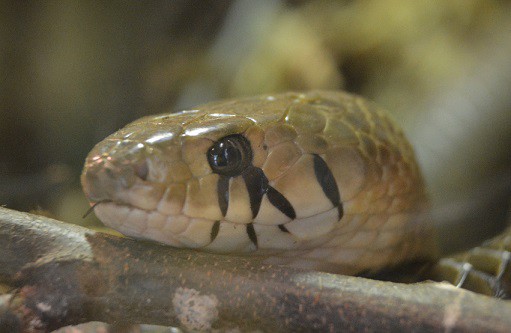
Maximum length: 295cm.
The more southerly relative of Florida’s eastern indigo snake. The Central American indigo snake (Drymarchon melanurus) is one of Guatemala’s longest snakes, blasting through the 2.5 metre mark with ease, exceeding the US version in length.
This is an easily recognisable species, due to one of the coolest eye markings of any snake: three thin stripes spreading downwards, with a colour of dense black. There’s also a 4th black line further back on the head, unconnected to the eye. These contrast vividly against its olive-yellow scales.
Likewise, its tongue is so black that it seems to have been drinking from a Texas oil well. Drymarchon melanurus mostly has a yellow body colour, with black colours beneath occasionally breaking through, but it gradually darkens towards the tail.
This snake has an extremely varied diet, featuring small mammals, bats, eggs, turtles and birds. This even includes the final frontier itself: the boa constrictor. This almighty showdown happened in February 2021, and the Central American indigo snake already had a firm grip on the smaller boa’s head when the scientists arrived. In response, the boa had coiled its body around its predator’s neck. Eventually, the indigo snake and boa constrictor uncoiled and stared at each other, having reached a draw.
| 5 | Rhadinella xerophila |
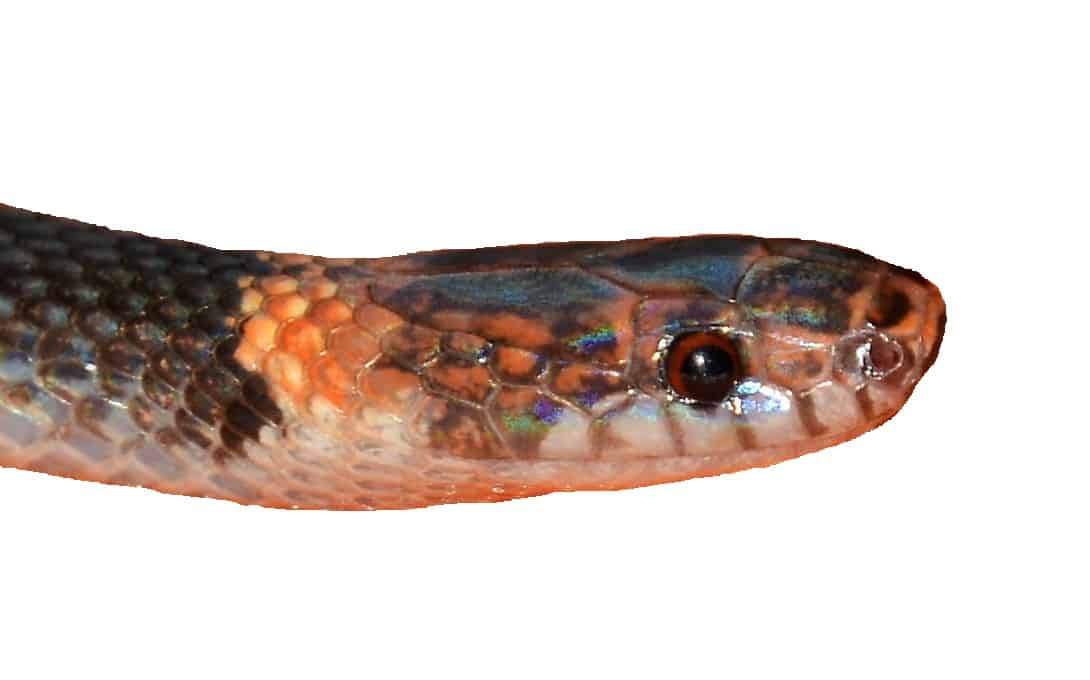
Maximum length: too soon to say.
The newest addition to the Guatemalan snake crew. Rhadinella xerophila was discovered in 2016, in the dry forests and thorn scrub of Guatemala’s Motagua valley, an area which averages at 800mm of rainfall per year (versus 4000mm for the wettest rainforests). Like other Rhadinella members, the snake had a white neck collar, but it differed from other members by its darker grey body colour, and the absence of noticeable stripes.
Rhadinella xerophila has a multicoloured head, with alternating scales of black and lava orange, like a path in a volcano starting to crack from below. Its scales have a slight iridescent sheen, and its tail is extremely long, tapering to a point. Its eyes have a round black pupil and a deep red iris. The original Rhadinella xerophila was found in Heloderma Natural Reserve, a privately owned nature paradise, surrounded by corn fields and melon crops. This individual measured 33.5cm.
The Rhadinella genus has 20 members (this being the 20th), all located in Central America. All are non-venomous and all are short, ranging from 20-50cm. The new snake was found to be most closely related to Rhadinella pilonaorum, which also lives in Guatemala, only 90km to the southwest, in dry pine-oak habitats.
| 6 | False fer-de-lance |
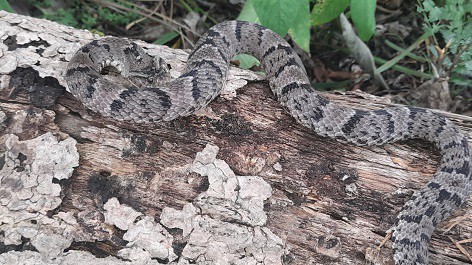
Maximum length: 102cm.
A mildly venomous snake which lacks any bright colours at all. This frog-eating species has placed its survival cards in the mimicry basket, copying the extremely venomous fer-de-lance that lives nearby. It does a decent job, with contrasting brown and beige patterns with all the correct shades. It also gets the triangular head correct. Yet this copycat falls down terribly with its pupils: cute and round rather than savage and vertical.
Nevertheless, its strategy must be working, as the false fer-de-lance (Xenodon rhabdocephalus) has managed to conquer every Central American country. It has a strong presence in Costa Rica, Panama and Guatemala alike, even reaching central Brazil. This is one of the more widespread snakes that barely any Westerners have heard of.
False fer-de-lances are dietary specialists, gathering calories from toads, frogs and their tadpoles. Consequently, they usually hang out close to streams, but those streams can be in a variety of habitats, including forests, fields and scrubland. In Guatemala, they appear at altitudes from sea level to 1200 metres.
As for its own venom, a Xenodon rhabdocephalus bite won’t take down a fully grown human, but the worst cases can cause intense pain and profuse bleeding. This species also has a flexible upper jaw, which can rotate to position its rear fangs pointing outwards, allowing easier access to the human hands and fingers it targets.
| 7 | Blunt-headed tree snake |
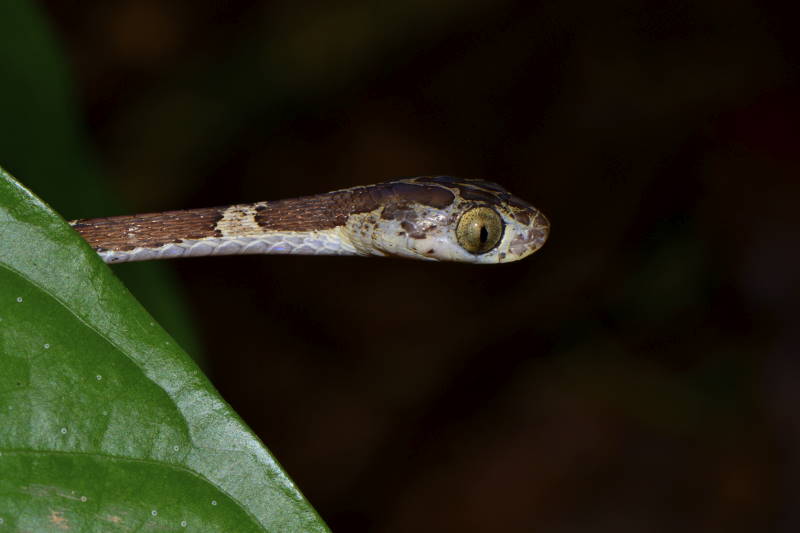
The blunt-headed tree snake (Imantodes cenchoa) stretches from southern Mexico all the way to central Brazil, and is one of the ultimate tree-dwelling snakes of Planet Earth. This is one of the most widespread snakes in the western hemisphere, yet also one of the weirdest. Every element of this snake’s body is geared towards a branch-skirting lifestyle.
Firstly, the blunt-headed tree snake has extremely large, bulbous eyes, which enable binocular vision and seeing every inch of the forest floor simultaneously. Its body is the width of a twig, enabling it to cross chasms between branches 50% of its own body length.
This species averages at a respectable 100cm, but is extremely light, preventing even the thinnest branches from snapping. Blunt-headed tree snakes also have sideways-projecting shelves on their vertebrae, to create stability while on branches.
Blunt-headed tree snakes mostly eat reptiles, and are mildly venomous. Their huge eyes aren’t just for show, but give them extremely sharp eyesight. They’re able to spot lizards resting completely motionless on branches, even after they’ve been sleeping for 90 minutes. Meanwhile, most other snakes require a flicker of movement to activate their hunting instincts.
This species inhabits the vast majority of Guatemala, alongside an easily confused cousin, the Central American tree snake (Imantodes gemmistratus).
| 8 | Godman’s montane pitviper |
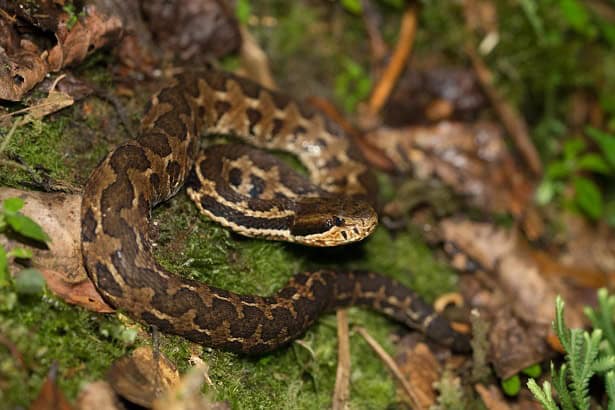
Maximum length: 82.2cm.
A venomous snake of misty mountain areas. Godman’s montane pitvipers (Cerrodiphion godmani) are most often seen crawling slowly along high altitude forest paths, surrounded by leaves and twigs. They’re one of the smaller vipers in Guatemala, at an all time record of just 82.2cm. This is actually an adaption to their cool mountainous climates, as a smaller body means a smaller total area to keep warm. Despite being short, they have a bulky body, and it’s rare for them to climb thin tree branches, with a low bush being the limit.
Godman’s montane pitviper has a flexible diet, including brush mice, spiny lizards, and climbing salamanders alike. Its venom overwhelmingly specialises in anticoagulant dangers, disrupting blood clotting and causing spontaneous bleeding from the slightest cut.
A study on 16 pitviper species found that its venom inhibited clotting in the classic way – cleaving through fibrinogen bonds, the bloodstream’s main clotting agent. However, it also strongly decreased a second, less commonly targeted clotting agent called Factor Xa (FXa). All other pitvipers tested decreased Fxa only weakly, except for its Honduran cousin Wilson’s montane pitviper (C. wilsoni).
Godman’s montane pitvipers are found in extreme southern Mexico, a large swathe of Guatemala, and western El Salvador. In Honduras, they’re suddenly replaced by their cousin Cerrophidion wilsoni, which is itself replaced by Cerrophidion sasai in Costa Rica and Panama.
| 9 | Terrestrial snail sucker |

Maximum length: 80cm.
A harmless piece of the Guatemalan wilderness, which primarily preys on slugs and snails, never mammals or reptiles. Terrestrial snail suckers belong to the giant Geophis genus (53 members), and are relatively common in Guatemala, where they inhabit a variety of forest types.
This species is widespread, also appearing in southern Mexico, Belize, Honduras, Nicaragua and Costa Rica. Terrestrial snail suckers are medium-sized for the Geophis clan, and are one of the most ground-dwelling members, with a relatively thick body. Their habitats include dry thorn forests, semi-deciduous forests, forests degraded by mankind, and tropical wet forests alike. They can be found at altitudes ranging from 0 to 1400 metres above sea level.
This snake varies in appearance, but nearly always has a black base overlaid with paler bands. In others, the pale bands are snowy white or even red, while around 50% have vividly contrasting black-yellow shades which make them extremely easy to recognise. Another Geophis species found in northern Guatemala is the pygmy snail sucker, or Geophis sanniolus, but this is easy to distinguish, as it has murky grey-brown shades designed to mimic a viper instead.
The terrestrial snail sucker poses no threat to humans whatsoever. This species lays a small number of eggs, producing just 3-5 per batch, which hatch during the rainy season. One of its confirmed prey is the Caribbean leatherleaf slug, an invasive species.
| 10 | Mexican burrowing python |
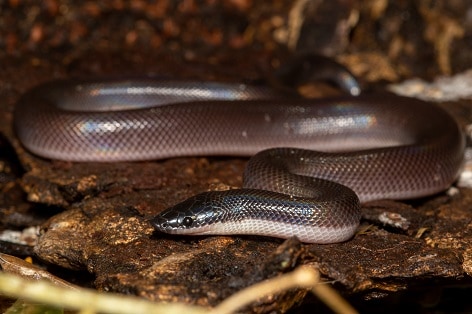
Maximum length: 157cm.
An expert burrowing snake, which hugs the Pacific coast of several Central American countries. The Mexican burrowing python (Loxocemus bicolor) is a chocolatey brown species with beady black eyes and a non-threatening expression. It’s generally found in dry lowland habitats, but also beaches, thanks to its superior digging skills, which allow it to delve deep into soft sand and away from harm.
This species is an evolutionary anomaly: the sole member of its Loxocemus genus, believed to have diverged from other snakes tens of millions of years ago. It’s also a long-lived species which doesn’t even begin reproducing until age 10, laying 10-15 white eggs when it finally does.
Turtles are one confirmed prey, including Olive Ridley sea turtles and their eggs. Mexican burrowing pythons actually dig their own route into the underground egg chambers rather than using existing tunnels made by crabs. Once they’ve finished swallowing, they don’t reverse out, but their burrowing is so effortless that they simply continue forward and make a new route.
To eat the eggs, Mexican burrowing pythons wrap around three coils and squeeze, causing the golden yolk to burst free. This species lacks venom, and it’s perfectly safe to touch them.
| 11 | Guatemalan jumping pitviper |
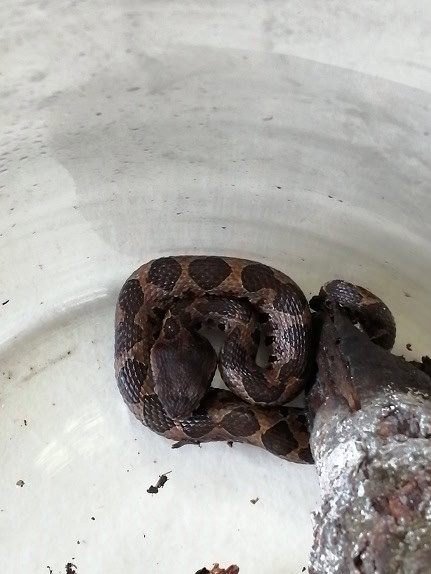
Maximum length: 79.5cm.
It’s an ophiophobe’s greatest fear – a pitviper that can not only slither but jump. Fortunately, like other members of its Metlapilcoatlus genus, the Guatemalan jumping pitviper (Metlapilcoatlus occiduus) only really advances by a small distance per jump, which are really more like advanced lunges, as its entire body never leaves the ground.
Guamtelaman jumping pitvipers occupy only a narrow portion of territory – the southern mountains, which they share with creatures like the Guatemalan palm pitviper (see above). They only appear in high altitude areas at 1000-1800 metres above sea level, never tropical lowland forests. On their western flanks, they have a small portion of land in far southern Mexico, while to the east, they also have tiny pockets in El Salvador.
This species is far less common than the Central American jumping pitviper, the most common member of the clan. However, its venom is still fairly well researched, and rather than neurotoxins, this pitviper contains a glut of myotoxins, toxins which assault and degrade muscle tissue. Another study revealed that its venom was slightly deadlier than the Central American jumping pitviper’s overall, with a more potent LD50 toxicity score.
Guatemalan jumping pitvipers stick to the forest floor, rarely climbing trees. Consequently, their scales are murky grey and brown, in complete contrast to the green palm pitvipers clinging to branches.
| 12 | Yellow-red ratsnake |
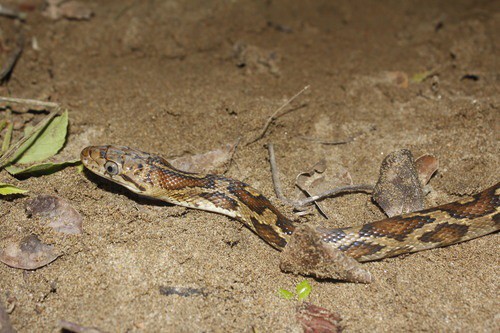
Maximum length: 150cm.
Perhaps the top bat-hunting snake of Central America. This species is such a demented bat-eater that it was once observed swallowing a stuffed, taxidermic vampire bat.
The yellow-red ratsnake (Pseudelaphe flavifura) inhabits southern Mexico, Guatemala, Belize and Honduras. It has a strong tendency to lurk in caves, where it performs its signature, horrifying move: latching to cave ceilings and dangling down in order to grab bats flying out.
Yellow-red ratsnakes swallow their bats quickly, gulping them down in 9 minutes. Caves they’ve been observed in include Kantemó Cave and Cantil Blanco Cavern in Mexico, and Brandon Hill cave in Honduras.
Compared to most ratsnakes, yellow-red ratsnakes are fast-moving and nervous. Their closest relative is believed to be Pantherophis emoryi, or the Great Plains ratsnake. They pose little threat to humans, and the exact yellow-redness varies between individuals. The snake above is duller in appearance, but others are more vivid. Outside of caves, this species is usually found in forests.