
| 1 | Winking snakes |
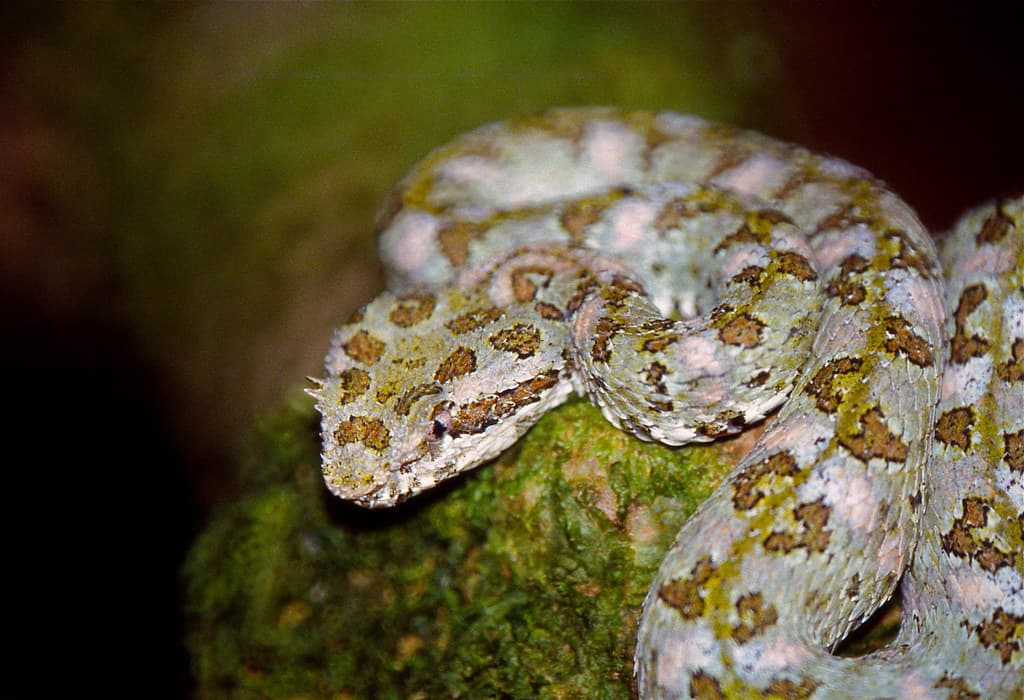
The eyelash viper is the one of the most dominant vipers in Central America. Its survival advantages are manifold – the ability to lurk in many forest types, an immensely patient hunting strategy, a flexible diet. The signature of this species is its immensely variable colour pattern, as the eyelash viper can appear in morphs of banana yellow, Christmas red/green and tree bark brown/grey alike.
Eyelash vipers rarely kill humans, but are not to be trifled with, as their haemotoxic bite can unleash severe swelling and deforming necrosis. According to local villagers and farmers, this is a snake with an attitude as well. The eyelash name comes from a series of hardened ridges above each eye socket. They’re not literally eyelashes, but certainly appear so when the snake is in silhouette, or even in a standard photo.
According to local legend, once the eyelash viper has finished biting a victim, it will look them straight in the face, and wink at them, before slithering off into the bushes again. It will deliver a final insult, using the flirty “eyelashes” the species is famous for.
The mere existence of these memorable eyelashes has led to some crazy myths, but this one is easily disprovable, for one simple reason: snakes don’t have eyelids. Not only does the eyelash viper not have the cockiness or sassiness to wink at its victims, it doesn’t even have the ability. The species does have one cool ability though: hiding in banana shipments and getting shipped to New York City (which happened in the 1950s).
| 2 | Vertical black mambas |
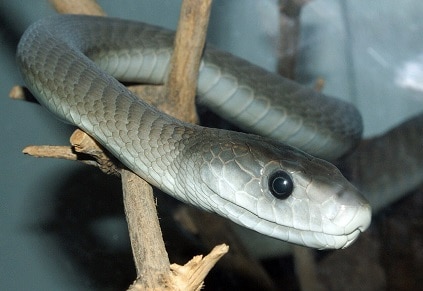
Writing about the various black mamba myths could fill an entire article. The black mamba doesn’t just produce dozens of deadly toxins in its venom, but has dozens of terrifying legends and bizarre myths surrounding it, some generated by specific African regions, and others which seem to have spread across its entire African territory.
One of the craziest myths relates to the black mamba’s tail. Specifically, that the black mamba has the ability to stand on the tip of its tail, standing its entire 3-4 metre body in the air vertically, giving it a great view of its surroundings, and driving any locals who happen to see it insane.
This myth relates to various others, such as that black mambas have a desire to kill anyone that enters the vicinity, and will even hunt people for miles and miles by curling up inside their car wheels as they drive. It also relates to a very true, and also horrifying fact: that the black mamba is able to slither forward at top speed with its upper body raised an entire 1 metre into the air.
Black mambas have immense upper body strength, and sightings of this phenomenon clearly became exaggerated over time into the snake raising its entire body vertically. Thankfully, there’s no proof (yet) that the black mamba is capable of this.
| 3 | Armadillo shape-shifters |
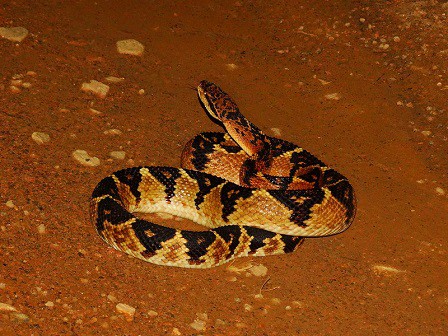
The South American bushmaster has many notable features in its Brazilian and Colombian heartlands. Firstly, this is the longest venomous snake in South America, the western hemisphere, and within the entire viper family. Worldwide, it’s the third longest venomous snake after the king cobra (1st) and black mamba (2nd).
The South American bushmaster inspires a great deal of fear simply by existing, but some of these have morphed into crazy stories. One of which is disguising itself as an armadillo, deceiving local hunters, and transforming back into snake form before delivering a show-stopping killing blow.
It’s an undisputed fact that South American bushmasters spend a disproportionately high amount of time in underground burrows. They even give birth underground, and younglings can stay in the safety of darkness for several weeks.
According to local village legends, a hunter of yore was pursuing an armadillo. The mammal dashed away, leading the hunter in hot pursuit. The hunter almost had his prize, but the crafty armadillo then entered a dark burrow. Then it played its final card, and transformed back into its true form: the South American bushmaster.
The hunter was blissfully unaware, and poked his arm into the burrow, knowing that his prize was almost near. He was unaware of the giant serpent within, and the bushmaster lunged eagerly, envenomating the hunter, and ultimately ending his life. Apparently, this has happened several times, leaving local hunters very cautious about hunting this small, shelled creature, lest they see its true identity.
| 4 | The king cobra’s wife |
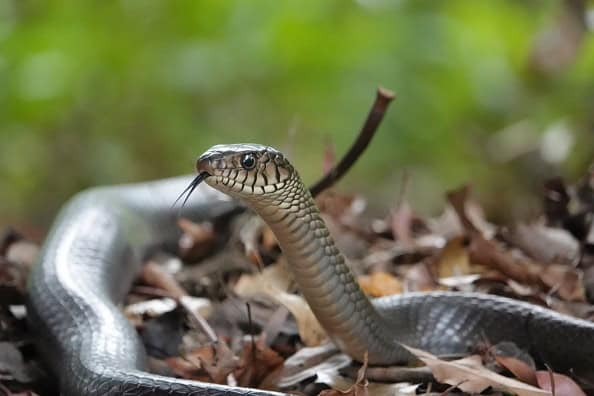
The king cobra is a snake which inspires great fear, but at least it’s a singleton and not married. But even that reassuring fact may not be true, at least if you believe local Thai or Indian villagers, The king cobra has a wife, apparently – the oriental ratsnake (Ptyas mucosa).
This is the 4th longest snake in Thailand, reaching up to 3.7 metres. It’s a thin-bodied species which moves at a great speed and climbs trees and even brick walls with effortless agility.
Oriental ratsnakes have no ability to hurt human beings, with not a drop of venom. Yet according to local wisdom, this species is the wife of the king cobra. It apparently possesses dangerous abilities of its own, including its long whippy tail, which it apparently throws around in a great swishing move. This is able to devastate rice fields according to farmers, causing the entire harvest to wither and die upon contact.
Whipping is another ability of the oriental ratsnake, as if it gets close enough, this species will thrash you to within an inch of your life. Are these legends true? Scientists have never proven them to be, but then again, scientists have never investigated them. You can find the oriental ratsnake in India, Bangladesh, Thailand, Cambodia, Vietnam and peninsular Malaysia.
| 5 | Italy’s milk snake |
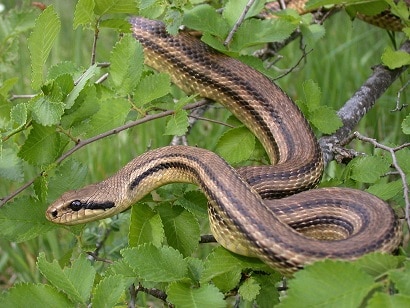
The four-lined snake is one of the dominant snakes of southeast Europe, covering virtually all of Italy, before spreading through the Balkan regions to Greece, where they again cover most of the country. Four-lined snakes have various snake skills, including swallowing eggs whole, and lurking in stone ruins and springing out at rural hikers who sit on the walls while they have lunch.
Four-lined snakes are non-venomous and incapable of killing a human being. They have sharp fangs, but aren’t ultra-aggressive in nature. One strange ability this species does have, according to older Italian people, is being a milk snake.
Specifically, the four-lined snake has the unusual power to coil around the udder of a cow and extract the milk within. Apparently, the four-lined snake has a strong taste for milk, and its eyes will light up at the sight of a herd of cows ahead.
Even more impressively, the four-lined snake actually coils around the legs’ of cows to immobilise them, in order to prevent them from stampeding away, so that it can acquire the milk within. This is the story provided by various local myths over the years, at least. It’s up to you whether you believe the stories, but the four-lined snake already has some cool features, such as being a rare European snake to eat eggs, swallowing them whole before cracking them open inside its body.
| 6 | Grass snake milk legends |
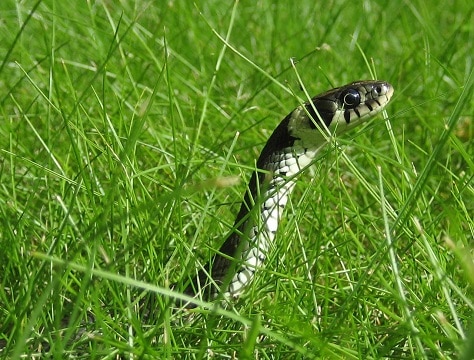
The library of milk-related stories doesn’t end there when it comes to snakes. The grass snake is another character involved with these strange tales. The grass snake is an ultra-common species found across Europe, which lurks in ponds and moist meadows, hunting for frogs and usually finding them.
Grass snakes are non-venomous, and wherever they live, whether it’s England, Italy or Ukraine, they’re a familiar sight to locals. As for the milk legends, the old accepted truth with grass snakes is that offering a bowl of milk is a great way to gain their goodwill. According to Lithuanian lore, offering milk to a grass snake will encourage it to protect the local cattle, after taking residence in warm compost heaps in the farm nearby.
All this makes the grass snake sound like a useful ally, but apparently it has a vengeful, malicious flipside, again related to milk: angering a grass snake will cause it to poison the household’s entire supply. It will even injure local cattle, rather than watching over them protectively.
Eastern Europe seems to be the source of many of these legends. Another involves weddings: the belief that grass snakes are attracted by human weddings, and will even form a protective circle around the couple walking up the aisle.
| 7 | Murderous cottonmouths |
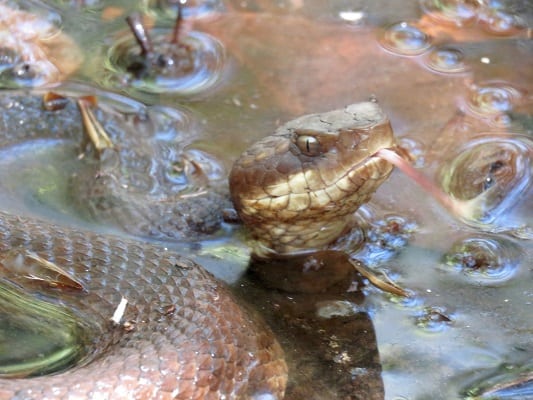
The cottonmouth might be ultimate snake for generating wacky legends alongside the black mamba, and it’s definitely the top myth-maker on US soil. Just one crazy belief is that cottonmouths chase their future victims for miles and miles, pursuing them relentlessly through forest and field.
Cottonmouths lurk in swamps and lakes, and apparently, when a middle-aged dog-walker or gang of teenagers wanders past, the cottonmouth will decide to kill them for whatever reason. Perhaps it’s angry at its swamp being invaded, or perhaps the cottonmouth is simply twitchy and nervous and would rather kill any human it sees just to be on the safe side.
Either way, stories are endless of cottonmouths chasing their victims. Supposedly, the only solution is to run as far and fast as you can. If you win the race, then you will keep your life, but if you tire, perhaps after years of neglecting your cardiovascular fitness, then that’s it for you. The cottonmouth will catch up, envenomate you repeatedly, and that will be your story.
Cottonmouths are even believed to chase people back to their houses. The one flaw is that nobody has ever been able to produce a video of this happening. There isn’t one small clip of a cottonmouth angrily pursuing a human, let alone a well-shot portion of a big-budget wildlife documentary.
It seems like this myth really is false, but there’s one caveat: anyone running for their life from an enraged cottonmouth would probably not bother to aim a camera over their shoulder.
| 8 | The terrifying cucumber smell |
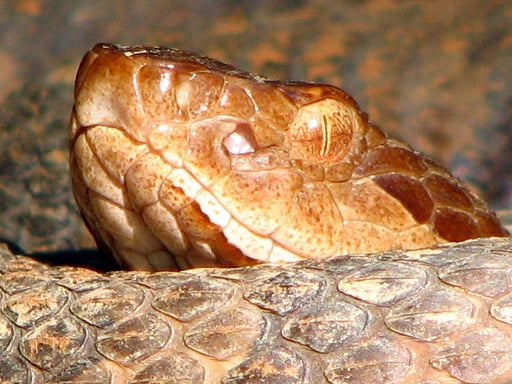
A cucumber smell in your kitchen is meaningless, but a cucumber smell in your backyard? Or worse, a cucumber smell in your local forest? This is one of the most ominous scents imaginable in the southeast of the US, according to many local legends.
The reason is the copperhead, which wisdom states smells surprisingly similar to the common cucumber. Supposedly, this smell appearing from nowhere means that assault by an angry copperhead is imminent, or worse, an entire group of copperheads.
Like its close relative the cottonmouth, the copperhead is a magnet for local myths and legends, none of which concern its friendliness and compassion, and most of which concern a tendency to randomly attack humans. The cucumber smell appearing means that you should dash inside instantly, or reverse course down the forest trail. More positively, it’s an instant indicator that one is nearby, allowing you to pinpoint certain copperhead hideouts.
The reality? Nobody has proven this to be true, but there’s enough reports even today that there might be something behind it. Some believe that the cucumber smell might only be detectable by certain people with a more attuned scent apparatus, with certain genetics. That said, the tales of the cucumber scent wafting over moments before a savage attack are definitely exaggerated.
| 9 | Hoop snake legends |
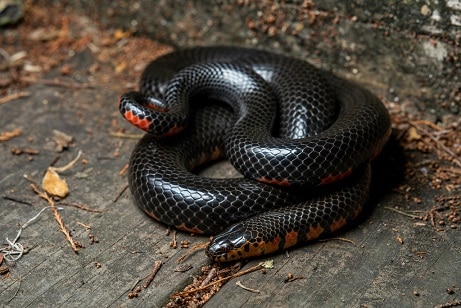
The mud snake is a swamp snake of the southeastern US, which reaches a maximum of 207cm. It’s particularly common in Florida, where it lurks in the gloomiest of swamps, often alongside alligators and snapping turtles. Scientists and biologists alike agree that this species poses no threat to human beings – or does it?
The mud snake lacks any slightly dangerous venom, and when picked up, it almost never bites, despite its large size. Nor does it constrict its owners or curious passers-by. Nevertheless, this snake is the subject of a strong local rumour – being a hoop snake.
According to legend, the mud snake has the ability to bite its own tail, and form a large circle or hoop. The mud snake will then position itself cleverly at the top of a hill, and roll down, picking up more and more speed and accelerating into an unstoppable serpent wheel. Once it reaches the flat ground, the mud snake/hoop snake will release its coil, stab its tail at an object, and without fail, that object will wither and die. That object can be an animal, but is commonly a tree, which despite its sturdiness, is no match for the demented mud snake and its sinister hooping skills.
This is a classic tale of the deep south, and a classic tale relayed by old timers who insist that they’ve seen it. Perhaps you have too, or perhaps you’ve been told about it by a much-loved grandparent. In this article, we will make no comment on the truth of these hoop snake claims, but let you, the reader, decide instead.
| 10 | Thai liver snatchers |
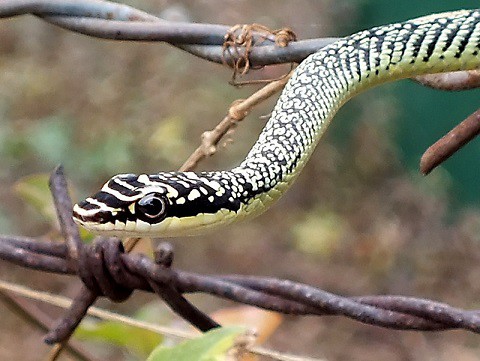
The golden tree snake is the main flying species of Thailand, leaping from branches and gliding 10-20 metres in order to land on the next branch. This species doesn’t gain height while in mid-air, but glides like a pro, by widening its body using handy skeleton-shifting techniques.
Golden tree snakes inhabit most of Thailand, where they’re extremely common. Naturally, many legends have sprung up about them, and one of them involves their main prey, the Tokay gecko. This is a big, bulky reptile with a leathery body, which the golden tree snake deliberately aims at when flying from its branches, before executing a land and grab in one efficient manoeuvre. All this is officially observed and verified by scientists, but the legend involves an apparent tendency of the golden tree snake to shove its head inside the Tokay gecko’s mouth.
Supposedly, the Tokay gecko will actually open its mouth when it witnesses this species coming. The golden tree snake will thrust its mouth inside, and gobble up the parasites in the Tokay gecko’s stomach. It might also swallow its liver, and once finished, it will retract its head from the gecko’s mouth and leave the vicinity.
That’s the story according to Thai villagers anyway. One observable fact is that Tokay geckos do open their mouths when golden tree snakes draw near occasionally. It’s thought that this is an intimidation technique, as they recognise one of their greatest predators approaching.
| 11 | Old cobras growing beards |
It’s no secret that snakes continually grow for the rest of their days. Mammals stop growing in early adulthood, but saltwater crocodiles can grow to brutish 6 metre lengths once they approach 100 years old, and it’s no different for elderly snakes, which add centimetres every year, assuming food is plentiful.
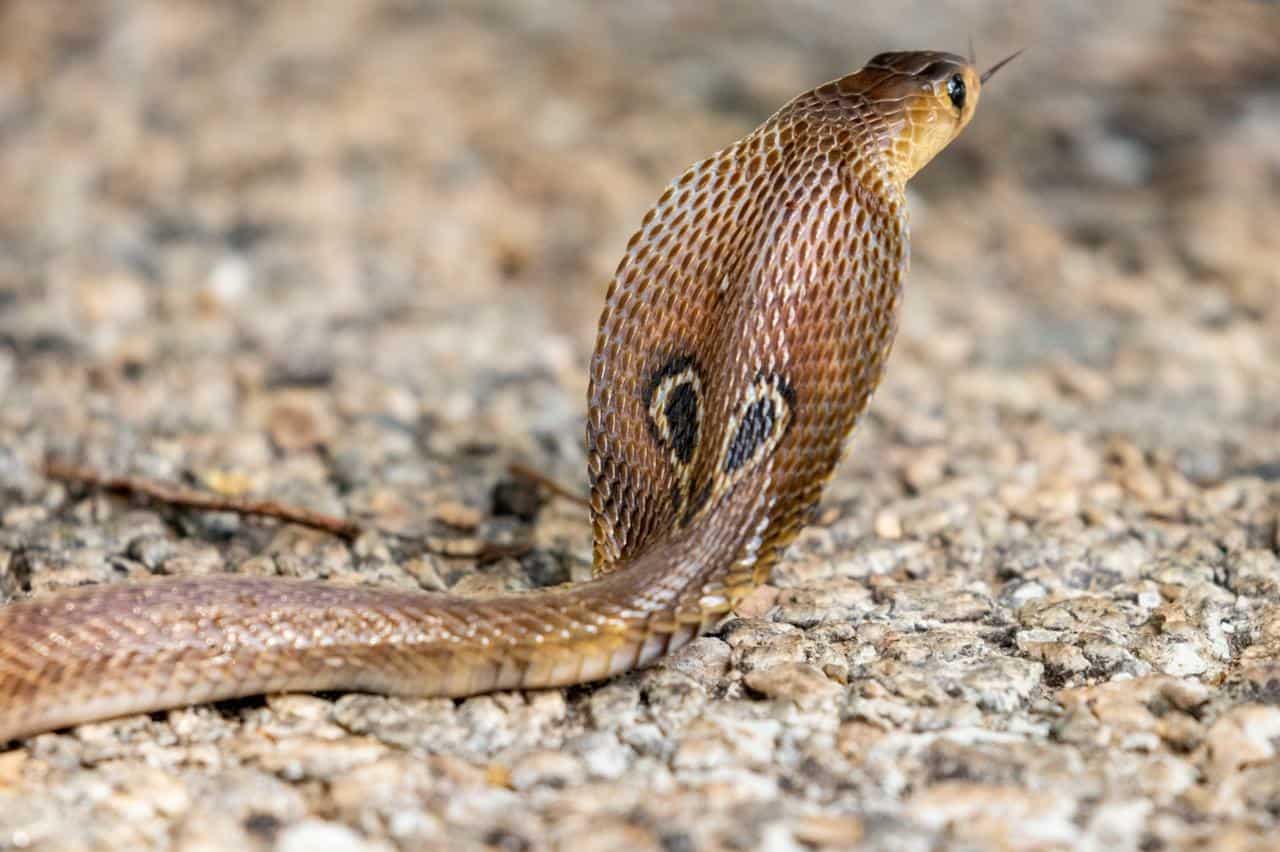
It’s the same for the Indian cobra, AKA the spectacled cobra, one of India’s most feared species, as any 2 metre individual you see is likely to be relatively old. But there’s another belief concerning this species, one that is rampant in local Indian villages, and indeed most of India – that elderly cobras grow a beard as they age.
This rumour is pretty self explanatory. When flustered, Indian cobras rear up, flare their neck hoods and hiss like any other cobra. But an individual of 20 years or over might have a beard as well, swaying in the breeze.
Needless to say, this isn’t true at all. There’s no doubt over this piece of folklore, as snakes don’t even have hair. Their body is covered with scales, and not a single hair follicle. There is a species in Vietnam known as the bearded snake (Fimbrios klossi), but even this species lacks any formation on its chin which would explain the name.
The Indian cobra lacks the ability to grow a beard. But that doesn’t mean it can’t grow wiser with age, more cunning, and more efficient in executing its various serpent schemes.