
| 1 | A rainforest river snake |
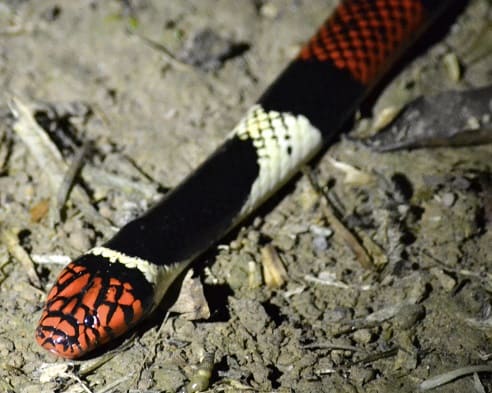
The Micrurus coral snake genus numbers 82 in the Americas, and is adding new members every decade. All are dangerously venomous, and the majority inhabit humid rainforest floors, where they bury themselves in a mixture of leaves and twigs. However, one species is far more water-dwelling than the rest – the aquatic coral snake, AKA Micrurus surinamensis.
This is a relatively long species, at an average of 80-100cm, and an all-time record of 139cm. Aquatic coral snakes are found exclusively to the east of the Andes mountains, and occupy a huge swathe of territory in South America. They’re found in eastern Ecuador, Peru, Venezuela, Colombia, Bolivia, and over 50% of Brazil.
Though they can cope with moderately degraded forests, aquatic coral snakes prefer pristine rainforests above all else. Their habitats include rainforest swamps, slow-moving rivers, and occasionally manmade water bodies (like ponds) along rainforest edges. They’re superb swimmers, and can hold their breath for far longer underwater than their Micrurus coral snake relatives. This is also a rare coral snake to specialise in hunting fish, with occasional reptiles thrown in.
The aquatic coral snake has an extremely simple venom, which is geared towards neurotoxins and lacking in most other toxin types. Nevertheless, this venom is extremely potent, and can paralyse fast-moving fish in no time. The LD50 rating of the venom is 0.2-0.4mg, outstripping a king cobra at 0.9-1.2mg. The venom yield is unusually large for a coral snake as well, reaching 160mg per bite, dwarfing the eastern coral snake of Florida at 3-5mg.
| 2 | ID: always check the face |
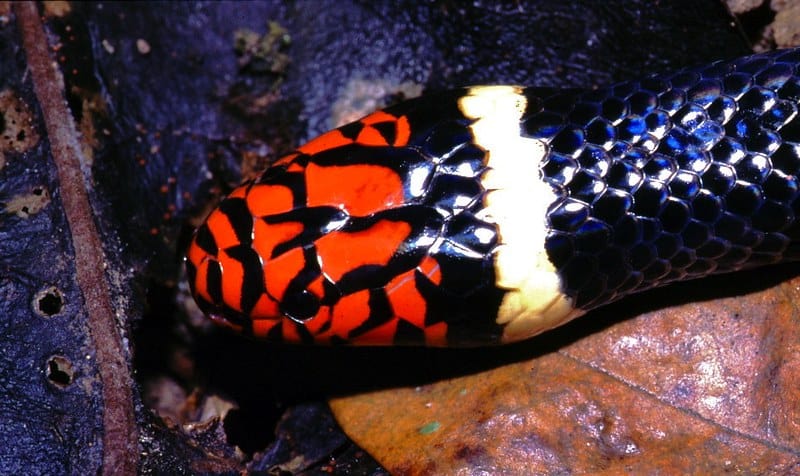
Apart from its unusually watery habitats, the aquatic coral snake is easily recognisable by its red-black face. The heart of each facial scale is red, with a black edging, and virtually no white-cream present. The red and black contrast sharply, creating a very distinctive face.
Of the estimated 82 coral snake (Micrurus) species in the Americas, this species is most closely related to the ribbon coral snake (Micrurus lemniscatus). This version has similar band orderings, but its face is a mixture of black and white instead.
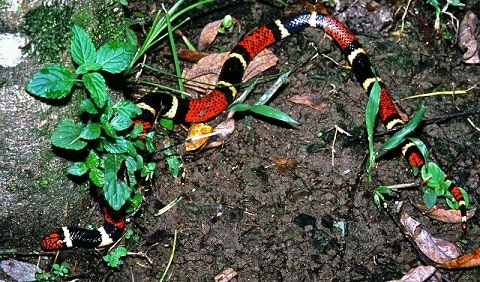
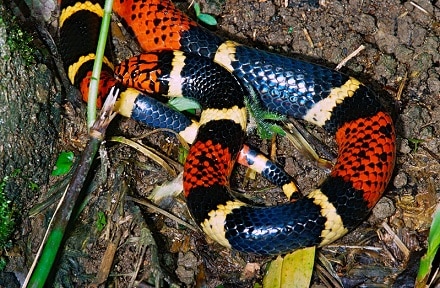
Aquatic coral snakes have a classic triad pattern, with no colours other than red, black and yellow (although the yellow can occasionally be near white). The ordering of these bands is always consistent, with red covering the most space, followed by a sequence of black-yellow-black-yellow-black. This sequence is repeated multiple times, and the tail contains at least one complete sequence.
With red touching black, the aquatic coral snake completely invalidates everyone’s favourite nursery rhyme, “red touches black, venom lack” (although this does work on US soil). The first ring immediately after the red face is black, followed by a white neck scarf.
| 3 | Foaming from the nose |
Aquatic coral snake bites aren’t mysterious in humans, as we have several bite reports. The most detailed to date involved an 18 year old biology student, walking back from a university campus in Pará State, Brazil. The student came across an 80cm coral snake, which he attempted to pick up. Unfortunately, a fang briefly pierced his left thumb, leaving him with one visible puncture mark.
A few minutes later, the bite was pain free, but the boy complained of paraesthesia (tingling) spreading from the fang mark all the way up his limb. 20 minutes post bite, he arrived at João de Barros Barreto University Hospital, and was experiencing blurred vision, difficulty speaking, walking, and opening his eyelids.
Things took a turn for the worse, with laboured breathing and foaming from the mouth and nose. The boy was conscious, but unable to speak. His pulse and blood pressure were completely normal.
The boy was immediately transferred to intensive care and placed on artificial ventilation, and fed 100ml of coral snake antivenom. 12 hours later, the boy awakened, and was able to move all his limbs on command. 48 hours post bite, he was able to leave hospital, with no lasting consequences, except the memories of a close brush with death.
| 4 | Only attacks if provoked |
Despite this life-threatening chain of events, the boy had ripped the coral snake from his finger the moment he felt the fang penetrate. A garter snake can chew your thumb for two minutes straight and cause only mild local swelling.
The neurotoxic effects also seemed far briefer than those of the black mamba, which can leave victims completely paralysed for days. Aquatic coral snakes cause purely internal symptoms, whereas the likes of common lanceheads have a severely necrotic venom, which commonly results in life-changing amputations.
When disturbed, aquatic coral snakes have a complex repertoire of defensive abilities. They can flatten their body to create an illusion of size, and sometimes stash their head in their coils. One of their tricks is to slither forward, then jerk backwards spasmodically. They also raise a brightly-coloured tail to distract from their heads. Here’s a video of one swimming.
Micrurus surinamensis is far from an aggressive snake, yet it’s not scared to become aggressive either. Touching an aquatic coral snake is a guaranteed way to unleash its demonic side.
| 5 | Underwater adaptions |
Living in rainforest rivers has caused the aquatic coral snake to spiral in new directions. In 2017, it was compared to two fellow Micrurus members, the ribbon coral snake (Micrurus lemniscatus) and Amazon coral snake (Micrurus spixii).
The first difference was a significantly longer tail, which could be connected to swimming, for shifting water from side to side. The aquatic coral snake had longer and more curved teeth than its cousins, which may be an adaption for grabbing slippery fish, as this is often seen in fish-eating serpents (including the ancient titanoboa).
Then there was a second adaption connected to its fish-eating ways: longer quadrate and supratemporal bones in the skull, allowing the species to gape its mouth wider. Coral snakes generally have a smaller gape size compared to, say, a python, as they typically eat elongated prey like caecilians and fellow snakes.
Another adaption was nostrils positioned closer together, and higher up on the skull. This allows the aquatic coral snake to expose less of its head while surfacing for air, escaping the gaze of watchful predators. Likewise, this species’ eyes are closer together than in fellow coral snakes. Micrurus surinamensis has a thicker head at the base, yet narrower at the front, reducing drag as it swims underwater.
| 6 | A low altitude snake |
Aquatic coral snakes generally appear from 0 to 600 metres in altitude. Their heartlands are stifling rainforest rivers, not rocky streams higher in mountains (unlike the aquatic garter snake of California).
Aquatic coral snakes aren’t completely aquatic, as they move to forest floors during the dry season, and even appear in houses adjacent to forests. Aquatic coral snakes are easily capable of climbing, though it’s more of an occasional side adventure. Juveniles have been witnessed 1.3 metres high, while in 2013, a juvenile was observed at 2.38 metres high in a rainforest in Rondônia state, Brazil, which is the record height observed.
The signs suggest that aquatic coral snakes abandon climbing as they reach adulthood. There are many aquatic snakes which stick to shallower river edges in their youth, before becoming bolder in adulthood and venturing to the fast-flowing centres – one example is the aquatic garter snake. Aquatic coral snakes may be similar.
Aquatic coral snakes are currently designated as “least concern” by the IUCN. While they face threats such as deforestation, their territory is simply too vast for them to be teetering on the edge of extinction.
| 7 | Immune to antivenom |
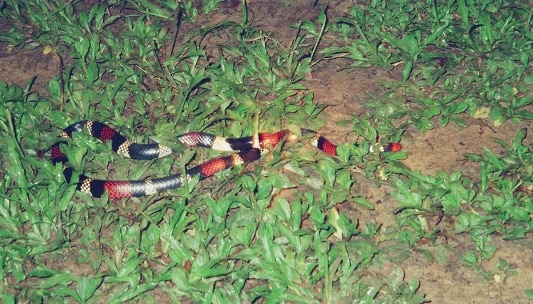
One brutal feature of aquatic coral snakes is that Brazil’s national coral snake antivenom is relatively ineffective against them. This all-purpose vial is manufactured by injecting venom into horses and extracting the antibodies, using two common species: the painted coral snake (M. corallinus) and southern coral snake (M. frontalis), the top-ranking species for bites in southeast Brazil.
Due to high toxin overlap within the coral snake clan, this antivenom has strong cross-reactivity against species it wasn’t designed for, such as caatinga coral snakes and Amazon coral snakes. Yet according to a 2010 study, aquatic coral snake venom was immune – it was the least remedied of the 9 coral snake species tested. This species belongs to a more distant branch of venom composition.
Another difference was that unlike the other 8, aquatic coral snakes had virtually no proteolytic activity. These are toxins responsible for the physical destruction of proteins, degrading cells into their base amino acids and polypeptides. This fits with testimonials from victims, which show that aquatic coral snakes have virtually no local effects like necrosis.
| 8 | Low annual bite totals |
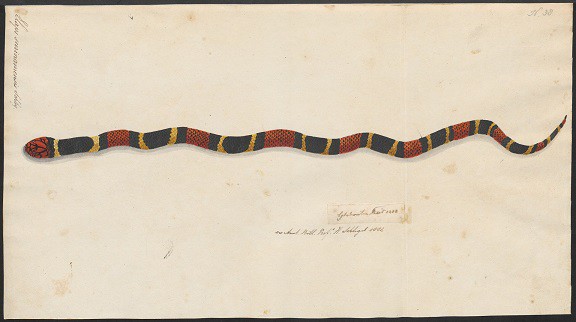
According to the same comparison study, aquatic coral snake venom had by far the least phospholipase A2s compared to the 8 other species. These cause a variety of effects, including myotoxicity (muscle destruction), and the destruction of blood clotting factors like fibrinogen.
Aside from neurotoxins, one toxin the aquatic coral snake did produce was hyaluronidase. This destroys hyaluronic acid in the skin, clearing the way for deadlier toxins to diffuse into the bloodstream. It’s essentially a sneaky, tactical toxin rather than a direct killer. Of the 9 species tested, painted coral snakes (Micrurus corallinus) produced the most hyaluronidase, while the eastern coral snake (Florida) produced the least. Aquatic coral snakes ranked in the middle of the pack.
Unlike many coral snakes, aquatic coral snakes have the power to bite large surfaces of the body rather than just fingers or toes. Yet they’re only a small player in Brazil’s national snakebite statistics, despite inhabiting a vast swathe of the country.
A study analysed 194 confirmed coral snake bites in Brazil from 1867 to 2014. The species was confirmed in 59 cases. Painted coral snakes (Micrurus corallinus) caused 36 bites, followed by the southern coral snake (Micrurus frontalis) at 12 bites. Caatinga, Amazon and aquatic coral snakes each caused one bite apiece. Let’s face it: most people aren’t placing their hands in Amazon rainforest rivers for a host of other reasons anyway.
| 9 | Ultra-targeted venom |
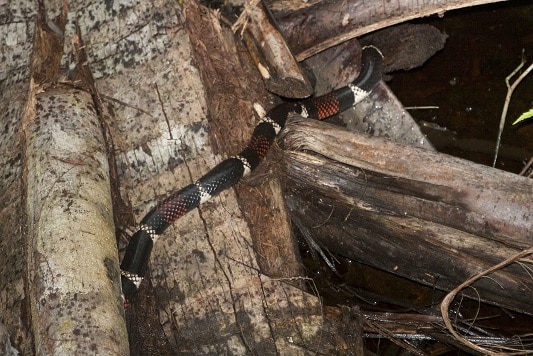
In 2001, a study proved how targeted aquatic coral snake venom is against fish, and found that it specifically targets a mildly electric fish called the banded knifefish. This study tested 14 coral snake species, also including southern and Amazon coral snakes, among many others. It tested their venom against 5 animals in total, the others being mice, Amphisbaena cunhai (a legless reptile), the velvet swamp snake, and marbled swamp eels.
A toxicity score of 1.0 indicated the maximum potency, and aquatic coral snakes achieved this for the banded knifefish. Their second most targeted was the marbled swamp eel, scoring 5.0. Amphisbaena cunhai was their third most targeted, followed by the velvet swamp snake, and the mouse as an afterthought.
Of the 14, the aquatic coral snake was the only member most targeted against fish. 5 of 14 coral snakes were most targeted against the velvet swamp snake, including the Amazon coral snake (M. spixii) and southern coral snake (M. frontalis).
Only one coral snake was most targeted against the mice, the white-banded coral snake (M. albicinctus), as mammals are rare in coral snake diets. The painted and Brazilian short-tailed coral snakes were most targeted against the amphisbaenian.
| 10 | A heavily nocturnal snake |
There’s much to learn about aquatic coral snakes, yet according to experts with boots on the ground, they’re most commonly sighted early in the night, after warm days with heavy rains. This is a heavily nocturnal species, which swims and hunts under a cloak of darkness, moving by day every so often. The ribbon coral snake is its closest relative, while Hemprich’s coral snake (Micrurus hemprichii) is the second closest among the 81 fellow species. This is only a distant relative of the eastern coral snake in Florida, or Texas coral snake.
Aquatic coral snakes lay 3-12 eggs on average. Eggs have a length of 45-52 mm, and a diameter of 24mm. Newborns crawl out of the shells at 33-35cm.
With most coral snakes feeding heavily on fellow serpents, aquatic coral snakes still keep them as an occasional treat. In May 2006, one was found on a road in Pará state, Brazil, and dissected to reveal a royal ground snake (Liophis reginae) in its stomach.