
| 1 | The only South American rattler |
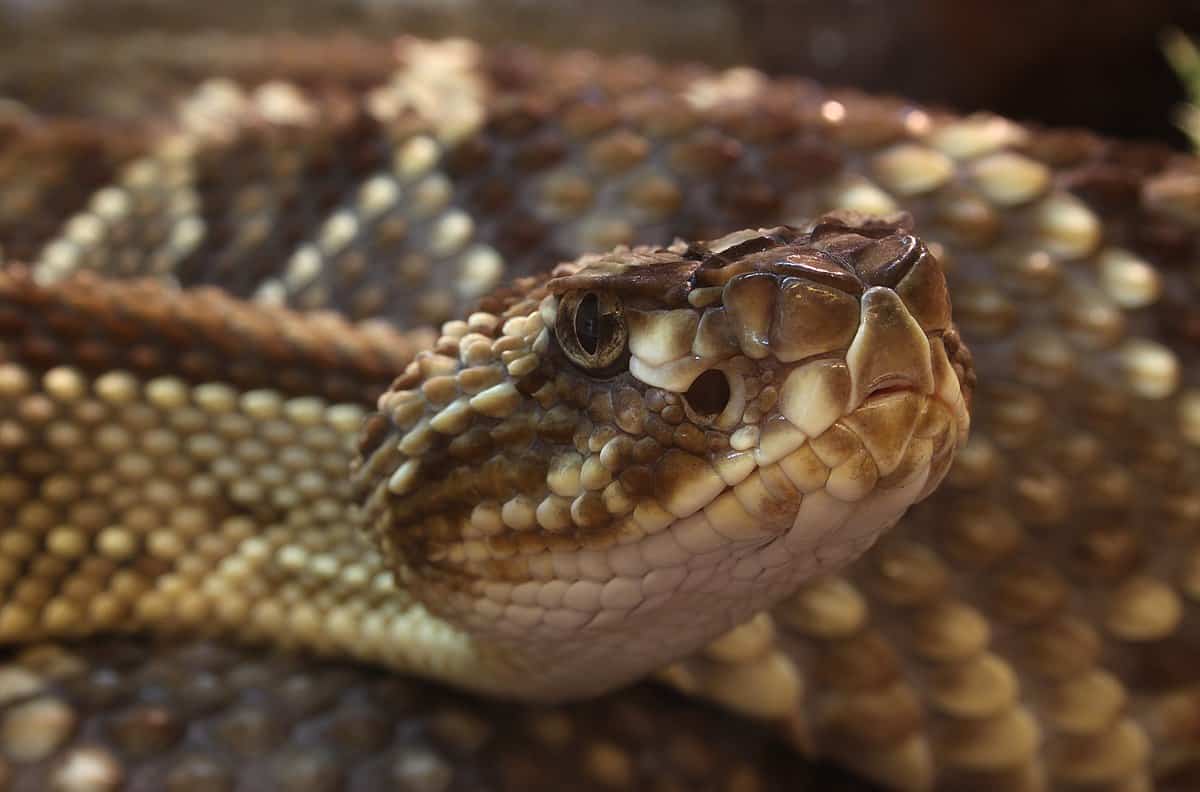
The Crotalus genus of true rattlesnakes has over 50 members worldwide, with up to 20 contained in the USA alone, and scores more in Mexico, their evolutionary heartland. Yet surprisingly, only two species have successfully exited Panama and colonised mainland South America, one of which is the aptly named South American rattlesnake (Crotalus durissus).
This species is one of the deadliest rattlesnakes of the 53-55, with an unusually neurotoxic venom comparable to Arizona’s tiger rattlesnake. South American rattlesnakes are extremely widespread, with strong colonies in Venezuela, Colombia and other northern countries. There’s then a large gap where the Amazon rainforest lies, before they suddenly reappear in southern Brazil, and adjacent Paraguay, Bolivia and Uruguay. They also penetrate deep into the heart of Argentina.
Unlike the deadly Bothrops lanceheads of Brazil, South American rattlesnakes avoid thick forests, and they never inhabit rainforests. Instead, they gravitate towards drier open areas, such as grassland, shrubland, cerrado savannah, spacious woodlands, village edges and semi-arid plains.
South American rattlesnakes can be found sheltering in a variety of spots, including overgrown shrubs, mammal burrows, and even termite mounds. It’s believed that humanity has actually made this species more common, by creating more open areas due to deforestation.
| 2 | A severely neurotoxic rattlesnake |
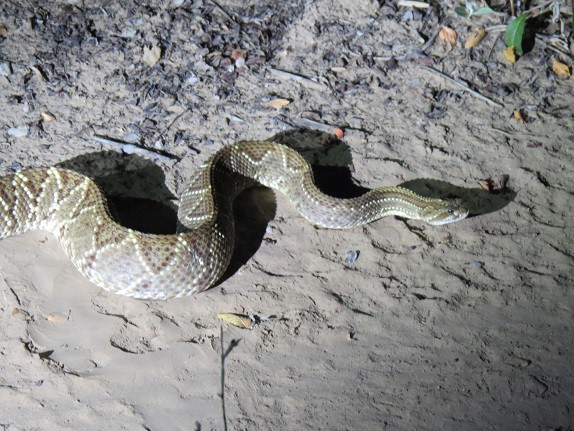
South American rattlesnakes are middling when it comes to snakebite statistics. They were once estimated to cause 7.7% of the 20,000 snakebites that occur in Brazil annually. However, they fall well short of the infamous jararaca, which causes over 50% of snakebites in Brazil, despite only inhabiting the southeast. Bites are rare in Colombia, contributing less than 1% of the annual total.
South American rattlesnakes are considered to be relatively non-aggressive. They average at 100-150cm, with a maximum of 180cm. This middling size results in a middling venom yield of 20-100mg. However, the point which elevates them to nightmare status is the venom’s sheer toxicity. After the tiger rattlesnake at 0.06mg, Crotalus durissus has the highest LD50 potency score of any rattlesnake, achieving 0.17mg.
The reason is an unusual quantity of neurotoxins, the chief offender being crotoxin. Also found in Central American rattlesnakes, this is a PLA2 which acts similarly to the lethal beta-bungarotoxin in Hong Kong’s many-banded krait.
Crotoxin acts pre-synaptically, blocking the release of the neurotransmitter aceytchloline at the brain source, making it doubly difficult to treat. This toxin was first discovered in 1938, when it was extracted from the southern Brazilian subspecies (C. durissus terrificus).
| 3 | Reasons to stand well back |
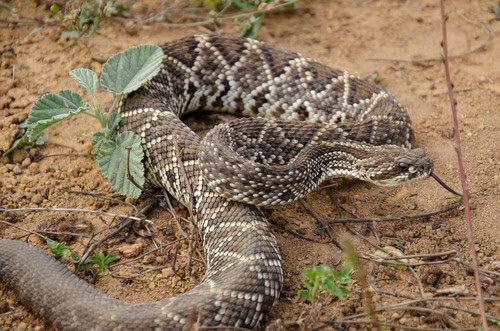
Crotoxin also has some post-synaptic activity, preventing brain signals from binding to nerve cells in muscle receptors. Essentially, this lethal ingredient hijacks neurotransmitters from both major angles. Crotoxin completely dominates the South American rattlesnake’s venom, contributing up to 72.5% of the overall toxin profile.
Consequently, bites from this species trigger a wave of neurotoxic symptoms, such as drooping eyelids (ptosis), difficulty speaking, muscular weakness, and blurred vision. They can also cause the victim’s neck to tilt bizarrely to one side as though broken. A strange taste in the mouth is often reported, similarly to with the black mamba. The effects are completely different to say, a western diamondback rattlesnake in Texas.
South American rattlesnakes can even permanently blind victims. A weird feature is that despite being heavily neurotoxic, a 1992 study found that only 3 of 249 patients suffered respiratory failure. The neurotoxins seem to target most of the body, but less so the lungs.
Instead, the main cause of death is acute kidney injury, the cessation of renal function, potentially requiring dialysis if the victim survives. This affected 32 of 249 patients (12.9%) in the study above. Coral snakes (also neurotoxic) specialise in respiratory failure, while the likes of Malayan pitvipers dispatch their victims via brain haemorrhage. A stroke also afflicted one patient in the study above.
| 4 | Toxic to muscle tissue |
South American rattlesnakes cause very few local symptoms compared to their US cousins. The bite wounds usually swell somewhat, but this rarely covers the entire affected limb, and skin tissue necrosis is minimal. Where they specialise is in sub-surface muscle tissue destruction, or rhabdomyolysis.
South American rattlesnake venom is rich in myotoxins, specifically crotamine, which can form up to 20% of the venom. The species’ most infamous symptom is dark urine, caused by the release of myoglobin into the bloodstream as muscle tissue is steadily destroyed.
Similarly, destroyed muscle releases creatine kinase as a by-product, which then surges in the bloodstream. Scientists use this as a biomarker to measure the muscle damage, not just in this species, but other snakes like the small-eyed snake of Australia (infamous for muscle destruction).
With the South American rattlesnake, creatine kinase tends to skyrocket within 24 hours of being bitten. Victims normally experience this as gradually intensifying muscular aches and pains across the body.
Despite these terrifying facts, bites are more survivable than ever, thanks to the invention of antivenom. Figures from Brazil’s National Disease Notification System stated that Crotalus durissus caused 2503 bites in 2017, with a fatality rate of just 0.71%.
| 5 | Your goal: get to hospital fast |
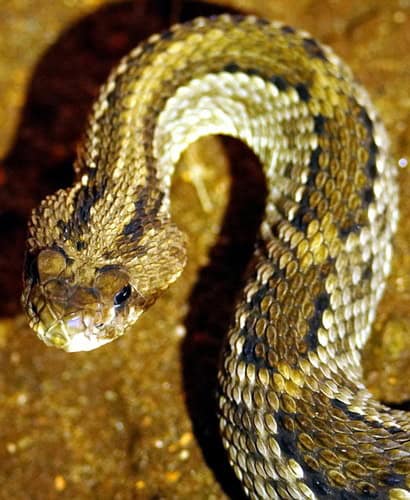
In one study, 31 children under the age of 15 were admitted to hospital in Campinas, São Paulo. 1 luckily suffered a dry bite, 3 mild symptoms, 9 moderate symptoms, and 18 severe systemic envenomation. This included drooping eyelids, muscle pains and aches, and muscular weakness. Some even experienced acute kidney failure, though none of the children died.
Amid the horror, there was one optimistic point: of the patients suffering from kidney failure, all were admitted to hospital later than 6 hours post bite. None admitted to hospital before 6 hours experienced severe complications.
Rapidly administering antivenom is key to surviving the terror of the South American rattlesnake. Once you’ve been bitten, it isn’t an instant death sentence – the mad dash to hospital is key to whether you survive.
Dry bites are also a definite phenomenon with this species. A study from Minas Gerais state found that of 41 victims, 12% showed no symptoms, and later, no detectable venom in their bloodstream. If you’re lucky, you can escape unscathed. Worldwide, the many-banded krait is an especially likely snake to cause dry bites, at up to 20.5% of victims.
| 6 | Diet: overwhelmingly mammals |
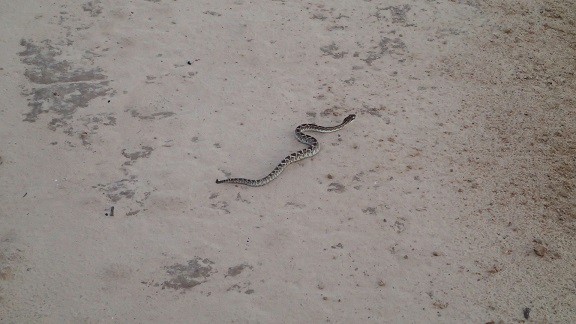
From 1993 to 1995, a study analyzed 633 SA rattlers brought alive to São Paulo’s famous Butantan Institute, a hub for manufacturing antivenom.
Overall, 343 prey items were found in 259 rattlesnakes. The results were overwhelming, with 341 being mammals, and just 2 reptiles. In some rattlesnakes, only hair was found, making the species unidentifiable. However, rodents easily dominated, particularly the Calomys group of vesper mice.
Teeth of various unidentified rodent species were unearthed. The rattlesnakes also contained the globally dominant Mus and Rattus families, which are invasive and contain the house mouse and Norwegian rat respectively, which are any snake keeper’s default bulk-bought meals.
The two reptiles were both giant ameivas, a species found in virtually identical habitats to the South American rattlesnake, including open cerrado savannah and the dry outskirts of villages. Virtually all the mammals eaten were ground-dwelling rather than tree mammals. Elsewhere, one of their confirmed prey in Uruguay is the pampas guinea pig (Cavia pamparum).
South American rattlesnakes digest their food faster during hot weather. A 1993 study found that in temperatures of 25C, full digestion took 25 days, which fell to just 16 days in temperatures of 30C.
| 7 | Occasionally preys on lizards |
South American rattlesnakes overwhelmingly rely on mammals for their prey. A second study examined preserved rattlesnakes from Instituto Butantan, but this time mainly using those gathered in central Brazil rather than São Paulo region.
The sample size was far smaller in this study, covering 33 prey identified in 30 rattlesnakes. Yet the breakdown was extremely similar. Mammals contributed over 90% of prey, crushing the competition.
Of the identified mammals, 6.06% were marsupials, versus 3.8% in the first study. 75.76% were rodents, versus 76.9% in the first study. The main difference was a slightly higher reptile proportion, but the figure was still only 9.09%.
No mammals were identified to the species level, but the reptiles were confirmed to be giant ameivas (Ameiva ameiva), as in the first study. This reptile is beloved and salivated over by numerous South American snakes. Other species confirmed to eat giant ameivas include Amazon tree boas, crowned tree boas and Neuwied’s false boas. The South American rattlesnake is just another snake desperate to sample its apparently sensational flavour.
| 8 | Secretly contains multiple species? |
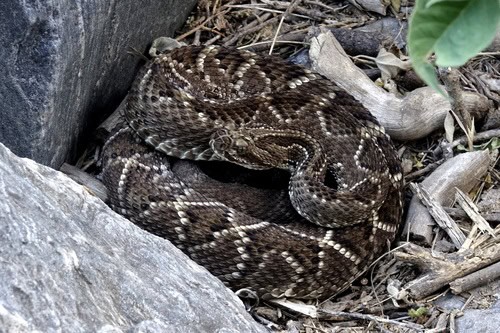
Originally, Crotalus durissus was considered to be a massive, monolithic species stretching from southern Mexico to northern Argentina. In 2004, however, 3 species were broken off due to an unexpectedly large genetic chasm separating them.
Central American rattlesnakes (Crotalus simus) took over the majority of Central America, Tzabcan rattlesnakes took over Mexico’s Yucatan peninsular, and the northwestern neotropical rattlesnake (Crotalus culminatus) took over the rugged mountains of southern Mexico. Overnight, the South American rattlesnake lost a sizeable chunk of territory to the north.
Another two species are still being debated, but probably independent as well. These are the Uracoan rattlesnake (Crotalus vegrandis) and the highly endangered Aruba rattlesnake (Crotalus unicolor).
A 2005 study also examined South American rattlesnakes within Brazil. Geographically, there’s a large gap between the northern and southern colonies, due to the inhospitable Amazon rainforest. However, these had a surprisingly small genetic divide, showing that in South America, the species really was monolithic after all.
Some assumed that multiple species would be hiding in its huge territory across Brazil, but the study showed that the South American rattlesnake really is one of the most widespread rattlesnakes (albeit less widespread than believed 30 years ago). The northern and southern colonies were estimated to have diverged 1.1 million years ago.
| 9 | Antivenom is easily available |
South American rattlesnakes aren’t as hyperactive as a cobra, nor as relaxed and lazy as a bushmaster. According to a 2009 study conducted in southeast Brazil’s Itirapina Ecological Station, they moved 2.4-48.2 metres in the average day. This was similar to the timber rattlesnake at 9.6-36.9 metres, though failing to match the sidewinder of Arizona’s deserts, which can travel up to 373.6 metres in one day.
This species has a well developed rattle, which it doesn’t hesitate to shake. Like other species, it gains a new rattle segment every time it sheds its skin, usually every 6 to 12 months.
Brazil develops its own South American rattlesnake antivenom, using venom from the southern subspecies, Crotalus durissus terrificus. This is injected into hyper-immunised horses, which generate copious amounts of antibodies in response, which are collected and stored into vials ready to be administered in hospitals nationwide.
5 vials are recommended in mild cases, 10 for moderate, and 20 for severe envenomations. This antivenom is manufactured mainly by the 120 year old Instituto Butantan in São Paulo.
| 10 | A surprisingly good swimmer |
South American rattlesnakes have a particular lifestyle, sticking to the ground in open, relatively dry areas. But they’re not stiff, rigid and unable to adapt. They have a variety of hidden skills, which only come to the forefront in certain circumstances.
In April 2015, a SA rattlesnake was spotted swimming across the Rio Grande river, Brazil, at a point 310 metres wide. It was making strong progress, as it was photographed roughly one third of the way across. Despite preferring dry areas, water bodies are no barrier for this species.
According to the scientists, these swimming skills may explain how the species has spread so far. It would only take one female to cross a river 1 million years ago for several more males to follow in hot pursuit, lured by her scent.
In January 2006, scientists in Brazil’s southeasterly Minas Gerais state found a South American rattlesnake coiled on a tree branch 2 metres high, in cerrado savannah. Hissing and rattling is part of their repertoire, but in 2017, scientists found a juvenile crossing a road, which stopped and flattened its upper body to create a false impression of size. This is common in cobras and Erythrolamprus members, but rare for rattlesnakes.
Likewise, a 2017 study found one in a dense forest, coiled on fallen leaves by a small stream. This was a rare habitat for the species, showing that they’re decently flexible.