
| 1 | Central American jumping viper |
Maximum length: 97.9cm.
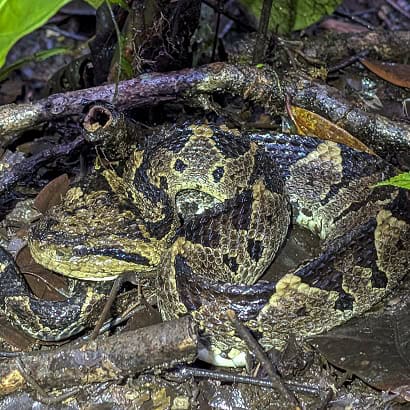
The Central American jumping pitviper (Metlapilcoatlus mexicanus) is a widespread species of Costa Rica, Panama, Honduras, Guatemala, and southern Mexico, which absolutely does not possess the ability to jump. This species does have one great ability, however – blending completely with the moist, humid forest floor.
The image above demonstrates a Central American jumping pitviper on a relatively clear day. In the right locations, this dangerously venomous pitviper can completely disappear, with every scale, every atom absorbing into the forest floor and becoming invisible. The scales of this species are murky and complex, mimicking its habitats, while a stationary ambush nature also helps it to stay unseen.
Metlapilcoatlus mexicanus has a myotoxic venom, targeting and degrading muscle tissue. However, the potency isn’t high, and this species has a very low death toll to its name.
Of all species in Central America, this has one of the most typical viper appearances. One of the few ID signs is an especially strong black eye stripe, but the lethal fer-de-lance also possesses a stronger stripe in some individuals.
| 2 | Boa imperator |
Maximum length: 3.7 metres.
The Boa imperator is the closest relative to the boa constrictor on Earth. It was originally part of the boa constrictor species, before being granted independence after genetic testing discovered a divergence date of millions of years ago.
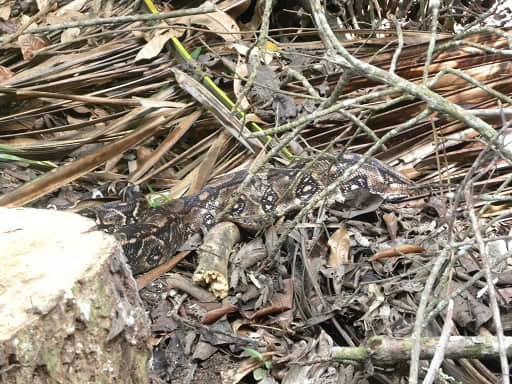
Boa imperator is essentially the species’ Central American form, inhabiting virtually the entire region, including southern Mexico, all 7 Central American countries (Costa Rica, Panama, Guatemala, etc), plus western Colombia, western Ecuador and far northern Peru. This species has a multitude of survival skills, including climbing trees, waiting patiently for hours, and a keen scent apparatus. Yet another is exceptional camouflage, as shown by the image above.
Rather than leafy green foliage, Boa imperator has exceptional camouflage in dry undergrowth, with an assortment of crunchy fallen twigs and branches. It can be almost invisible at the right angle, with its large diamond-shaped blotches being the main giveaway.
While Boa imperator is possible to see while on the move, the difficulty multiplies ten-fold when stationary. This species has a flexible diet, devouring rodents, lizards and birds alike.
| 3 | Salmon-bellied racer |
Maximum length: 150cm.
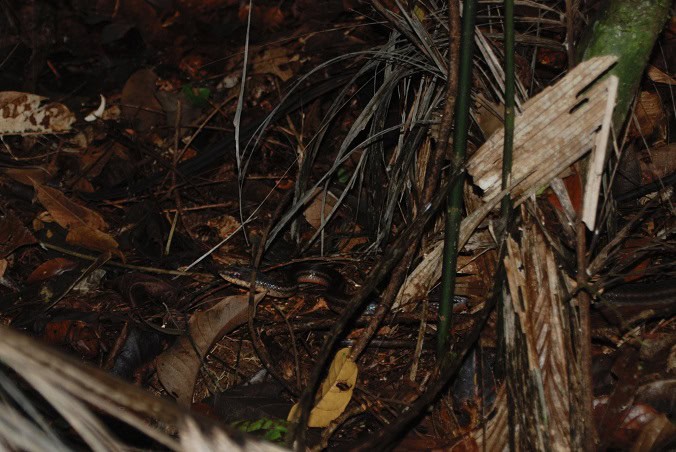
Another of Central America’s most common species. The salmon-bellied racer (Mastigodryas melanolomus) appears at elevations of 0-1750 metres, and also inhabits the western and eastern coasts of Mexico (without coming close to the USA). This species is non-venomous and appears in a wide range of habitats, from woodlands and hillsides to manmade villages. This species is particularly common in coffee plantations, where it’s one of the more likely creatures for a whistling agricultural worker to bump into.
Unlike our previous two species, the salmon-bellied racer isn’t a lazy ambush predator. It’s always on the move, exploring villages and local woodlands, which theoretically should allow it to blend in less. Yet this species still blends with the majority of Central American environments it passes through, with the exception of leafy greenery.
When picked up, this species normally coils harmlessly around the captor’s hands. With bird predators, it’s a different story; the salmon-bellied racer coils around the wings and body of the aggressor, squeezing hard enough to prevent it from flying away. The was first observed in Costa Rica in 2012.
| 4 | Talamancan palm pitviper |
Maximum length: 91.1cm (at least).
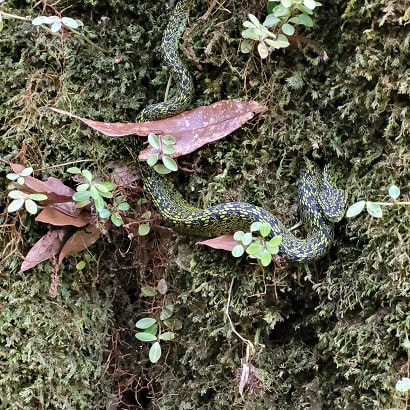
This species is an expert at blending into the rich green plant matter of high altitude forests, and particularly moss growing on tree trunks, if the image above is any evidence. The Talamancan palm pitviper is a venomous species of high altitudes, appearing at up to 3000 metres, and avoiding lowlands. There are few documented bite cases on record, but this species contains a smattering of neurotoxins, and far higher amounts of metalloproteinases.
Talamancan palm pitvipers are ambush predators, with complex patterns, making all their camouflage dreams come true. They appear solely in Costa Rica, and even then only in the high forests of the Talamanca Cordillera mountain range. You chances of encountering this species are low, and your chances of noticing one are less.
The diet of this species likely includes small mammals, and reptiles as a juvenile, like other Bothriechis eyelash viper members. The viper above appears poised to strike, with a sharp kink at the neck. The strike may be imminent, or the snake could have held the same strike posture for hours, hoping for a small mammal to walk past.
| 5 | Black-striped snake |
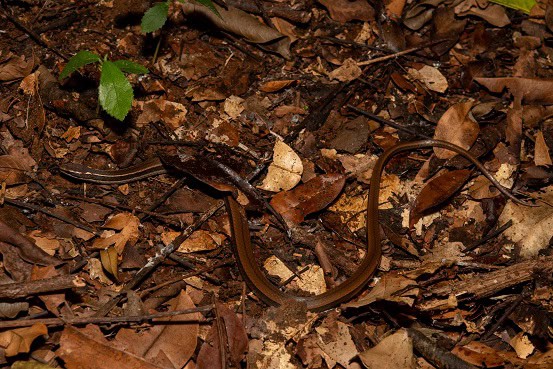
Maximum length: 50.8cm.
The only entrant on our list to appear in the USA, and even then, only in a tiny portion. The black striped snake (Coniophanes imperialis) is a harmless species ranging from Nicaragua in the south, through Honduras, Guatemala and northern Mexico, all the way to extreme southern Texas, where it inhabits just 4 countries.
Even if you do live in Willacy, Hidalgo, Kennedy or Cameron County, there’s a strong chance of walking right past this species, as the black-striped snake has excellent camouflage. This species generally lurks in drier areas, rather than hyper-moist forests. As well as crispy leaves on woodland floors, it can be found in dry cracks in soil, and beneath random debris like rotting wood and piles of stones.
This species generally thrashes and twists nervously when picked up, and despite its small size, and small teeth, biting isn’t unheard of. This is a mildly venomous species, which is only capable of subduing small prey such as frogs and toads. Another of its defensive tactics is waving its tail back and forth, as though hypnotising predators.
| 6 | Central American lyre snake |
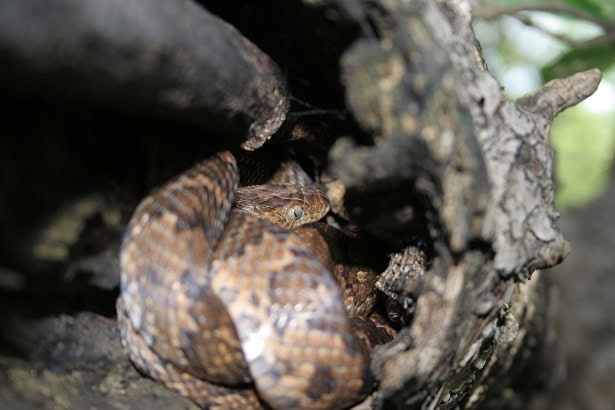
Maximum length: 190cm.
A more restricted species in territory, but extremely common where it does appear. The Central American lyre snake (Trimorphodon quadruplex) appears in high numbers in northwest Costa Rica, western Nicaragua (Pacific coast) and Honduras. Its venom is mild, containing several haemorragins and myotoxins, but with relatively weak effects.
This is a classic species which succeeds by hiding in plain sight. In the image above, the lyre snake isn’t hard to spot at all, once you know it’s there. But the colour coordination between its scales and the tree bark is so strong that if walking past and chattering to your friends, you could easily miss it out of the corner of your eye.
Central American lyre snakes are active foragers rather than ambushers. Their ceaseless quest for calories and intriguing scent particles often brings them inside gardens and even kitchens, as this is one of Central America’s main home invader snakes. Generally, this species has flexible habitats, moving through grassy plains and woodlands with equal ease.
| 7 | Rainforest hognose pitviper |
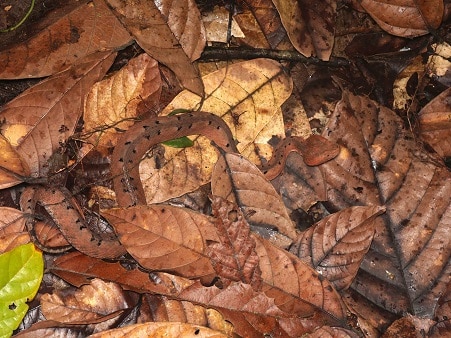
Maximum length: 63.5cm.
The rainforest hognose pitviper (Porthidium nasutum) not only blends into thick forests, but matches the exact shade of leaves on the rainforest floors it inhabits, down to the precise pigment levels. This is a moderately dangerous species, with a relatively weak LD50 rating of 4.6mg.
This species varies significantly in colour, with some being orange to match fallen leaves, and others being muddy brown to match the miscellaneous forest mulch. The best chance of spotting this forest snake is via its incredibly triangular head, but even this is a challenge.
Rainforest hognose pitvipers have a wide range in Central America, being most heavily concentrated in Costa Rica. It’s rare for rainforest hognose pitvipers to kill, but their bites can still cause agonising local symptoms such as swelling, and permanent stiffness surrounding the bite site. You’re safe from this disguised snake in open fields and grasslands, as they’re almost exclusively found in forests. Their favourite spots of all are the thick bases of trees, where they blend in effortlessly with the fallen leaves.
| 8 | Central American eyelash viper |
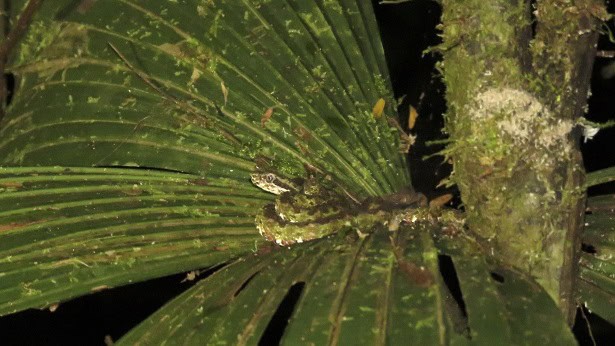
Maximum length: 91.6cm.
The most widespread branch-dwelling pitviper in the whole of Central America, with the fer-de-lance dominating the ground. The Central American eyelash viper ranges from Panama to Guatemala, with an endless stream of sightings arriving in Costa Rica every month.
Being a tree and bush lover, this species is much greener, not a clean pastel green, but a complex blotchy green that allows it to blend perfectly with the complex rainforest. But the story isn’t even that simple, as the eyelash viper has multiple colour morphs. The individual above is perfectly green, but others are yellow to blend with banana plantations, grey to blend with bark on thick tree trunks, etc.
This species doesn’t have the most powerful venom, but is capable of sending victims to hospital with a nasty bout of swelling. Central American eyelash vipers are common in lowlands ranging from sea level to 1000 metres, but the moment you flee to the safety of high altitude, their cousin appears: the side-striped palm pitviper (Bothriechis lateralis), which is a bright, cleaner green instead, and more than equipped at disappearing completely into leaves.
| 9 | Ecuador sipo |
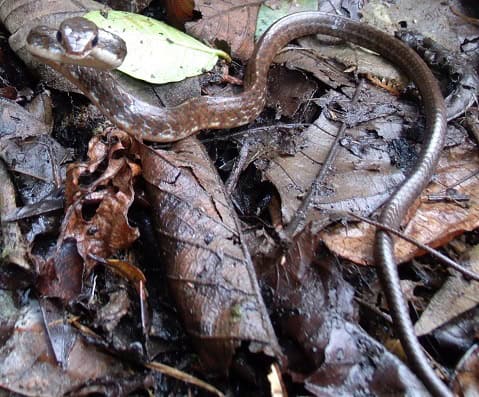
Maximum length: 271.8cm.
A non-venomous species which does appear in western Ecuador, but is equally common in western Colombia, Panama, Costa Rica and Nicaragua. Ecuador sipos (Chironius grandisquamis) are flexible in their habitats, nimbly crossing precipitous gaps between tree branches, before weaving patiently along the ground in pursuit of a scent trail.
This species is variable in colour, but never possesses any green on its body. Ecuador sipos can be a consistent grey-black or brown, or have more complex brown and black blotches. A consistent feature is a dramatically paler underside, contrasting against the darker body above.
Ecuador sipos always appear in forests, never urban areas. The goal of their colours is purely camouflage, and they succeed with aplomb, disappearing into the forest, blending with fallen branches and miscellaneous forest mulch. This is a perfectly survivable species to meet, and a moderately common one, neither too abundant nor sparse. This is also the northernmost member of the Chironius snake genus (23 members) it belongs to.
| 10 | Cloudy snail-eating snake |
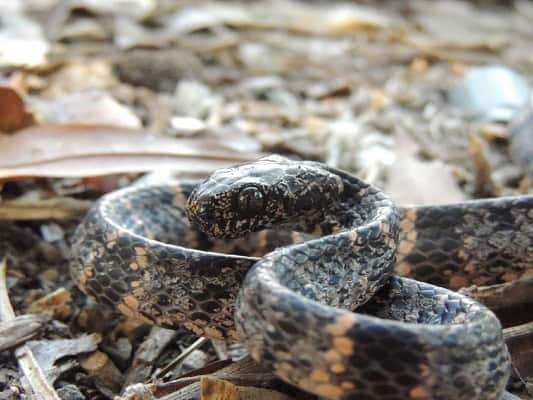
Maximum length: 101.3cm.
Part of the large snail-eating Sibon genus, which has at least 23 members. The cloudy snail-eating snake (Sibon nebulatus) is the most common of this group, occupying most of Central America, as well as northwestern South America.
Cloudy snail eaters have fully taken over Costa Rica and Panama, and reach as far north as Mexico City. Rather than towering tree branches, they’re mainly found on low bushes at 0.5-3 metres in height, as well as the forest floor.
This species lacks any green, remaining a mixture of grey and brown, which enables camouflage against both tree bark and assorted forest matter. In the right area, this species seems to flit in and out of existence, as though caught between one serpent dimension and the next.
Cloudy snail eaters are completely harmless, without even a mild venom. Their eyes are large and detailed, with sharply vertical pupils. The eyes contribute to their camouflage, with an iris colour exactly matching the nearby scales, preventing their bulbous vision orbs from alerting potential predators.
| 11 | Rhombic cat-eyed snake |
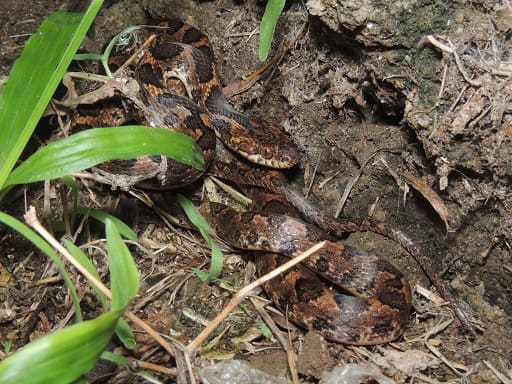
Maximum length: 104cm.
An epidemic of a snake in certain areas of Central America. This species is dominant in western Costa Rica, the Pacific coast of Nicaragua, most of Honduras, and is probably the single most commonly sighted snake in Panama City. The territory of this species is almost completely confined to Central America, with just a tiny foothold in Mexico, and where it does live, it blends with the forest easily.
Most cat-eyed snake members are heavily tree-dwelling, but can also spend time on the ground if necessary. The rhombic cat-eyed snake is no different, and rather than leafy green, it prefers to mimic a mixture of fallen leaves and debris, and tree branches. The latter includes branches both attached to trees and lying on the ground. Blending with a thick tree trunk is no issue for this species either.
Effortless climbing is another of this species’ skills, although its venom is mild and probably unable to kill a human (except perhaps an infant). This species preys heavily on frogs, and has large, dark brown blotches overlaid on a lighter brown base.
| 12 | Western parrot snake |
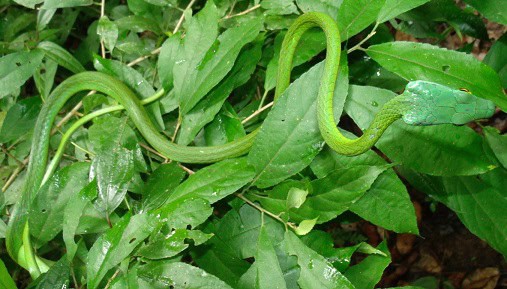
Maximum length: 161cm.
A hyper-green species which appears only to the west of the Andes mountain range. That means western Colombia and western Ecuador, but also Panama, Costa Rica and Nicaragua, where it’s a common species.
Western parrot snakes prey heavily on amphibians such as banana tree dwelling frogs, and spend most of their time on branches or bushes. They’re almost completely green from head to tail, allowing perfect camouflage in foliage. One of the exceptions is a black stripe passing through the eye, and the eye itself, which has a yellowish iris.
Western parrot snakes are fast-moving and agile, but this doesn’t stop them from completely disappearing into background foliage. One fact to remember with any parrot snake is its unpredictability. This species can be nestled snugly in a disguising bush of camouflage one second, and in your face moments later, bearing its fangs wide with a demented glare in its eyes.
The line between retreating backwards and full-frontal assault is very thin with this species. Fortunately, western parrot snakes have no power to kill human beings, just to intimidate them and give them nightmares for several weeks.