
| 1 | Common lancehead |
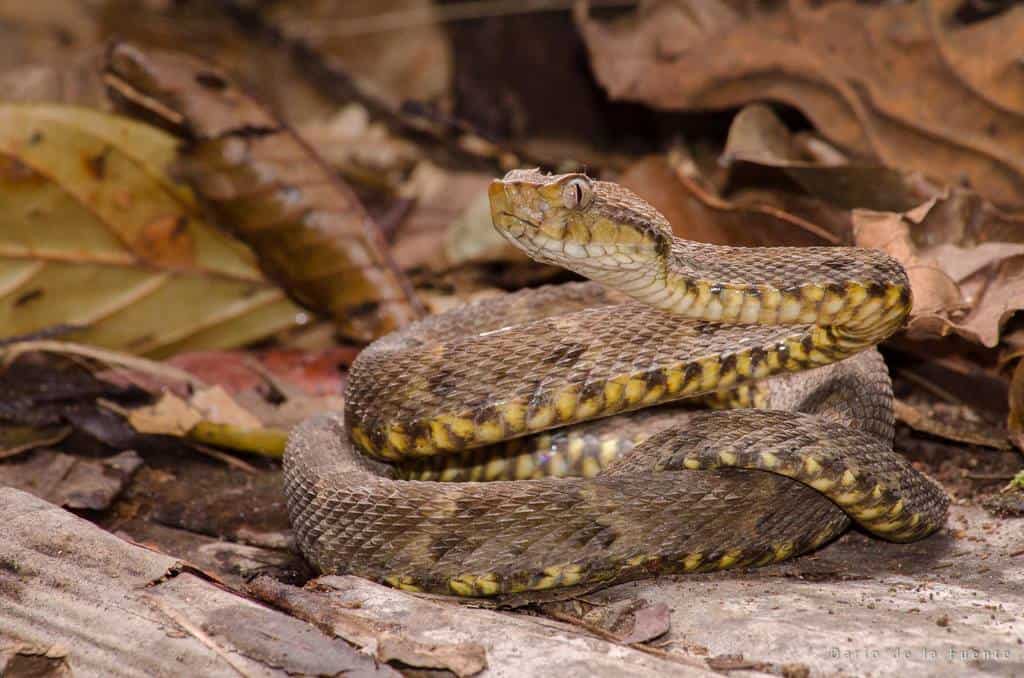
Maximum length: 172.3cm.
One of Brazil’s most common snakes, and coincidentally one of the deadliest. Common lanceheads are generally found in forests, and bushy villages on their outskirts. They’re especially notorious for invading rodent-infested farmland directly adjacent to rainforests, in order to catch an easy meal.
Common lanceheads (Bothrops atrox) are found in about 60% of Brazil, inhabiting the entire Amazon region, but skipping the easterly states bordering the Atlantic Ocean (e.g. São Paulo). They average at 75-125cm, with an all-time maximum of 172.3cm. They have golden eyes and a black tongue, and the venom that spews from their mouths is truly deadly.
Bothrops atrox specialises in haemorrhages, as well as bleeding, bruising, swelling, nausea, vomiting, and finally kidney failure. There are no unusual or bizarre symptoms, just utter destruction. Another possible cause of death is a stroke, as the haemotoxins assault blood vessels in the brain.
Common lanceheads are aggressive, rarely backing down from a fight. Their venom yield is particularly high, at up to 344mg per bite. In some Amazonian regions, common lanceheads cause 50% of snakebites, even up to 90%. Most bites happen on the bushy farmland which they lurk on, but common lanceheads are also spotted on forest trails at night, minding their own business. It’s rare to find them in open areas like plains or sweeping grassland, as they need some sort of thick vegetation to survive. This is mainly a nocturnal species, although stepping on them during the day is another risk.
| 2 | Painted coral snake |
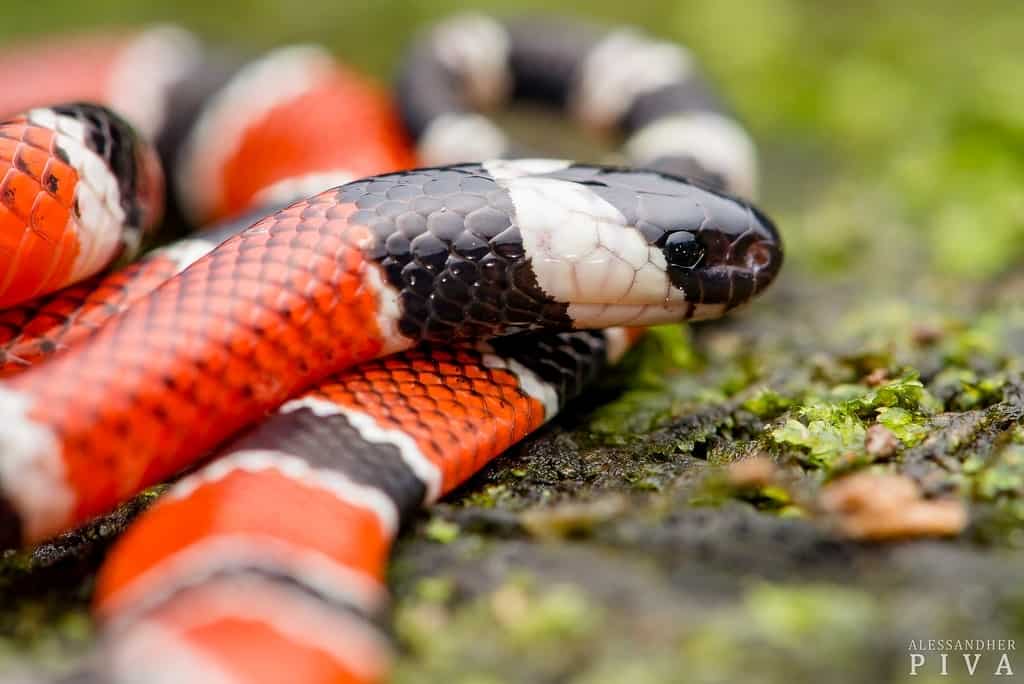
Maximum length: 98cm.
The Micrurus coral snake genus has 35-40 members in Brazil alone, yet somehow, this neurotoxic clan contributes just 1% of overall Brazilian snakebites. This is mainly because of their shy temperament, but one species stands above the rest in most statistics: the painted coralsnake (Micrurus corallinus).
This species lives in southern Brazil and along the east coast, including the outskirts of São Paulo. It sticks mainly to forests, often resting on top of low bushes and rocks. According to a study on 194 coral snake bites in Brazil, the painted coral snake caused 36 bites, while the southern coral snake (Micrurus frontalis) came second with 12.
Like other coral snakes, Micrurus corallinus has a neurotoxic venom: paralysis, drooping eyelids, and muscular weakness are all classic symptoms. This species also has the unusual symptom of robbing your sense of taste, which lasted for 3-4 weeks in two patients. Perhaps their most infamous symptom is the “myasthenic snarl”. The neurotoxins disrupt the nerves of your face, cheeks and eyes, so that when you attempt to smile, you only get 30% of the way there, and are left with a vicious crocodilian expression instead.
Painted coral snakes aren’t particularly aggressive. They don’t hiss loudly when humans approach, nor charge them down in a blind rage, but locals often mistake them for harmless snakes and pick them up, and that’s when they feel sharp fangs sinking in. This species averages at 56-85cm, and 52% of its diet consists of fellow snakes.
| 3 | Southern coral snake |
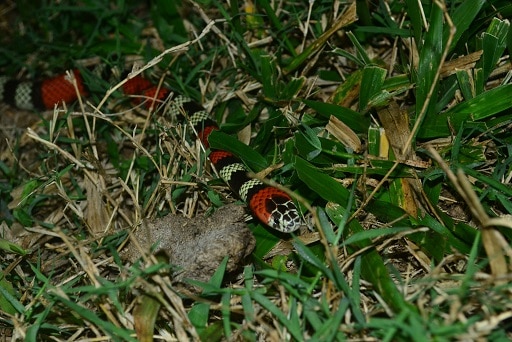
Maximum length: 164cm.
In Florida, a simple way to dodge the eastern coral snake is remembering the old rhyme “red touches black, venom lack”. However, this is Brazil, with a whole new set of rules.
The southern coral snake (Micrurus frontalis) lives in southern Brazil, Argentina and Paraguay, and certainly has red touching black. It’s also just as dangerously neurotoxic as other coral snakes. In fact, when Brazil created its first coral snake antivenom in 1911, this was the species they used, by injecting the venom into horses and collecting the antibodies they generated in response.
As we mentioned earlier, Micrurus frontalis is the second bitiest coral snake in Brazil, contributing 12 out of 194 bites in one study. Again, they never plan an attack on humans, but their venom is packed with neurotoxins, which begin with drooping eyelids, progress to pain and tingling (parathesia), and then severe muscle weakness. A guinea pig study found that the venom wreaks havoc on the heart as well.
This species has a slightly different venom to the painted coral snake. The latter has mainly presynaptic neurotoxins, which alter brain signals before they’re sent, whereas southern coral snakes specialise in post-synaptic neurotoxins, which bind to acetylcholine receptors in muscle cells and prevent brain signals from arriving. Consequently, certain anticholinesterase remedies can be used for M. frontalis which don’t work for their cousin.
Southern coral snakes live mainly in forests, in the upper layer of soil mixed with leaf litter. The two coral snakes on this list have a large area of overlap in southern Brazil, but the painted coral snake stretches much further up Brazil’s east coast, while this species reaches further south into Argentina. At a maximum of 164cm, this species is far larger than the painted coral snake (maximum 98cm).
| 4 | Crossed pitviper |
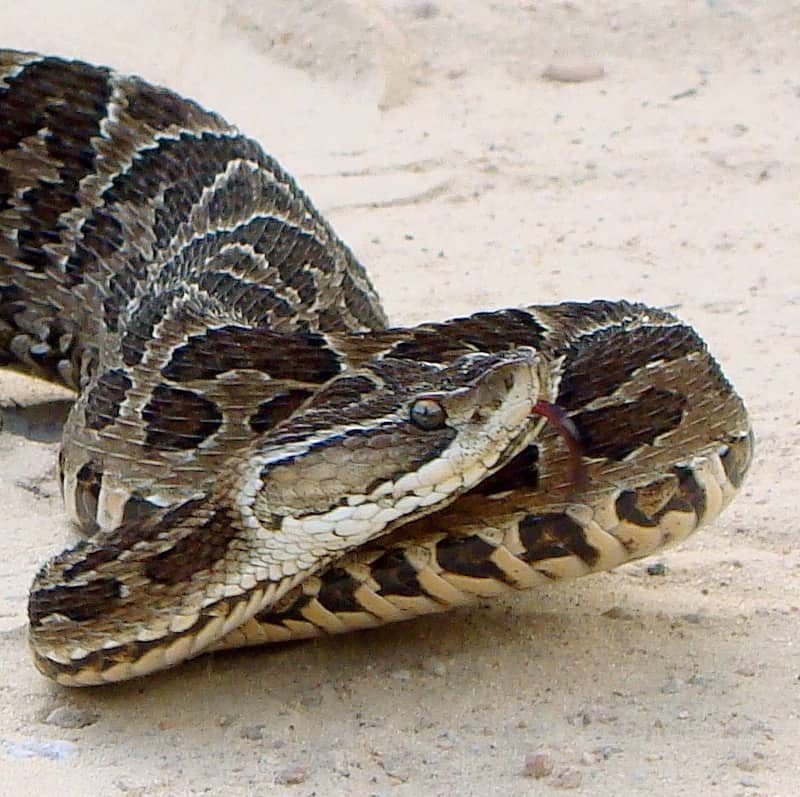
Maximum length: 169cm.
A snake of southern Brazil, as well as Uruguay, Paraguay and Argentina. The crossed pitviper (Bothrops alternatus) has a different habitat to other Bothrops pitvipers, as it much prefers open, sweeping grasslands with excellent views. It’s rare to find them in dense forests, though they sometimes pop up in sugar plantations.
This snake rarely kills its victims, but unleashes extreme destruction on the tissue surrounding the bite mark. Crossed pitviper bites can rot the flesh so that white bone is exposed, trigger spontaneous bleeding, and cause limbs to turn gangrenous and require amputation. More common symptoms include painful swelling and blistering. One study found that 97% of victims had delayed blood clotting.
In a survey from 1902 to 1946, the crossed pitviper caused 384 snakebites of a total 6601 in Brazil, yet only 8 were fatal. This viper doesn’t usually doesn’t end your life, but can change your life if severe enough. A recent death was a 44 year old woman in 2004, who was bitten and later suffered a brain bleed.
Crossed pitvipers derive 100% of their prey from mammals. They’re hunted themselves too, particularly by burrowing owls, which carry them off and then rip huge pieces of flesh off their body. This snake lives in a brutal world, whether they’re dealing out the brutality or experiencing it.
| 5 | Jararacussu |
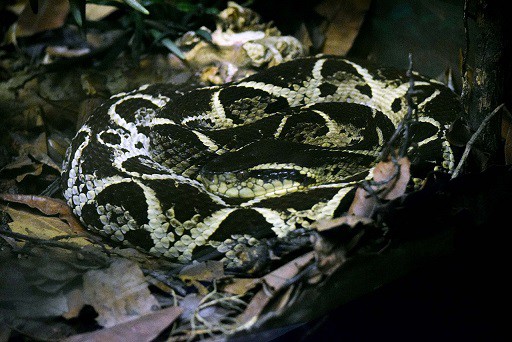
Maximum length: 220cm.
The largest pitviper in Brazil, and the one which pumps out the most young per batch (up to 73). The jararacussu is dreaded by Brazilian villagers like no other species.
Instead of Amazon rainforests, the jararacussu (Bothrops jararacussu) is a citizen of Brazil’s Atlantic forests further east, as well as Paraguay, Bolivia and northern Argentina. It prefers dense forests over wide open plains, especially dark, gloomy forests with a dense canopy cover, where only the slightest rays of sunlight can penetrate. Jararacussus stick to the ground rather than climbing tree branches, partly because they’re so heavy.
Jararacussus are mainly dark forest dwellers, but they sometimes appear in open areas directly adjacent to forests. This brings them into regular contact with villagers, who they will attack without thinking. The jararacussu is an aggressive species, which will hiss, rear back and launch into savage, unprovoked assaults. From 1902 to 1946, Brazil recorded 6601 snakebites in official medical logs, and 657 (9.95%) of those came from the jararacussu.
Another study examined 29 proven jararacussu bites from São Paulo hospitals. 3 patients died, which occurred at 18.75, 27.75, and 83 hours post bite. Jararacussus have a particularly huge venom yield, averaging at 247mg, and occasionally blasting through the 1000mg barrier. Their venom has a particular tendency to cause necrosis, the rotting and sloughing off of formerly alive tissues.
| 6 | Bothrops bilineatus |
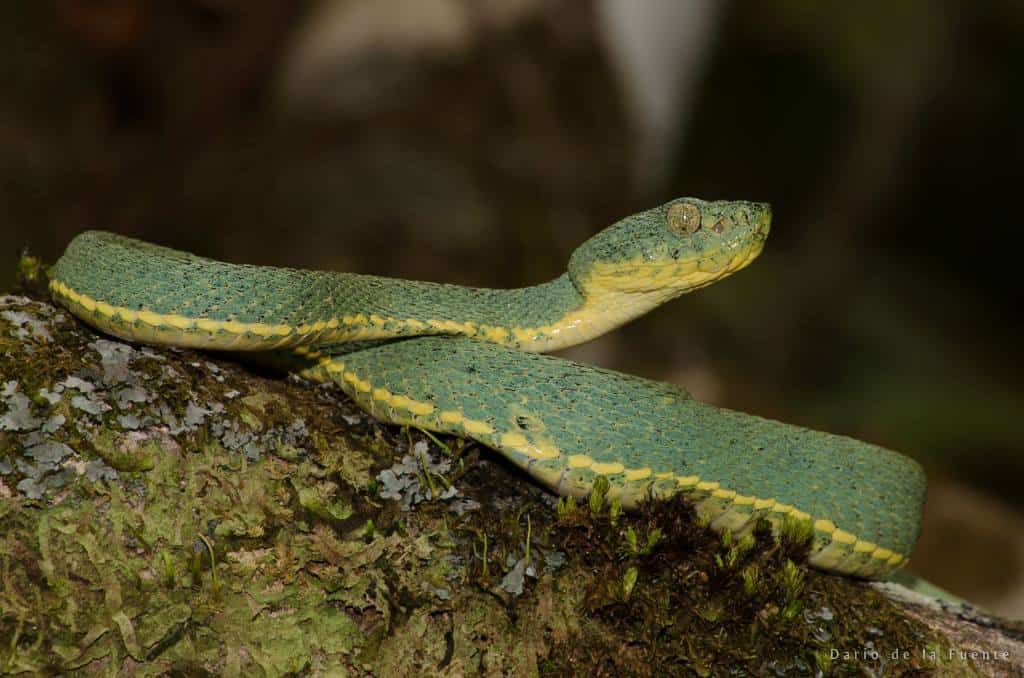
Maximum length: 123cm.
A tree-dwelling pitviper which is common across Brazil, from the humid Amazon to the Atlantic forests of the far east. Bothrops bilineatus, AKA the green jararaca, is only absent from the south and southeast (e.g. São Paulo), where the sea of rainforest finally disappears.
This is another forest snake, but unlike the jararacussu, Bothrops bilineatus is almost exclusively a tree dweller. This is an ambush species, which can wait for days at a time for the treefrogs or lizards they crave. They blend into foliage effortlessly, and have an extra long tail for crossing thin branches.
Despite this lazier lifestyle, Bothrops bilineatus still manages to cause 3-36% of snakebites in certain Amazonian regions. Its tree-dwelling lifestyle means that it tends to bite unsuspecting victims on the head, chest and shoulders, as it drops down with its fangs bared. American explorer William Beebe had a lucky escape when a Bothrops bilineatus lunged from above and struck the rim of his hat.
On one hand, the LD50 rating of this species’ venom is just moderate, at 6.28mg. On the other hand, this is a powerfully haemorrhagic venom which can be especially brutal. Victims often bleed spontaneously from the bite mark, eyes, nose and gums. At least 1 death has been confirmed.
Bothrops bilineatus is often spotted in cocoa plantations as well. Two regions where it’s particularly common are southeastern Bahia and in Upper Juruá.
| 7 | Jararaca |
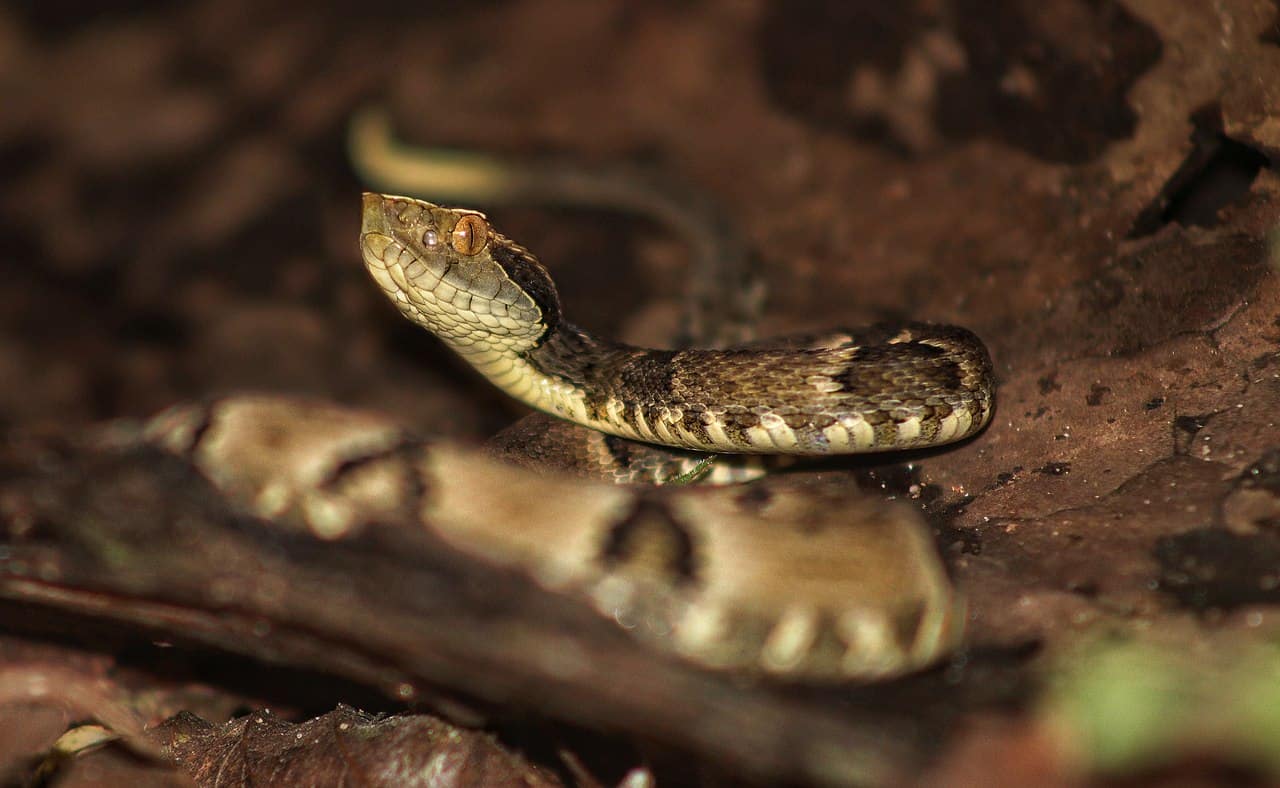
Maximum length: 160cm.
The most common venomous snake in southeastern Brazil. The jararaca (Bothrops jararaca) is the surprising best friend of heart disease patients all over the world. Since 1965, it has been used for lowering blood pressure, as a peptide within its venom was reverse engineered and transformed into a vein-relaxing medication called Captopril. Unfortunately, those living near the jararaca aren’t so lucky.
Jararacas are more flexible than other Bothrops pitvipers, which is why they’re so common. As well as forests, they can inhabit savannahs, thickets and agricultural land. This is a snake which comes alive during the wet season, feeding and breeding. During dry spells, they retreat further into their forests, becoming less active.
Jararacas are a two sided coin. From 1902 to 1946, they caused 51% of known venomous snakebites in Brazil, at 3446 out of 6601. But the mortality rate was surprisingly low, at just 0.7%. The average venom yield is 25-35mg, while the fatal dosage in an average human is 70mg. Nevertheless, a jararaca bite can cause swelling, bruising, blistering, and spontaneous bleeding of the gums.
Jararacas are missing from Amazonian regions of Brazil, but are absolutely everywhere in the southeast. It’s estimated that near São Paulo, they’re the third most common snake, representing 16% of the total. In certain parks and preserves, the jararaca is the most abundant snake, causing constant encounters with weekend revellers. Adults derive 80% of their calories from rodents.
| 8 | South American rattlesnake |
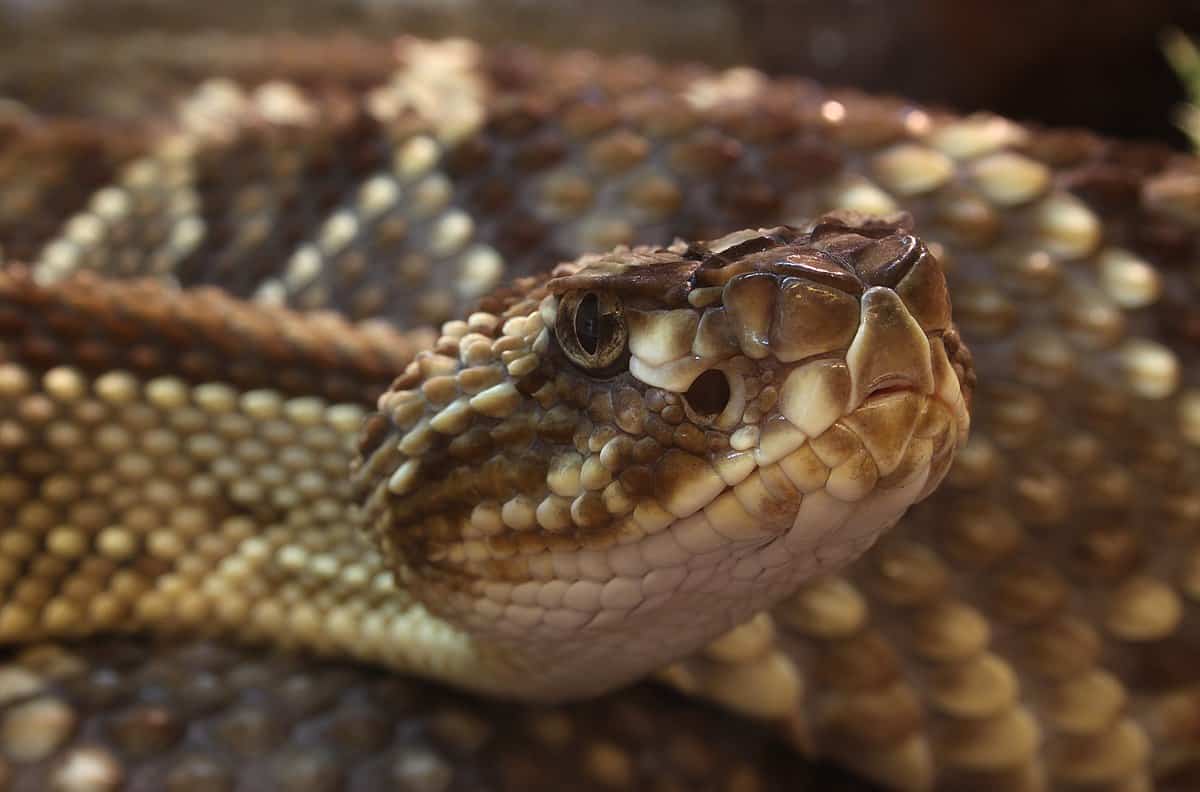
Maximum length: 180cm.
This is the only rattlesnake species in South America. Yet despite the US having 15-20 species, Crotalus durissus manages to have the second most toxic venom of them all, behind the tiger rattlesnake. The latter has an LD50 toxicity rating of 0.06mg, while the South American rattlesnake (Crotalus durissus) scores 0.17mg.
This snake is a true horror. The one redeeming feature is that they’re not particularly aggressive, and will probably slither by if you’re camped out having a picnic. But if they do get their fangs in, death is likely, as the mortality rate is 72% without antivenom, and 12% with.
South American rattlesnakes inhabit approximately 50% of Brazil. They skip the Amazonian regions, and inhabit a vast swathe of central and southeastern Brazil. This species is far more neurotoxic than most US rattlesnakes. Thanks to the compounds crotoxin and crotamine, South American rattlesnakes unleash auditory disorders, speech difficulties, muscle weakness, and finally respiratory paralysis.
The freakiest part is the victim’s neck, which becomes so limp that it looks broken. The venom can also damage the heart, cause hypotension, permanently blind victims – the list of horrifying symptoms never ends. Instead of jungles, this rattlesnake lives in open areas, including grasslands, shrublands, semi-arid areas, and savannahs.
This species reaches a record of 180cm, versus 251.5cm for Florida’s eastern diamondback (the largest global rattler). Weirdly, Crotalus durissus venom has the power to block the hepatitis C virus. However, it’s probably best to seek other remedies.
| 9 | Brazilian lancehead |
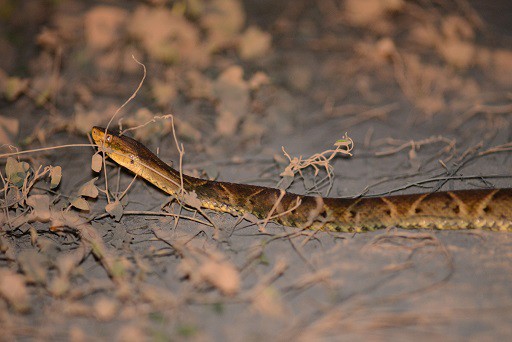
Maximum length: 230cm.
This venomous pitviper causes the most annual snakebites in Minas Gerais State, southeast Brazil. It also appears in Paraguay and Uruguay, and a tiny enclave in northern Argentina.
Rather than dense jungles, the Brazilian lancehead (Bothrops moojeni) favours gallery forests – isolated forests along the edge of rivers, bordered on the other side by grasslands. Brazilian lanceheads are a common sight in Cerrado savannah, and are considered to be especially aggressive. While their venom rarely kills, it can cause life-changing injuries.
In particular, this venom behaves differently in young snakes to adults. In juvenile Brazilian lanceheads, the venom primarily affects blood clotting, but as they age, the local, necrotic effects on skin tissue increase. This change occurs from age 1 to 2, due to a sharp increase in phospholipase A2 (PLA2) and metalloproteases in the venom. It’s a similar story with length, as according to a 1989 study, those measuring 80-147cm caused far more local swelling, redness and necrosis compared to shorter snakes.
Bothrops moojeni has a more varied diet than other Bothrops pitvipers. It was found in a 2003 study to eat 41% mammals, 17.4% lizards, 31.9% frogs and 6.2% fellow snakes. Eating so many frogs is probably connected to their tendency to appear near rivers.
| 10 | South American bushmaster |
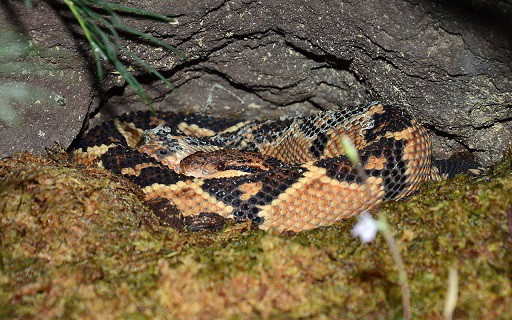
Maximum length: 3.65 metres.
The longest viper species worldwide, just edging ahead of their Central American bushmaster cousin. The South American bushmaster (Lachesis muta) is also the longest venomous snake in the western hemisphere, and the third longest worldwide behind the black mamba (2nd) and king cobra (1st).
This is a true rainforest snake, which compensates for its easy visibility by barely moving all day. The South American bushmaster does like to hide in bushes, where it can wait for days on end in ambush posture, hoping for its mainly rodent prey to walk past. As a jungle species through and through, Lachesis muta inhabits the entire Amazon rainforest, plus the Atlantic forests of eastern Brazil, but skips populous southeastern Brazil (São Paulo, Rio, etc).
This snake matches its size with a pair of 2 inch long fangs, and a huge venom total. The original estimate was 200-411mg, before being revised up to 500mg. The venom of this species has every class of toxin going, including neurotoxins, haemotoxins and myotoxins. Only 1.4% of bites are fatal, but deaths can be quick, even occurring within 45 minutes.
Typical symptoms include nausea, hypotension, and respiratory problems. Compared to most Bothrops pitvipers, South American bushmasters cause relatively few local symptoms. Blisters and bleeding are common, but necrosis is rarer, and so are the amputations that can result.
South American bushmasters are known to defend their eggs, making them a rare snake to do so. However, they generally have a calm temperament, and will only pounce on humans if they persist in agitating them. This lazy snake can survive on just 10 meals per year.
| 11 | Brazil’s lancehead |
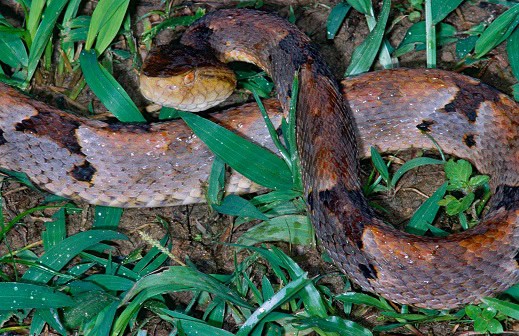
Maximum length: 149cm.
A medium-sized pitviper, with an average length of 70-90cm. This is one of the less commonly encountered snakes on our list, despite being widespread. Rather than manmade plantations or gardens in villages, this species is more common in pristine, undisturbed forests. Consequently, their territory hugs the borders of the Amazon rainforest closely.
Brazil’s lanceheads (Bothrops brazilii) range from eastern Ecuador, through a swathe of northwest Brazil, to Peru in the south. Stricter in habitat they may be, but this species has a relatively flexible diet. They’re able to eat mammals, frogs and reptiles, with one confirmed prey species being the keel-bellied shade lizard. Bites are rare, but are believed to have the usual mixture of cytotoxic and haemorrhagic symptoms.
Brazil’s lanceheads commonly live alongside the common lancehead (Bothrops atrox), but the two can be distinguished in the following ways. Firstly, their bodily patterns are more sharply contrasting. Secondly, the stripe extending backwards from their eye is much thinner and fainter, rather than full and thick like in a common lancehead. Another strong ID sign is a pinkish iris, although we don’t recommend getting close enough to check this. This iris is clearly visible in the image above.