
| 1 | South America’s most common tiny snake |
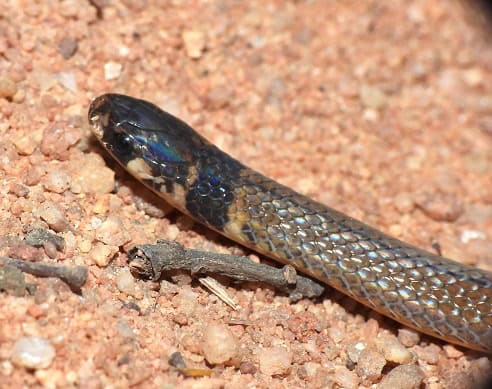
The boa constrictor is the most common large constrictor in South America, inhabiting every country except Chile. The common lancehead is the most widespread venomous snake, causing the highest annual bite totals in Brazil. Meanwhile, the most widespread tiny, completely harmless species in South America is probably the black-headed snake, AKA Tantilla melanocephala.
This is a dull-looking species which moves by night, spending most of its day cowering under cover objects. Black-headed snakes are only slightly venomous, and are completely safe to pick up in the palm of your hand. They have few defensive weapons at all, yet this hasn’t stopped them from conquering almost the entire continent of South America.
Like the boa constrictor, black-headed snakes inhabit every country except Chile, reaching as far south as northern Argentina and Uruguay. They cover the vast majority of Brazil, from the Amazon rainforest to drier cerrado grassland in the southeast.
To the north, black-headed snakes reach Panama and Costa Rica in Central America. They’re absolutely everywhere in Colombia, Ecuador, Suriname, Guyana and French Guiana, and even have a strong offshore island fortress on Trinidad and Tobago.
| 2 | Dull with a very black neck |
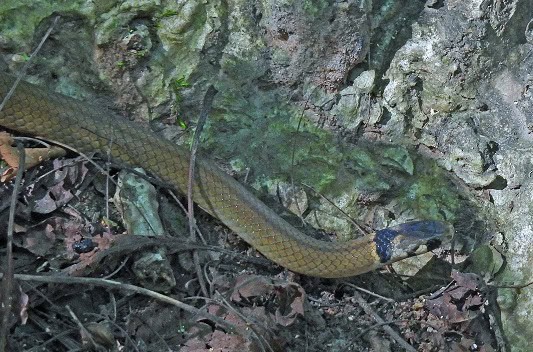
Black-headed snakes belong to the 68-member Tantilla genus, which officially ranks as the 5th largest snake group in the world. Within this genus, they’re easily the most common species. Like all Tantilla members, they’re very small, averaging at 30cm, with an all-time record of 43.5cm. Females are larger than males on average.
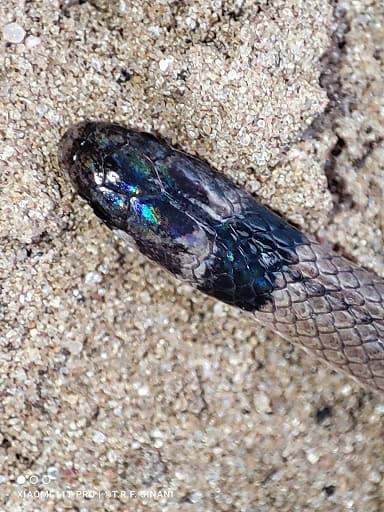
Black-headed snakes are dull in colour, never having any bright green or red scales. Compared to Tantilla members in the US, such as the western black-headed snake of California, their head is significantly less black. There’s a black patch atop the head and several more on their head, but this species is recognisable by a large white patch behind each eye as well. This is a consistent ID sign to watch for across their South American range.
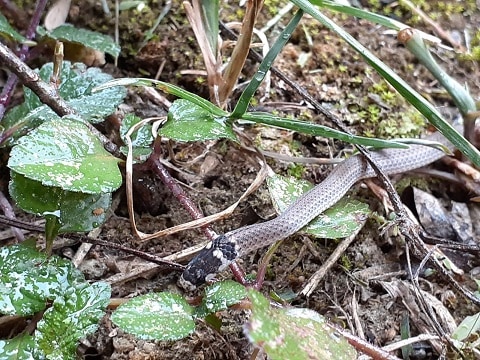
Rather than massive blotches, black-headed snakes are adorned with several parallel lines running lengthways along their body, which typically number 9. They have round pupils rather than vertical, and their tongue is black.
There’s one caveat – black-headed snakes are so tiny, and so addicted to hiding under safe cover objects, that you’re unlikely to spot them in the first place.
| 3 | Preys on venomous centipedes |
With an average length of 30cm, black-headed snakes completely shun mammals, amphibians and reptiles. Instead, their diet consists almost entirely of one small yet aggressive food group: centipedes.
In 1998, scientists examined 186 preserved black-headed snakes, from collections in Brazil’s Instituto Butantan. Inside these, they discovered 129 food items. The results were clear, as just 4 items consisted of insects, with the remaining 125 consisting of centipedes.
While 48 centipedes were unidentified, 74 of the remainder belonged to the common Otostigmus group. The equally common Cryptopidae group was almost completely ignored, accounting for just 3 meals. Cryptopidae centipedes are significantly faster-moving, and therefore, the scientists speculated that black-headed snakes have naturally evolved to prefer slower Otostigmus centipedes as a way of making their hunting sessions more efficient.
Black-headed snakes have also been observed to prey on roaches occasionally. However, they almost never prey on earthworms, as this niche has been stolen by their neighbouring snakes in the Atractus genus, which also average at around 30cm.
| 4 | Slightly venomous, harmless to humans |
The same 1998 study also examined 5 captive black-headed snakes, introducing Otostigmus centipedes to their enclosures, to examine their hunting methods in great detail.
The black-headed snakes simply seized the centipedes in their jaws, showing no fear of their venomous stingers. They held their prey in their mouths for several minutes, waiting for them to stop struggling. This proved that despite being harmless to humans, black-headed snakes do indeed possess a mild venom.
Once the centipedes had gone limp, the snakes walked their jaws up the centipede’s body. Then they commenced swallowing, which was always by the head. From the initial contact of the jaws to beginning the process of swallowing, the process took 2-7 minutes.
The scientists theorised that as a species, black-headed snake venom was unusually toxic towards centipedes. Specialised venoms are known for several other South American snakes; the green vine snake has a venom specialised against fast-moving anoles, but weak against geckos and mice.
| 5 | Hunted by spiders |
Several snake species worldwide have been observed being hunted by spiders, such as the rough green snake of Florida. Spiders are capable of eating giant prey by spewing digestive enzymes over their scaled bodies, softening flesh and allowing them to swallow small chunks. However, the black-headed snake goes above and beyond by having two separate observations in South America, both involving the same spider species: the brown widow, a cousin of the much deadlier black widow.
The first observation took place in Anzoategui state, Venezuela, in 2000. It took place inside a house, as a black-headed snake was observed by researchers dangling from the space between the wall and the floor, suspended in a brown widow web. The snake was still alive, but its flesh had already been eaten by the spider at two points close to the neck.
The second observation was made outside a house in 2017, in a national park in Brazil’s Goiás State. This time, the black-headed snake was dead, and as the scientists watched, the brown widow began coiling the snake’s body within the web.
The spider had already been dining on the snake, but this time lower on the body. There was a huge size discrepancy, as the spider measured 1.1cm, and the black-headed snake 19.2cm from snout to tail tip.
| 6 | Hunted by fellow snakes |
Black-headed snakes aren’t just eaten by spiders, as they’re regularly swallowed by other snakes. In fact, the black-headed snake might be the single most popular snake-on-snake prey in South America. They’ve been eaten by an endless list of species, including but not limited to…
Common lancehead – South America’s most widespread venomous snake. A study on 107 preserved common lanceheads found 4 snake prey in their stomachs. One was too heavily digested, but the other three were all identified as Tantilla melanocephala.
Rio tropical racer – a fast-moving species of southern Brazil and Paraguay, which is often seen swimming quickly through swamps, with its head bobbing up and down. A 2007 study on its diet identified two snake species: a Patagonian green racer and black-headed snake.
Erythrolamprus bizona – a widespread species of northern South America, which mimics deadly coral snakes. In 2020, scientists found a 60.6cm E. bizona in a thick forest in Colombia. When they placed it in a cloth bag for storage, it coughed up a dead Tantilla melanocephala.
Other species confirmed to hunt the black-headed snake include the American pipe snake, northern woodland racer, and Günther’s false coral snake.
| 7 | Appears in many habitats |
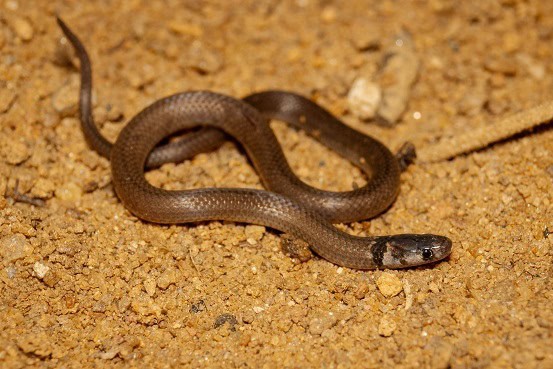
Despite tasting fantastic in the opinion of fellow snakes, the populations of Tantilla melanocephala haven’t taken a dent at all. It’s a much more widespread and successful species than some of its predators, and one reason is its natural instinct for shelter.
Black-headed snakes are rarely found in the open, exposing themselves to assault. They’re much more commonly found under logs, piles of wood, rotting vegetation, or manmade objects such as plant pots and piles of leaves. Black-headed snakes have even been found in termite mounds before. If the soil conditions are right, they can burrow downwards on the spot, disappearing into loose sediment.
Black-headed snakes have another great advantage as well: habitat flexibility. They generally favour forests, but are comfortable in modified areas with plantations, as well as villages, and even back gardens. They can venture inside houses and barns without worry, as the sightings of them captured in brown widow webs show. In southern Brazil, which is much less forested than the Amazonian north and west, they’re often found in open cerrado savannah.
| 8 | Mysterious head wobble |
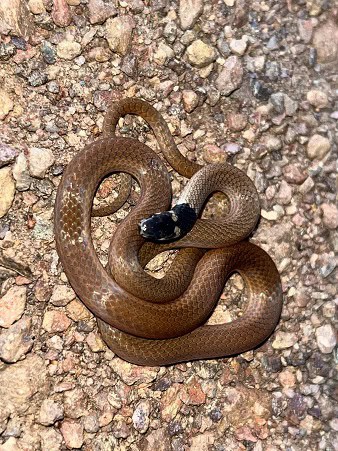
Black-headed snakes lack any major offensive weapons, yet still have more subtle survival techniques. While ordinarily calm and steady, they can flee rapidly into the depths of the forest when threatened. If picked up, they sometimes thrash aggressively in the palm of your hand, startling you into dropping them.
Black-headed snakes may also have the ability to detach their tails, to escape the clutches of predators, as a report from northern Bahia, Brazil found two individuals with broken tails.
Another of their strange tendencies is to face the aggressor head on, and wobble their head back and forth rhythmically. This head wobbling has also been observed in the common garter snake and smooth green snake, yet scientists are unsure of its purpose. Unlike wiggling a bright tail, which distracts from the head and brain, there’s no obvious explanation.
Compared their neighbours in Ecuador, Brazil, etc, this species has one other important feature to remember: they virtually never climb trees. Black-headed snakes appear on the ground, or maybe underground, but are rarely found even 1 metre above the forest floor on a branch, let alone 10 or 20 metres high (like a ringed tree boa).
| 9 | Tiny egg totals |
Many species which are massively common lay huge egg totals, allowing their offspring to spread far and wide, but Tantilla melanocephala is an exception. The boa constrictor produces up to 63 live young per clutch, while the common lancehead produces up to 56. Meanwhile, the black-headed snake produces just 1-3 eggs per clutch, making for one of the lowest totals in South America.
They do have one advantage: the ability to reproduce just 10 months after birth for males, and 20 months for females. The 1998 study from earlier discovered another strength of this species as well. Unlike other Tantilla members, which appeared seasonally, black-headed snakes were collected at all times of the year, with the same frequency.
Juveniles were most commonly collected in March, but adults had no preference for any particular month. Combined with their habitat flexibility, this is another reason behind the black-headed snake’s takeover of South America, unlike the tiny egg total.
The species’ growth rate, meanwhile, was estimated at 50% in the first year. Captive individuals moved mostly at night, prowling around the surface, and remaining in shelter by day. However, observations from Brazil’s northern Bahia state contradict this, referring to Tantilla melanocephala as a diurnal (active by day) snake.
| 10 | One massively widespread species |
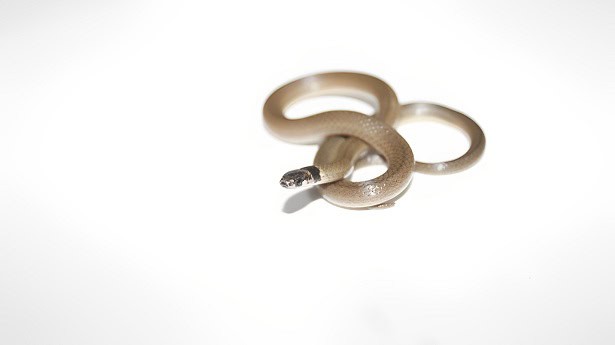
One question is whether Tantilla melanocephala is actually several similar species misidentified as one, or a “species complex”. For example, the boa constrictor was once believed to stretch to Mexico, until its Central American colonies were split off into an independent species called “Boa imperator”.
One event happened in 1980, when two male black-headed snakes were examined from western Ecuador, and declared to be an independent species called Tantilla equatoriana. This was made based off minor variations in scales and patterns, such as the extent of the pale patch behind each eye (subocular patch), and an increased number of subcaudal scales, at 77-79 versus 50-72 for Tantilla melanocephala.
However, a reanalysis in 2004 found that these variations were easily within the scope of the black-headed snake species. The study concluded declared that Tantilla equatoriana didn’t exist, and that the two snakes were likely Tantilla melanocephala after all. The debate continues, as to this day, some still consider Tantilla equatoriana to be a legitimate species.
Given the vastness of South America, it’s highly likely that black-headed snakes lurking in certain obscure valleys or forests will turn out to be independent species one day.
| 11 | Spreading via sand shipments? |
Black-headed snakes may not be dangerous, but they do have one cool skill: island hopping. Black-headed snakes occur naturally on Trinidad and Tobago, which are very close to the Venezuelan mainland, but have also somehow appeared on the Grenada Bank islands of the southern Caribbean 500 miles way.
2009 saw a discovery of two black-headed snakes on Grenada, one in St Andrew Parish and another in St David Parish. Discoveries have also been made on Mustique and Union Island. On all three islands, herpetological surveys 50 years prior hadn’t observed Tantilla melanocephala once.
Various theories have been raised, but the favourite was black-headed snakes lurking in shipments of sand scooped up in Guyana, and being transported to Caribbean islands for building purposes. The likes of Grenada and Mustique are under constant construction, fuelled by tourism and the resulting tax revenue.
Somehow, the snake was simultaneously appearing on multiple islands where it had never appeared before, meaning that the culprit had to have been a substance imported to all three. Though the theory still hasn’t been proven, sand was the only explanation that fit.
| 12 | US cousins |
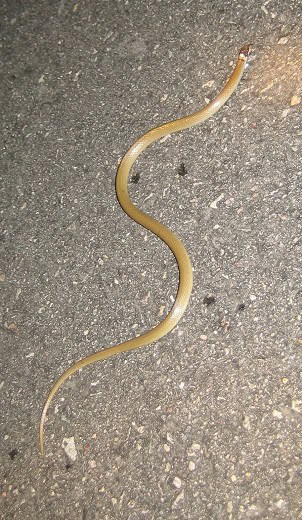
The black-headed snake doesn’t come anywhere close to the USA, or even Mexico, reaching as far west as Costa Rica without crossing into Nicaragua. However, the USA hosts 8 species of Tantilla, among the 68 worldwide. These include…
Plains-headed black snake – the most northerly Tantilla in the world, spreading into southeastern Wyoming. A common species which inhabits western Texas, New Mexico, southeastern Arizona, Kansas and more.
Florida crowned snake – one of two Florida members, this species is abundant across the north and centre of the state, but not the south. There’s also a tiny pocket in southern Georgia.
Rim-crowned rock snake – Florida’s most severely endangered snake. This species lives at the southern tip of the state near Miami, appearing only in untouched forests.
Western crowned snake – found only in southern California, and Baja California, Mexico.
Flat-headed snake – a common species in much of Texas, and states immediately west of the Mississippi river, including Arkansas and Missouri. Lacks the usual dense black head, with just a slightly darker head.
Southeastern crowned snake – found exclusively to the east of the Mississippi River, but skips Florida. Its range therefore includes Georgia, the Carolinas, Alabama and Tennessee.
Southwestern black-headed snake – a common species which is particularly abundant near Tucson and Phoenix. Also found in southern California and New Mexico.
Chihuahua black-headed snake (pictured above) – a rare species in the USA. A common species in Mexico, which only just crosses the northern border into Arizona and New Mexico.