
| 1 | Side-striped palm pitviper |
Maximum length: 95cm.
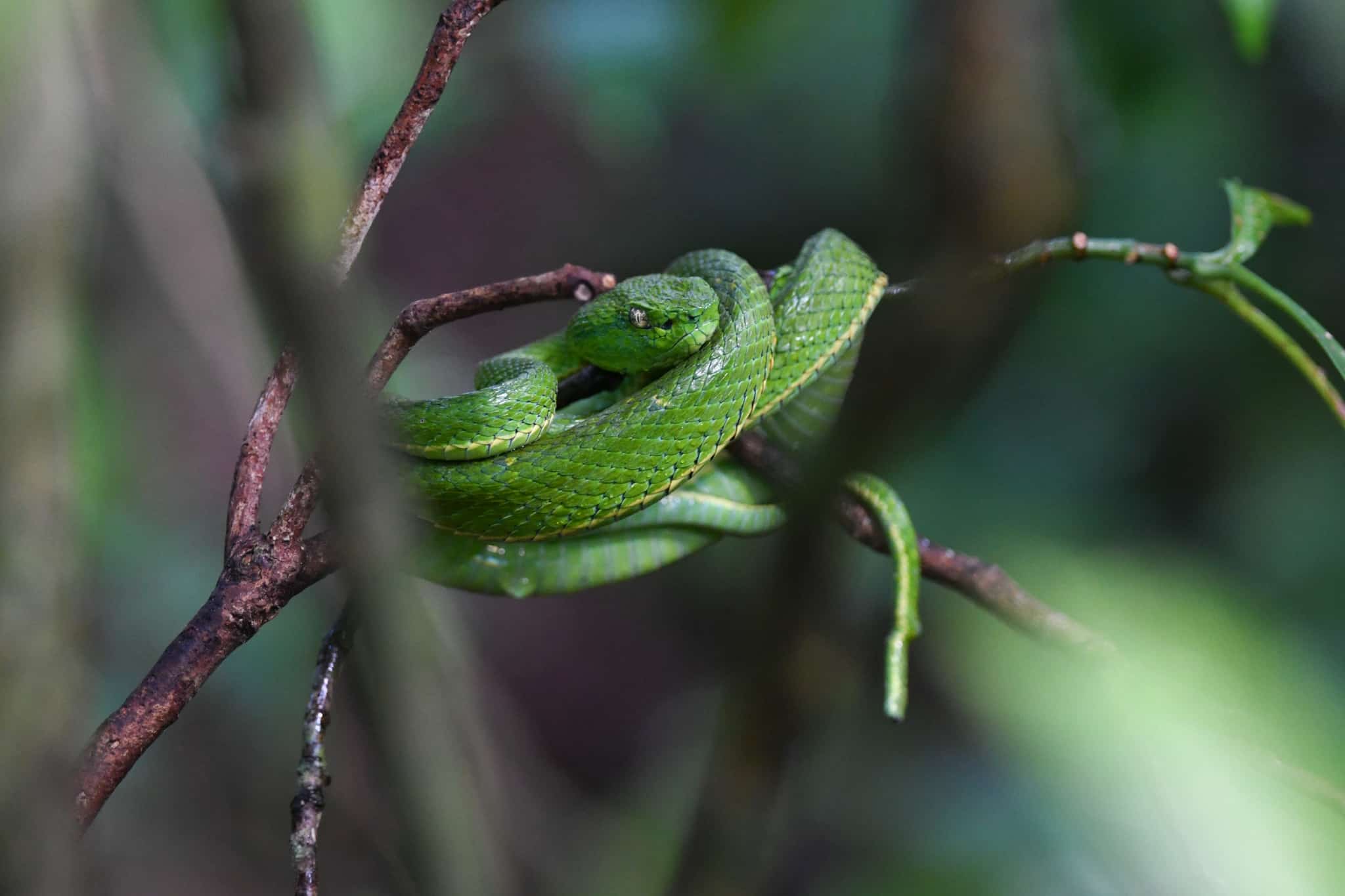
A branch-dwelling species which is easily one of Panama’s more dangerous snakes. The side-striped palm pitviper (Bothriechis lateralis) is a venomous snake which inhabits forests ranging from from 850-2100 metres above sea level. This species loves areas of dense vegetation, which they easily blend into using their bright green scales. They’re abundant in western Panama, but also a swathe of Costa Rica and small areas of Nicaragua.
This species rarely attacks people just for the fun of it, preferring to rely on their incredible camouflage. The one thing you mustn’t do is touch them, as this triggers an instant savage response.
Side-striped palm pitvipers are fairly flexible, and can cope with some human habitats, particularly coffee plantations and rural gardens. But protected rainforest zones are their heartlands, in which they can be extremely abundant. Younglings dine on dink frogs and brittle-belly frogs, while adults maintain the frogs, but add in reptile meals such as turnip-tailed geckos.
The venom of Bothriechis lateralis is a mixed bag. At worst, it cases intense pain, swelling and spontaneous bleeding, being a mostly hemotoxic venom. Death would come via kidney failure or brain haemorrhage. But most bites from this Panamanian snake are moderate to mild, and many fail to inject venom at all.
| 2 | Central American bushmaster |
Maximum length: 3.6 metres.
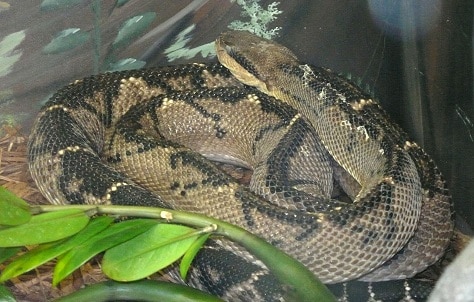
The fourth longest venomous snake in the world, with an all time record of 3.60 metres, and an average of 2.0 metres. This species is found in Panama, Costa Rica and extreme southern Nicaragua, and is the northerly relative of the slightly larger South American bushmaster (max 3.65 metres). Central American bushmasters are generally darker than their cousin, and have a thick black line extending backwards from each eye.
This snake prefers to stay still for days on end, rather than prowling the countryside aggressively. The bushmaster name comes from their cunning tendency to hide in thick undergrowth, but the Spanish name is even more brutal: matabuey, which translates to “ox-killer”.
This snake has a docile personality, but its venom can unleash vomiting, intense pain, sweating and excitability. There are very few neurotoxins, but necrosis is highly likely, as are nasty infections in the bite wound. Their hollow fangs can also shift position in their jaw.
This species largely hunts spiny rats (Proechymis family), and seeing as spiny rats love welfia fruits, bushmasters often lurk beneath welfia trees waiting to ambush them. Central American bushmasters stick to areas of extremely heavy rain, usually those receiving 2000-4000mm annually.
| 3 | Ringed tree boa |
Maximum length: 172.5cm.
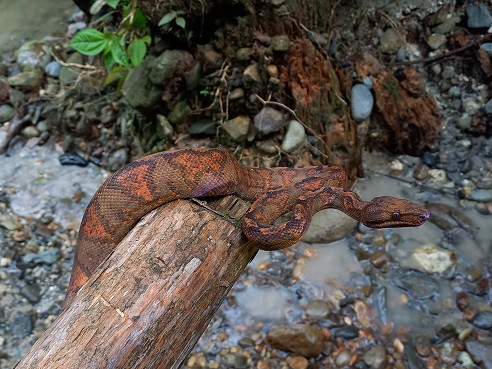
A tree-climbing snake which is naturally rare throughout its territory. The ringed tree boa is a thin-bodied species which has been witnessed a heart-pounding 40 metres above ground, one of the highest figures for any snake. This species belongs to the same Corallus genus as the Amazon tree boa, and is particularly common along Panama’s Caribbean coast.
Instead of open clearings or clumps of trees by playparks, the ringed tree boa is a real jungle snake, preferring forests untouched by mankind. Lowland rainforests are their absolute favourite, where they’re usually invisible due to climbing so high. Ringed tree boas are also nocturnal, and all this combines to make encounters few and far between.
Ringed tree boas are non-venomous, but have thin, razor sharp teeth shaped like hypodermic syringes. With a feisty personality, they don’t hesitate to unleash them on interlopers. This species varies in colour, with some being brown and others brick red. Their patterns are more constant: semi-circular blotches with a dark brown outline.
Ringed tree boas hunt using constriction, and are a confirmed bat-eater. Their known prey includes proboscis bats and birds such as the Canada warbler. As well as Panama, ringed tree boas are found in Costa Rica, western Colombia, Nicaragua and southern Honduras.
| 4 | Neuwied’s false boa |
Maximum length: 121.7cm.
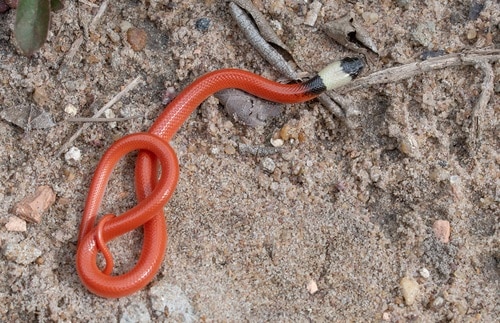
A 100cm species with a weird name, as it looks nothing like a boa whatsoever. This snake is one of Panama’s more flexible, appearing in humid forests and open grasslands alike. Neuwied’s false boa (Pseudoboa neuwiedi) is easily recognisable, with a red/brown body contrasting sharply against a snowy white neck and black head. Unlike the thick, crinkled skulls of actual boas, they have a slender head with round eyes.
Pseudoboa neuwiedi reaches a maximum of 121.7cm. Like a real boa, they hunt using constriction, yet they also have a nasty, skin-shredding venom. According to a 2018 study, this was almost as proteolytic as a fer-de-lance’s venom, and equal in strength to the Neuwied’s pitviper of Brazil (named after the same scientist).
This is one of the most obscure dangerously venomous snakes of the Americas. Fortunately, Neuwied’s false boas have a calm personality, and rarely attack people for no reason. They also have a strange fang anatomy which prevents them from injecting venom easily.
Neuwied’s false boas lean towards lizards for their prey, particularly ameivas. Giant ameivas and dusky giant ameivas are two confirmed prey species. Neuwied’s false boas also appear in Colombia, Venezuela, Trinidad and extreme southern Costa Rica.
| 5 | False coral snake |
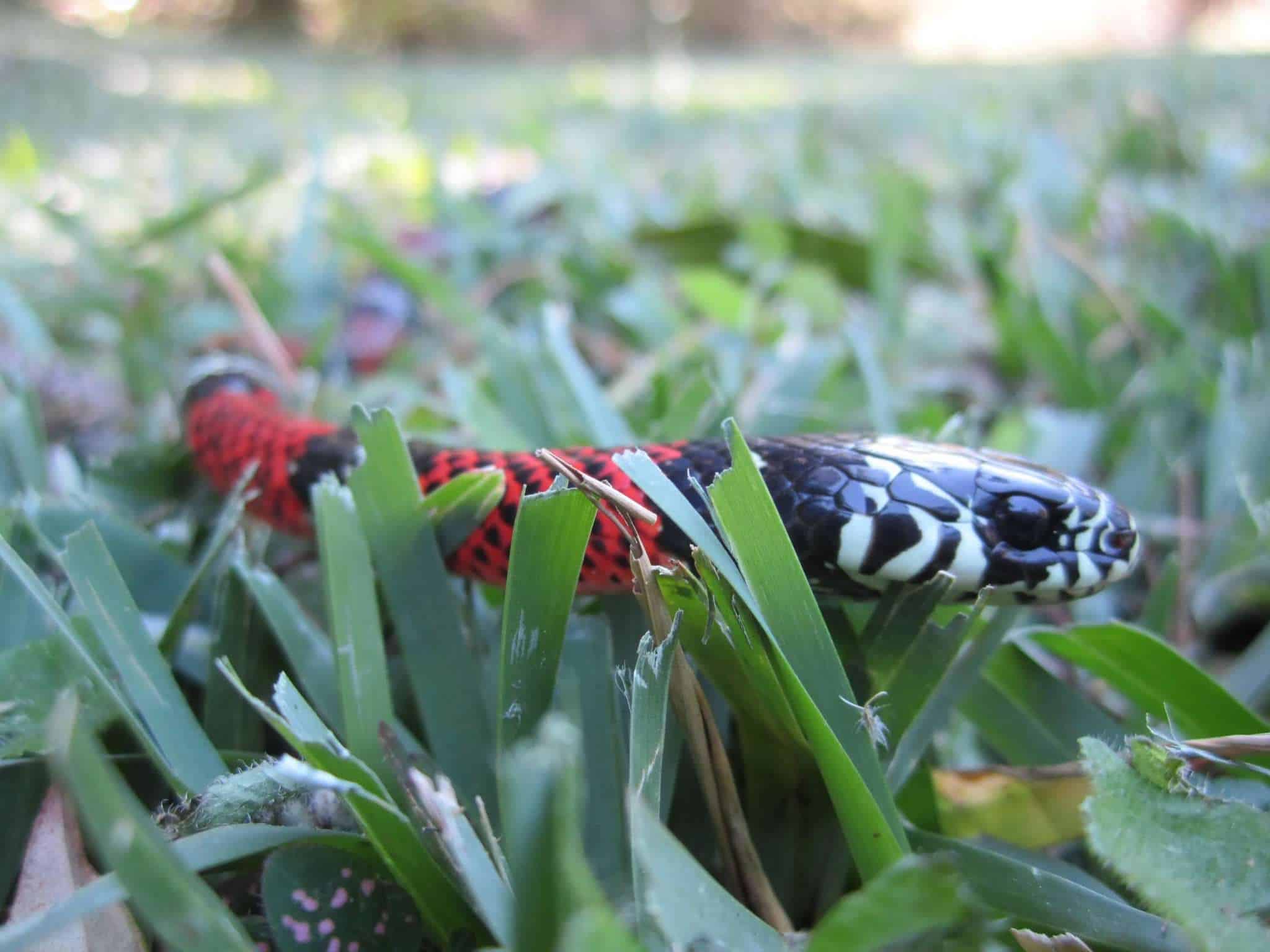
Maximum length: 120.8cm.
A Panamanian snake found in low altitude forests, including evergreen, semi-deciduous and riparian forests. The false coral snake (Erythrolamprus bizona) is a widespread species, which appears from Costa Rica, through Panama, to Colombia and Venezuela.
This is one of the endless false coral snakes of the Americas, snakes which mimic their deadly neighbours in order to give predators a second thought. Of these mimics, Erythrolamprus bizona is unusual in that it possesses its own venom as well. According to a 2018 study, this venom is surprisingly strong, with neurotoxic and proteolytic properties outstripping those of a Neuwied’s pitviper. This is something of a supersnake, as it combines cunning disguise with deadly toxins.
Fortunately, Erythrolamprus bizona is relatively docile, and poses no threat to humans as long as you give them personal space. The main ID key is their face, as E. bizona has marbled black colours alternating against fine patterns of white. Most real coral snakes have one clean colour on their face, usually black and occasionally yellow. The red and white bands also look fuzzy with E. bizona, like static on a TV. This is because each coloured scale is topped with a tiny black marking.
Finally, E. bizona has a thicker, sturdier body than most coral snakes. Erythrolamprus bizona seems desperate to be a real coral snake, as even its diet is similar. It mostly consumes other snakes, such as black-headed snakes (Tantilla melanocephala), northern cat-eyed snakes, and Freminville’s scorpion eating snakes.
| 6 | Red-headed glasstail |
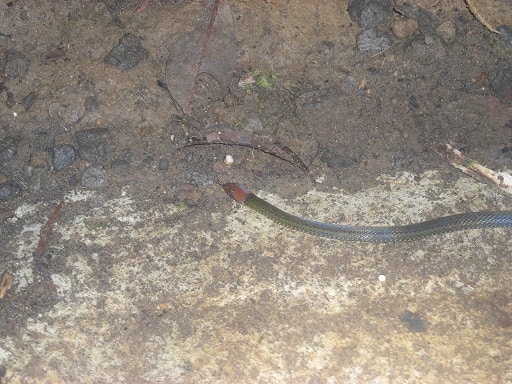
Maximum length: 69cm.
A harmless 40-60cm species which has never caused a human death. The red-headed glasstail lives not just in forests, but the crawling, dense interiors of forests. They stick to the forest floors, where they carefully monitor their surroundings for frogs hopping into view, or lizards crawling along a low bush. This is one of Panama’s harder snakes to find, as they prefer the deepest, most untouched forests.
Like the orange-bellied glasstail of Costa Rica, their name comes from an extremely fragile tail which breaks easily, which is a ploy used to escape the grips of predators. Red-headed glasstails are centred in Panama, but also inhabit Costa Rica to the west, and Colombia and Ecuador to the south. The red-brown head is their signature physical feature, reaching the chin, until white takes its place. The red extends down their neck for three or four scales, gradually brightening, until grey-brown suddenly takes over for the rest of their body.
This harmless species has a golden eye, surrounding a round black pupil. They also have a vivid black line below the eye, like an underline symbol, while their belly is creamy white.
This might be a tropical snake, but red-headed glasstails don’t like it too scorching. During the hottest, driest weather, they switch from day-faring to become nocturnal.
| 7 | Striped vine snake |
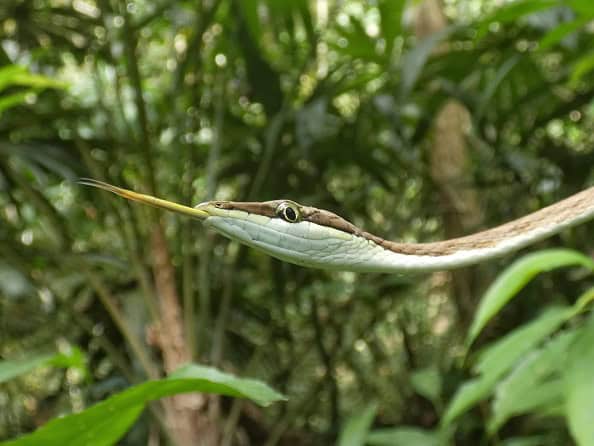
Maximum length: 134.5cm.
A super-thin snake, which effortlessly skirts along the flimsiest tree branches while barely weighing them down. This species was originally believed to be the brown vine snake, but this was split into several species, and those in Panama and Costa Rica were switched to the striped vine snake (Oxybelis vittatus) instead, partly due to a large genetic separation.
Striped vine snakes have one especially memorable feature: a purple-brown mouth lining, which they show off aggressively when cornered. They perform this manoeuvre from a tight S-shape coil, hissing loudly to scare off the enemy, despite lacking any dangerous venom.
They have a second strategy too: freezing completely while dangling from a branch, and lolling their tongue out. The goal here is to disrupt their silhouette, confusing birds into misidentifying them. Oxybelis vittatus even mimics the movements of vines, moving back and forth in a swaying motion to blend in with vegetation.
Oxybelis vittatus has the power of binocular vision, the full 3D sight of a human, because of unusual grooves in their snouts which allow their vision fields to cross over. Striped vine snakes live in a variety of habitats within Panama, including rainforests, parks, gardens and beachside vegetation. Trees are their only real requirement. Striped vine snakes have a parched brown back, with a paler, sometimes greenish belly.
| 8 | Lansberg’s hognosed pitviper |
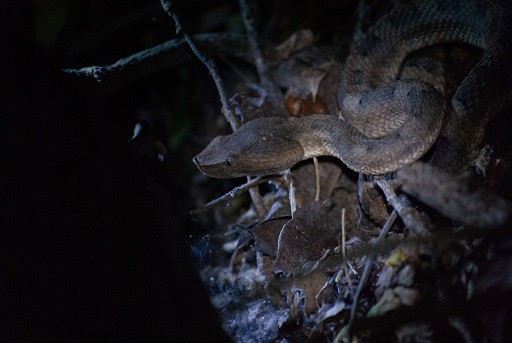
Maximum length: 90cm.
A small venomous snake measuring 50-70cm, which sticks to the ground and only rarely climbs trees. This is a common species in Panama, including near the capital Panama City. Lansberg’s hognose pitvipers appear in humid areas, but their real heartlands are seasonally dry slopes along the Pacific coast, where they hang out in dry forests and semi-arid areas.
This snake is the Panama cousin of the rainforest hognose pitviper found in Belize and Guatemala. Their venom is dangerous to humans, with toxins engineered heavily towards haemorrhaging. When this venom was injected into mice, the blood vessels in their brain began bursting, and their kidneys and livers began bleeding. The main toxin class is snake metalloproteinases, but Porthidum lansbergii possesses several toxins not found in other Porthidium members, such as nucleotidases and VEGF proteins.
Lansberg’s hognose pitvipers vary significantly in colour. They range from orange to stone grey, to somewhere inbetween. Their blotches are usually subtle, being just slightly darker than their surroundings.
Despite its venom, Lansberg’s hognosed pitviper is far from the biggest bully in the forest. In 2020, one was spotted being eaten by a juvenile fer-de-lance, in a dry forest of northern Colombia. Lansberg’s hognosed pitviper inhabits 4 known countries: Venezuela, Colombia, Panama, and extreme southeastern Costa Rica.
| 9 | Ecuadorian milk snake |
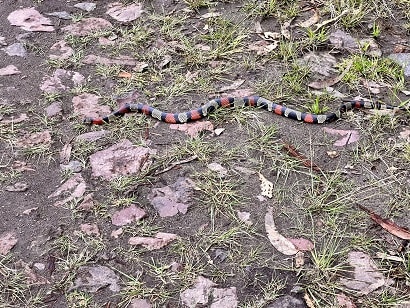
Maximum length: 160cm.
Originally, the US milk snake (Lampropeltis triangulum) had a colossal empire stretching from Canada to Texas to northern South America. These days, it’s a collection of several independent species, and the Ecuadorian milk snake (Lampropeltis micropholis) is firmly in control of Panama. This species is most common in cool highlands rather than swarming jungles, and has been found at 2500 metres above sea level.
Ecuadorian milk snakes are a regular invader of farms in mountainous areas, where they search continuously for small mammals to eat. Mus musculus, the common house mouse, is their only confirmed prey so far.
This is another coral snake copycat, and the ID method is identical to E. bizona: the milk snake has a marbled black and white face, which is constantly alternating, while a coral snake’s is simply plain black or red Being a constrictor, Ecuadorian milk snakes have a thicker body than most coral snakes.
This species also has several fully black populations, where the bands totally vanish into a uniform car tyre colour. Ecuadorian milk snakes reach Costa Rica to the north and Ecuador and Colombia to the south, but Panama is easily their stronghold. Humans have nothing to fear from this non-venomous species.
| 10 | Brown rainbow boa |
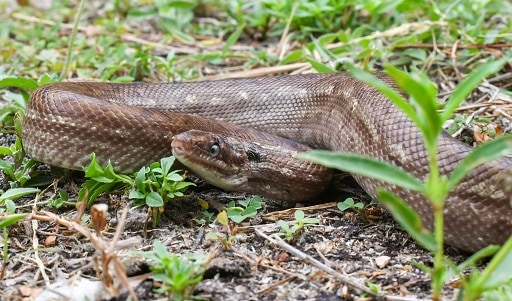
Maximum length: 180cm.
An extremely popular species with reptile enthusiasts worldwide. Brown rainbow boas (Epicrates maurus) are not just the calmest within their Epicrates rainbow clan, but one of the calmest boas worldwide. Their range stretches from Costa Rica to northern South America, with Panama having a particularly huge concentration of sightings.
Epicrates maurus has a red-brown colour as an adult, and its body structure looks chokingly thick. They have vertically elliptical pupils, with irises the colour of a boggy swamp surface. From a distance, it’s hard to see what the rainbow fuss is about. They look kind of dull, but the pieces fall into place when light is shone on them, as their scales have an iridescent sheen which produces every shimmering colour from red to lilac.
This is the second boa in Panama after the ringed tree boa (Corallus annulatus). You might think that there’d be competition, but there’s easily room for both species, as brown rainbow boas are far less arboreal. They ascend branches when young, but stick to the ground more exclusively as they gain bulk with age, which would probably cause branches to snap. Brown rainbow boas are flexible, and inhabit both rainforests and drier coastal clearings.
| 11 | American snail eater |

Maximum length: 71.9cm.
The American snail eater (Dipsas articulata) is a species of Costa Rica, southern Nicaragua and a swathe of Panama. It’s a completely harmless species which spends its life coiled on tree branches 2-4 metres high, without lunging and attacking people like the palm pitvipers it shares branches with.
American snail eaters prey on snails, just as the name suggests. They’re completely harmless to humans, and mainly appear in lowland, swampy rainforests, occasionally cloud forests at altitudes of up to 700 metres, but never towering sky island mountains. They’re recognisable by their black and white bands, with the black bands covering slightly more space than the white. The white ones are also adorned with small yellow patches.
The American snail eater poses zero threat to human beings. In 2004, one of their defensive methods was observed in Tortuguero National Park in Costa Rica – hiding its head to protect its brain.
Researchers found an American snail eater in a lowland swamp forest, and when the snake noticed the humans, it buried its head in its own coils for several minutes. It only left its ball posture after being placed in a vivarium, but reentered the position later. They share this method with the ball python of west Africa, despite the two species probably having diverged well before the dinosaurs went extinct.
| 12 | Yellow blunt-headed tree snake |

Maximum length: 103.5cm.
A mildly venomous species which lives far above your head on branches, and probably wouldn’t bite even if it came face to face with you. The yellow-blunt headed tree snake (Imantodes inornatus) is an almost exclusive tree dweller, as spotting one on the ground is very rare.
This non-threatening snake ranges from Honduras in the north to Ecuador in the south, with Costa Rica and Panama hosting plenty of sightings. Rather than towering cloud forests, this species is usually found in lowland rainforests below 1000 metres.
Bulging eyes are an unmissable ID sign, as well as an impossibly thin body, which is designed for effortlessly crossing tree branches. This is a snake which focusses on nimbleness and acrobatics, rather than slow and steady ambush. Though not fully researched, the yellow blunt-headed tree snake is known to feed on anoles and frogs, as well as frogs’ eggs.
This species overlaps with its cousin, the more widespread blunt-headed tree snake (Imantodes cenchoa), which appears in all of Central America. But the two are simple to distinguish. While equally thin, and with equally bulging eyes, yellow blunt-headed tree snakes lack the large brown blotches of their cousin, sticking to a monolithic dark yellow, with occasional thin black markings.
| 13 | Ringed snail sucker |

Maximum length: 73.3cm.
A harmless snail-eating species, which ranges from Honduras to Ecuador. Though similar in personality to the American snail eater, the ringed snail sucker (Sibon annulatus) belongs to the Sibon genus rather than Dipsas.
As the name suggests, Sibon annulatus is definitely ringed, but this doesn’t do justice to their complex jungle patterns. Like other Sibon members, it seems to be covered with a permanent layer of gnarly tree bark and rainforest goo. This makes it easy to disguish from the American snail eater, which has far cleaner patterns.
The ringed snail sucker is a committed forest snake, which is active at night, though never moves particularly quickly. According to one study, they also derive over 40% of their calories from earthworms. Ringed snail suckers occasionally appear on the ground, but are far more common on trees or bushes, 1-3 metres high.
Across the many images posted online by amateur nature enthusiasts, there’s one clear trend: this snake loves to rest on large rainforest leaves. They appear on branches too, but green, sweeping jungle leaves that collect plenty of water drops are their base, probably because their slug prey like to nibble on them, just as they annoyingly nibble on leaves in someone’s backgarden.