
| 1 | Psammophis (sand racers) |
Members: 28 in Africa (34 worldwide).
Africa is a vast continent, which likely hosts hundreds of snake species yet to be discovered. The Congo rainforest alone probably has dozens, with large areas of poorly mapped territory.
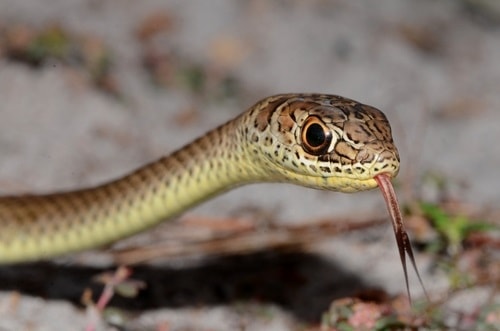
Of the snakes we do know about, there’s a vast amount of different groups, and as of 2025, the one with the most members is Psammophis, AKA the sand racers. This mildly venomous genus numbers 28 across the continent, and occupies every country of sub-Saharan Africa.
Psammophis sand racers are fast-moving, thin-bodied, and are generally diurnal, AKA active by day. A few are rarely sighted, such as the Rukwa sand racer, while the likes of South Africa’s cape sand snake are absolutely everywhere. One of their strange characteristics is that a few members rub a nasal secretion into their own scales, giving them a shine. This is theorised to be for preventing sun loss.
28 Psammophis members are found in Africa, but 6 species are found further afield, including the long sand racer of India, and Indochinese sand snake of Thailand. The strongest bite case so far came from the Schokari sand racer of Egypt, which caused a man’s fingers to swell painfully, with the resulting stiffness only fully fading after 3 months. The most recently discovered species was Psammophis cornusafricae, from the deserts of Ethiopia, discovered in 2023.
| 1 | Afrotyphlops (African blind snakes) |
Members: 28.
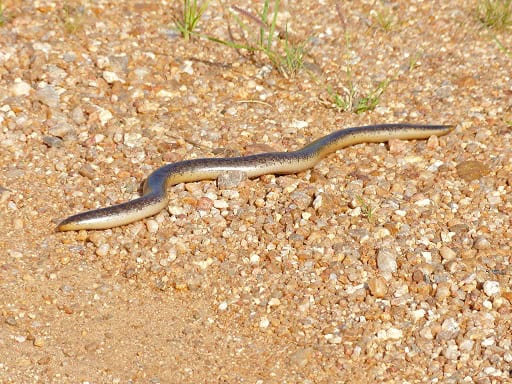
Another completely harmless genus of snakes. The Afrotyphlops genus numbers 28 that we know of, and poses no threat to human beings. This is a fossorial, or underground-based clan, and given their love of dark tunnels well away from human vision, it’s highly likely that there are more Afrotyphlops members which haven’t been discovered.
The Afrotyphlops group is found only in sub-Saharan Africa. Most of the 200+ blind snakes worldwide are tiny, but Afrotyphlops contains some of the largest members, including the African giant blind snake (Afrotyphlops schlegelii), which reaches 80cm.
This clan lacks any form of venom, or even teeth. Their defensive tactics include disappearing underground, or more disgustingly, regurgitating their previous meal in the palm of your hand.
Afrotyphlops members feed heavily on termites, and are highly aggressive in acquiring them. They’ve been spotted burrowing furiously into the sides of termite mounds, before completely disappearing. They often rest in the centre of termite mounds after feeding, and their own predators include snakes of the Polemon genus, such as the collared snake-eater.
| 3 | Boaedon (house snakes) |
Members: 27.
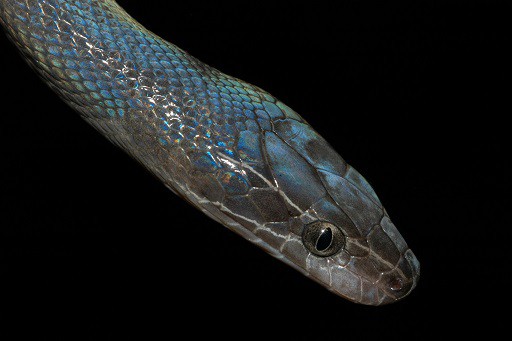
A harmless group of snakes, which commonly lives in towns and even cities, including large South African cities such as Cape Town and Pretoria. Boaedon house snakes are completely comfortable around humans, adapting superbly to housing estates, bus stops and deforestation.
This group includes such members as the Cape house snake of South Africa, and bug-eyed house snake of Namibia. This is a non-venomous group of snakes, with extremely flexible diets, which makes them easy to keep as pets. A captive Cape house snake can be flung a defrosted mouse with ease.
Boaedon house snakes have unusually large eyes, with vertical pupils, and tend to lack flashy patterns, which makes identifying them difficult. They tend to lurk under cover objects such as logs or pieces of cardboard, but aren’t fossorial like blind snakes.
This snake genus is almost completely confined to Africa, except for a small colony on the Arabian peninsular. One common member is the brown house snake (Boaedon fuliginosus), which covers virtually all of Africa, ranging from Mozambique to Morocco in the north. Scientists believe that Boaedon fuliginosus is actually a species complex, which will be broken down into multiple independent species in the future, meaning that the Boaedon clan will surely grow further in the years to come, perhaps taking the number 1 spot.
| 4 | Philothamnus (green snakes) |
Members: 25.
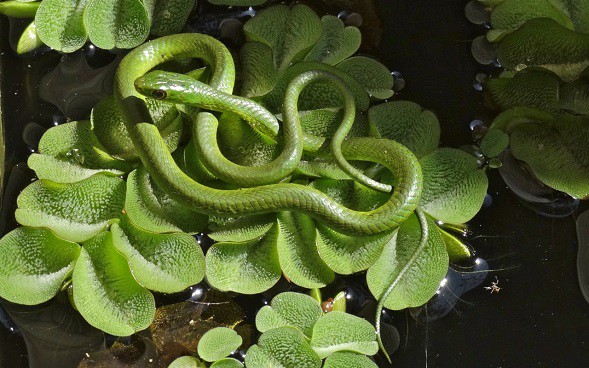
If you stumble across a hyper-green snake in an overgrown bed of grass in Africa, then it’s highly likely to be a Philothamnus member. This vast, but non-venomous clan includes members such as Battersby’s green snake in Nairobi, and the green watersnake (Philothamnus hoplogaster) of South Africa. Philothamnus members are found only in sub-Saharan Africa, and have at least 25 members, possibly more.
This is a completely harmless genus of snakes. Philothamnus members rarely attack even if picked up, and instead rely on a combination of high speeds and amazing camouflage for their survival. Check out the image above; members of this genus blend into grass with ease, with each pigment of their scales fine-tuned for total disappearance.
Philothamnus members prey on a mixture of amphibians and reptiles. Some members such as South Africa’s green watersnake eat 97% amphibians, while others such as the eastern natal green snake are split roughly 50:50 between amphibians and reptiles.
The only real danger of this clan is confusing them with a much deadlier snake: the green mamba. The latter is significantly longer, sometimes exceeding 2 metres, and Philothamnus members often have subtle black markings which green mambas lack. But the smart move is to never touch a possible Philothamnus member until you’re completely sure of its identity.
| 5 | Lycophidion (African wolf snakes) |
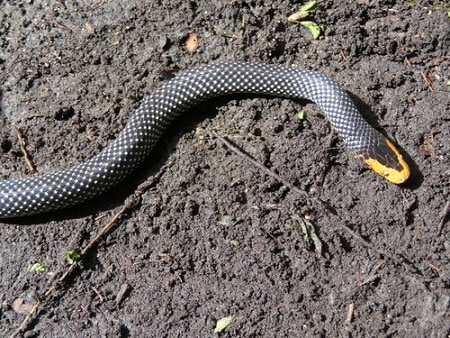
Members: 23.
A huge, but poorly researched genus of snakes. Lycophidion members are found in almost every nation of sub-Saharan Africa, where they usually appear in open savannahs. The most common member is easily the cape wolf snake (Lycophidion capense), which ranges from South Africa to Kenya, and often appears near human-inhabited areas, particularly in the city of Durban.
These snakes are thought to be completely harmless, and rely on constriction for hunting. One of their tendencies is coiling into a tight ball and stashing their head in the centre, shielding their brains from bird predators. They’re confirmed prey for larger, more aggressive snakes such as the cape file snake, and their own diet is rich in lizards, among the few species which have actually been researched.
African wolf snakes almost always have a black base, but have many interesting variations. The red-snouted wolf snake is native to Tanzania’s Usambara mountains, and has a bright yellow face (see above). The spotted wolf snake is found in far western Africa, bordering the Atlantic (Gambia, Senegal), and has round red spots. Then there’s the flat-snouted wolf snake, which has a compressed head and snout.
| 6 | Atractaspis (stiletto snakes) |
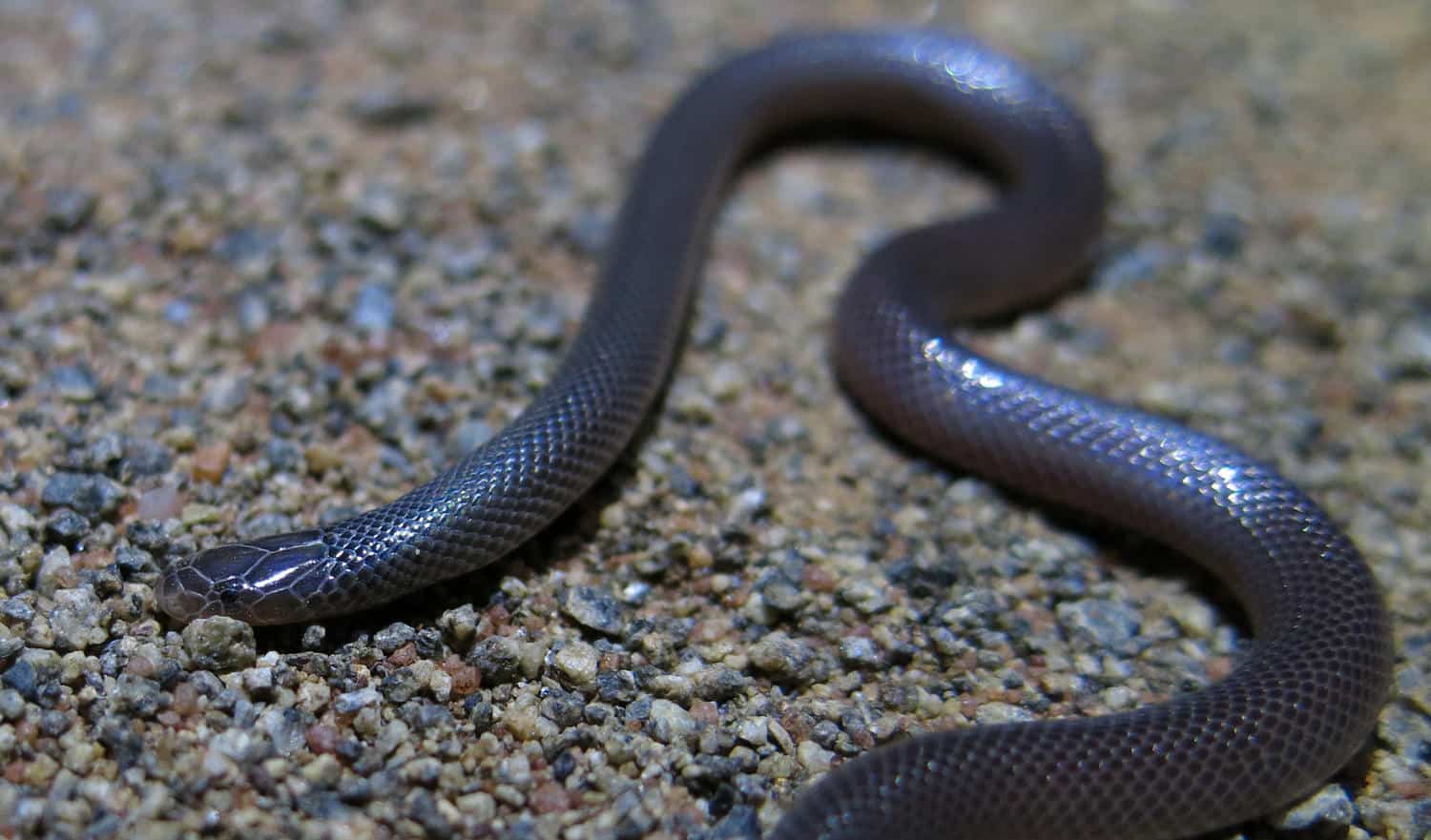
Members: 22.
The first potentially lethal group of snakes on our list. The Atractaspis genus is colloquially known as the stiletto snakes, or the side-stabbers, due to a sideways-pointing tooth that juts sideways from their mouth. This unique tooth is capable of injecting venom into unfortunate victims, even when the rest of their mouth is closed.
Atractaspis members cover all of sub-Saharan Africa, as well as North Africa, spreading into southern Israel and Saudi Arabia. Almost all are black and shiny, with only a few exceptions. Almost all members are fossorial, forging underground tunnels, which commonly leads to confusion with equally black blind snakes.
But this snake genus is no joke – Atractaspis members can cause swelling, blistering and necrosis if left untreated with antivenom. One of the most common is Bibron’s stiletto snake, found in South Africa and Zimbabwe, which causes some of the highest numbers of snakebites annually alongside the cape cobra. Other members include the fat burrowing asp of Gabon, which is unusually thick, and Peter’s burrowing asp of Kenya.
| 7 | Leptotyphlops (slender blind snakes) |
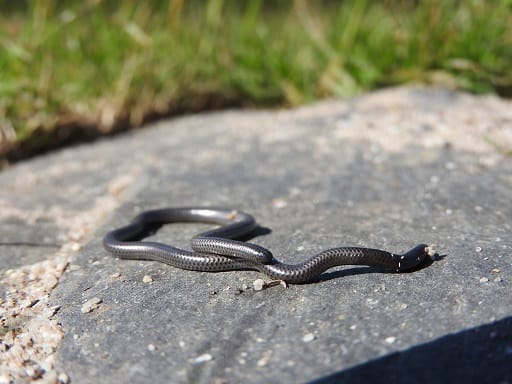
Members: 21.
Another large genus of blind snakes. Leptotyphlops is another fossorial, underground-dwelling clan, which inhabits a vast swathe of South Africa. Compared to Afrotyphlops, they tend to be significantly smaller, and are also blacker on average, leading to confusion with lethal stiletto snakes.
Leptotyphlops members are harmless, and prey heavily on ants and termite larvae. They’re found across virtually all of southern Africa, including South Africa, and Kenya and Uganda to the north, but are missing from central African nations such as Nigeria and Ghana. Two of the most common members are the black thread snake, found along South Africa’s southern coast, and Peter’s thread snake, found across Zimbabwe, Mozambique, northern South Africa and more.
African thread snakes are exceptionally shiny, and usually measure less than 30cm. Their head and tail are barely distinguishable, with the same width. Picking them up is perfectly safe, but we advise against this, given their similarity to Atractaspis stiletto snakes. The two even live in similar habitats, as Leptotyphlops thread snakes favour open savannahs and fields rather than parched deserts or thick forests.
| 8 | Bitis (African adders) |
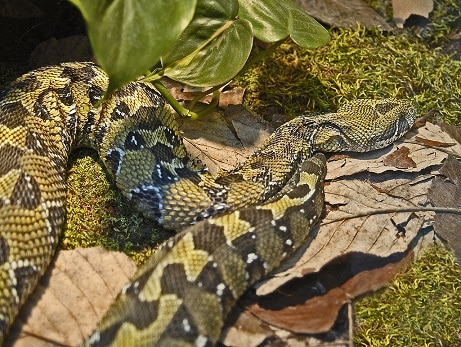
Members: 18.
Sub-Saharan Africa has two large genera of vipers which appear almost nowhere else, also including the Atheris bush vipers (see below). Bitis is the signature ground-dwelling clan, a group of thick-bodied ambush predators which stick to one area for days and rarely move.
Most Bitis adders prey heavily on mammals, with some lizards or birds. The majority have a cytotoxic venom which tears through layers of skin and muscle tissue, although a handful such as the red adder of South Africa possess neurotoxins.
Bitis adders are almost completely found in Africa, with one exception: the puff adder, which also reaches Saudi Arabia and Yemen. The puff adder is the most common species overall, inhabiting almost all of sub-Saharan Africa. Most Bitis adders have excellent camouflage, and are the exact opposite of a cobra in personality, moving slowly and steadily through the countryside rather than zipping around in a hyperactive state.
The Bitis adders have an impressive variety. Some have sharp horns sprouting from their faces, such as the many-horned adder of South Africa. Some are just 60cm, such as the red adder, while puff adders measure up to 191cm. Some live in deserts (Peringuey’s adder), while others live in bushy forests near coffee plantations (Ethiopian mountain adder). Yet all are united by the fact that you should never touch them.
| 8 | Atheris (bush vipers) |
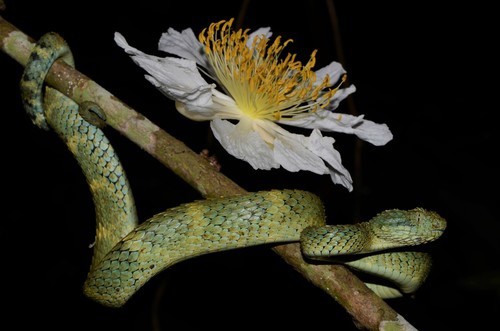
Members: 18.
The main branch-dwelling genus of venomous snakes to watch out for. The Atheris bush vipers also number 18, and are endemic to sub-Saharan Africa, with no members appearing in North Africa, the Arabian peninsular, or Madagascar.
Atheris bush vipers are similar to the eyelash vipers of Central America, climbing to branches all day, and assaulting people who dare to stray to close, but without ever charging at people. Few members are widespread, due to widespread deforestation, and their inability to inhabit flat, open terrain (unlike a puff adder).
The African bush viper (Atheris squamigera) is relatively common, inhabiting a swathe of the Congo rainforest. At the opposite end, you have the hairy bush viper, which has memorable jagged scales closely resembling a pineapple, yet appears only in a few forests of DRC, Uganda, Kenya and Tanzania.
The Atheris bush vipers are poorly researched in terms of venom, although the hairy bush viper is believed to be highly neurotoxic, and therefore potentially deadly. This group blends perfectly with lush jungle foliage, making them difficult to spot except via a pair of gleaming vertical pupils.
| 8 | Dasypeltis (egg-eaters) |
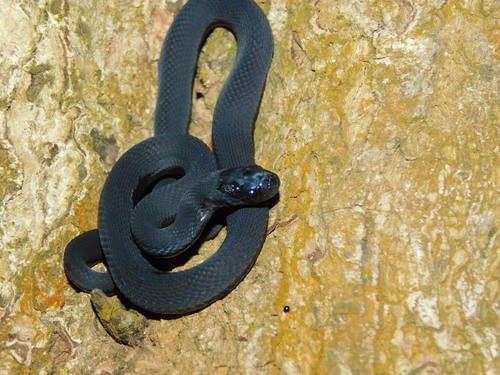
Members: 18.
As lethal as a hairy bush viper is, it would probably choke to death if it tried to swallow a bird’s egg whole. The Dasypeltis genus has no such problem, as their colloquial name is the African egg-eaters. This group is endemic to sub-Saharan Africa, and has at least 18 members (probably more).
Dasypeltis members derive the vast majority of their calories from eggs. The likes of the brown egg eater (South Africa) and montane egg eater (Kenya) hunt down hidden egg stashes using scent particles alone, slithering through overgrown thickets until they locate the bird mother’s secret spot. Then they swallow an egg whole, before cracking it with enlarged vertebral shelves, and regurgitating the yolk.
Dasypeltis egg-eaters are harmless to humans. However, they possess a variety of tricks, such as triangulating their head to mimic a viper, and baring a jet black mouth lining while gaping their jaws open wildly.
Dasypeltis egg-eaters mainly appear in sub-Saharan Africa, but have one small enclave to the north of the Sahara desert. This lies in Morocco, which is home to the obscure Sahel egg eater (Dasypeltis sahelensis).
| 8 | Prosymna (shovel snouts) |

Members: 18.
A harmless genus of snakes, which is recognisable by their spade-shaped snout, designed for digging. Prosymna members prey heavily on reptile eggs, including those of geckos. They range from South Africa in the far south, all the way to the Atlantic coast in Gambia and Senegal, which are inhabited by the obscure Prosymna collaris.
The African shovel snouts have round pupils, and vary in patterns, but usually have a paler underside than their main body. From a side view, their shovel snout is clearly visible – this isn’t a falsely named group. All members have this strangely-shaped snout, yet some burrow more than others. The Mozambique shovel snout (common in South Africa) digs deep into surface layers of soil, vanishing from sight, while the southwestern shovel snout of Namibia would rather take shelter in dark rock cracks.
Other members include the East African shovel snout of Mozambique, which is reported to feed on flying ants. The Prosymna genus as a whole is completely non-aggressive towards humans, with no notable venom.
That said, this snake has vast gaps in the research. Though Prosymna has the same number of members as the Bitis adder clan, the latter has had vastly more studies conducted, mainly due to their higher danger factor.