
| 1 | Taiwan’s main mountain pitviper |

Taiwan is less of a snake haven than Thailand or Vietnam, but is still home to at least 50 species, with the last new species being discovered in 2015. Virtually the entire island hosts one viper or another, and the main high altitude pitviper is the Taiwan pitviper (Trimeresurus gracilis), also known by locals as the Kikuchi Habu.
This species is found exclusively over 2000 metres above sea level. It even appears at altitudes of up to 3500 metres, making it the highest-reaching member of the Trimeresurus pitviper genus it belongs to, and one of the highest altitude pitvipers in southeast Asia. There’s no chance of encountering this species in the capital Taipei City, but Taiwan pitvipers are common in cool, rugged hiking areas such as Taroko National Park and Yushan National Park.
At 2000-3000 metres above sea level, Taiwan pitvipers are common in coniferous and broadleaf forests. As the altitude increases and temperatures cool, these forests become too deprived of sun for a cold-blooded reptile to survive. Consequently, at the highest altitudes of 3000-3500 metres, Taiwan pitvipers are much more common in open grassland or on rocky slopes, nipping at the heels of hikers trying to tiptoe past. They’re also common near clumps of arrow bamboo, and are occasionally found as roadkill on highways in the mountains.
| 2 | Separated from two other pitvipers |
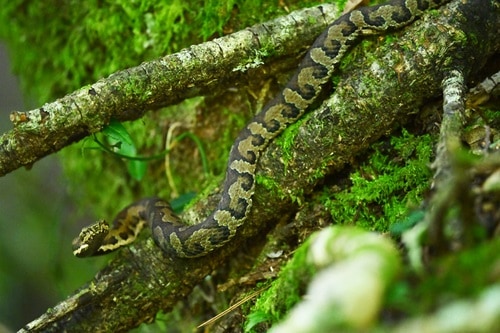
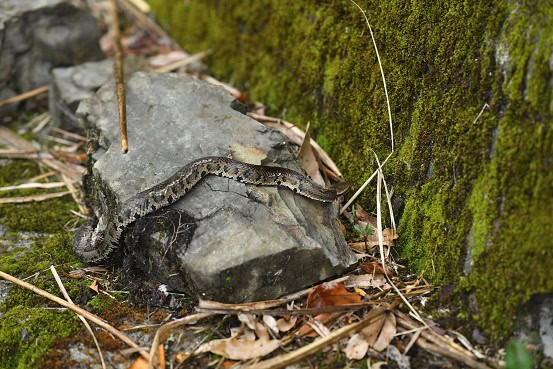
Taiwan pitvipers cling to tree branches only rarely, and are almost never found high in trees. They spend the majority of their day on the ground, sometimes resting on large rock slabs in order to warm themselves in the mountainous sun.
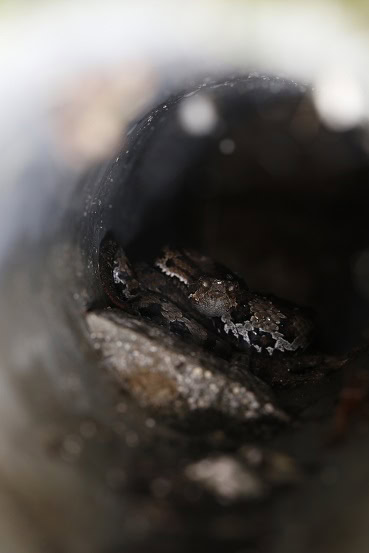
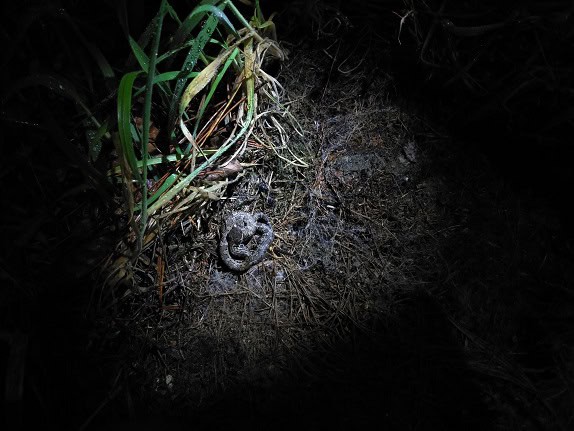
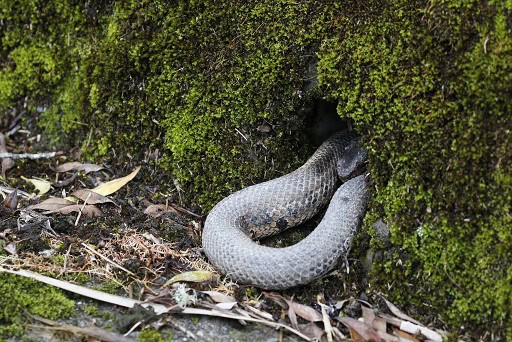
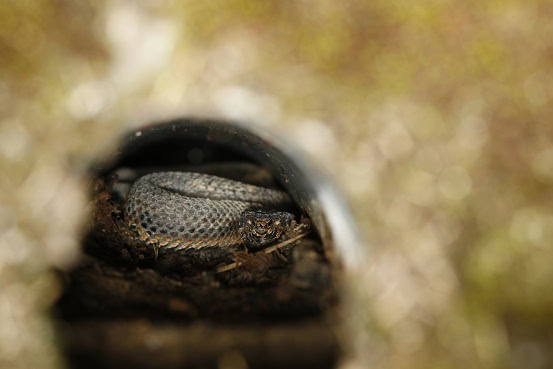
Consequently, they lack the bright green scales of other Trimeresurus pitvipers. Instead, this species is a light brown contrasting against darker brown stripes, without a hint of neon leafiness. This is also a short species, with a record of just 60cm. Taiwan pitvipers have fantastic camouflage against the forest floor, and they also have a tendency to take shelter in small holes, whether in rock piles or at the bases of trees.
Taiwan is neatly divided when it comes to pitvipers. The common Chinese pitviper (Trimeresureus stejnegeri) inhabits the lowlands below 2000 metres, and primarily clings to tree branches. The Taiwanese habu (Protobothrops mucrosquamatus) also lives below 2000 metres, but sticks to the ground, and is responsible for the highest number of bites on the island (around 50% annually).
Meanwhile, the Taiwan pitviper has taken control of the chilly mountains, which are more sparsely inhabited by people. The three species almost never appear alongside each other, therefore avoiding heavy competition.
| 3 | Diet: mammals in adulthood |
For such a remote snake, the Taiwan pitviper has a well-researched diet, courtesy of a large study released in 2008. Scientist patrolled two national parks in Taiwan, gathering both live and dead Taiwanese pitvipers: Yushan and Taroko National Parks. Some were collected alive, while others were found as roadkill on major mountainous highways. The snakes were categorised as yearlings, subadults or adults.
Across the 160 Taiwan pitvipers, 89 food items were discovered. The results were clear, as yearlings completely shunned mammals. Their diet consisted mainly of reptiles, representing 91.7% of their diet, with small numbers of amphibians, representing 8.3%. Not one mammal prey was discovered.
As they aged into subadults, the Taiwan pitvipers added more mammals, but only shrews, with no rodents. When they reached fully-fledged adulthood, small mammals completely dominated, with lizards falling by the wayside. Male adults preferred shrews, while female adults gravitated towards rodents. Overall, mammals comprised 68.1% of adult meals, with lizards comprising 30.4%. Adults completely shunned amphibians.
| 4 | No confirmed deaths, but dangerous |
Taiwan pitvipers average at just 50cm, but their venom is highly toxic, and more than capable of sending you to hospital.
On one hand, this mountainous species lacks neurotoxins, and cannot trigger the drooping eyelids and full body paralysis of a black mamba. With their small body size, they can’t overwhelm your body using a moderately intense venom which comes in huge quantities, like the eastern diamondback rattlesnake of Florida, which overwhelms the kidneys.
Nevertheless, Taiwanese pitvipers could cause lasting deformities if left untreated. A 2024 report detailed two cases. The first victim experienced typical pitviper symptoms of swelling, intense pain and profuse bleeding. There was also an area of necrosis, rotting flesh, which is typically caused by an abundance of cytotoxins in snake venom.
Meanwhile, the second patient received 2 bites, and experienced pain and progressive swelling, but no necrosis. In both patients, no systemic effects were observed (e.g. kidney failure), nor neurological effects.
| 5 | No dedicated antivenom |
Taiwan pitvipers are unlikely to kill you, but there is one unfortunate fact which cranks the risk level up: no antivenom. Trimeresurus gracilis has no dedicated serum manufactured against its venom, and currently, victims in hospitals are treated with an antivenom raised against the Chinese pitviper and Taiwanese habu, the two main species of Taiwan’s lowlands.
Reports are mixed on whether these antivenoms work. In the first case study above, this antivenom “was used to treat both patients, with a favorable outcome in each“. However, a 2024 study devoted itself to antivenoms specifically, testing 3 mixtures against Taiwan pitviper venom, none of which were raised against the venom itself.
Of the 3, antivenom for the short-tailed mamushi (Gloydius brevicauda) deactivated the toxins most strongly; this species lives in South Korea, and doesn’t even inhabit Taiwan. Meanwhile, the standard Taiwan antivenom above performed only moderately well, despite being the norm in hospitals. The weakest antivenom of the three was the remedy for Deinagkistrodon acutus, AKA the Chinese moccassin.
| 6 | Similar to a notorious US killer |
Despite being found in more remote areas, the Taiwanese pitviper’s venom has been fairly well researched. A 2023 study examined its toxin makeup, and found high levels of snake venom metalloproteinases (SVMPs), with small quantities of serine proteases.
The individual toxins had a strong similarly to the Okinawa habu of southern Japan, which is believed to be its closest relative worldwide. But one result was stranger: a venom profile strongly resembling the western diamondback rattlesnake.
This infamous species inhabits a swathe of the southern US, including Arizona, New Mexico and Texas. It’s responsible for the highest number of US snakebite deaths, alongside the eastern diamondback. The Taiwanese pitviper had very similar toxin proportions to the western diamondback, and even similar venom toxicity towards mice, with the one caveat of a far lower venom yield, due to a smaller maximum size of 60cm versus the western diamondback’s record of 233.7cm. This led scientists to speculate that the Taiwanese pitviper was closely related to the ancestor of all US rattlesnakes.
| 7 | A non-factor in snakebite statistics |
Because they inhabit remote mountain habitats, Taiwan pitvipers have very little presence in Taiwan’s national snakebite statistics. One study examined 4647 officially documented snakebites in Taiwan from 2005 to 2009. It found that collectively, the Chinese pitviper and Taiwanese habu contributed 71.78% of snakebites. Small proportions were contributed by the Chinese cobra, many-banded krait and Chinese moccassin. Meanwhile, the Taiwan pitviper wasn’t even mentioned by the study.
Another couple of case studies were discussed in a 2022 report. The first victim was a woman, who was bitten on the tip of the finger by a juvenile Taiwanese pitviper. She arrived at hospital within 1 hour, and was administered four vials of non-specific antivenom within 6 hours, followed by another 3 vials within 24 hours.
The woman developed a variety of nasty symptoms, including haemorrhagic bullae and swelling, and was forced to return to hospital 5 days after being bitten. On day 8, she underwent surgery to remove necrotic tissue. After 3 months she had mostly healed, yet her finger was left permanently bent.
| 8 | Prothrombin and accelerated bleeding |
Meanwhile, the second victim was also bitten on the finger, this time by an adult female Taiwanese pitviper. This woman was treated with antivenom significantly more quickly, receiving 4 vials within 1 hour, followed by another 4 vials one hour later, and a final 4 vials at 9 hours post bite. Her main symptom was swelling, which progressed to the elbow and eventually the forearm by 9 hours post bite.
The woman spent 14 days in hospital, and her finger also became stiff, and tricky to bend, but healed fully in 1.5 months, with no long-lasting deformity. In both patients, the scientists found elongated prothrombin times; this measures the time it takes for the clotting material prothrombin to be created from its base material thromboplastin. The higher the time, the greater the likelihood of haemorrhaging.
The second woman healed fully, and the faster administration of antivenom was partially why. Nevertheless, the scientists deemed the antivenom to be “insufficient” for treating victims of the Taiwanese pitviper. The mixture given was again the standard Chinese pitviper-Taiwanese habu mixture, used in most Taiwanese hospitals.
| 9 | Diet, part 2 |
In the next phase of their diet study, scientists backed up their National Park mission by testing captive Taiwan pitvipers, including 8 adults and 11 neonates (newborns). The adults were starved for 1 month prior to the experiment, and the neonates 2 weeks. Each snake was offered 6 types of prey: a mouse, lizard, Japanese stream treefrog, blue worm, cricket, and a slug.
The scientists placed each prey in each pitviper’s cage, and waited for 72 hours. If the snake ignored the meal, then it was replaced with a different prey. If the snake consumed the prey, then the scientists waited for 2 weeks (newborns) or 1 month (adults) before placing a new meal in the terrarium, allowing their hunger to reactivate…
The first result was clear: the slug, cricket and blue worm were completely ignored. Neither the adults nor the neonates had any interest in them.
Meanwhile, all 11 newborns showed interest in the lizards and amphibians. Only 1 showed interest in the mouse. By adulthood, the interest in reptiles had significantly declined, as only 3/8 adults showed interest. Only 2 showed interest in the amphibians, while all 8 adults greedily accepted the mouse.
| 10 | Probably an ambush predator |
Several species were found repeatedly in the Taiwan pitvipers examined. The only amphibian detected was the Alishan salamander (no frogs), while the most common reptile was easily the Taiwan alpine skink, another high altitude dweller, followed by the Hsuehshan grass lizard. The latter two are endemic to Taiwan. Confirmed mammal prey included the Père David’s vole, Taiwan vole and Taiwan field mouse.
The scientists detected a prey frequency in stomachs of just 16.9%, with the vast majority having empty stomachs. This was within range of various other ambush snakes around the world: the Australian death adder at 8.1% in one study, the timber rattlesnake at 16.1%, and prairie rattlesnake at 15.0%. Most Trimeresurus pitvipers are ambush predators, so all evidence suggested that the Taiwan pitviper was as well.
Another study tested the theory that venoms are designed not just to kill prey, but predigest them, using metalloproteinases which physically dissolve cells of a mouse or lizard. Taiwan pitvipers contain high amounts of metalloproteinases in their venom, so this was a logical species to test. Taiwan pitvipers were fed dead mice which were either “fresh” or had been envenomated.
The result: no improvement in digestion time. In fact, the envenomated mice took slightly longer to digest than the control mice. This doesn’t apply to every snake on Earth, but at least for the Taiwan pitviper, the venom seems to be for killing prey only (and scaring away scientists), not dissolving them into an easily swallowable mush.
| 11 | Less cold tolerant than expected |
Taiwan is split between the Chinese pitviper and Taiwanese habu in the lowlands, and the Taiwanese pitviper above 2000 metres. The cause seems logical: a higher tolerance for colder temperatures. But according to a 2007 study, it might not be that simple.
The study tested the tolerable limits of cold and hot temperatures for all 3 species, and found that the Chinese pitviper had a tolerable lower mean of 5.6C. However, while the Taiwanese pitviper could cope with slightly colder temperatures, the difference was only 2 degrees, at 3.7C. The Taiwanese habu actually had greater cold tolerance, at 3.5C versus 3.7C, despite preferring lower altitudes.
The scientists theorised that rather than temperature preference, prey was the reason why Taiwanese pitvipers preferred higher altitudes. They speculated that below 2000 metres, most lizards tended to live in different habitats to the Taiwanese pitviper, including humid forests and on tree branches, rather than in open grasslands or coniferous forest floors. This would rob them of their juvenile food source, preventing them from moving to areas lower down.
Another possibility is simpler: that their pitviper rivals are more adapted survival beasts, and would outcompete them if they ventured to lower altitudes.
| 12 | Dives underground during winter |
The scientists also found that in Tatachia Recreation Area (altitude 2550 metres), a habitat of the Taiwanese pitviper, the ground surface temperature fell to 1.9C in winter. This was significantly below the species’ lower limit.
Therefore, the scientists deduced that Taiwanese pitvipers must vanish underground during winter, into holes in their coniferous forests or sweeping mountain grasslands. They tested underground soil layers, and found that at just 1 metre underground, temperatures only fell to a minimum of 4.4C – within the tolerable range.
Generally, Taiwanese pitvipers hibernate from November to March, reappearing in April and disappearing in late October. Scientists have even analysed the possible effect of climate change on the Taiwanese pitviper. They calculated the effect of a 3C temperature rise on Taiwan’s central mountains, and found that at 2000 metres, Taiwan pitvipers were likely to become more active, as their shady forests gained new warmth. They would have an increased digestive ability, allowing them to devote more energy to movement instead.
However, the scientists found that above 3000 metres, there would likely be no benefit. The scientists also warned of a dire consequence: that their pitviper rivals in Taiwan’s lowlands could seize the opportunity to move to higher altitudes, exploiting the new warmth, possibly outcompeting the Taiwan pitviper and putting the species in danger.
| 13 | Possibly not a Trimeresurus member |
The Trimeresurus pitviper genus is vast, with 44 members as of 2025. The vast majority are bright green, and while there’s a few other brown members (like the Andaman pitviper), Taiwan pitvipers are still unusual in lacking any bright colours whatsoever. There’s other strange features as well, such as their liking for high altitudes, and their complete lack of interest in tree branches. The likes of white-lipped pitvipers and large-eyed pitvipers spend their entire lives on bushes and trees.
In the best scenario, the Taiwan pitviper is the most distant offshoot of the wider Trimeresurus genus. However, some believe that it belongs to a completely different group, or possibly a completely unique genus. In 2012, a new paper argued for the creation of an all-new snake genus: Oxyus, of which the Taiwan pitviper would be the sole member.
Other pitviper groups in southeast Asia include Gloydius and Ovophis. Scientists have found that Taiwan pitvipers have a close genetic relationship to the Okinawa pitviper (Ovophis okinavensis) of southern Japan. Even the toxins of the two species were similar in structure, with one PI metalloproteinase being 95% identical.
It’s possible that the Taiwan pitviper will be switched to the Ovophis group as well, or become recognised as a unique pitviper altogether, found only in the rugged mountains of central Taiwan, waiting to ambush anyone who dares to enter them. For now, it officially belongs to the Trimeresurus genus, but is something of a weird snake which doesn’t belong.