
| 1 | A southern African constrictor |
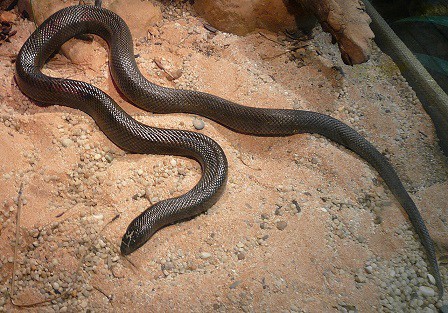
The mole snake (Pseudaspis cana) is a larger than average, slow-moving snake of southern Africa, which lacks any form of venom and kills its prey via constriction instead. It’s mainly a ground-dwelling species, climbing trees only rarely, and appears in a wide range of habitats, usually relatively open ones like grassland and hillsides.
Although black mambas are more famous, this species is more common, covering a large swathe of territory. Mole snakes cover virtually the entirety of South Africa, Zimbabwe and Namibia. They cover the tiny nations of Eswatini and Lesotho, small areas of Mozambique, and large swathes of Malawi and Angola. They also have small pockets in Tanzania, and the furthest north they reach is Kenya.
Mole snakes reach an all-time record of 210cm, and 120-180cm is typical. They’re relatively thick-bodied as well, due to their constricting hunting methods. They vary significantly in colour, as adults can be either jet black, brown or even yellowish, with a slight black edge to each scale.
The origin of the mole snake’s name is hard to conclusively pin down, but comes from one of three things: 1) its tendency to eat mole rats, 2) its tendency to eat golden moles, or 3) its tendency to lurk underground like a mole itself. This species often invades dark mammal tunnels, before spending several weeks in them as a base.
| 2 | Not to be trifled with |
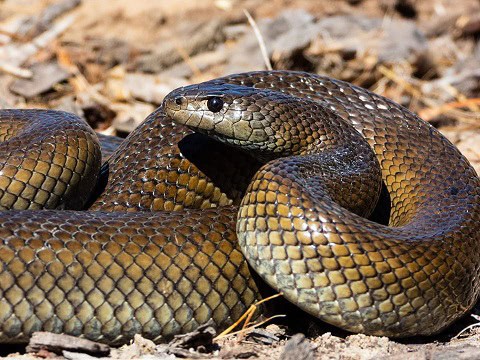
Many non-python constrictors worldwide are calm and gentle around humans, such as the California kingsnake, which is proportionately the most powerful constrictor worldwide but makes for a perfectly peaceful pet. The mole snake, meanwhile, can be a calm pet, but only after a period of serious adjustment. This species can be seriously vicious when picked up, one of the most vicious non-venomous snakes worldwide.
Adult mole snakes tend to flee if cornered, while juveniles freeze and rely on camouflage. If you do manage to pick an adult up, then expect not just bites, but sharp, lacerating bites that draw blood and potentially require stitches. The mole snake’s teeth have a unique morphology, as the teeth of the lower jaw have a special cutting edge along the inner curve. This extra sharpness is theorised to be for battling rodents in underground burrows, or perhaps duelling rival males.
Either way, a manhandled mole snake will grasp your finger with its mouth. It will then multiply the pain by rotating its fangs while still embedded in your skin, ripping the flesh into a grisly mess. The enraged mole snake may even rotate its jaw around your entire finger, sending a deafeningly loud message of “put me down”.
Mole snakes have also been described as using their upper jaw like a lever to control the lower. Keepers testify that the mole snake adjusts to captivity eventually, but this is one non-venomous snake you should never underestimate.
| 3 | Brutal wrestling bouts |
The mole snake’s aggressive personality extends to inter-species relations as well. Many snakes worldwide practice male wrestling, from the tiger ratsnake of Brazil to the oriental ratsnake of Thailand.
The goal is usually to compete for females, and the contests themselves often follow a pattern of two males intertwining their bodies, before attempting to force their rival’s head to the ground. This is a display of sheer serpent strength and agility, but the majority of wrestling snakes worldwide never lay their jaws on each other. Exceptions include the scrub python of Australia, and the brutally aggressive mole snake of southern Africa.
Mole snake wrestling bouts (more like gladiatorial battles) are often so vicious that mole snakes’ ribcages are left exposed afterwards. Somehow, they’re able to recover and thrive with these wounds. It’s common to find mole snakes with battle scars all over their bodies, most of which are concentrated around the neck and tail.
These brutal battles are aided by the same cutting edges on their lower teeth. Like with a human finger, the lacerations inflicted by rival males can encircle a mole snake’s entire body. It’s possible that these battles are the entire reason the mole snake’s razor sharp teeth evolved, and that fending off humans is just a bonus benefit.
| 4 | Disappearing patterns with age |
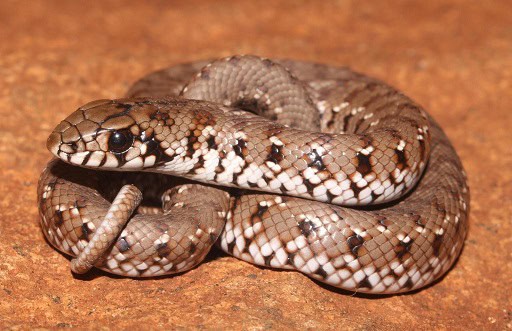
Adult mole snakes vary significantly in colour, with one consistent feature being a shiny, reflective quality of the scales. Adults can be jet black, yellowish or brownish. This varies by soil type, and correlates with certain regions. Those around Port Elizabeth are brick red, those on the west coast are black, while those on the highlands near Gauteng tend to be yellow.
The one consistent feature of adulthood is that the patterns are plain. The mole snake chooses a colour and sticks to it, with no patterns, but as a juvenile, it’s completely different. The mole snake undergoes an ontogenetic colour change – a transformation in appearance with age – and this explains some of the massive variation you’ll notice in images, or in the African wilds themselves.
Instead of being plain, juvenile mole snakes have blotchy patterns. A typical juvenile is light brown, covered with dozens of white and black spots, arranged in ordered lines, which themselves have subtle patterns next to them. As the mole snake matures, those patterns gradually fade away, leaving the adult a monolithic colour, whether it’s pale or dark.
| 5 | Habitats of the mole snake |
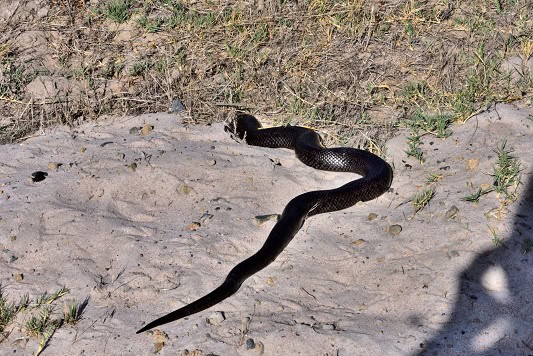
The mole snake is a species of open areas, typically relatively dry ones. It avoids thick forests, perhaps appearing in spacious woodlands. This isn’t a semi-aquatic snake, and you won’t find one on luscious green pond shores like the green watersnake, or swimming through a lake.
Hotspots of the mole snake include rolling grassy fields, open savannahs, shrubland, rocky slopes interspersed with vegetation, the edges of crop fields, and even semi-deserts in areas like southern Namibia. Mole snakes veer towards drier habitats overall, but are a relatively flexible species. This snake is even found in bustling towns and cities. Mole snake sightings are plentiful in Pretoria and Johannesburg, and in Cape Town, they’re the most abundant large snake overall, sharing space with abundant smaller species like the cape house snake.
Mole snakes can be found in overgrown dry thickets, but slither confidently through open spaces as well. You can find one resting calmly on a rock slab, with great views of the rolling hills, or weaving its way up a jumbled rock field, finding the best route through treacherous terrain.
| 6 | Rare meal: penguin eggs |
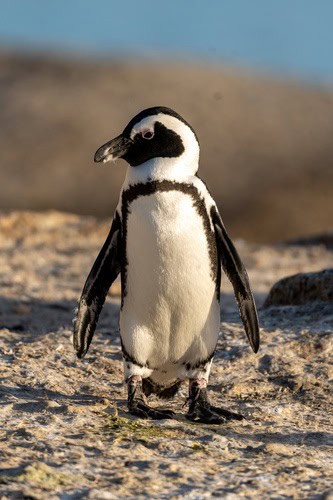
The African penguin is the only penguin species found in the Old World, AKA Europe, Asia and Africa. No penguin species makes it to the northern hemisphere, but this species hugs the coast of South Africa, with several concentrated roosting colonies, and a few outposts elsewhere such as in Namibia. The species is listed as critically endangered, with an estimated 19,800 mature individuals surviving worldwide, partly due to declines in offshore sardines, their main food supply.
One African penguin hotspot is Robben Island, the infamous former prison island, found to the northwest of Cape Town. This is a flat island with rocky shores, which has caused over 30 shipwrecks over the last few centuries, and is home to a lighthouse constructed in the 1800s. The Dutch sent the first prisoners here in the 17th century, and over 300 years later, the island was home to an imprisoned Nelson Mandela for 18 years, alongside several other anti-Apartheid campaigners.
These days, the island is a tourist attraction, where Mandela’s old cell is still visible, but another resident is thousands of African penguins. The colony is one of the strongest in South Africa, currently numbering an estimated 3000. There’s also seals, and the penguins’ greatest predator – the mole snake.
| 7 | Penguin eggs, part 2 |
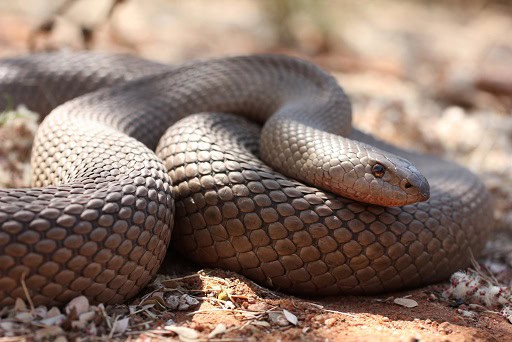
Robben Island is something of an offshore mole snake hotspot. Their usual foodstuffs like mole rats are absent here, so instead, the mole snakes are forced to exploit local seabirds. From 1989 to 1994, a study examined the diet of mole snakes on Robben Island, making 140 individual visits. Among 45 adult mole snakes, 19 had food in their bellies, and of those, 10 contained African penguin eggs. One mole snake contained two penguin eggs, making for 10 eggs overall.
Also recorded were eggs of the Hartlaub’s gull (found in 6 snakes) and helmeted guinea-fowl (4 snakes). Many of these were multiple meals; for example, one mole snake contained 8 helmeted guinea-fowl eggs.
For all species, the mole snakes swallowed the eggs whole, resulting in large bulges moving down their body. On some occasions, the mole snake accidentally cracked the egg before swallowing it. The scientists noted that the mole snakes never ate eggs of the crowned cormorant, for one simple reason – this species lays its eggs high on bushes or in trees, which mole snakes almost never climb.
Meanwhile, the juveniles had a completely different diet. They mostly ate clicking stream frogs (Strongylopus grayii), gravitating towards small freshwater pools where the frogs thrived. Another juvenile contained a young cape weaver bird, which had probably fallen out of a nest.
Bats and eggs are unusual prey for snakes worldwide, but penguin eggs are extremely rare. Tiger snakes have been mentioned as eating them in southern Australia, and perhaps Galapagos racers on the Galapagos Islands of Ecuador (where the Galapagos penguin thrives), but thanks to this study, the mole snake is currently the best documented penguin egg snatcher of any snake.
| 8 | Burrow-invading tendencies |
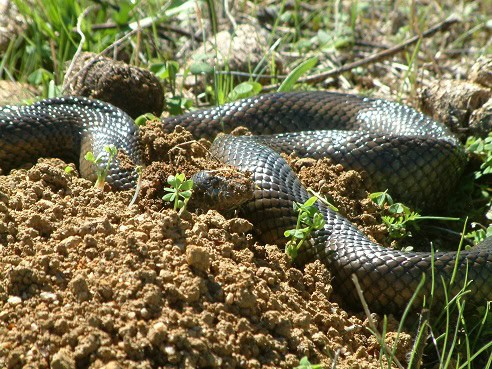
Back on the mainland, the mole snake has a mammal species which it’s locked in a constant battle with, a battle which it usually wins: the mole rat.
This is a group of African rats consisting of members like the cape mole rat (Georychus capensis) and Damaraland mole rat (Fukomys damarensis), which live in tunnels underground, which they’re faithful to their entire lives, only rarely switching to a new burrow. Mole rats have the survival tactic of sealing their own burrow entrances, completely closing off the subterranean tunnel networks to the outside world. The entrances then harden in the intense African sun, making them difficult to access for cunning predators…
As you’d expect though, the mole snake gives it a good attempt. For decades, even centuries, mole snakes have been known to dwell in dark burrows. Images of them poking their heads put of dark soil tunnels are common today, and in a 2020 study, scientists researched whether they favour the burrows of mole rats specifically. After wandering the dry landscapes of southern Africa’s Kalahari region, they made various observations…
One – on October 15th 2018, a scientist broke the entrance to a confirmed mole rat burrow. After placing his hand inside, he was immediately bitten by a surprised mole snake, which was hidden inside.
Two – in Dordabis, Namibia, a researched placed his hand into a Damaraland mole rat burrow. When he withdrew his arm, a mole snake was coiled around it. Surprisingly, the snake didn’t bite him. The snake had two visible bulges at the mid-body, almost certainly from preying on the burrow’s inhabitants.
Three – near Darling in the western cape, in January 2018, a mole snake was observed digging aggressively into a mound of soil, using its head as a digging tool. The mole snake accessed a hidden tunnel network, before slithering forward and disappearing. A few days later, the mole snake was spotted near the same burrow entrance with bulges at its mid-section. No mole rats were found inside, despite the mound of soil being freshly dug.
Like many underground snakes, mole snakes take up residence in burrows after swallowing the occupants. In southern Africa, cape cobras are also known to invade underground mammal burrows, but the mole snake’s life and ultimate fate is particularly intertwined with them.
| 9 | Nemesis: cape cobra |
In 2022, the mole snake was the star of one of the more brutal videos of the snake kingdom. The characters were a mole snake and a cape cobra, locked in a battle to the death, over a video lasting 2 minutes and 54 seconds.
The location is a dry, sandy area with little vegetation. The video begins with a classically beige cape cobra, and a classically pattern-less mole snake locked in an embrace. The cape cobra looks long and a whippy, while the mole snake looks shorter, but this is deceiving. The mole snake only looks shorter because it has the cape cobra in a vice like-grip, with several coils applied around its neck and chest area.
Cape cobras derive a large portion of their calories from fellow snakes, 32% in one study. Mole snakes are confirmed, as are venomous puff adders. It’s highly likely that the mole snake in this video has already been bitten, with venom flowing through its veins. Time may be short for the mole snake, but it is putting up a good fight, squeezing the cape cobra’s neck with all the force it can muster.
At the beginning of the video, the cape cobra appears to be in control, but as the minutes elapse, the mole snake’s grip only appears to tighten. The cape cobra turns to face the camera, and it certainly doesn’t look confident – if anything, it looks like it’s panicking. Nor does the mole snake’s grip appear to be weakening under the influence of venom.
The battle was described in the video as a race against time, to see whether the mole snake would succumb to the venom before the cape cobra choked to death. The actual outcome was never revealed. But there’s a twist to this tale, which isn’t immediately apparent. According to a 2024 review, the mole snake has some natural resistance to the venom of fellow snakes.
Exactly how much isn’t elaborated upon, whether it’s minor resistance or total. The honey badger has total resistance, while the mole snake may have moderate levels, but not enough to withstand a 100mg flood of cape cobra venom (as the cape cobra has a high venom yield).
We’ll never know the outcome of the battle above, but one thing’s for certain: if it was captured on film, this cape cobra/mole snake battle is probably repeated thousands of times each year across southern Africa.
| 10 | Virtually never climbs trees |

The mole snake has a claim to fame, or more like an anti-claim to fame: being one of the least tree-climbing snakes in Africa.
It’s not necessarily that the mole snake is unable to climb trees, it’s just that there are virtually no observations of it happening. Cape cobras regularly climb trees to raid birds’ nests, while green watersnakes are theoretically pond vegetation dwellers, but often ascend thin branches. Meanwhile, a photo of a mole snake climbing a tree is virtually impossible to produce.
The mole snake is a bulky snake, but that isn’t necessarily an obstacle, as evidenced by the African rock python, which often gets lured up tall trees out of sheer curiosity. It’s all about innate tree-climbing instincts, which the mole snake simply doesn’t have.
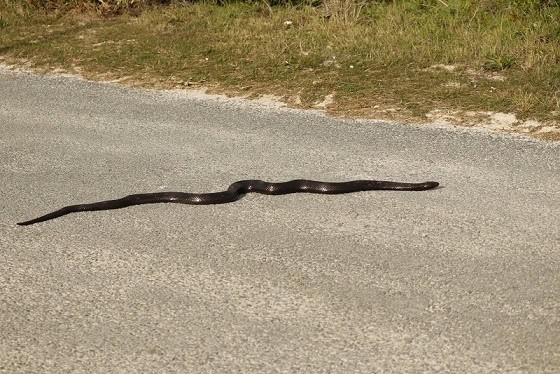
The mole snake’s preferred option is to travel downwards instead, into the reassuring darkness of underground burrows. Somewhere you will find this species is on major highways, often blocking traffic, for which there’s plenty of photographic evidence. One of this species’ ultimate hotspots is Nossob road, a dusty highway which straddles the border between Botswana and far northern South Africa.
| 11 | Isolated in evolution |
The mole snake boasts another record – being an isolated snake on the evolutionary tree. The Pseudaspis genus it belongs to contains no other members, not in Africa, nor anywhere else.
Many African snake groups are huge, like the Afrotyphlops blind snake genus, which contains 28 members, or the venomous Bitis adder genus, which contains 18. However, at some point in history, all other Pseudaspis members must have been pushed back to ever-more restricted areas and died out, failing to compete in the harsh wilderness of Africa.
Worldwide, the closest relative of the mole snake is the western keeled snake (Pythonodipsas carinata), a shy, mysterious species found in drier regions. The only two countries this species inhabits are Namibia and Angola, where it appears in dry savannahs and gravel plains. Few photos exist of this snake, but those in existence reveal stunning camouflage (see here).
This species looks completely different to the mole snake, with blotchy beige and grey scales into adulthood, rather than a smooth monolithic colour. The two probably diverged millions of years ago, despite being “closely related”.
Nevertheless, this species has one great similarity to the mole snake – highly evolved and modified teeth. The western keeled snake has a greatly enlarged fang, and an enlarged and grooved posterior-most tooth. Few people meet this snake, but reports suggest a willingness to bite similarly to the mole snake.
| 12 | Random facts |
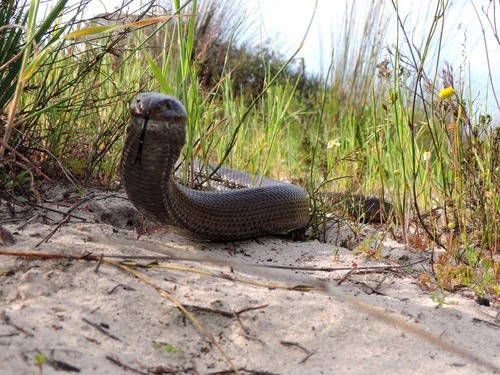
Other features of the mole snake include round pupils, as this is a diurnal snake rather than nocturnal. Zoom in on this species’ face, and you’ll notice a classic burrowing feature, a sharpened snout, enabling it to shift aside soil, and even hack its way into entrances.
Mole snakes lay high numbers of young, up to 95 at once. These come as live young rather than eggs, and typically measure 20-31cm. Another rarely observed feature is a narrow neck hood, which they can spread in order to mimic a cobra. The mole snake deploys this trick only rarely.
The underside of the mole snake is another feature which changes with age. Juveniles have a pristine white belly with dark spots, which you can see in this brutal video of a cape cobra dragging one away as a meal. In adulthood, the underside darkens significantly, like the rest of the body.