
| 1 | Carnac Island (tiger snakes) |
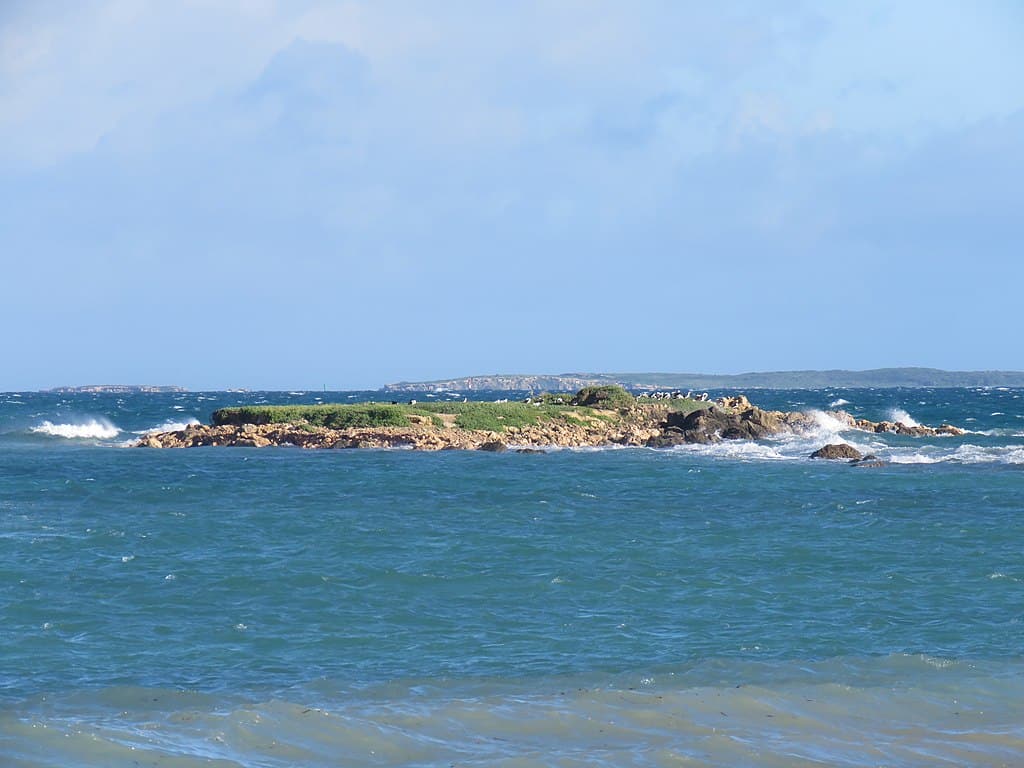
A western Australian island originally used as a whaling station in 1836, but abandoned shortly afterwards. Carnac Island lies 10km southwest of the port city of Fremantle, and later found usage as a prison for rebellious indigenous Australians.
These days, Carnac Island is an uninhabited wildlife haven, with occasional tourist boat stopoffs. There are seagulls galore, plenty of king skinks, and thriving sealion colonies resting on its beaches.
But there’s also another resident – 400 tiger snakes. There isn’t a single sign warning tourists, but step away from the pristine white beaches, and you’ll find an average of 1 tiger snake every 8 metres. The island is crawling with this snake, which has the power to totally disable blood clotting.
The origin of these snakes is a mystery. According to one study, travelling snake showman Rocky Vane dumped his entire stash on the island in 1930, after his wife was bitten and died. Some believe that they’ve been there for thousands of years, and swam from Garden Island 2.2 miles away.
In 2006, David Attenborough visited, and noticed that the tiger snakes were often blind, pecked in self defence by the nesting seagulls, which form a large portion of their diet. Despite this, the snakes are thriving; they’ve become more reliant on smell, and are constantly flecking their tongues.
| 2 | Isle Tortuga (rattlesnakes) |
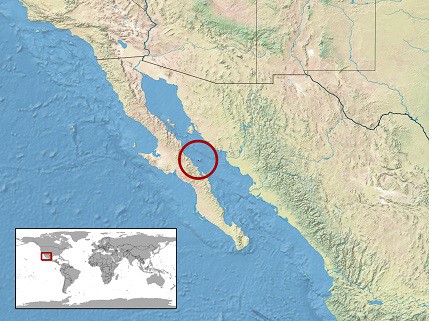
This volcanic island is located off the coast of Baja California, northwest Mexico. It covers 4.4 square miles, and is centred around a large volcanic caldera, which has been dormant for an undetermined amount of time.
Tourists often dock to explore the pristine white beaches, or go snorkelling in the clear waters overlooked by palm trees. But the locals stay far away, and that’s because Isla Tortuga is crawling with rattlesnakes. It’s been dubbed the biggest rattlesnake pit in the world, with every corner covered except the large volcanic crater.
These rattlesnakes are a unique form – Crotalus atrox tortugensis, a subspecies of the western diamondback rattlesnake. The black blotches cover less space than in the mainland version, and their heads are slightly shorter. They probably originated from a handful of swimmers that reached the island, before slowly spreading to every single corner.
In 2022, the worst came true when 3 scientists were stranded on the island. They’d paid a local boatman to ship them out, but he failed to return, leaving them exposed and starving on the beach for 3 days. They were saved by a navy vessel, and fortunately didn’t bring any rattlesnake stowaways aboard.
It’s a self-perpetuating situation – there’s little human development on the island because it’s a rattlesnake pit, and therefore it continues to be rattlesnake pit. The top prey of the snakes is the Dickey’s mouse (Peromyscus dickeyi), the only mammal on the island.
| 3 | Ilha da Queimada Grande, Brazil |
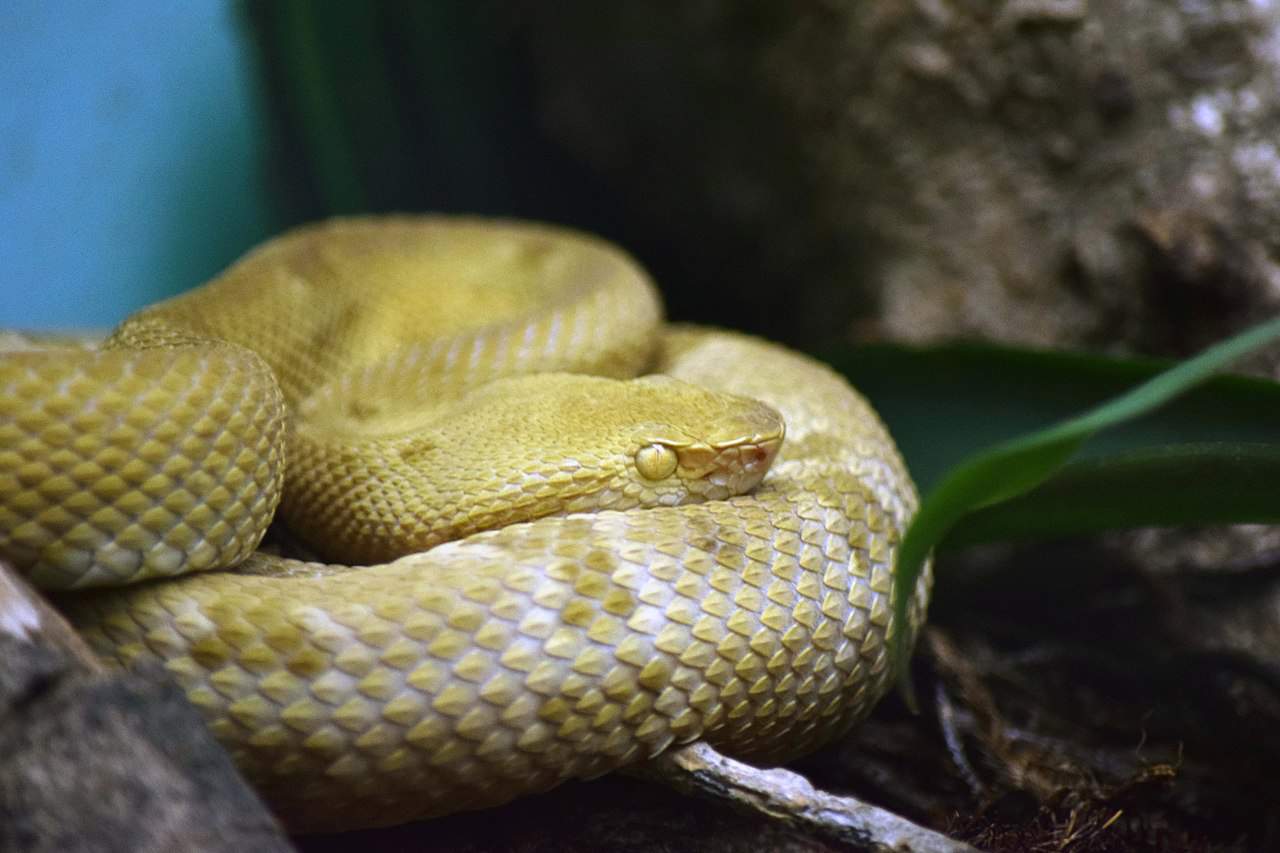
If the seven wonders of the world were flipped on their head and became the seven hellscapes on Earth, this island would probably be one of them. Ilha da Queimada Grande is located off the southeast coast of Brazil, and is strictly off limits to the public. It’s a stormy island of high towering cliffs, and home to an endangered species – Bothrops insularis, AKA the golden lancehead.
This snake became isolated thousands of years ago, when ice caps melted and sea levels rose, but it now covers the entire island. There’s 2000-4000 golden lanceheads on Ilha da Queimada Grande, and the densities can reach 1 per square metre.
The venom of this snake can kill a human within one hour, and at 90 miles offshore, you’d be dead long before a rescue helicopter landed. According to local legend, a settlement was built in 1909, which vanished by the 1920s as the residents suffered death by snakebite one by one.
Today, the sole building is a lighthouse, designed to guide researchers, who need legal permission to dock. If a boat crashed in stormy weather, then the survivors staggering ashore would only have one route forward – deeper into snake island.
| 4 | Musambwa Island, Uganda |
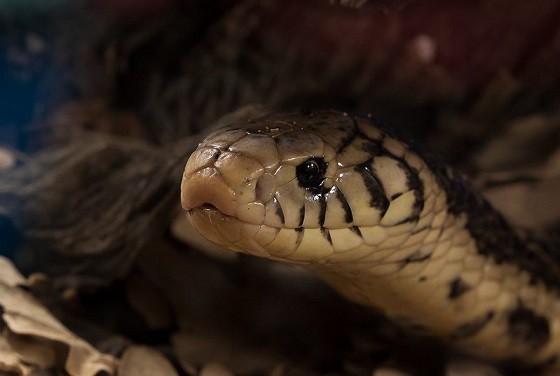
A forested island in the centre of Lake Victoria, Uganda. Musambwa Island is home to 100 fishermen, but most importantly, approximately 2000 forest cobras, meaning that the snakes outnumber the local humans 200 to 1.
The forest cobra can produce 500mg of neurotoxic venom per bite, but the fishermen consider the killer snakes to be guardian spirits. Musambwa itself translates to “spirit”, and the forest cobras are considered to be the island’s rightful owners, not the fishermen. Sex is forbidden on the island, and so are women, in order to reduce temptation.
When 60 year old Emmanuel Katongole arrived to fish one day, he found a gigantic cobra under his pillow on the first night. The locals scolded him for “scaring off good luck”. A snake slithering into a house is a blessing on Musambwa, not a curse. Assure the snake that you mean no harm, and all will be well (supposedly).
Musambwa Island is also home to 150,000 birds, and the constant sound of squawking can be deafening. Check out this 2 minute video for footage of this human-snake paradise.
| 5 | Main Duck Island, Canada |
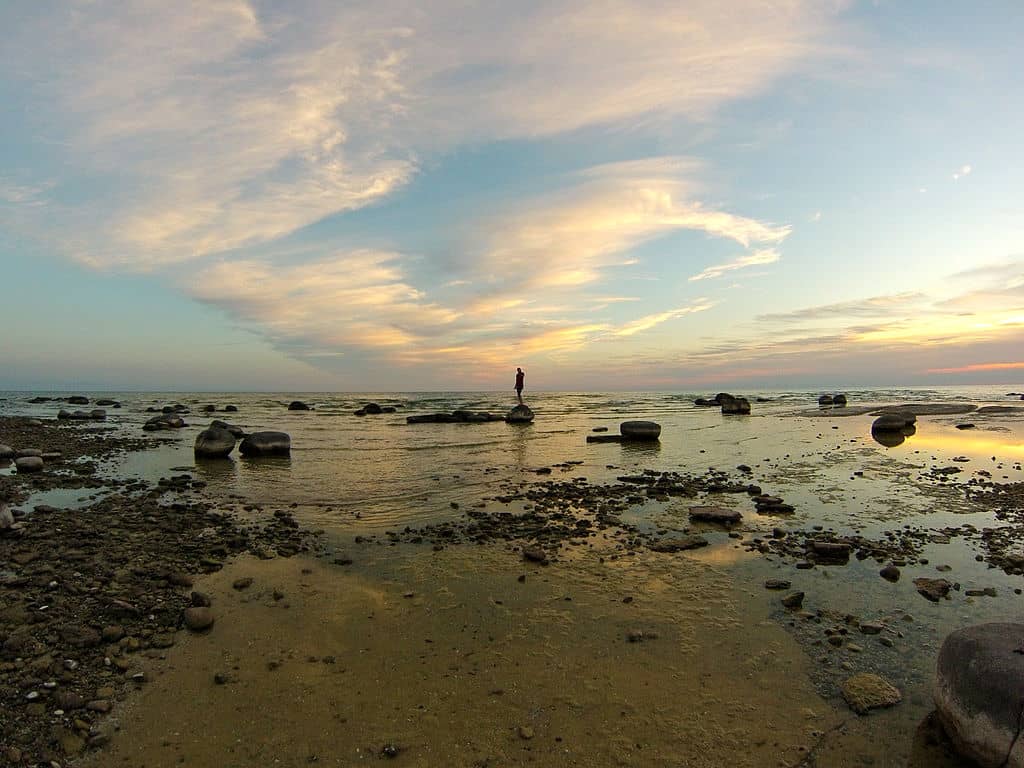
Located on the eastern side of Lake Ontario, and one of a pair with Yorkshire Island, 12 miles from the nearest shore. The main animals here aren’t ducks, but northern watersnakes, along with a few common garter snakes.
From small streams to shingle beaches, Main Duck Island is packed with these non-venomous, energetic snakes. They tend to be larger than the northern watersnakes on the mainland, due to a lack of natural predators. Unusually, Main Duck Island has few birds, except for the occasional migrating bald eagle. There are no human inhabitants either, just the occasional tourist boat, meaning that northern watersnakes have their own pressure-free paradise to exist in.
From 1914 to 1978, a lighthouse operated on Main Duck Island, and the owners tried their best to control the snakes, to no avail. The waters surrounding the island are stormy, and many calamitous shipwrecks occurred in the 19th century.
The island was also once home to prohibition era rum runner Claude “King” Cole, who owned a farm with horses, sheep and hogs, which dealt the snake a temporary blow. These days, the snakes are estimated to be the most numerous in Main Duck Island’s history.
| 6 | St Thomas’ Island, Bulgaria |
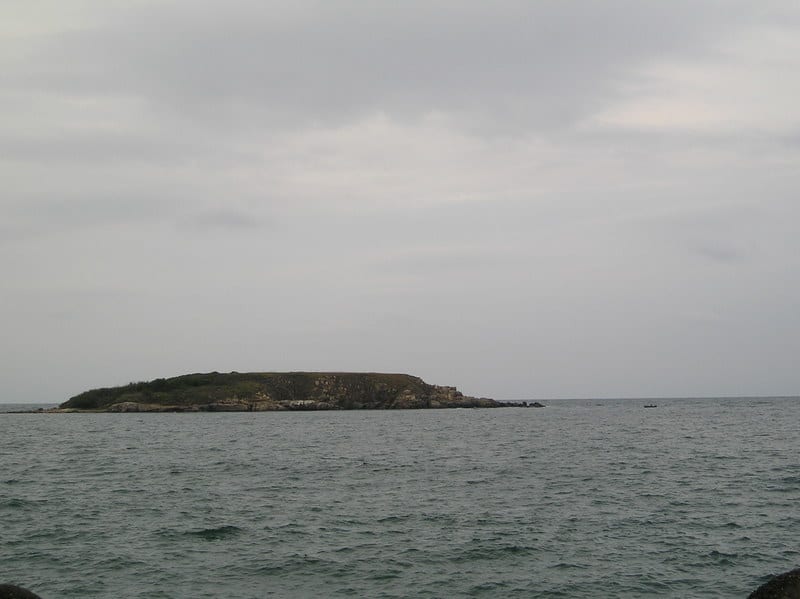
Also known as Snake Island, this relatively bare outcrop lies in the Black Sea of Bulgaria, 4 miles north of the seaside resort of Primorsko. This is a theorised treasure island, as local legends speak of pirates who stashed their riches in the caves below, but never returned to retrieve them. The island’s managers insist that no such caves exist, but every year, fresh treasure hunters turn up on missions.
The island has even been forced to hire security guards to deter these treasure hunters, yet there’s also a natural guardian orbiting the shores of St Thomas’ Island: the dice snake. This species is grey-brown in colour, and is absolutely everywhere surrounding the island.
Dice snakes pose no threat to humanity, but may be capable of giving people heart attacks, particularly if magnified through a pair of diving goggles. They mainly feed on fish, allowing them to thrive in lakes, and are skillful at playing dead.
St Thomas’ Island is also unique for being covered in cacti, a rarity in Bulgaria. The monarch Tsar Boris III decide to import a stream of wild cacti, for reasons he never bothered to explain. Consequently, St Thomas’ is also a nature reserve – inhabiting this snake island is strictly forbidden.
| 7 | Pulau Kalampunian Damit |
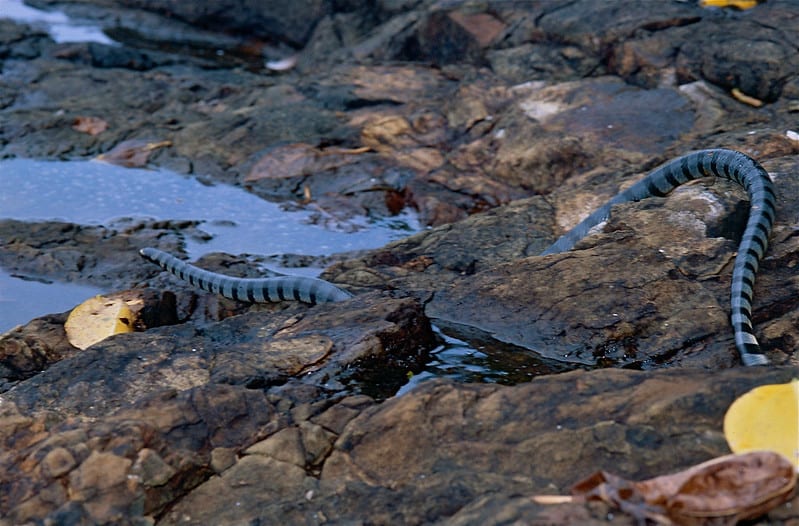
A scenic snake island located off the north coast of Sabah state, Malaysia. This is a collection of 3 islands, with the largest (Pulau Tiga) being the scene of a Survivor shoot where the contestants were abandoned for weeks and filmed for TV viewers’ enjoyment. The smallest island is Pulau Kalampunian Damit, a notorious breeding ground for the banded sea krait, a common aquatic species.
This species’ modus operandi is to hunt for eels and fish in deep rock cracks underwater. When the banded sea krait seizes and swallows an unlucky fish, it retreats to dry land in order to digest, and Pulau Kalampunian Damit happens to be the rocky outcrop all the snakes in this area head to. They also come to the island to mate, as it’s effectively their local capital.
Pulau Kalampunian Damit is a scenic island, covered with silver pinsoa trees and salty rocks splashed with white wave foam. Because banded sea kraits stick to one base over the course of their life, rarely travelling, this outcrop is a consistent snake hub.
A 1991 study counted the population, and arrived at 721 snakes, with a margin of error of 38. The males outnumbered the females 3.9:1, probably because they were all swarming in to mate. Banded sea kraits have tiny mouths and rarely bite, but possess an extremely toxic venom.
| 8 | Amedee Island |
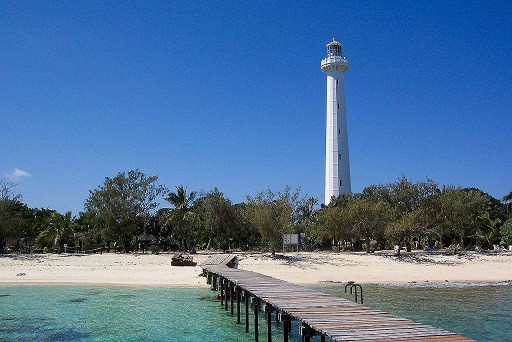
The tourist reviews for this island are full of horror at the amount of snakes slithering around, not just on the sandy beaches, but even in the toilet bowls.
Amedee Island is located in the French overseas territory of New Caledonia, which lies to the east of Australia. Tourists are lured in by a UNESCO World Heritage Site called New Caledonia Lagoon, and the opportunity to swim with turtles. The blue skies never seem to end on this gorgeous island, and the towering Amedee Lighthouse (56 metres high) is also popular.
But the island’s dark secret is the banded sea kraits, which follow a similar life plan to on Pulau Kalampunian Damit: grab food underwater, then swim to dry land in vast numbers. These snakes have caused a lot of frayed nerves among tourists, but have never bitten any visitors on record, as they barely react to human presence. People can walk or swim right past these snakes, as they lie on rocks while barely moving.
It would take massive stimulation to make the snakes of Amadee Island attack, but anyone with an instinctive fear of snakes should probably stay away. You would probably have to tiptoe towards the lighthouse using all possible mental effort to reassure yourself, while breathing as steadily and calmly as possible. As one review said: “they are absolutely everywhere“.
| 9 | Shedao Island, China |
Shedao Island has the highest density of pitvipers of any island, even beating eastern Brazil’s nightmare island. This Chinese tourist spot is not just packed with snakes, but home to its own unique species – the Shedao Island pitviper (Gloydius shedaoensis).
Like other island snakes, this species has evolved to feed on birds. Shedao Island pitvipers often climb trees in search of meals, forcing tourists to look up constantly, unless they want a venomous snake landing on their head. Worse, they’ve developed an usually strong venom, due to the pressure of their isolated location.
Various estimates include 1 pitviper every square metre, and 9100-11,500 pitvipers on the island overall in 1982. Compared to the olden days, that was nothing; in the 1930s, there was estimated to be 50,000 snakes, before poaching for snake wine decimated the population.
Shedao Island lies 7 miles off the northeast Chinese coast, and in 1980, it was declared a nature reserve. Rather than bare and rocky, the island is covered with vegetation, giving the snakes plenty of places to lurk.
For decades, this Chinese snake island was guarded by one man: Sun Lixin, who lived in a decrepit and cracked house. He dedicated himself to the snakes, watching the island keenly for poachers, and pouring out small pools of water when a severe drought struck in 1989.
| 10 | Chappel Island (tiger snakes) |
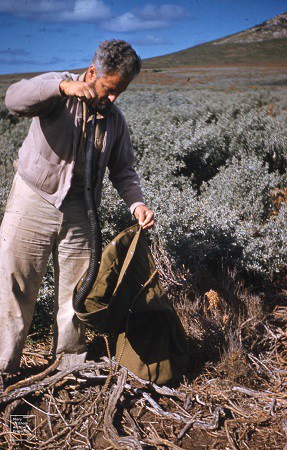
The average tiger snake is 1.1 metres long, and just 3mg of its venom can kill a human. We’re happy to report that there’s an island where they grow far larger than normal – Chappell Island. The second of Australia’s constantly slithering tiger snake arenas, this is on the opposite side of the country to Carnac Island, on the relatively cool northeast coast of Tasmania instead.
The tiger snakes here may be a specific subspecies, Notechis ater serventyi, and commonly reach 2 metres. This is a dry, inhospitable island, and the local tiger snakes have to survive with barely any fresh water. Most of their moisture comes from swallowed prey or dew collected on their scales.
No humans live here, and the only chance the local tiger snakes get to eat is one 6 week period each year when mutton birds land in great numbers. The oily birds provide a buffet where they can go absolutely nuts, but then that’s it. The birds leave, the door to nourishment slams shut, and the tiger snakes must live off their energy reserves for 10 whole months, until the birds finally return.
It’s a harsh life on Chappell Island, but 3000 tiger snakes are believed to live there in total, accompanied by 0 humans. Chappell Island was also the home of the largest tiger snake ever recorded, which measured 2.4 metres.