
| 1 | South American bushmaster |
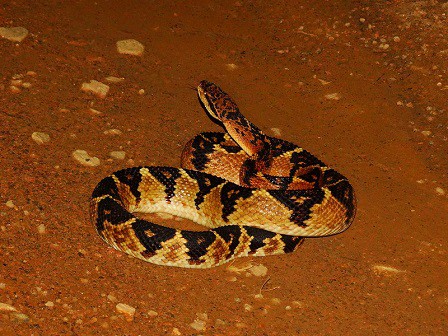
Maximum length: 3.65 metres.
If you pick cocoa for a living, then snakes are inevitably going to be part of your daily life. Cocoa plantations = a hot humid climate, and there’s many potential killers waiting for you, regardless of continent. One of the main dangers in Peru, Brazil or eastern Ecuador is the South American bushmaster, the official longest venomous snake in the western hemisphere, at a maximum of 3.65 metres.
The South American bushmaster (Lachesis muta) is one of the laziest species in its local rainforests. It can spend days in one ambush position, including in dark underground mammal burrows, like those of the nine-banded armadillo. Forests are its main habitat, but also plantations nearby, and manmade cocoa plantations tend to be a strong match for its natural habitats.
The camouflage of this species is immense. This viper sticks to the forest floor, rarely climbing branches, and consequently, it has evolved brown, beige and black patterns rather than green. A misplaced foot in a Peruvian cocoa plantation equals a South American bushmaster sinking its fangs into your leg, unless you get lucky and it doesn’t react (which occasionally happens).
This species is severely dangerous, mainly down to its venom yield. The raw venom toxicity is 1.6-6.2mg, which is middling, but each bite can inject 500mg, which is almost a record for South America. Symptoms include sweating, nausea, respiratory problems, hypotension, and potentially death.
| 2 | Laurent’s tree snake |
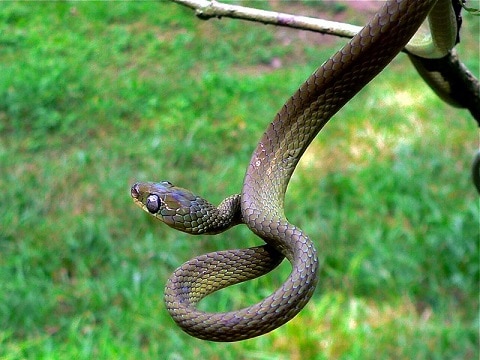
Maximum length: 124cm.
Within Africa, cocoa production is concentrated in the centre and west, with Ivory Coast dominating at an estimated 2,377,442 tons of production in 2023. In 2nd place is Ghana, at 653,700 tons annually, followed by Cameroon (295,819 annually) and Nigeria (284,232).
To produce such high amounts of cocoa, vast amounts of land must be converted to plantations, and there’s absolutely no way the local snakes won’t seize this opportunity for a new place to live. One confirmed species to inhabit cocoa plantations is Laurent’s tree snake, AKA Dipsadoboa viridis. This is a poorly researched species found in the Congo, Gabon and Cameroon, portions of West Africa, and probably more undiscovered countries. Naturally, it appears in rainforests, yet sightings are often made in the plantations next door.
This species is confirmed to be venomous, but the exact potency in humans is unknown. It’s non-aggressive in personality, making it a relatively safe occupant of plantations, which workers can easily walk past. This species clings to branches all day, unlike the butterfly viper, another cocoa plantation-lover of Central Africa.
Laurent’s tree snakes have a strange defensive trick: kinking themselves into a shape designed to mimic a branch. Their diet consists of reptiles and amphibians, and they’re recognisable by large, bulging eyes, with vertical pupils, contrasting against a fairly thin body.
| 3 | Andean snail eater |
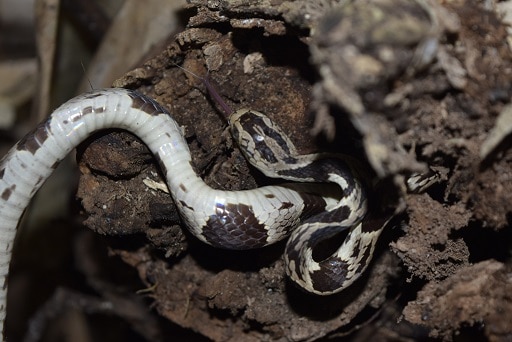
Maximum length: 84.3cm.
One of Ecuador’s most harmless, inoffensive species. The Andean snail eater (Dipsas andiana) is found in western Ecuador only, to the west of the Andes mountain range. Worldwide, it’s found only in Ecuador, yet is highly concentrated in the rainforests where it appears. This species splits its time between the forest floor and small bushes and low tree branches around 1-3 metres high.
Cocoa beans are native to Ecuador, including beans such as Nacional, believed to be one of the world’s tastiest. In a natural, untouched world, Andean snail eaters would have moved through cocoa tree clusters in their relentless pursuit of slugs and snails, and the same is true now when humanity has massively expanded their coverage.
Andean snail eaters lack any form of venom, and are memorable in appearance, due to a vivid U or V-shaped marking on the back of the head. A few have sharply contrasting black and white scales, while others are beige and brown, more similarly to a viper. Their bulging eyes are another ID sign, as is their rounded, not triangular head (unlike a viper).
If you’re touring an Ecuadorian cocoa plantation, or indeed work in one, then you might get a shock when this black and white snake lands on your head, but there’s no real reason to worry. Ecuador is the official leader for South American cocoa production, with 375,719 tons produced in 2023, ahead of Brazil at 296,145 tons, despite Brazil being far larger.
| 4 | Green jararaca |
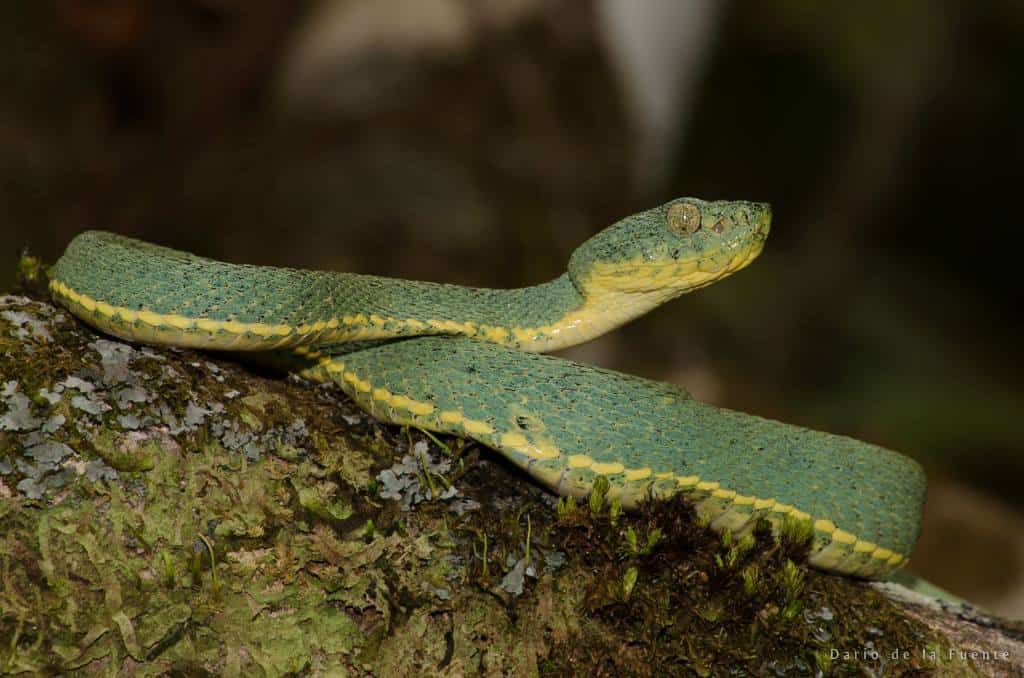
Maximum length: 123cm.
The same can’t be said for this frog-guzzling snake, however. The green jararaca, AKA Bothrops bilineatus, belongs to the huge Bothrops pitviper genus (40+ members), all of which are venomous. Most of these stick to the ground, but the green jararaca clings to tree branches, in vast swathes of the Amazon rainforest. Of all cocoa plantation guests in South America, it’s one of the most likely to actually strike and bite you, alongside the common lancehead.
Bothrops bilineatus clings to branches for most its day. It ranges from Ecuador in the west to the Atlantic coast, and is confirmed to inhabit cocoa plantations in eastern Brazil’s populous Bahia state.
The problem with this cocoa resident is simple: a lunging, snapping bite, which injects a cytotoxic venom into your bloodstream instantly. Though the green jararaca isn’t the deadliest pitviper ever, deaths are confirmed, and symptoms generally include spontaneous bleeding, swelling and burning sensations.
Green jararacas derive the majority of their prey from frogs and toads. They can climb to an eye-watering 20 metres above the forest floor, and dangle themselves down over a stream using a prehensile tail. The one advantage is that cocoa plantations are less green than their usual forests. Consequently, they should be easier to spot, and therefore tiptoe past.
| 5 | Brongersma’s worm snake |
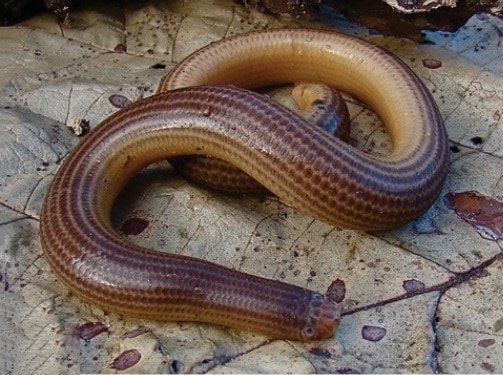
Maximum length: 32.5cm.
An utterly harmless cocoa plantation lurker, and an easy one to distinguish from more venomous snakes. Brongersma’s worm snake (Amerotyphlops brongersmianus) is a blind snake, with atrophied eyes and virtually no vision. It’s one of the more common blind snakes in South America, ranging from Argentina in the south, through much of Brazil, to French Guiana in the north.
One reason for this large territory is its habitat flexibility, as Brongersma’s worm snakes appear in fully fledged forests and agricultural areas alike. Manmade cocoa forests are a confirmed habitat, thanks to this report in Herpetological Review, where a Brongersma’s worm snake was collected in a pitfall trap within a cocoa plantation in Bahia state, eastern Brazil. The snake later laid 15 eggs, adding to scientists’ knowledge about its egg-laying capabilities, which proved to be decent.
Brongersma’s worm snake preys primarily on ants, and lacks any form of venom. Blind snakes even lack properly developed teeth; the most some do is release a vile small as you pick them up, or perhaps spike you with a sharpened tail. Because of its brownish colours, and love of loose soil, Brongersma’s worm snake is one of the harder cocoa plantation snakes to actually spot.
| 6 | False fer-de-lance |
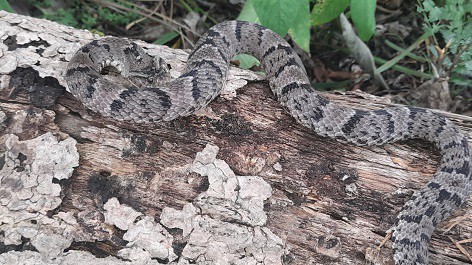
Maximum length: 102cm.
One of the ultimate viper mimics of South America, and Central America. The false fer-de-lance (Xenodon rabdocephalus) is an extremely widespread species, covering a vast area of land from southern Mexico to Bolivia. It possess generic grey-brown colours which allow it to mimic any viper it lives alongside. There’s no viper in the Americas with as large a territory as Xenodon rabdocephalus, but in Central America, this species mimics the fer-de-lance successfully, and in South America, it mimics the common lancehead with ease.
False fer-de-lances always appear in moist habitats, but these can include pastures, forests and of course cocoa plantations. This is a mostly harmless plantation inhabitant, with a moderately intense venom, which likely causes swelling and pain rather than death.
Nevertheless, its fear quotient far outstrips its actual danger. This species has probably caused several near heart attacks in workers before, due to its close similarity to several genuine nightmare snakes. The round pupils rather than vertical give away its true identity, but from a distance, these can be tricky to distinguish, particularly once you’ve already backstepped 5 metres in horror.
The false fer-de-lance preys almost completely on amphibians, including frogs, toads and occasionally tadpoles.
| 7 | Fer-de-lance |
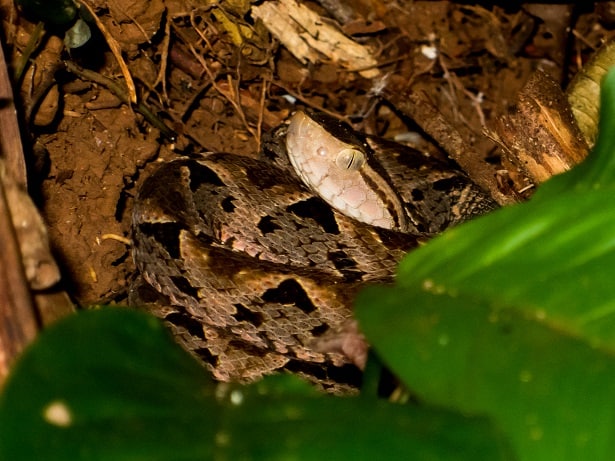
Maximum length: 250.1cm.
One reason Xenodon rabdocephalus is such an effective mimic is that it lives in very similar habitats to the species it is mimicking. The real fer-de-lance, AKA Bothrops asper, is the single most feared snake in Central America, as well as western Colombia, where it causes over 70% of snakebites in certain regions. Its venom yield is a gigantic 500mg per bite, correlating with a large size of well over 2 metres.
Like the false fer-de-lance, this species has murky patterns. It sticks to the ground rather than dwelling on branches, and it’s a common resident of various agricultural areas, including cocoa plantations.
The fer-de-lance is one of the worst snakes you could stumble across, partly due to its immense camouflage in any environment with leaves or steadily accumulating forest debris. This includes cocoa plantations, and because of this species, workers must often watch their step. Fer-de-lances are extremely fast, and are feared for their unpredictability, swinging from stationary and apparently bored, to explosive and murderous within milliseconds. Deaths are common with this species, typically occurring due to kidney failure or intracranial haemorrhage.
Again, a key ID sign is the vertical pupils, but back off if you’re exploring a cocoa plantation and see any snake which you believe could be a viper. The fer-de-lance covers 6/7 Central American countries, excluding El Salvador, and also inhabits western Colombia and western Ecuador.
| 8 | Butterfly viper |
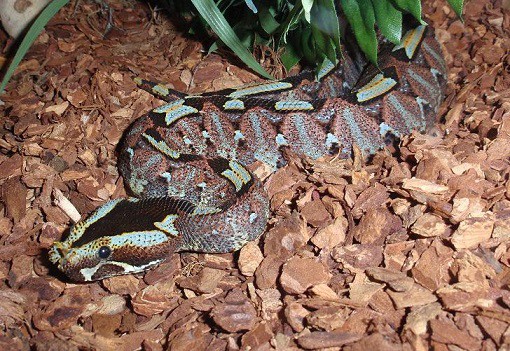
Maximum length: 120cm.
A species of central and western Africa, including Ghana, Ivory Coast and Cameroon. This is another ground-dwelling venomous snake, with fantastic camouflage, potentially causing people to step on its back. Unlike the fer-de-lance, however, this species is much less aggressive, with few bites being recorded, and almost no confirmed deaths.
The butterfly viper (Bitis nasicornis) is a moderately common species which is recognisable by its sharp horns sprouting out of its snout. It’s closely related to the gaboon adder, another inhabitant of cocoa plantations, but this species is much more colourful, covered with wacky rainforest shades like alien fungi.
Butterfly vipers are ambush hunters, which go for days without moving. They prey heavily on mammals, but also a high amount of frogs. In 2006, a study found that their favourite habitats of all were mature rainforests and swamp forests, but manmade cocoa plantations fit this mould well enough to provide a comfortable home for them.
This species has a dangerous venom on paper, with a venom yield of 200mg, and an abundance of myocardiotoxins, which target heart tissue. Nevertheless, it’s a cocoa plantation inhabitant which you can probably survive, whether in Nigeria or Uganda.
| 9 | Emerald snake |
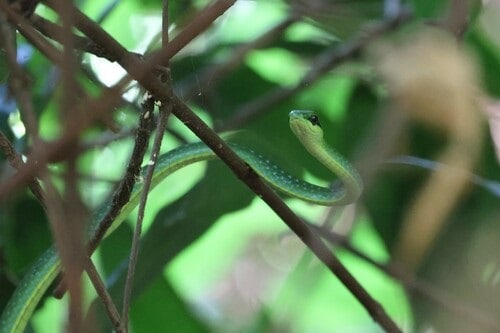
Maximum length: 119.1cm.
This obscure snake belongs to the very small Hapsidophrys genus, which contains just 3 members, and only 2 on mainland Africa (one lives on Principe). The emerald snake (Hapsidophrys smaragdina) is a branch-dwelling species found in central Africa, ranging from Uganda to Gambia. This one of the more common snakes in central Africa with barely any research to its name.
The facts we know are the more obvious ones, including its immensely green colour, and its tendency to cling to tree branches. There’s also its habitats, which include forests, but also gardens and cocoa plantations.
Emerald snakes appear in all the top cocoa-producing nations of Africa, including Cameroon, Nigeria, Ghana and Ivory Coast. They’re active by day, with large eyes and occasional patches of electric blue visible.
The emerald snake might be venomous, and might be capable of swelling a human hand, like other mildly venomous species. Nevertheless, this isn’t a cocoa plantation species to be concerned about. A greater concern is its lookalike – the African bush viper (Atheris squamata), which is similarly green, and similarly arboreal. This species may also appear in cocoa plantations, and is dangerously venomous, but thicker-bodied, and with rough-looking scales.
| 10 | Central American eyelash viper |
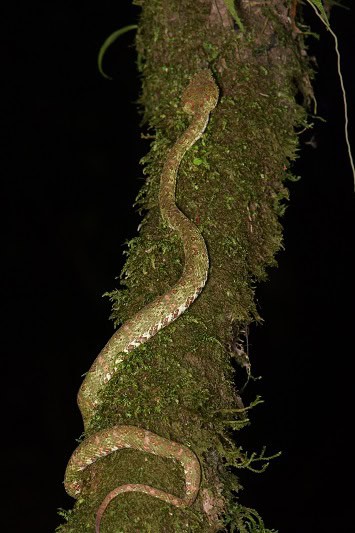
Maximum length: 91.6cm.
The Central American eyelash viper is so common in cocoa plantations that it wouldn’t be surprising if you unwrapped a bar of chocolate and one leaped out at you. This is a widespread species in Central America, ranging from Guatemala to western Colombia.
Eyelash vipers inhabit forests, but are infamous for appearing in plantations, particularly banana plantations, where they blend in with a yellow colour morph. They’re perfectly comfortable in cocoa plantations, where they spend days on branches, hatching cunning schemes to be baked into chocolate cakes and hide inside Easter eggs (maybe).
Eyelash vipers feed on a variety of prey, including voles, frogs and hummingbirds. Their venom is moderately toxic, as deaths are known, but symptoms generally include haemorrhaging and necrosis rather than neurotoxic effects.
This species can appear on the forest floor, but is nearly always found on branches or bushes. Its preferred branch height is 1-3 metres, which is both a detriment and an advantage. On one hand, this species is easier to see, as you face its cunning eyes head on while carrying armfuls of beans. On the other hand, its lunging bites are more likely to strike the chest and upper arm, rather than a thick boot which offers protection.
Eyelash vipers generally appear at lower altitudes, from sea level to roughly 1000 metres (sometimes a little higher). But above 1000 metres, other species take over, like the black-speckled palm pitviper or blotched palm pitviper. Few cocoa plantations in Costa Rica or Panama are safe from members of the Bothriechis eyelash viper clan.
| 11 | Machete savane |
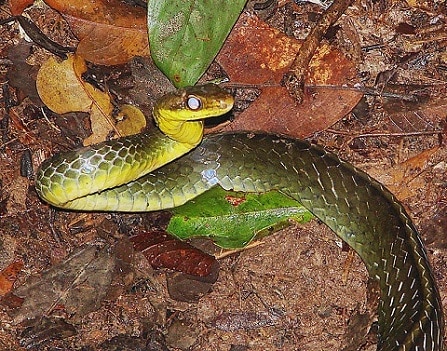
Maximum length: 205.4cm.
A non-venomous, but unpredictable and potentially aggressive snake. Machete savanes (Chironius carintus) are widespread in South America, appearing in a swathe of northern and eastern Brazil, Suriname, Trinidad and French Guiana. While they lack the ability to kill a human, they do possess the weapon of ripping, tearing fangs, and spine-chilling fear.
Machete savanes split their time between the ground and trees, where they can climb to 15 metres high. They eat a varied diet, but mainly focus on reptiles and amphibians, including rusty treefrogs, paradoxical frogs and rainbow whiptails. Machete savanes almost completely stick to forests, rather than open grassland. Nevertheless, plantations are acceptable if they’re a relatively close mimic of forests, and cocoa plantations definitely fall into that category.
Specifically, this snake is confirmed to inhabit the cocoa plantations of Bahia state, eastern Brazil, alongside several neighbours, such as Brongersma’s worm snake and the venomous green jararaca. Machete savanes are fast-moving, and hunt using active foraging. This combined with a bright yellow-green underside makes them easy to spot for harried plantation workers, unlike the camouflaged South American bushmaster.
Machete savanes have a good reason to be aggressive, as they’re hunted by many predators. They’re eaten by laughing falcons, which tear them into bite-sized pieces, and possibly spiders. They’re even dragged away and eaten by crabs, specifically the manicou crab. Machete savanes aren’t smart enough to realise that humans mean them no harm.