
| 1 | Rim rock crown snake |
Maximum length: 29.2cm
This tiny snake lives exclusively in Florida, and has been listed as endangered by the state government since 1975, and by the IUCN since 2007.
Rim-rock crowned snakes are closely related to the more widespread southeastern crown snake, and always measure under 30cm. Their body is a flashy red with no patterns, with the sole variation being a stark black head. They look more like worms than snakes, and their diet includes earthworms and centipedes.
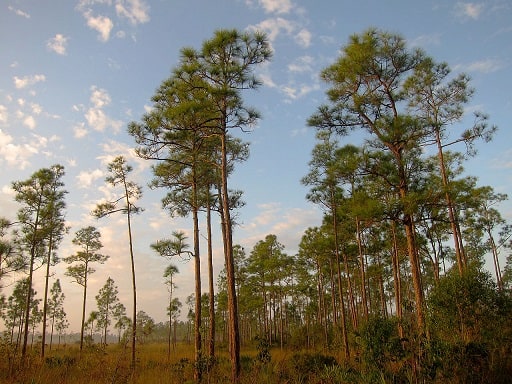
Rim-rock crowned snakes (Tantilla oolitica) are found solely in Miami-Dade County and Monroe County (Florida keys). The problem is their ultra-specific habitats: tropical hardwood, hammocks and pine rocklands, with a shallow sandy soil covering a limestone base. These precise ecosystems are found only in sunny southern Florida, and since the species’ discovery, 98% of Miami’s Rock Ridge pinelands have been developed, whether for housing or commerce.
Likewise, 50% of original hardwood hammocks have been destroyed. The exact spot where Tantilla oolitica was first discovered in 1966 was converted into a supermarket just months later. The only saving grace is that rim-rock crowned snakes are still common where they cling on. Nobody sees them much anyway, due to their shy personality, and attraction to sheltered spots below rocks and fallen leaves.
| 2 | Giant garter snake |
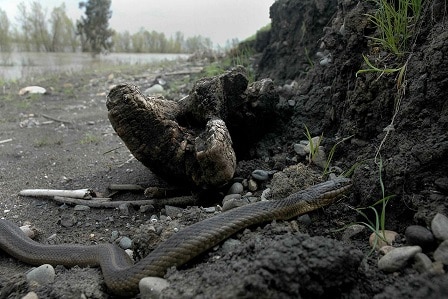
Maximum length: 162.6cm.
The largest of the neverending garter snake family, the only one known to exceed 150cm. But there’s a negative flipside to this as well – being one of the rarest species. Giant garter snakes have only ever inhabited California, particularly tule marshlands within the Sacramento and San Joaquin Valleys. This is a snake of wetlands, and by the mid-twentieth century, development had reduced its range by 50%.
Giant garter snakes (Thamnophis gigas) featured on the very first California Endangered Species Act back in 1970. Today, they’ve been eliminated from 98% of their San Joaquin range, but are clinging on much better in the Sacramento Valley, partly because of the booming rice fields it contains. Those fields create an artificial system of waterways, which they slither along like tunnels to hunt their prey, which mostly consists of frogs, tadpoles and fish.
Giant garter snakes rarely stray more than 4 metres from water, making it extremely hard for them to colonise new areas. Another factor is that pesticide run-off is killing their prey, such as native red-legged frogs. Giant garter snakes aren’t critically endangered, but if you want to meet one, you’ll have to go on a pilgrimage to a very narrow corner of California.
| 3 | Louisiana pinesnake |
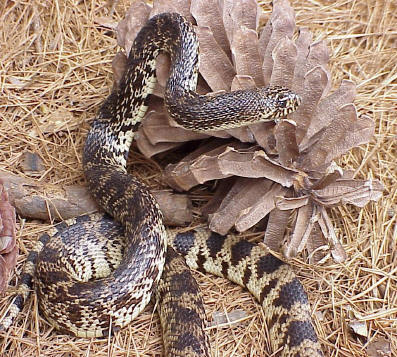
Maximum length: at least 178cm.
The Louisiana pinesnake is widely accepted as America’s rarest and most endangered large snake, and possibly overall snake. At an average of 130cm, and with a thick body, there’s no chance that this species is escaping scientists’ radars simply by being tiny.
The Louisiana pinesnake lives in two states, Louisiana and Texas, and only 9 confirmed counties across both. Its sole habitats are longleaf pine forests, which are steadily shrinking as more economically efficient loblolly pine plantations spring up for harvesting. Longleaf pine is the only forest type with the proper soil for the Lousiana pinesnake’s digging habits.
Specifically, the Baird’s pocket gopher is also restricted to longleaf pine forests, and the Louisiana pinesnake has evolved to shelter in this species’ burrows, and eat them as food. Without the gophers, this rare snake is almost guaranteed to disappear.
There’s a bevy of smaller factors as well, including too much control of wildfires (for once). Longleaf pine is naturally designed to burn at regular intervals, to kill off mid-story vegetation and keep the soil below just right, but farmers are now controlling these fires to benefit their own crops.
Today, Texas has only 7% of its 1935 longleaf pine cover. But a collective recovery effort is now underway, and in 2020, a vast deal with the Weyhauser logging company was announced to protect 667,000 acres of land, all to protect America’s rarest snake.
| 4 | Arizona black rattlesnake |
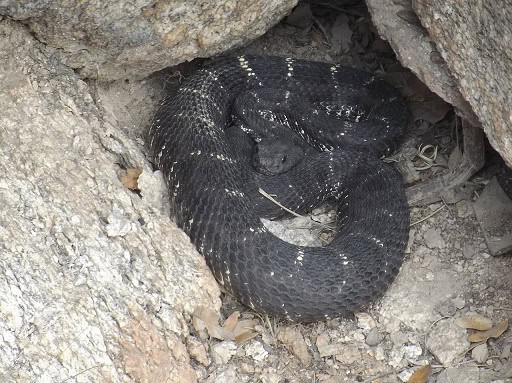
Maximum length: 120cm.
Of the 50+ rattlesnake species found in North America, the Arizona black rattlesnake (Crotalus cerberus) is one of the rarest. This is an easily recognisable species, with jet black scales overlaid with starry white patterns.
This rattlesnake is found in Arizona and New Mexico, and favours cool, moist forests in places like Tonto and Saguaro National Parks, in sky islands far above normal civilisation. Its hotspots include the Hualapai Mountains of Arizona, the state’s highest mountain range, plus the Pinaleno and Blue Mountains.
Arizona black rattlesnakes were once believed to be a prairie rattlesnake subspecies, but separated into their own species in 2009. They measure 78-120cm, and have the sneaky serpent power of changing colour, caused by a deliberate flow of melanin out of scale melanophores. Arizona black rattlesnakes are rarely seen by people, not just because they mainly inhabit National Parks, but because they stay well away from footpaths and developed visitor areas.
Sadly, a 2016 study put them on an “extinction trajectory”, after analysing 118 populations. They concluded that the population was shrinking, partly caused by wildfires, which had reduced their forest habitats by 27% in 13 years across the study area (the Colorado plateau). With their aversion to low altitudes, migrating and replenishing other colonies is significantly harder for this species.
| 5 | Eastern indigo snake |
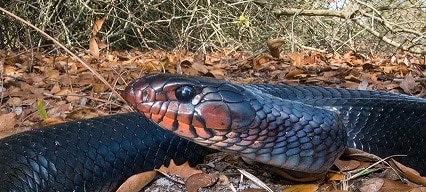
Maximum length: 262.9cm.
The second longest snake in the US after the gopher snake, but brute size hasn’t saved this species from civilisation’s encroachment. Eastern indigo snakes derive 50% of their calories from other snakes, including scarlet snakes and ring-necked snakes. Their forests probably inspire a shudder of fear in other snakes, forcing them to take shortcuts around the edges. But those woods are increasingly empty, as the federal government now lists the eastern indigo snake as threatened in Florida and Georgia.
Habitat destruction was a factor (including longleaf pine forests again), but another killer was the decline of the gopher tortoise, whose burrows the eastern indigo snake takes refuge in. Rattlesnake hunters are a huge problem, as the likes of eastern diamondbacks also hide in these burrows. Hunters often try to flush out their prize with poisonous gas, killing the innocent indigo snakes inside.
It’s possible that thriving colonies have been overlooked, but the 2.5 metre size of this species makes it less likely. In 2012, the Alabama government announced a statewide extinction.
It’s not all bad news though: reintroductions are now underway, including 25 released in Alabama in June 2022. Eastern indigos also have more potential habitats than some: pine rocklands, dry prairie, tropical hardwood hammocks, coastal dunes and scrubby flatwoods.
| 6 | San Francisco garter snake |
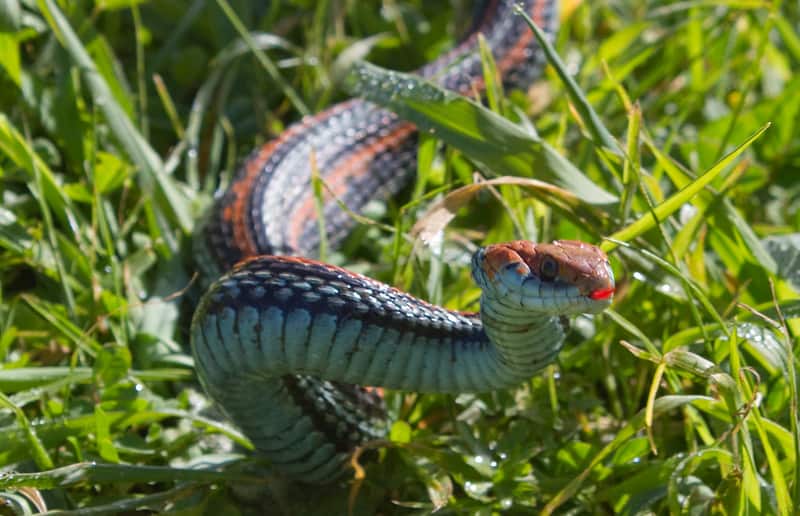
Maximum length: 137.2cm (common garter snake).
The most colourful of the USA’s endangered snakes. The San Francisco garter snake isn’t a full species, but a subspecies of the common garter snake (Thamnophis sirtalis). Despite this, its appearance differs wildly, with colourful red and blue scales with jewel red eyes.
San Francisco garter snakes exist only in San Mateo County and Santa Cruz County, and their numbers may be in the mere thousands. Their flashy colours are partly their undoing, as reptile collectors have long scooped them up and taken them home. This is another wetland snake, favouring ponds and marshes, where it hunts for small frogs, its main foodstuff.
The more wild marshes disappear in western Califonia, the more the San Francisco garter snake retreats. This species has been listed as federally endangered since 1967, and state endangered since 1971.
Yet in 2021, a shining beacon of hope was lit. It turned out that California’s largest population of this snake inhabited a small parcel of land owned by San Francisco International Airport. Despite airports being a symbol of everything technological and industrial, the management had been maintaining this random slice of undeveloped land for years, just to protect the local wildlife. Surveys revealed that 1300 San Francisco garter snakes lived there, as did the endangered red-legged frog, one of their top food sources.
| 7 | Brazos Watersnake |
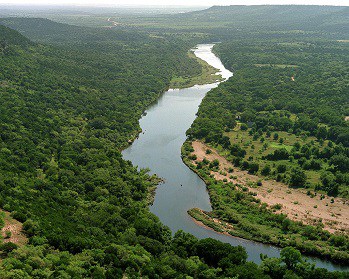
Maximum length: 90.2cm.
This obscure snake lives in one river in central Texas, and only the upper portions. The Brazos watersnake (Nerodia harteri) likes fast-flowing, rocky rivers with little vegetation, except for on the banks, where they like to take shelter under weeds. As juveniles, they stick to shallow rocky areas to hunt, like a kid’s paddling pool. As they grow older, they can cope with deeper, more treacherous waters, with faster-flowing currents.
Few citizens of Texas ever see the Brazos watersnake, because a big swathe of this river occupies wild country that only hikers ever venture to. As of 1987, this species occupied 303km of river, along with two reservoirs: Possum Kingdom Lake and Lake Granbury. However, the population has been put under serious pressure through dam construction, and the remaining populations have become fragmented, and struggle to link up.
Brazos watersnakes are an olive-brown colour, with scales interlocking like fallen leaves. Their eyes seem to bulge out of their skulls, and their bellies are an interesting colour, covered with white rows that resemble a rib cage.
| 8 | Southern hognose snake |
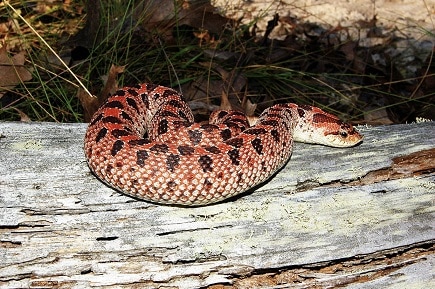
Maximum length: 61.0cm.
By some estimates, the western hognose snake numbers over 100,000 in the wild. The southern hognose snake (Heterodon simus), meanwhile, is a different story. This species is far from teetering over the brink of demise, but has less than 10,000 left in the wild.
Despite the name, the southern hognose snake mainly inhabits the eastern US, including Florida, Georgia, and South Carolina. It’s a non-venomous species with beige and black colours, with round, hopeful eyes that seem to lack any aggression. At 45-55cm, this is the smallest hognose snake, as well as the rarest.
The problem with this rare species is not just the low numbers, but that no subpopulation contains more than 1000 individuals, meaning that each is under unique pressure. Its numbers continue to decline sharply, and unlike the Louisiana pinesnake, there’s no single reason. The loss of longleaf pine is to blame, but so are reckless drivers, as southern hognose snakes are particularly attracted to the warmth of roads.
One study found that out of 764 sightings in North Carolina, 643 were dead individuals on the road. Invasive fire ants are also believed to wage war on this snake. Southern hognose snakes have now been declared extirpated in Alabama, but there’s one glimmer of hope: that they’re naturally secretive, and could be avoiding scientists’ gazes.
| 9 | Short-tailed snake |
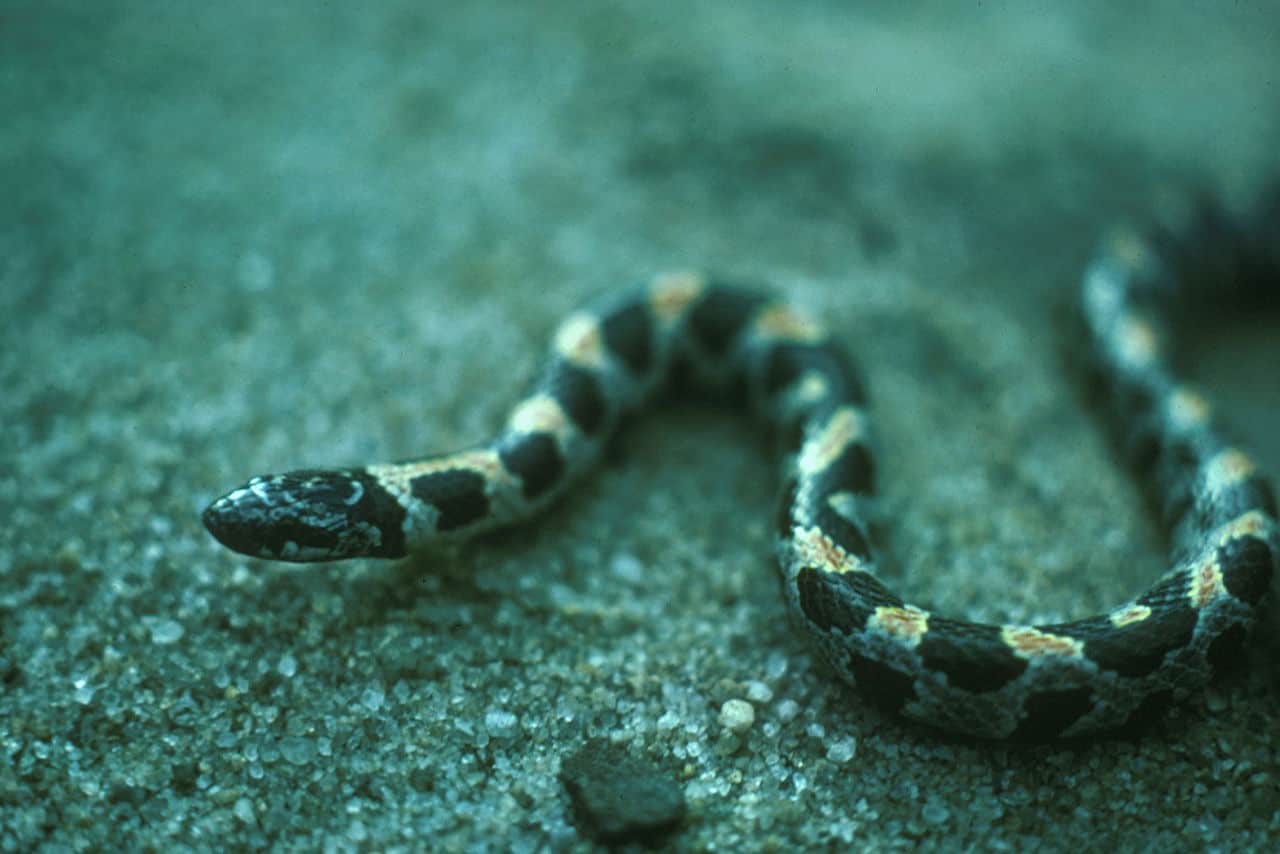
Maximum length: 65.5cm.
Another rare snake only found in Florida, but this time in the central counties. Short-tailed snakes (Lampropeltis extenuata) are listed as threatened, and protected by state law in Florida. They live a burrowing lifestyle, with an average length of 35-51cm, and probably wouldn’t be seen much even if they ruled the whole world.
It’s a familiar story: Lampropeltis extenuata has evolved over millions of years to be a habitat specialist, focussing on turkey oak woods, and also oak hammocks and sand pine scrub. Those forests are retreating in the face of development, and the short-tailed snake is too inflexible to move to backups like cow fields or swamps.
The origins of this species are believed to lie in “Florida island”, where sea levels rose in the Miocene millions of years ago and cut the local wildlife off, allowing the short-tailed snake to evolve in new directions from its kingsnake ancestors. The short-tailed snake’s diet consists of even smaller snakes, including Florida crowned snakes, a relative of our first entry. This species can act viciously when picked up, hissing and biting.
| 10 | Kirtland’s snake |
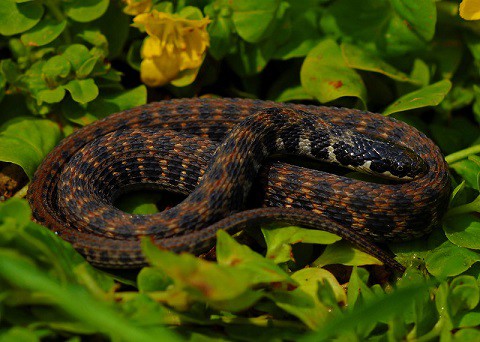
Maximum length: 62.2cm.
Another victim of habitat destruction, but grassy meadows and wetlands rather than the tropical forests of Louisiana. Kirtland’s snakes mostly inhabit Ohio and Illinois, spilling into neighbouring states. In 1980, they were known from 100 counties across 8 states, but since then, they’ve only been spotted in 25% of their former range.
Kirtland’s snakes are fairly inflexible – they can pop up in vacant lots in towns sometimes (lurking under cardboard), but mostly cling to riverside wetlands, always with a water source nearby. Herbicides are a problem, as Kirtland’s snakes can barely tolerate a single ounce. In a classic example of nature’s complexity, agricultural chemical runoff hurts the local worms and slugs, removing the Kirtland’s snake’s main foodstuff, sending them spiralling into catastrophe.
Studies show that Kirtland’s snakes disappear completely from areas with moderate herbicide application. They’re also a cosy species which sticks to a home base, rarely migrating – this lack of curiosity is keeping them from reconquering old spots.
Despite this, Kirtland’s snakes are still abundant in certain spots in Ohio. This species has a tendency to hide in vacant crayfish burrows along river shores, making them difficult to find in the countryside.