
| 1 | Wonambi |
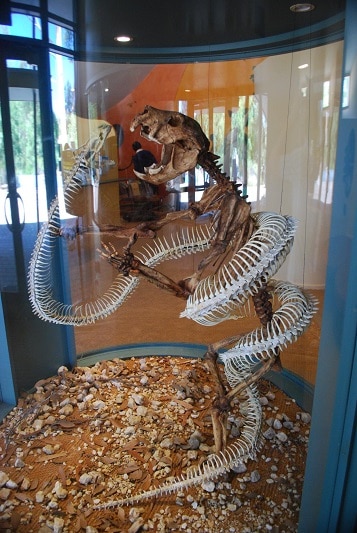
A huge prehistoric Australian constrictor, whose fossils have been found in modern day South Australia. This species is actually called Wonambi naracoortensis, but in our opinion, plain old wonambi sounds cooler. This species differs from others on this list in that it went extinct only very recently, disappearing into oblivion in the Pleistocene Epoch approximately 44,000 years ago (according to the most recent fossil).
Wonambi measured 5-6 metres and was a constrictor, with brutal inward-curving teeth that prevented any prey from escaping. Aboriginals with their spears and bushfires may have wiped them out, but so might have natural global warming, evaporating the water holes they favoured and creating the arid Australia we know today.
Wonambi is also a possible source for the Aboriginal rainbow serpent myth – some believe the legend to actually be a long held collective memory, which persisted for an unimaginably long time.
The wider wonambi family lasted for 90 millions years, over 50% of recorded snake history. Yet by Wonambi naracoortensis‘s time, it had been whittled down to a few members, or maybe it was the last one of all.
One problem was that wonambi lacked a flexible skull, being such an ancient family, and was restricted in its prey size, sticking to smaller marsupials. In fact, being such a relic, it’s amazing that wonambi lasted until less than 100,000 years ago. Today, the skeleton of a wonambi still lies on the floor of Naracoorte Cave in southern Australia.
| 2 | Coniophis precedens |
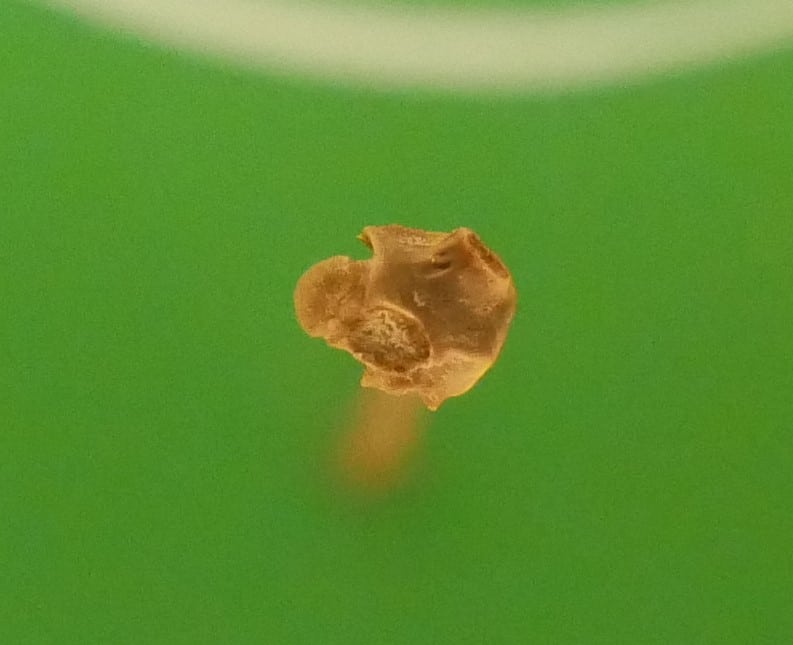
This prehistoric snake was discovered a century ago, but only through a single isolated vertebra. In 2012, the floodgates opened, as new vertabrae and jawbones finally emerged. Based on fresh analysis, scientists concluded that Coniophis precedens was possibly the “missing link” between modern snakes and lizards.
This species roamed the Earth during the Cretaceous Period 66 million years ago, just before the total extinction of all dinosaurs. Its snake-like body was fully in place, as its vertebrae were similar to those of modern snakes.
But the skull of Coniophis precedens was more like today’s lizards. Its jawbone was fixed, preventing it from opening freakishly wide like a python, and limiting the size of its prey. Rather than mammals, it was probably restricted to salamanders and small lizards.
The fossils were all found in Montana and the floodplains of eastern Wyoming, including the same muddy soils as many T-rex skeletons. Coniophis precedens wasn’t believed to be the ancestor of today’s snakes, but a relic in its own time. Modern snakes with modern skulls already existed in the Cretaceous, and Coniophis precedens was probably an increasingly outcompeted leftover even before the asteroid strike.
| 3 | Dino egg squeezer |
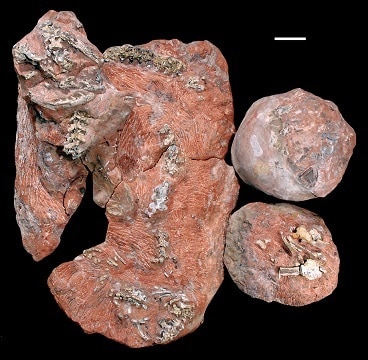
In the late Cretaceous Period, a 3.2 metre snake followed a scent, and spotted the prize it had been dreaming of: a titanosaur nest with many eggs and hatchlings. It wasted no time in approaching, sending the mini-dinos into a panic, and wrapped itself around one particularly tempting egg.
But at that moment, the snake and its prey were buried in an avalanche of sediment. They remained where they died for 67.5 million years, perfectly preserved, until a western Indian archaeological dig finally uncovered their fossils in 1987.
The eggs were quickly identified, but the snake took longer. At first, they assumed that the bones were prey of the titanosaurs, until in 2010, when they finally announced the discovery of an all-new prehistoric snake: Sanajeh indicus.
The jaw of this snake was a halfway-house. It wasn’t capable of unhinging and gaping freakishly wide yet, but could cope with larger prey than before, as the 50cm dino infants illustrated. Sanajeh indicus didn’t have a jaw capable of swallowing eggs, but was coiled around them anyway – probably waiting for them to hatch.
In 2022, the discovery of a second Sanajeh indicus skull was announced, so this may have been a common Cretaceous species.
| 4 | Myanmar dawn snake |
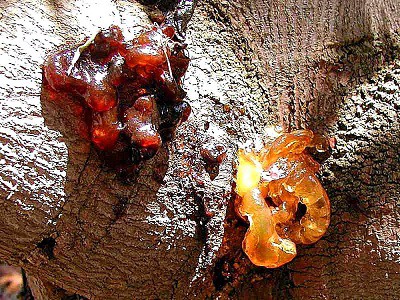
In Jurassic Park, Dr John Hammond manages to resurrect dinosaurs by finding mosquitoes frozen in amber for 66 million years, extracting dino DNA from the sucked blood still in their bodies. The amber preservation method is all too real, and in 2018, a 99 million year old snake species was discovered in Myanmar (Burma).
This long-extinct snake measured just 4.75cm, and was almost certainly a hatchling. The head was missing, but 97 vertebrae were intact, along with the attached ribs.
Fragments of insects and leaves within the amber proved that this was a forest snake. After being analysed inside a powerful X-ray called a synchrotron, scientists announced that this was an all new species: the Myanmar dawn snake (Xiaophis myanmarensis). The snake had been frozen in time 34 million years before the final extinction of the dinosaurs. It existed well before T-rexes first evolved.
Interestingly, its spine wasn’t vastly different to those of modern snakes. The scientists also found a second snake part in the amber – a shed skin, probably from a different, larger species.
| 5 | Titanoboa |
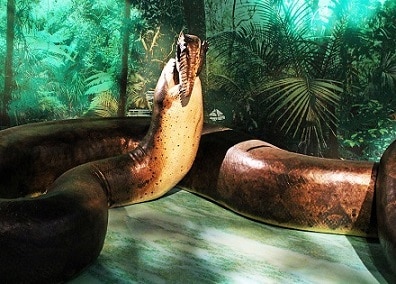
The largest known snake in Earth’s history, as of 2009 anyway, when it supplanted Gigantophis garstini. Titanoboa dates back 58-60 million years, and the first fossils were unearthed in a coal mine in northern Colombia.
Before long, the archaeologists had dug up bones from 30 individual titanoboas. Titanoboa cerrjonensis is the sole known member, and is estimated to have reached 14.3 metres in length, and nearly 1 metre wide. It would have been capable of swallowing a human being without even slowing down, and turtles and crocodiles would have fled before it.
Titanoboa was the undisputed lord of the proto-Amazon rainforest, slithering forward with the reassuring knowledge that no predators would dare to attack it. Whether titanoboa knew that it was the biggest snake on Earth is unknown. The fossils are limited, and it’s possible that some titanoboas exceeded even 15 metres. The hot climate back then was a factor, up to 6 centigrade warmer than today, allowing snakes to expand to unprecedented sizes.
Like The Meg made famous by Jason Statham, there are theories that titanoboa could cling on in the depths of Amazon jungle. Surely it couldn’t have gone undiscovered after all this time? But there’s one point in its favour – that nobody who found it would ever return.
| 6 | Pre-asteroid burrower (Menarana) |
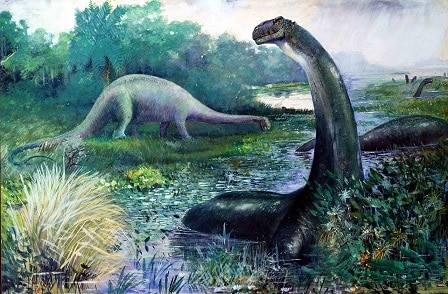
This prehistoric snake clan vanished 66 million years ago, along with the dinosaurs, failing to survive the asteroid strike. The first fossils were found in Madagascar and announced in 2010, but when new Spanish vertabrae were found, Menarana was split into two species: Menarana nosymena and M. laurasiae (there were probably more).
Menarana is believed to have been a burrower, based on a fused and compact skull, and depressed vertebral spines which allowed it to glide down holes. At 2.4 metres, Menarana wasn’t a terrifying prehistoric monster, but probably slithered below the feet of charging T-rexes mid-hunt, or herbivorous triceratops munching peacefully on leaves. This snake inhabited a humid world overflowing with diverse and wacky life, with dinosaurs in every forest or rocky canyon.
That said, some believe that Menarana had too large a skull to be a burrower, making digging too energy inefficient. They believe that its “burrowing” characteristics may have actually been an evolutionary leftover from burrowing ancestors.
However, an in-between possibility is that Menarana didn’t dig its own tunnels, but enlarged pre-existing tunnels. This ancient snake may have followed other Cretaceous creatures into their burrows, and used its moderate digging skills to excavate loose rubble and fallen soil.
| 7 | Ancient European python |
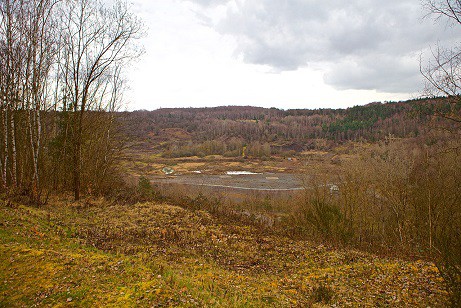
In Germany, there’s a former shale mine called the Messel Pit, which almost became a garbage dump in the 1970s, but was spared due to being a treasure trove of Eocene fossils. It was granted Unesco protection in the 1990s, and in 2020, a new chapter arrived with the discovery of the oldest python fossil yet.
The skeleton was nearly complete, with 275 vertebrae, and a skull completely intact. It dated back to 47 million years ago, pushing back the earliest known python fossil by 20 million years.
At 3.2 metres, the snake was long by today’s standards, though not gigantic. It was officially dubbed Messelopython freyi, part of an entirely new genus. Today, Europe has no native python species, but the discovery led scientists to consider whether they originally evolved in the northern hemisphere rather than the southern.
The scientists left no stone unturned in confirming Messelopython freyi as a new species, comparing it to 90 snakes and lizards from museum archives. 785 characteristics were examined, including the positioning of teeth, vertebrae and other bones. Like today’s pythons, the thick body points to Messelopython freyi being a constrictor.
| 8 | Colossal sea serpent |
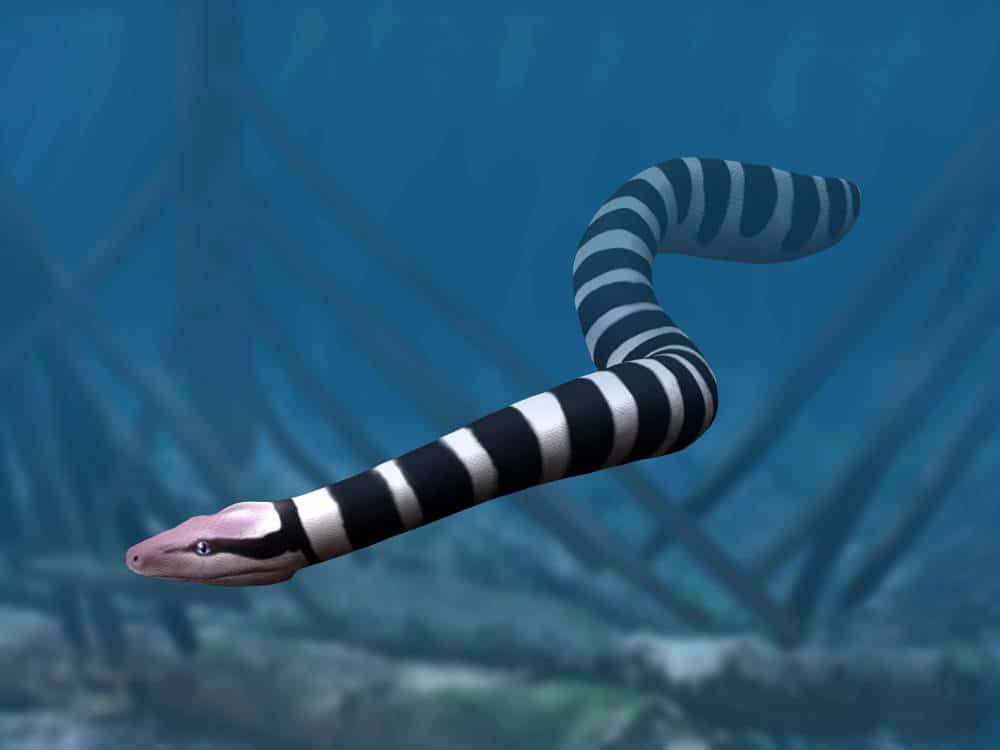
The largest known sea snake from the history books. Palaeophis colossaeus was identified using a single vertebrae, which led to an estimated length of 9-12.3 metres.
Naturally, there are now mockups on the internet of divers examining the raging snake, seemingly unaware that they’re about to be swallowed. With only 1 fossil discovered, we know little about P. colossaeus specifically, but Palaeophis is a prehistoric snake genus with multiple known members, unlike other snakes on this list.
The Palaeophis group had a stiffer spine than modern sea snakes, so P. colossaeus may have been a superior swimmer, but a poorer constrictor. The surviving vertebrae are also more vascularised, lined with veins and arteries, which normally correlates with faster growth.
The lone P. colossaeus vertebra was found in the Trans-Saharan seaway of Mali (near Tamaguélelt). The most recent Palaeophis fossils dated to 33.9 million years ago, while the earliest overlapped with the dinosaurs, at 70.6 million years ago. Palaeophis colossaeus was easily large enough to hunt proto-dolphins and the calves of proto-whales.
| 9 | The survivors |
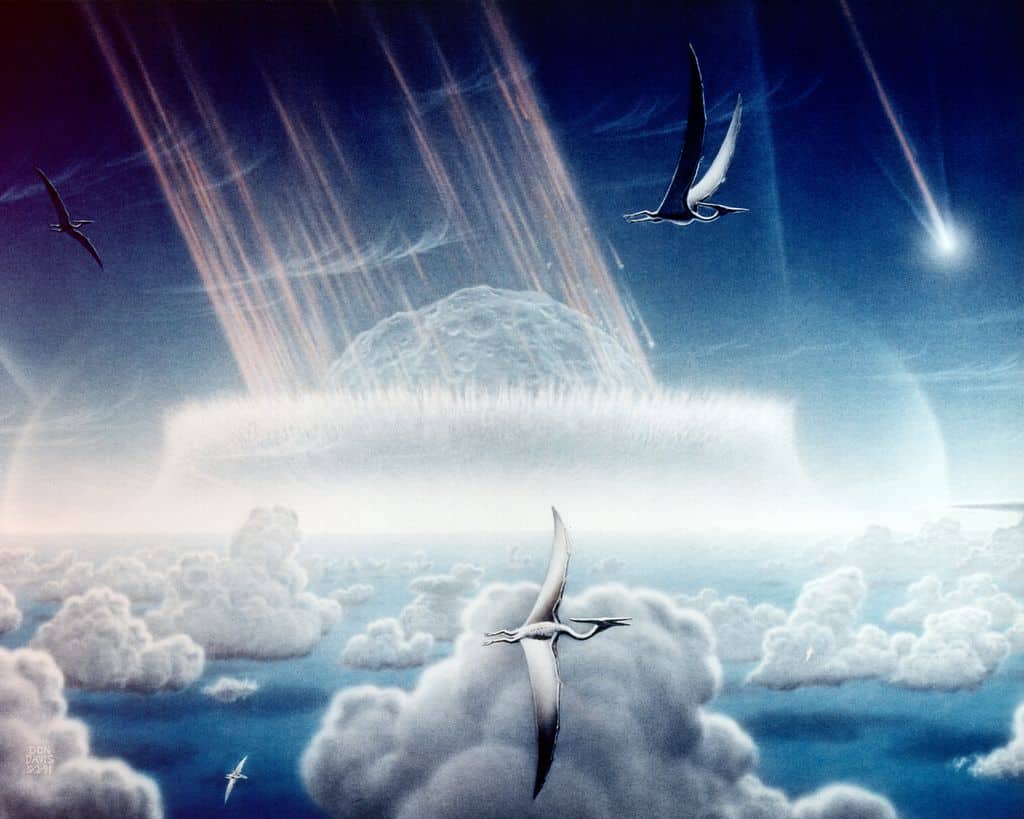
This entry isn’t just one snake – it’s a small handful of snake species from 66 million years ago which survived the asteroid strike. If this was a movie poster, they would be in shadow, standing side by side, yet to be revealed.
In 2021, scientists revealed a detailed DNA analysis, which showed that all 4000 snake species today originated from a mere handful of mass extinction survivors. As soot blasted into the air and global temperatures plummeted, dinosaur species fell one by one. So did almost all Cretaceous snakes, but some clung on, particularly those able to go months without eating.
Those which could spend time underground also had a survival advantage. When the dust finally settled (literally in this case), the handful of surviving snakes looked out upon a vast world free of dinosaurs. This left them free to seize vacant ecological niches and evolve in strange new directions, creating today’s vipers, garter snakes, cobras, pythons and more.
In particular, snakes only moved to Asia and into the oceans post-asteroid strike. Scientists haven’t identified any of these hard-nosed survivors, but a snake that disappeared along with the dinosaurs was Cerberophis robustus.
| 10 | Gigantophis garstini |
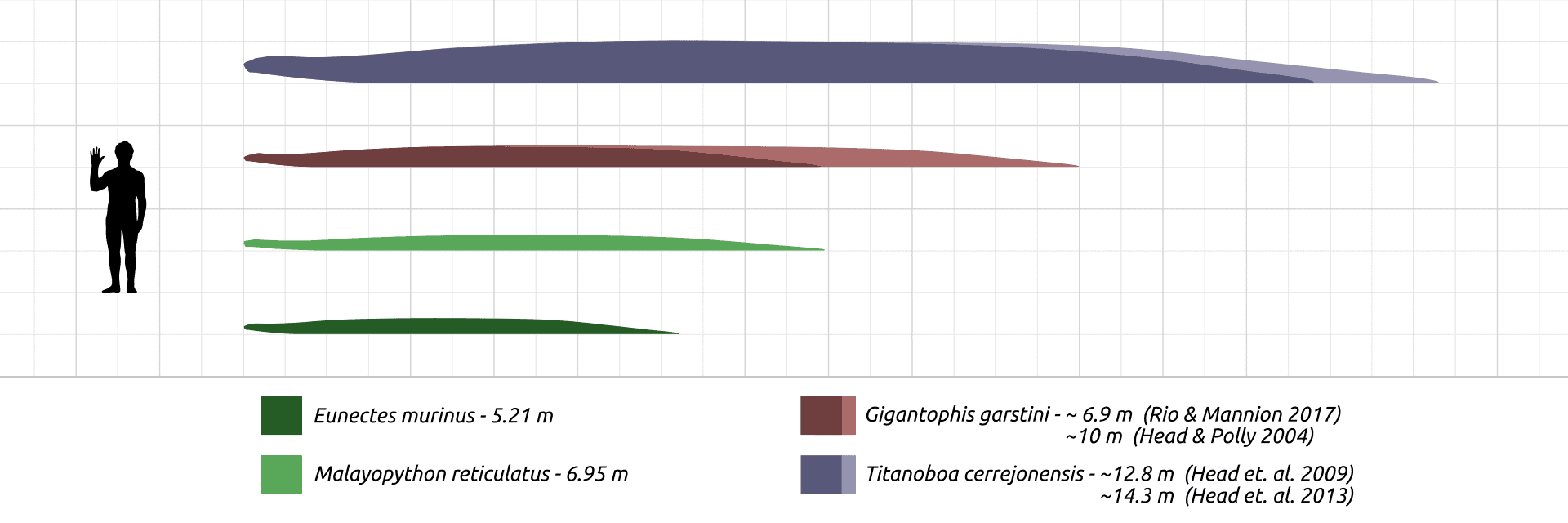
It’s fallen by the wayside recently, but Gigantophis garstini spent a century as the largest known prehistoric snake before titanoboa was discovered in 2009. Rather than South America, it resided in North Africa, with fossils being discovered in modern day Egypt and Algeria.
The fossils so far have mainly been vertebrae, but from them, scientists have extrapolated an average size of 9-10.7m. Others have been more conservative at an average of 6.9m, but this is still larger than any living snake.
The first fossils were discovered in 1901, and more recently, possible fossils have been found in Pakistan, which could either be the same species or a close relative. Gigantophis garstini may have been a boa constrictor equivalent: massive and feared, and found across a huge range of territory.
The fossils date back 40 million years, well past the time of the dinosaurs, and well past titanoboa’s demise. It’s possible that this snake moved into the vacant niche of massive carnivore.