
| 1 | Anamala pitviper |
Maximum length: 91cm.
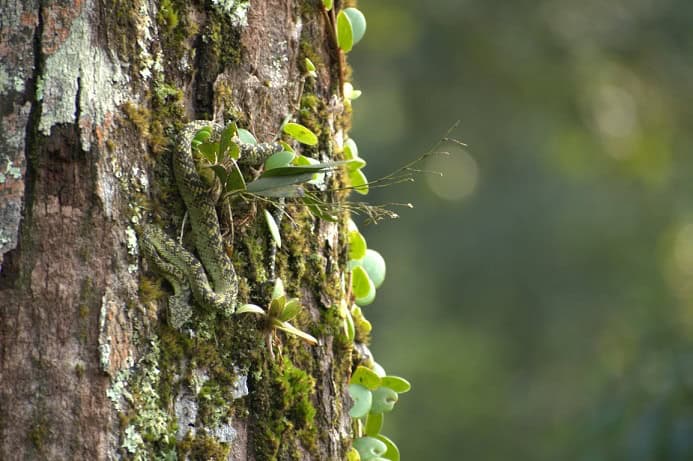
The Anamala pitviper (Craspedocephalus anamallensis) is a species found exclusively in India’s southwest, in the Western Ghats mountain range. Within this range, it only occupies the southern portions, e.g. the Anaimalai Hills. Within this area, the Anamala pitviper is common, but easy to walk past, due to its excellent camouflage.
This is mainly a tree-dwelling pitviper, resting on thin branches and thick, gnarly tree trunks alike. Anamala pitvipers are typically found above your head rather than around your boots, and their ability to blend in is supreme. This is a snake of many morphs, often tailored specifically to wherever they’re resting. The individual above is green to blend with mossy trunks, while others are brown-grey to blend with tree bark.
Anamala pitvipers cause a fairly low bite rate, but are still a dangerous threat, causing severe swelling and almost certainly a hospital visit. Deaths are extremely rare, and bites are easy to treat with antivenom. This species feeds mainly on frogs, and ventures to the ground only occasionally.
| 2 | Indian python |
Maximum length: 4.6 metres.
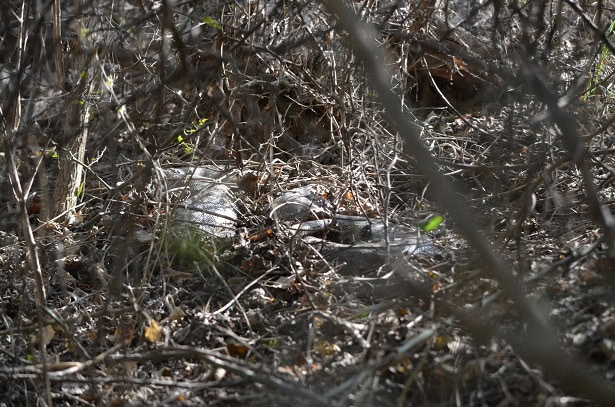
The Indian python (Python molurus) is one of the longest snakes on Indian soil, only falling short of the king cobra (max: 5.85 metres) and the Burmese python (5.79 metres) in the far northeast. This species occupies virtually the entire country, excluding deserts and high Himalayan mountains. The Indian python is a classical constrictor, lurking in overgrown thickets along lake edges and near ponds, and waiting patiently for mammals to wander past.
To enable these ambush schemes, the Indian python has developed virtually impenetrable camouflage. When viewed in isolation, its blotchy brown patterns are fairly striking, yet the Indian python disappears in dry Indian undergrowth much more easily than you’d expect. Tripping over an Indian python is a possibility; walking right past one totally unawares is highly likely.
Indian pythons are also found in Sri Lanka to the south. The main region where they’re missing is Rajasthan in the northwest, home to the Thar Desert, where they disappear from the border regions adjacent to Pakistan.
| 3 | Andaman keelback |
Maximum length: at least 1 metre.
This species is found on one of the most poorly researched serpent strongholds on Earth: the Andaman and Nicobar Islands, which lie far to the southeast of mainland India, but are still technically part of the country.
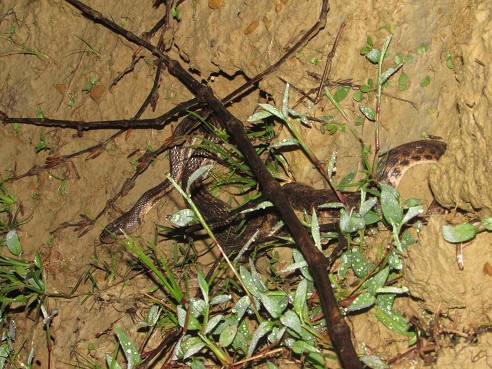
The Andaman keelback is a mildly venomous, semi-aquatic species, which spends its time in ponds and lakes. It’s a close relative of the checkered keelback, an extremely common species on the Indian mainland, but has a 1.6% genetic divergence according to a 2021 study. One great feature of this species is strong camouflage, which seems to blend with mud, thickets and fallen branches alike.
Andaman keelbacks mostly spend their time on the ground, meaning that green leafy camouflage is a waste of time for them, but instead, they can blend into virtually any other substrate. Another skill of this species is faking death; scientists have observed an Andaman keelback flip over onto its back, and go completely limp as though totally lifeless. Though poorly researched, this species probably relies on fish and frogs for its prey.
| 4 | Malabar pitviper |
Maximum length: 89cm.
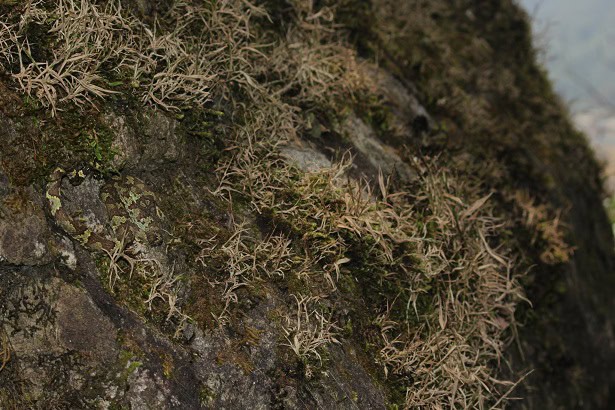
A moderately venomous pitviper of India’s southwest, again found exclusively in the Western Ghats mountain range. This species has no desire to slither aggressively around the forest, announcing its presence to the whole world like the king cobra. Instead, it prefers to sit back and let itself absorb into the essence of the forest, disappearing completely from view.
The Malabar pitviper (Craspedocephalus malabaricus) is a stationary ambush predator, like the Anamala pitviper, and its camouflage is equally effective. With various morphs, this species can blend with leaves, patches of moss, and thick trunks covered in bark alike.
This is a moderately venomous species, which rarely kills, but can send victims to hospital with a severely swollen arm or face. This species is extremely closely related to the Anamala pitviper, sharing most of its lifestyle habits. The two have no overlap, as the Malabar pitviper is found exclusively to the north of the 20 mile wide Palghat Gap, an area of lowlands where the mountains temporarily disappear. Meanwhile, the Anamala pitviper appears only to the south, in the Anaimalai Hills sub-region.
| 5 | Streaked kukri snake |
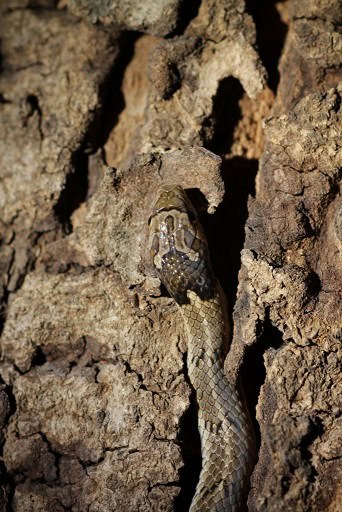
Maximum length: 75cm.
The kukri snakes (Oligodon) are a vast group of snakes in Asia, which are united by being non-venomous, but potentially dangerous if picked up, due to a sharp pair of front fangs. One of the more common Indian species is the streaked kukri snake (Oligodon taeniolatus), which is also one of the better Indian snakes at completely disappearing from the vision of humans, despite being just a few feet away.
Striped kukri snakes are found in the majority of India, particularly the southern half and west, as well as Sri Lanka. They have a beige underlay, overlaid with subtle black markings, which allows them to blend with both parched earth and gnarly tree trunks with ease. Other physical features include round pupils, and a pink tongue with a white tip.
This species also has the claim to fame of being the westernmost kukri snake on Earth, reaching as far west as Pakistan and even Iran. Its diet includes small lizards, and also a healthy dose of egg yolk.
| 6 | Saw-scaled viper |
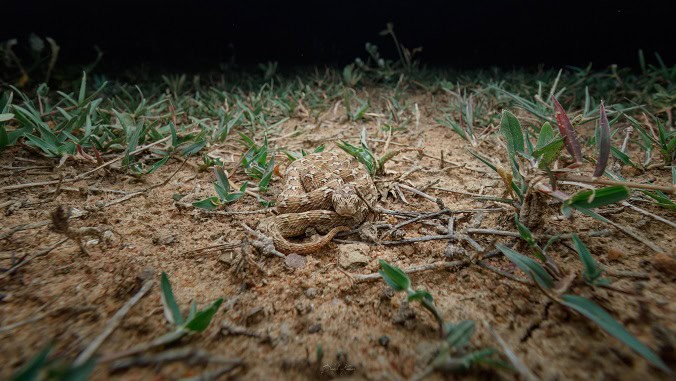
Maximum length: usually 50cm (80cm in certain regions).
The saw-scaled viper (Echis carinatus) is one of the deadliest species in India, causing many thousands of bites per year. Symptoms include kidney failure, painful blisters, and the rupturing of red blood cells, causing uncontrollable bleeding from various areas of the body.
Compared to India’s other big 4 venomous snakes, the saw-scaled viper specialises in drier environments, including semi-deserts, and within these landscapes, its camouflage is superb. The saw-scaled viper is nearly always beige, with little variation in colour compared to the Malabar pitviper. Its tone is precisely tuned to blend with sand, dry soils, and even rocky hillsides just as effectively.
Saw-scaled vipers therefore become even deadlier than they would have been otherwise. This species is found in the vast majority of India, as well as much of Sri Lanka. The only redeeming feature is a tendency to grind its scales together, producing a musical rasp; this might alert you before you put a foot catastrophically wrong.
| 7 | Large-scaled pitviper |
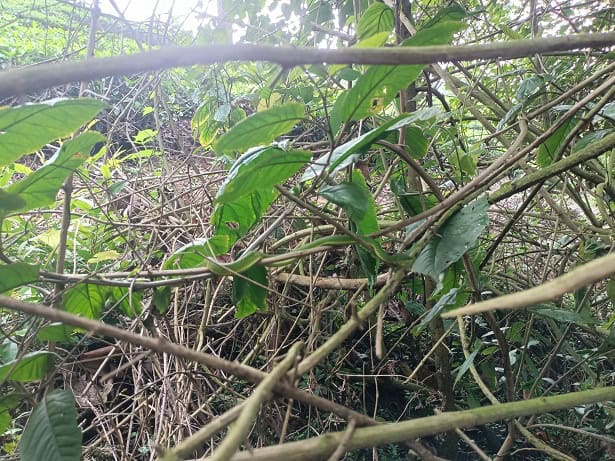
Maximum length: 92cm.
This stealthy pitviper is found in southwest India, in the Western Ghats mountain range, and coexists in its territory with the Anamala pitviper. The difference is in the colour, as the large-scaled pitviper is a heavily green species, with very little variation between individuals. This grants it excellent camouflage in areas of lush greenery.
The large-scaled pitviper (Craspedocephalus macrolepis) appears exclusively in the Anamala Hills sub-region of the Western Ghats mountains, where it’s relatively common. It appears at higher altitudes of over 1200 metres, and although it appears fully green from a distance, its patterns are slightly more complex up close. Black cracks are visible between each scale, revealing the skin below, and there’s also a bluish inside of the mouth, with occasional bluish patches on the body.
Either way, the large-eyed pitviper has excellent camouflage, becoming one with the moist forest greenery and totally disappearing. This species is only moderately dangerous, as tea workers are regularly bitten, but deaths aren’t common.
| 8 | Hump-nosed pitviper |
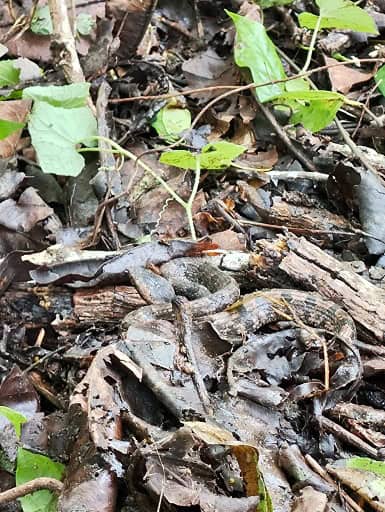
Maximum length: 50cm.
The main ground-dwelling pitviper to the Malabar pitviper’s branch obsessive. The hump-nosed pitviper (Hypnale hypnale) is a creature of forest floors in the Western Ghats mountains, and is one of the more highly ranking species in India’s snakebite statistics after the main “big 4” species.
Hump-nosed pitvipers lurk among leaves and assorted forest mulch, barely moving for hours. Their stationary nature causes many people to brush past them, as does their relatively small size, which makes them harder to see. Even worse, the hump-nosed pitviper comes equipped with an invisibility cloak – its own scales, which blend effortlessly with the surrounding forest matter.
Rather than bright green or blue, this species is either brown or grey, allowing for disguise over many hours. The venom of this species isn’t to be underestimated, with reported symptoms including swelling, gangrene, necrosis and even kidney failure.
Death is relatively rare, as one survey found that just 3 out of 224 patients died, or 1.3%. Nevertheless, the hump-nosed pitviper is another good reason to watch exactly where you’re placing your shoe in southwest India.
| 9 | Günther’s vine snake |
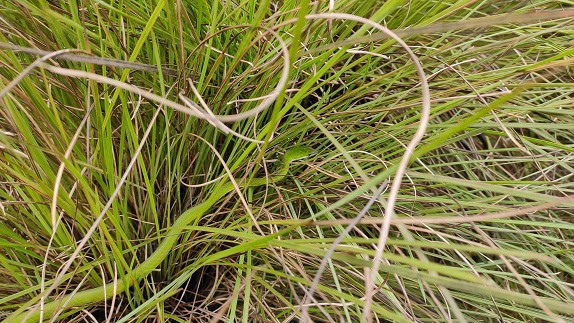
Maximum length: 65cm.
A difficult snake to beat when it come to camouflaging in tussocks of grass, or thin branches on leafy rainforest trees. Günther’s vine snake poses little threat to humans, with only a mild venom. It has a fast, and whippy speed, but is equally adapt at camouflage, thanks to an intensely green colour.
Günther’s vine snake is found in southwest India, in the Western Ghats mountains. It isn’t just green, but extremely thin, allowing it to mimic vines. The green colour is overlaid with subtle black speckles, adding complexity to the disguise, and breaking up the vision of predators hoping to identify a snake-shaped object.
This species is relatively poorly researched, but most Ahaetulla vine snakes prey heavily on reptiles (e.g. the Asian vine snake of Thailand). One rare exception to this species’ green tone is an oily black tongue and inside of the mouth. Günther’s vine snake also has oddly-shaped horizontal pupils, similarly to India’s many other Ahaetulla members.
| 10 | Montane trinket snake |
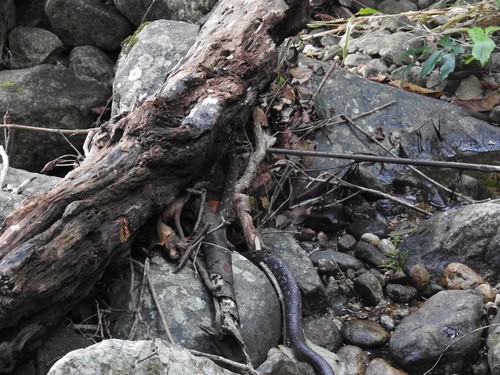
Maximum length: 168cm.
The trinket snake (Coelognathus helena) is one of India’s most common non-venomous species, while the montane trinket snake (C. helena monticola) is a subspecies found in higher altitude areas of the southwest. This species is flexible in nature, splitting its time between the ground and branches, moving at a decent speed, and eating a flexible diet, including rodents scurrying around agricultural land.
This species is non-venomous, but has an aggressive personality, so aggressive that it can scare off an Indian cobra. One of its great skills is camouflage, as the montane trinket snake has no trouble blending in and completely disappearing into dry forest matter and rocks.
Better yet, trinket snakes not only have naturally great camouflage when it comes to colour, but can also modify their own body shape to amplify the deception further. The trinket snake is proven to kink its body at intervals in order to resemble a fallen piece of bamboo, tricking predators into thinking it’s just a piece of inert vegetation, rather than a tasty meal.
| 11 | Common catsnake |
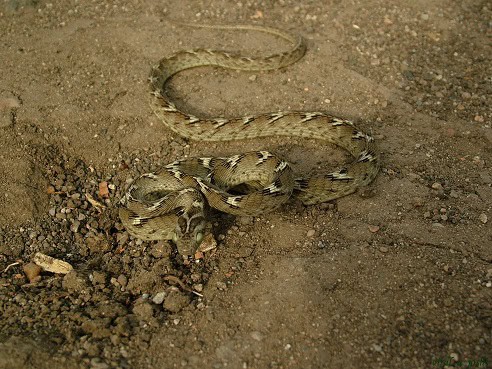
Maximum length: 130cm.
Part of the 40-member Boiga catsnake genus, and the most common member nationwide in India. Most catsnakes are branch-lovers, like the green catsnake of Thailand, but this species spends significantly more time on the ground. Consequently, its colour is different as well: beige and brown rather than leafy green, allowing it superior camouflage on soil and baked earth instead.
This species still appears on tree branches regularly, but is equally likely to appear in dry thickets or a narrow trail between some bushes. Common catsnakes (Boiga trigonata) are mildly venomous, with sharply vertical pupils. Their defensive display can be intimidating, with wild glaring eyes and a gaped mouth, but they pose little threat to human beings.
If this species does appear in trees, then it will stand out sharply against green leaves, but less clearly against thick tree arms or the tree trunk itself. Fortunately, if you make a mistake, then you have little to fear, unlike with our next species…
| 12 | Russell’s viper |
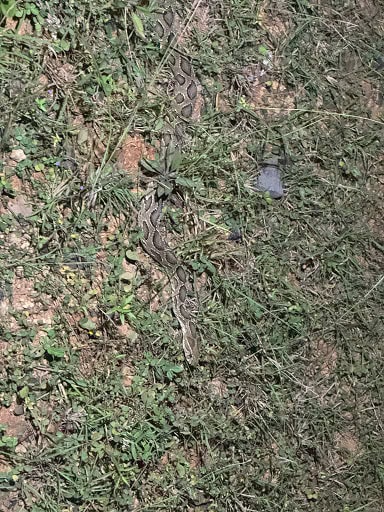
Maximum length: 185cm.
It’s no exaggeration to say that the Russell’s viper is the worst snake on Earth, when it comes to sheer havoc inflicted on humanity. This species doesn’t have the most toxic venom per drop, but may inflict the highest casualty rate, due to a tendency to appear in villages and on farmland bustling with workers.
Russell’s viper venom wreaks havoc on the kidneys, and the limbs of victims. Death is common, as is amputation due to the sheer cytotoxic mayhem inflicted. Part of the reason for the chaos is the Russell’s viper’s fantastic camouflage. This species is dull in tone, with interlocking brown, beige or grey patches, which somehow blend with green just as easily as brown, as you can see above.
While moving, this species is easy to spot, but the Russell’s viper solves that problem by staying in position for several days at a time. This is a lazy ambush predator, and one to always be aware of on a trip to the Indian countryside. Your second priority is standing back from the Russell’s viper – your first priority is spotting it in the first place.