
| 1 | African rock python |
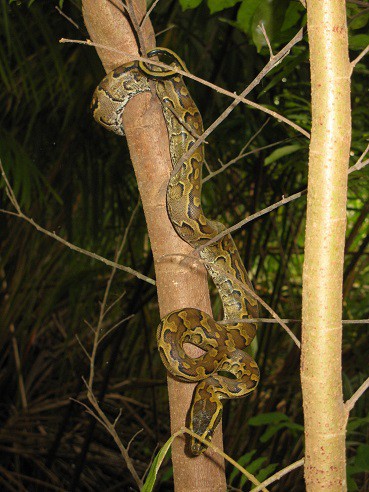
Maximum length: around 6 metres.
The African rock python is the 2nd longest snake on Earth, and has a variety of powerful snake skills. It can lay over 100 eggs at once, it may exceed 6 metres, and its pounce is so powerful that it’s able to rugby tackle impalas.
Its habitats are flexible as well, as African rock pythons can appear in woodlands, villages and savannahs alike. Nevertheless, this species does have one weakness – moisture. African rock pythons require at least some moisture in their environment, or they’ll completely grind to a halt.
Within their habitats, they’re much more likely to be found near rivers or ponds. This characteristic also means that immediately after heavy rains, African rock pythons become much more common. The formerly dry, parched land suddenly becomes much more inviting to them, allowing them to spread their wings far and wide.
Prior to rain, African rock pythons can be sparse, but after a storm, they can be found blocking roads, climbing trees, or even slithering across football fields. Post hibernation, the first spring rains mark the moment when African rock pythons rev up for the year. It’s even believed that the installation of water holes across African fields has made this species more common.
| 2 | Rice paddy snake |
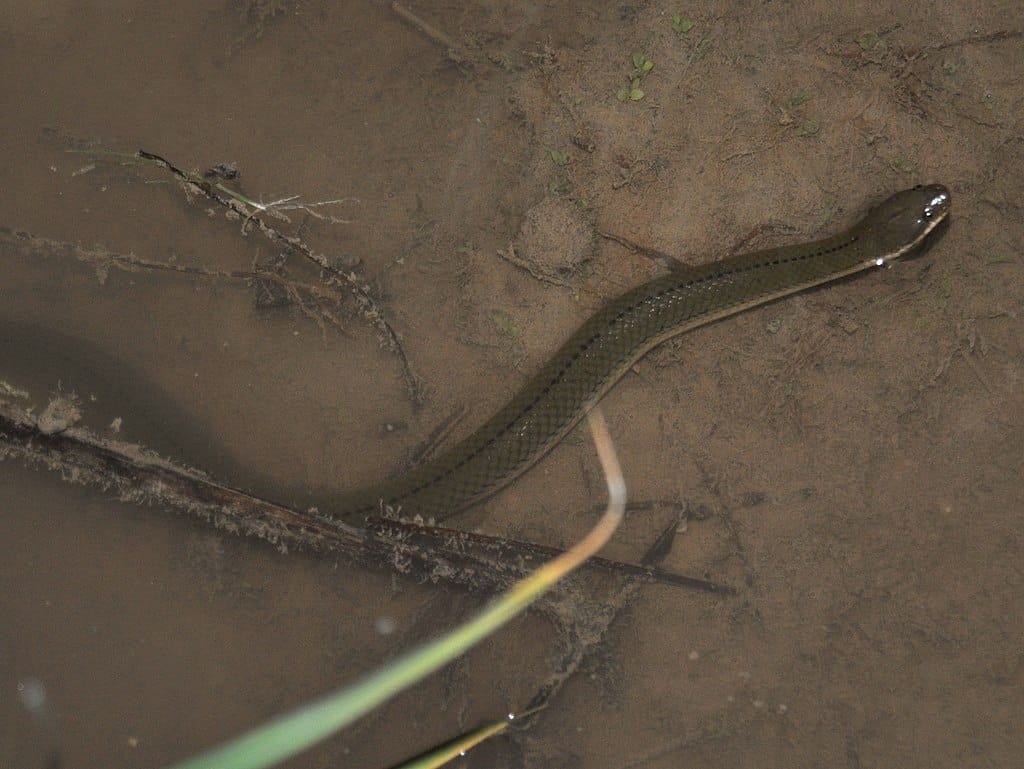
Maximum length: around 70cm.
The rice paddy snake (Hypsiscopus plumbea) is a species of Thailand and Cambodia, which mainly inhabits a single comfortable swamp or cosy forest pool. This species sleeps in its swamps and hunts in its swamps, eating a diet of mainly fish. It’s easily recognisable, with a greenish-brown body and a paler yellow belly.
Ordinarily, rice paddy snakes stick to aquatic environments closely, but heavy rains are their calling card, which let them know that the entire world is open for exploration. Everything changes when the heavens open, as they go from nowhere to absolutely everywhere.
After a rainstorm, rice paddy snakes can suddenly be found in fields, courtyards and schools alike, exploring new horizons that they’ve never seen before. Their most likely motivation is finding fresh new swamps whose fish supplies haven’t been depleted yet. There’s no downside to this population explosion, as this species is completely harmless to humans.
Rice paddy snakes are also found in Java, Borneo and Sulawesi in Indonesia. For some reason, they’re particularly common near Kuala Lumpur in peninsular Malaysia.
| 3 | Sunbeam snake |
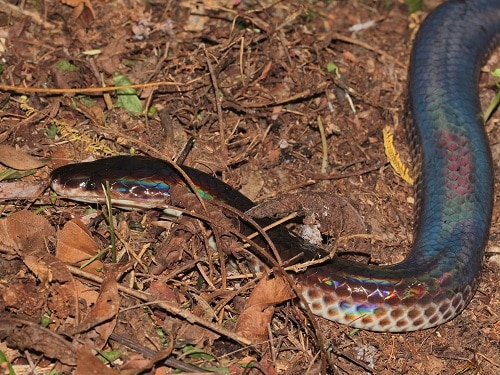
Maximum length: 125cm.
The sunbeam snake is a harmless species of Thailand, which is highly sought after by reptile enthusiasts for its iridescent scales, which convert bright lights into every colour of the rainbow. This is a species of mixed tree clumps and villages, with especially frequent sightings near guava and rice plantations.
Sunbeam snakes are like leeches or earthworms in that they’re normally in hiding, yet all come out at once in the hours post heavy rains. Following a downpour, they’ll go from nowhere to suddenly covering every patch of the local woods, in a non-threatening way, albeit still slightly disturbing.
Sunbeams snakes are nothing to fear, even if picked up, as the most they’ll do is wrap two full body coils around your finger and squeeze. They’re non-venomous, and sometimes wiggle their tail so furiously that it makes a vibrating sound without touching anything.
Being so colourful, sunbeam snakes are tempting to go out and find, but if it’s been dry for two weeks, you might as well not bother. Check the weather forecast, alter your schedule and go surfing instead, and return to the local guava plantation once heavy rain has fallen.
| 4 | Puerto Rican boa |
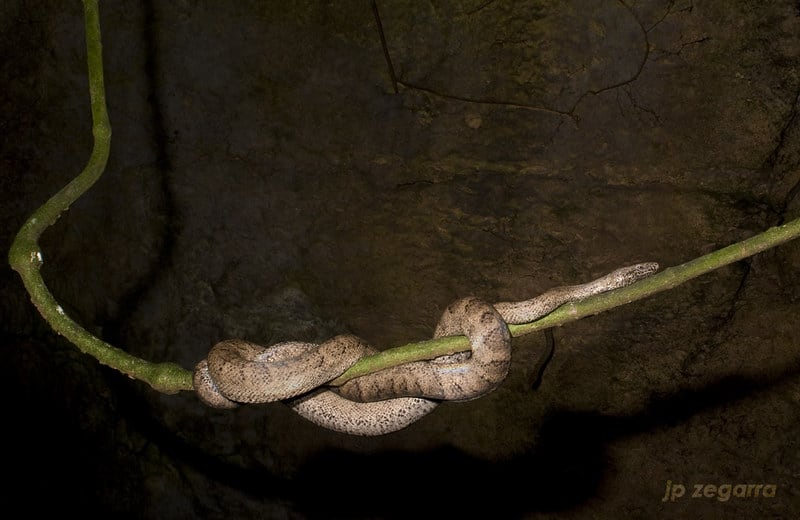
Maximum length: 241cm (so far).
A snake which bides its time, waiting for optimal conditions. The Puerto Rican boa doesn’t waste its time in dry weather, as it knows that its rodent prey will be far less abundant. Instead, it uses those gaps to regain its energy, lurking in karst limestone forests far from humanity..
Puerto Rican boas live solely on their namesake island, and spend much of their time hunting bats in dark, dripping caves. Above ground, they prey heavily on black rats and Evermann’s anoles. Many anecdotal reports state that the ultimate time to see this boa is in the hours following a heavy, sustained downpour.
Puerto Rican boas exploit this freshly wet world, moving at a slow yet consistent pace. They use all their skills to exploit this key moment, climbing several metres up trees, and clinging to branches that really should snap. If the forest is dry, then these acrobatics will be less fruitful, as their mammal prey will also be less abundant.
The Puerto Rican boa is an aggressive species which refuses to calm down even after years in captivity. It’s likely that its close relatives the Jamaican boa and Cuban boa also rev up after rainfall.
| 5 | Purple glossed snake |
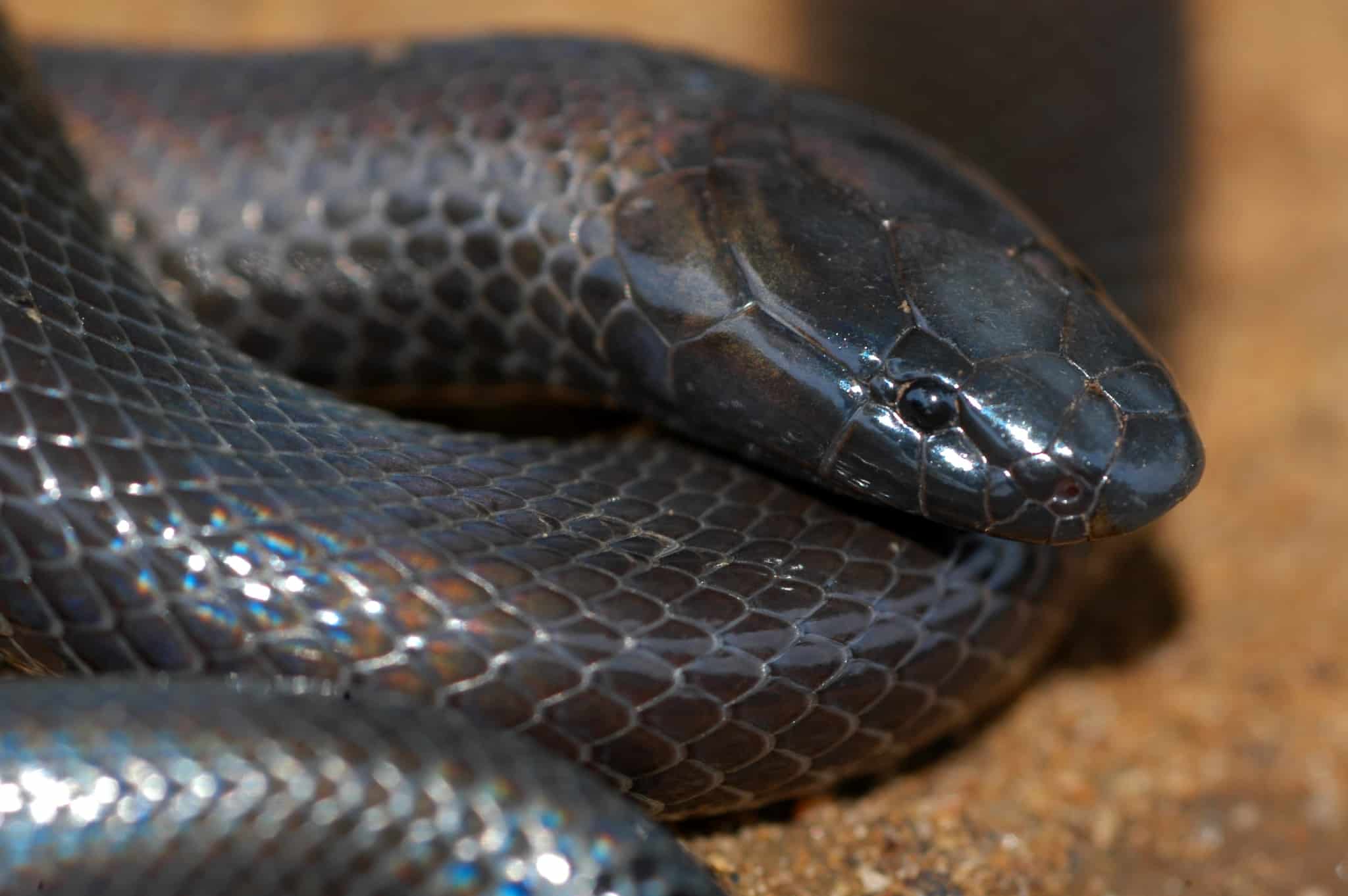
Maximum length: 111.1cm.
A 50-75cm snake of South Africa and Zimbabwe, which spends 50% of its life underground. The purple glossed snake (Amblyodipsas polylepis) is an unpredictable species, as one minute it’s plentiful, while the next day it’s mysteriously gone. The secret answer to this riddle is rainfall, as for whatever reason, moisture draws this species up to the surface, where it embarks upon a quest for lizards, its main prey.
The purpled glossed snake is a mildly venomous species which has never caused a human death. It moves around the savannah slowly, and has smooth, shiny scales. Although it might look disturbing when dozens of purple glossed snakes start crawling up from their soil tunnels at once, there’s no reason to be afraid. The only caveat is a close resemblance to lethal stiletto snakes, so it would be wise not to touch them.
One possible reason for this species’ love of moisture is camouflage. The purple glossed snake has a dark body, which would stand out far more clearly against parched earth. After heavy downpours, with water sloshing around everywhere, this snake would blend with the soil far more easily, reducing the risk of predators taking notice.
| 6 | Mussurana |
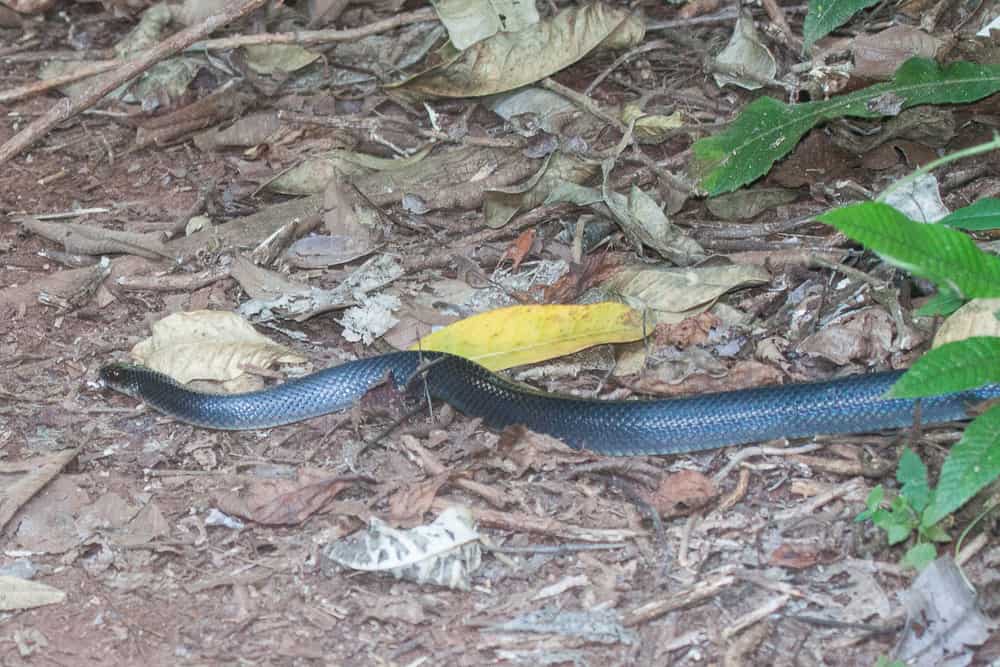
Maximum length: 275cm.
It’s a stormy day in Costa Rica, with raging downpours and booming claps of thunder. Leaving the house would be madness. The downpour clears, and the air is now crisp and fresh. The day is suddenly full of opportunity, but now, there’s a new threat to contend with: snakes everywhere.
Central America immediately after rainfall is total snake pit, and Clelia clelia (AKA the mussurana) is one species that becomes much more active in moisture. This species is Central and South America’s most notorious snake predator, eating the likes of boa constrictors, black-necked coral snakes and fer-de-lances. A world post-rain is the best time for a mussurana to hunt, simply because other snakes are also active at this time, being led on by frogs or anoles.
Clelia clelia is a non-venomous species, but can fly into a rage if humans stray too close. It’s rare to find this species during sunlight as well, with overcast conditions being the most opportune.
Immediately after rainfall, the forest becomes a place of infinite opportunity for this shiny black snake. Yet mussuranas still have to be careful, as predators higher up the food chain have the same idea. The short-faced caiman is a 1.5 metre species of Amazon rainforest rivers, which is confirmed to prey on serpents like the emerald tree boa. This crocodilian normally lurks under the surface, but after downpours, it too becomes more adventurous, venturing further onto dry land amid tangled jungle undergrowth.
If the mussurana and its friends aren’t careful, they could find themselves in the jaws of a crafty crocodilian, the moment they’re getting excited about their day. Heavy rain presents a glorious opportunity for many snakes, but also many risks.
| 7 | Lined snake |
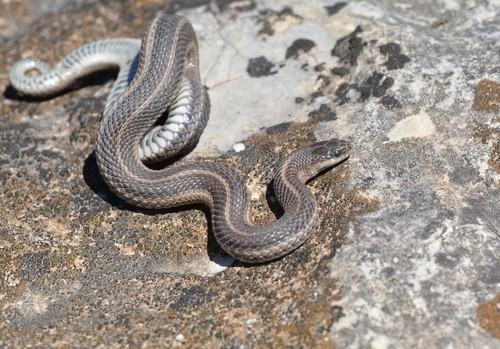
Maximum length: 57.2cm.
On a dry day, this middle American snake is virtually nowhere. It’s almost impossible to find in your local grassland, unless you lift up every last embedded rock. Post rain, the lined snake (Tropidoclonion lineatum) is still challenging to find, yet much more active than usual.
Lined snakes range from Kansas and Nebraska to New Mexico, and live on sweeping plains, commonly with long grasses that make them impossible to see. They have excellent burrowing skills, excavating tunnels in the upper 30cm of soil, in order to search for earthworms, their main prey. Immediately after heavy rains, those earthworms venture to the surface en masse, and the lined snake is always close behind.
The top place to spot this species is on a rural road directly adjacent to its grassy plains (sometimes as roadkill). In New Mexico, sightings have been made at high altitudes of 2810 metres.
Lined snakes are closely related to garter snakes, yet belong to their own unique genus: Tropidoclonion. If you’re desperate to see a lined snake in person, there’s three ingredients: 1) grassy plains, 2) a nearby road, and 3) heavy rainfall.
| 8 | Stiletto snake |
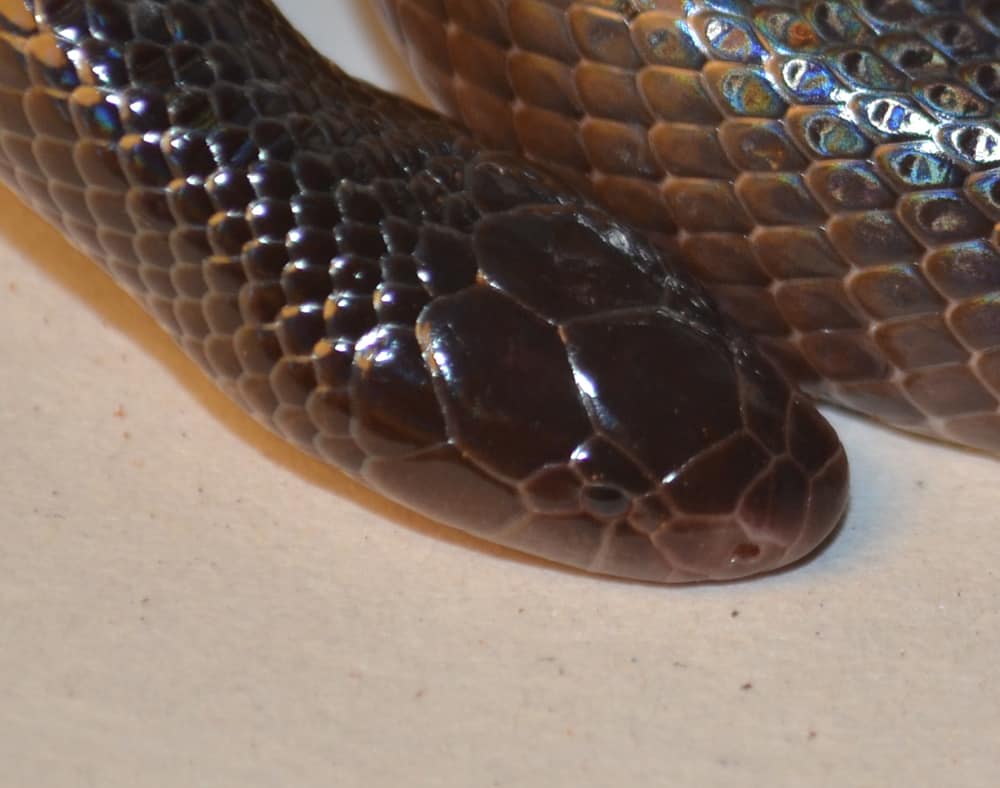
Maximum length: 70cm.
The southern stiletto snake (Atractaspis bibroni) is a species of Zimbabwe, South Africa, Mozambique and more. It closely resembles the humble black thread snake, with similar shiny black colours, but is far more dangerous, with a highly necrotic venom. This species ranks highly in South Africa’s annual snakebite statistics, and has the nickname of side-stabbing snake, due to freakishly angled fangs that jut sideways from its mouth.
A darkening sky is this species’ favourite sight in the whole world. The stiletto snake can’t read a weather forecast, but it knows exactly what strengthening winds, thickening clouds, and rising humidity means. It knows that once the downpour passes, it’ll be free to explore South Africa’s countryside at will, searching for small reptile meals which are now far more abundant.
Stiletto snakes are always most common just after heavy rains, as for the majority of the time, they’re hidden safely underground. They’re most active in summer, and early evening is their favourite time of the day.
The stiletto snake is why you should never pick up a shiny black snake in southern Africa. This species rarely cause deaths, but is capable of turning a bitten finger so blue and gruesome that it resembles a victim of frostbite.
| 9 | Tiger rattlesnake |
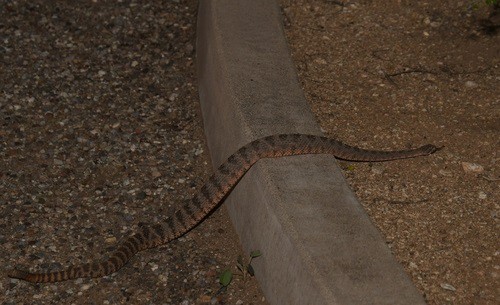
Maximum length: 91.2cm.
Tiger rattlesnakes (Crotalus tigris) are desert-dwellers, which lurk among cacti and dry rocks, sometimes right next to interstate highways in Arizona. They live in deserts with sweeping views of the distant mountains, and possess the most neurotoxic venom of any rattlesnake. Weirdly, their venom also contains the least individual toxins of any rattlesnake.
In 1998, Arizona received record-breaking rainfall totals, due to a strong El Niño in the Pacific Ocean, a phenomenon of ocean currents. Scientists noticed something strange in the desert: that the tiger rattlesnakes were way more active.
The species normally moves 30 metres daily, but now they were buzzing with energy. The males were particularly hyper, and in 1999, something magical happened: a particularly high number of females gave birth. The plot thickened. Somehow, rainfall makes male tiger rattlesnakes more interested in females.
There were two theories: 1) that rodents were more plentiful, giving them additional energy reserves, or 2) that tiger rattlesnakes inherently prefer more moisture. They gained energy, but luckily not so much that they slithered all the way to Tucson. In fact, tiger rattlesnakes tend to be loyal to one particular desert hole for years.
| 10 | Red spitting cobra |
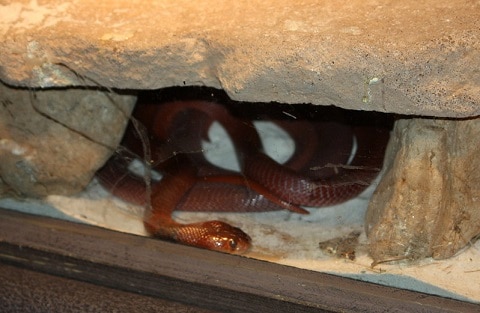
Maximum length: 150cm.
The red spitting cobra (Naja pallida) is a dangerously venomous, 100-150cm species of Ethiopia and Kenya. Surveys reveal that this cobra is most active from October, which coincidentally or not, is also the start of the Kenyan rainy season.
Rainy season is the time when a local Kenyan is at high risk of having venom spat in their eyes, or even worse, receiving a bite. Red spitting cobras can spit accurately at 2.5 metres away, and prefer open areas like savannahs, avoiding dense forests. They also appear on rock formations, as Steve Irwin discovered in a heart-pounding 2000 clip.
Red spitting cobras are flexible, but gravitate towards frogs for their prey. Coming out after heavy rains might be the cobra’s innate preference, but it’s also a response to high availability of prey. Frogs become more adventurous after rains, when puddles cover every surface, and streams suddenly form where the savannah was once parched. It gives them corridors of moistness away from their usual rivers, and the land suddenly becomes a hotbed of hopping and chirping.
Red spitting cobras come out after rainfall for logical reasons: because it’s more economical to search for prey when there’s tons of them around.
Show photos of black snakes.with small amounts of red indigenous to south Alabama
Talking about the mud snake? Definitely the 11th entrant on the list if you are.