
| 1 | Mexico |
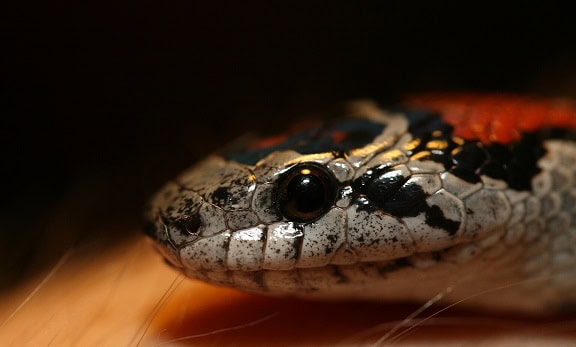
Number of species – 438.
Mexico officially ranks first among all countries worldwide for number of snake species, at least for ones officially discovered and named by science. This is a country where you can barely walk 10 metres forward without meeting a new snake.
Mexico has over 20 rattlesnake species alone, and is believed to be the land where they originated in ancient times, before spreading northwards to the modern day USA. Mexico has dry thorn woods, thick jungles, and arid plains in equal measure, and legions of snakes have evolved to fit each ecological niche.
There’s nowhere in Mexico which is fully free from snakes. If you decide to live there, then snakes are a fact of life.
Longest snake – the northern version of the Boa constrictor, Boa imperator. This only became an independent species in 2009. Its blotchy, silvery-beige appearance is extremely similar, but genetics reveal that Boa imperator diverged from its more famous cousin millions of years ago. Its maximum known wild length is 3.7 metres.
The longest rattlesnake in Mexico is the Mexican west coast rattlesnake (Crotalus basiliscus), which can exceed 2 metres, and is the third longest worldwide behind the eastern and western diamondbacks.
Deadliest snake – the corrosive, heart-stopping, mind-melting, vein-dissolving fer de lance (Bothrops asper) is found in most of the south, and reaches partway up the eastern coast. This species has an astonishingly fast lunge, and is renowned (more like feared) for its unpredictability.
| 2 | Brazil |
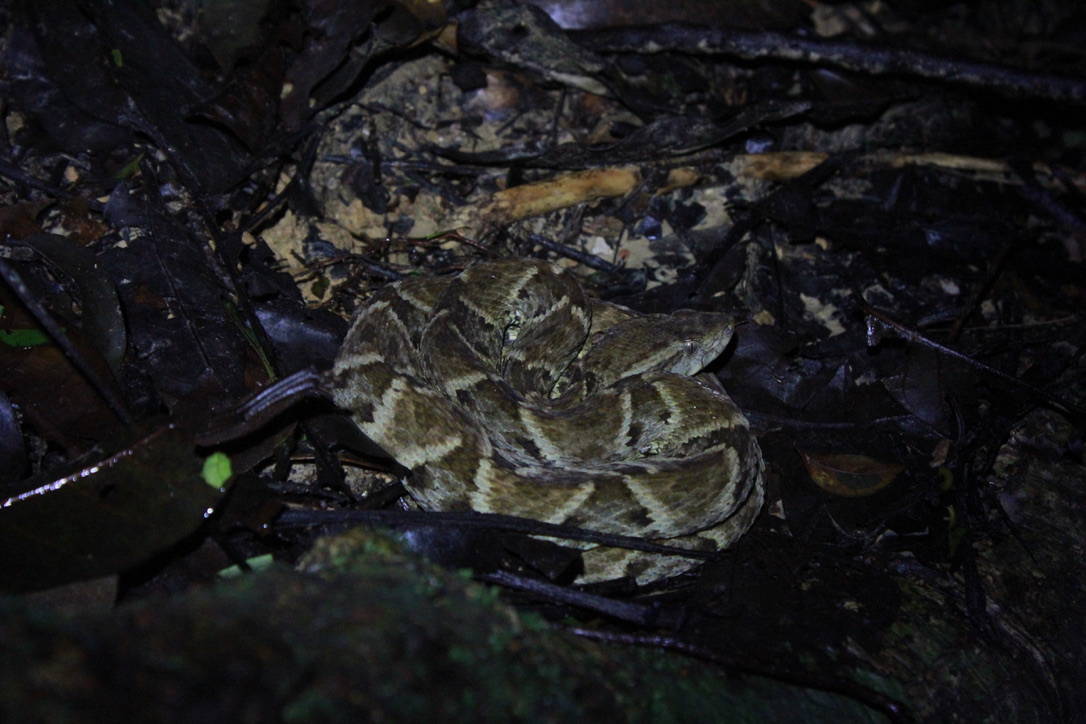
Number of species – 420.
There’s no surprise that Brazil made the list, when it contains the Amazon rainforest, the world’s largest snake respawn point. The Amazon rainforest spent millions of years as a pressure cooker for freakish life forms to evolve, and evolve they did.
The mildly venomous Erythrolamprus genus has some of the brightest colours, with one member being the yellow-bellied swamp snake. Brazil has at least 30 venomous vipers, including one rattlesnake and endless Bothrops lanceheads.
You can find snakes in any location in Brazil, even in cities. There’s blind snakes in the soil, parrot snakes in trees, and last but not least, tiger ratsnakes in your attic.
Longest snake – the green anaconda. This is the second longest snake in the world after Thailand’s reticulated python, but is significantly thicker, and therefore the world’s heaviest snake.
Green anacondas (Eunectes murinus) are so large that they occasionally view small adult women as prey, although no victims are confirmed, just failed lunges. They lunge at prey from river shores, lurking in the shallows, before snatching capybaras, caimans and wading birds. The longest confirmed wild length is 5.21 metres.
Deadliest snake – the common lancehead (Bothrops atrox) causes the majority of Brazilian snakebite deaths. In some Amazonian regions, it causes an estimated 90%. There are various Bothrops lancehead members, but this is the most flexible, freely slithering through forest, field, and backyard alike.
Common lanceheads average at 75-125cm, and vary wildly in colour, but are most typically brown-beige with black specks. They’re especially optimised for camouflage in fallen leaves.
| 3 | Indonesia |
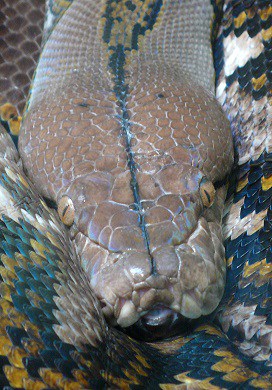
Number – 376.
In the UK, it’s a popular trek to go from John o’Groats in far northern Scotland, to Land’s End on the southwest tip in Cornwall, crossing the entire island of Great Britain. If you were to do this on Java, or Sumatra, there’s no way you’d come out alive. You wouldn’t make it halfway before venom was coursing through your veins, you stumbled into the embrace of a crushing blood python, or a coral snake paralysed every atom of your body.
Obviously we’re exaggerating, but Indonesia is packed full of snakes, and there’s almost certainly dozens of species which haven’t been discovered. From Sumatra in the west to Sulawesi in the east, tourists are almost guaranteed to meet one or two.
Some live peacefully among humanity, others must be treated with caution, while a large percentage are rarely seen. One of the newest discoveries was Hypsiscopus indonesiensis, found in 2024, a rare water snake found in a single lake in southern Sulawesi.
Longest snake – Indonesia is home to the longest snake on earth, the reticulated python. This species has an all-time confirmed wild record of 6.95 metres, and often lives in towns and cities, weaving through alleyways between wooden houses. Indonesia has a constant stream of 10, 11, even 12 metre pythons being reported in Western media, but when investigators arrive with a tape measure, the snake is usually conveniently missing.
Deadliest snake – the Javan spitting cobra (Naja sputatrix) is the most dreaded one to meet. This snake is fast, agile, with a rapid lunge and nervous demeanor. Its venom contains potent post-synaptic neurotoxins which can paralyse the victim. Worse, this species can spit globules of venom into mid-air.
| 4 | India |
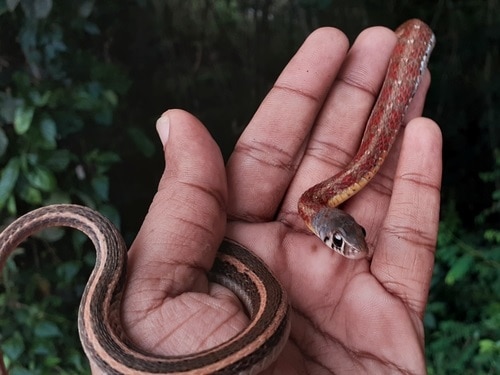
Number – 305.
It’s not surprising that India made this list – in fact, it’s surprising that it isn’t even higher. Like Indonesia, India has so many lethal jungles and unexplored hillsides that there could be 100 species still which haven’t been identified. The spotted earth snake was only discovered in 2020 in the Western Ghats mountains, and the Churah Valley kukri snake was discovered near a remote Himalayan village in 2021.
India has snakes which cover the whole country, like the buff-striped keelback, and those which only appear in a few dozen square miles. During the colonial era, the British had decades to research the country’s animal flora, bringing back many preserved specimens to London in jars, yet they still missed endless creatures.
Indian cobras are hard to miss, as they tend to roam around open ground. Consequently, they were first described in 1758. The saw-scaled viper was described in 1801. But India has endless snake secrets, far too many to be discovered in one lifetime of research.
Longest snake – the reticulated python inhabits a tiny portion of northeast India, but the largest widespread snake is the Indian python (Python molurus), which can exceed 4 metres and covers virtually the entire country.
This species is the thick, constricting relative of the Burmese python, which is infamous for invading Florida’s Everglades. The two were regarded as one species originally, but later split. Indian pythons aren’t especially aggressive, but have been recorded eating deer, by lunging from shallow waters similarly to an anaconda.
Deadliest snake – even the Indian cobra cannot compare with the horror that is the Russell’s viper. This thick venomous snake spends hours and hours not moving each day.
The problem is its favourite location: crop fields bustling with workers. Hundreds are bitten each year after stepping on Russell’s vipers in rice fields, sometimes losing their feet to amputation. Thick boots are now being distributed to act as a shield.
| 5 | Colombia |
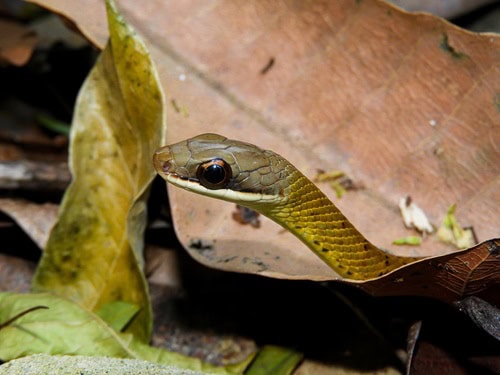
Number – 301.
The one thing keeping drug cartels from completely dominating the global market is the venomous snakes which keep attacking them in their hideouts. Colombia is a nation full of humid jungles, with swirling clouds and mist, and hissing noises coming from virtually every forest. Any bend in the trail ahead could host new dangers; any car boot you open could reveal a viper preparing to lunge. As a country, Colombia is survivable – but only just.
Geographically, Colombia is home to the northern extent of the Andes mountain range, which runs vertically right down the centre. So the country is split in two: the western portions share snakes with Central America, while the east has species similar to Brazil.
For example, there are plenty of anacondas in eastern Colombia, but none in the west. The Andes mountains in Colombia form the boundary between various cousins, like the Central and South American bushmasters, and the boa constrictor and its northern version, Boa imperator.
Longest snake – the green anaconda takes the cake again. One of its hotspots within Colombia is the Guaviare River, a tributary of the Orinoco. Colombia was a hotspot of exploring Western scientists during the early 20th century, and endless tales flooded out of anacondas measuring 10, even 11.5 metres. A typical description was “longer than my canoe”, made by scientists sailing down wide rainforest rivers.
Deadliest snake – in the west, it’s the fer-de-lance, which causes 50-70% of bites in Antioquia and Chocó departments, with a fatality rate of 6%. In the east, the common lancehead dominates.
| 6 | China |
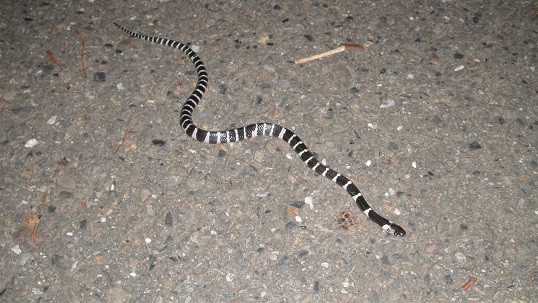
Number – 246.
China isn’t generally thought of as a snake oasis, yet the country is so large that there’s well over 200 species by default.
In the humid jungled south, China has similar snakes to Thailand and Vietnam: Pareas snail-eaters, spitting cobras, kukri snakes with razor sharp teeth, king cobras. In the north, you have snakes more adapted to temperate climates, like Central Asian pitvipers and steppe ratsnakes.
Consuming snakes as food is one of the infamous qualities of China. Indo-Chinese ratsnakes are popular in soup, while venomous kraits are dried, salted and rolled into pocket-sized discs to be used for medical treatments. Places you can buy these delicacies include the infamous Wuhan meat market; snakes were very briefly blamed for the Covid-19 outbreak in the earliest stages of the pandemic (January 2020).
Longest snake – king cobras can be found across southern China, from east to west. As the world’s longest venomous snake, the largest can exceed 5 metres. Hong Kong has an especial density of sightings. However, they cause far less bites than the Chinese cobra (Naja atra), which appears more frequently in urban areas, while king cobras stick to natural forests.
Deadliest snake – the Chinese cobra and Chinese pitviper (Trimeresurus stejnegeri) bite the most people, but are relatively weak compared to other vipers. In a survey on Chinese cobras, just 3 of 242 victims died. The deadliest for raw venom potency is the many-banded krait, a severely neurotoxic black-white snake, which is shy and lethargic by day (preferring to hide in burrows), but a vicious demon when the sun sets.
| 7 | Ecuador |
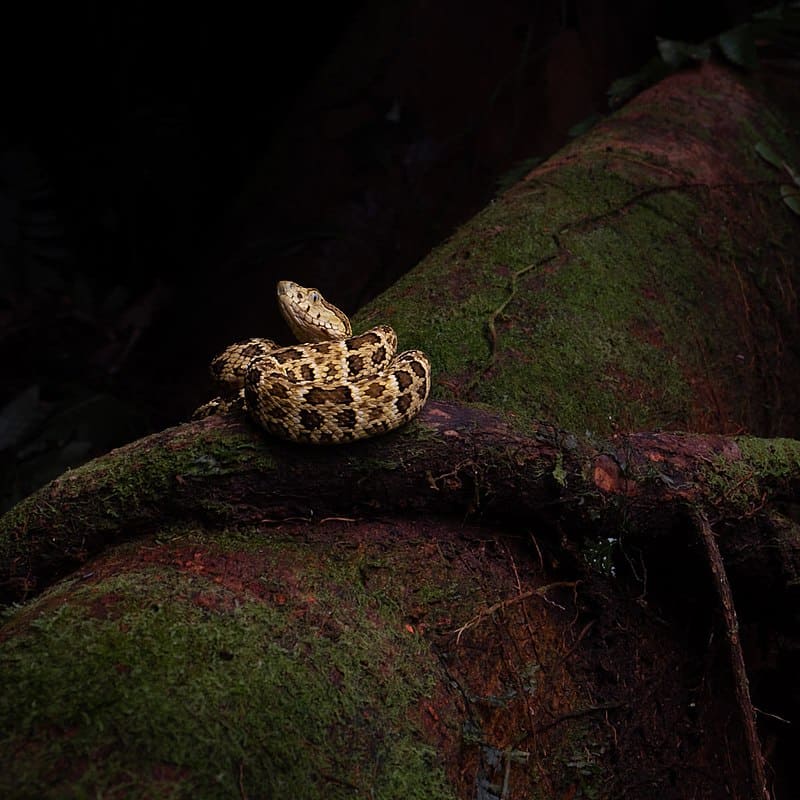
Number – 241.
Ecuador is a relatively small country next to India, China or Australia. It isn’t tiny, but doesn’t have hundreds of snakes based on sheer sprawling size alone. The reason Ecuador has 241 snake species (at least) is its position to the west of the Andes, on the Pacific coast.
The towering Andes mountain range bissects the whole country, dividing it in two, meaning that Ecuador takes its pick from two worlds of snakes, effectively doubling its species count. To the east, the species are far more typical of South America (boa constrictors, common lanceheads). But to the west, you have the typical Central American species such as the fer-de-lance, as well as a menagerie of strange creatures that evolved in isolation.
Dwelling in impossibly dense rainforests fuelled by constant Pacific weather fronts, many unique lifeforms have sprung into being. Unique snakes in western Ecuador include Logan’s lanceheads, ribboned brittle snakes and hooded centipede snakes.
Longest snake – the largest snake in Ecuador lies in the eastern half, and may reach 6 metres. It’s the green anaconda… or is it? A huge media splash happened in 2024 when scientists announced that the green anacondas in the northwest of their range, specifically the Ecuadorian Amazon, were actually a different species, tentatively dubbed Eunectes akayima.
These anacondas were genetically separated by over 5 million years, and were even larger than regular green anacondas, reaching 6.3 metres. The team only tracked the serpents with aid from local tribesmen. The mystery remains unsolved, as scientists are still debating whether this is genuinely a new species.
Deadliest snake – Ecuador is home to several rare vipers found in no other country. These include Lojan’s lancehead and Osborne’s lancehead, both with a dangerously necrotic venom.
However, the regular fer-de-lance (Bothrops asper) can be found in the western half as well, and like in Colombia, this is the one snake you should run away from as fast as possible. In certain regions of Ecuador, fer-de-lances inflict 82% of venomous snakebites.
| 8 | Thailand |
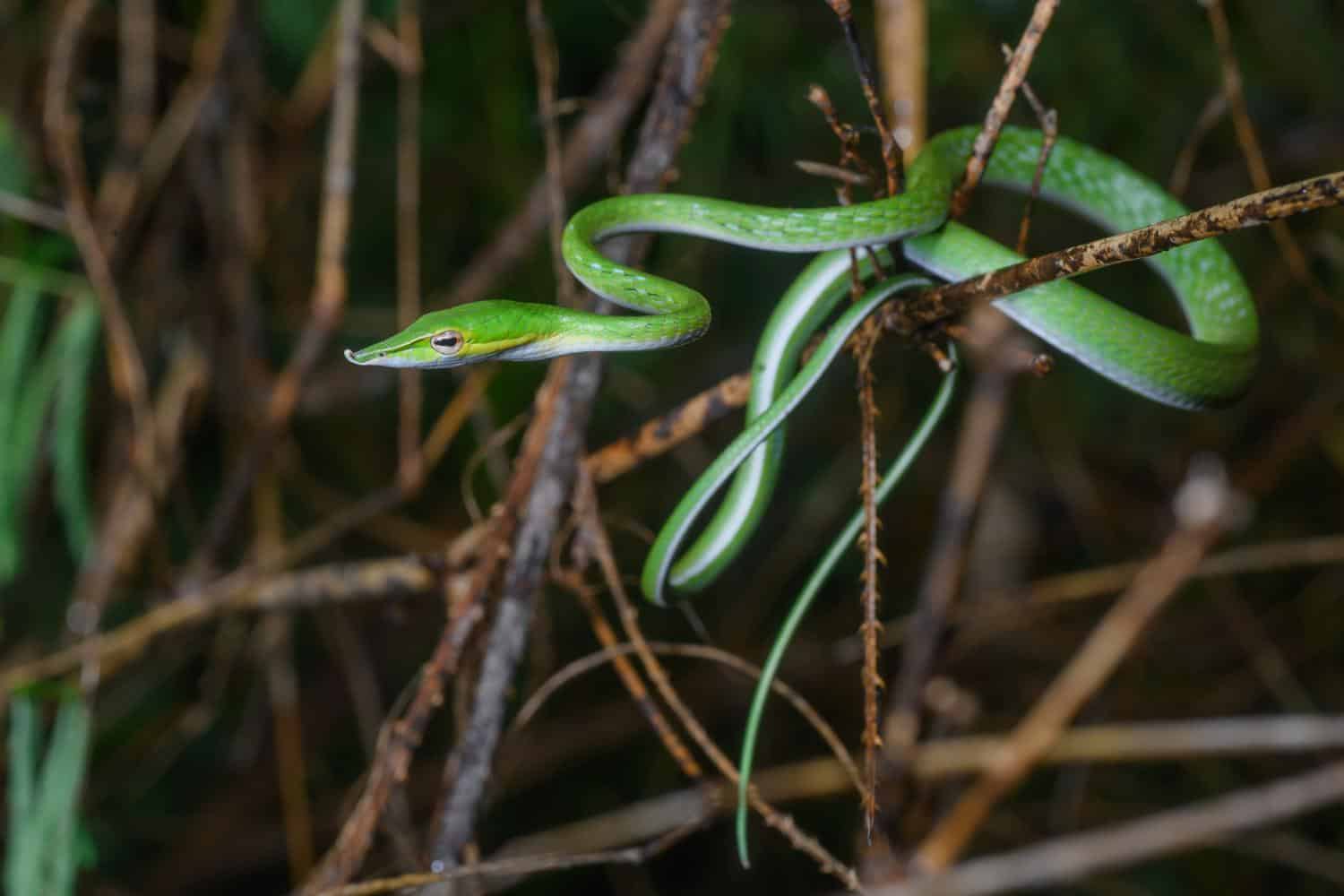
Number – 228.
You might be confused to find that Australia isn’t on our list. Snake pit though it is, a country of mostly arid lands cannot compare to a humid jungle when it comes to species diversity, and Thailand is definitely one such garden of Eden, if a venomous and deadly one.
Thailand’s climate, rainforests and geographical position all conspire to make it a snake haven. It borders a huge amount of countries, such as Cambodia, Malaysia, Laos and Myanmar. While it has mountain ranges, none are so towering like the Andes that they block snakes from spreading to Thailand from other realms.
Thailand lies at the heart of southeast Asia, and is a melting pot of all sorts of funky snakes, friendly and aggressive. Thailand includes: 19 green pitvipers, 4 true cobras, 9 slug-eating snakes, 22 kukri snakes, 4 reed snakes, 11 bronzebacks, 14 wolf snakes and 10 catsnakes.
Longest snake – reticulated pythons occur in every region of Thailand. In Bangkok, they were especially common in the early 20th century, in the time of bustling saw mills and king’s palaces, but they still slither into supermarkets occasionally now, and hide in people’s houses. When the average Thai person meets this snake, they treat it with respect, but don’t fly into a wild panic.
Deadliest snake – the Malaysian blue coral snake (Calliophis bivirgatus), which has an electric blue body and a red head. This contains the rare calliotoxin, which paralyses animals the moment the venom enters their body. Humans can be paralysed within minutes as well, due to a hijacking of sodium channels in cells.
Malaysian blue coral snakes are so lethal that the harmless pink-headed reed snake is mimicking them for its own protection. Fortunately, bites in humans are extremely rare.
| 9 | Vietnam |
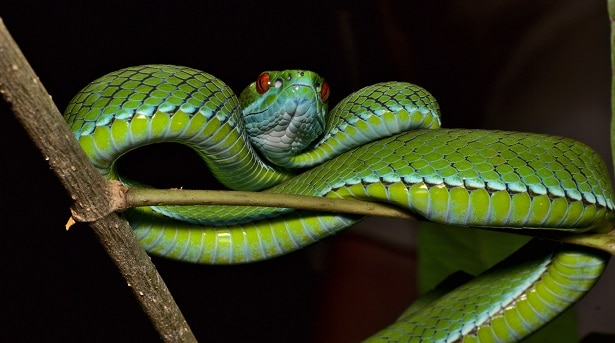
Number – 216.
The US National Archives state that during the Vietnam war, 25-50 US soldiers suffered snakebite each year. It’s no secret that the place is a snake pit, whether you’re in a jungle or on the muddy shores of the Saigon River.
Vietnam has the same types of snakes as Thailand, just with a slightly different mix of species. For example, they both have plenty of Trimeresurus green pitvipers, which cling to branches all day, but Vietnam hosts the rarer ruby-eyed green pitviper (pictured above).
Humans might worry, but these snakes aren’t even safe from each other, as king cobras are always patrolling around eating ratsnakes, sunbeam snakes, and venomous vipers. Some are rarely seen, although this doesn’t mean they can’t see you. Some, like the Nganson bronzeback, can be seen for just a second or two before they dart away into the bushes.
Longest snake – reticulated pythons are found all over southern Vietnam, however they tend to be less numerous there. Consider this iNaturalist map; it clearly shows a wide range for reticulated pythons, but with a scarcity of dots in Vietnam compared to Thailand, even in population hotspots like Ho Chi Mingh City.
Deadliest snake – the Malayan pitviper is Vietnam’s cruellest, deadliest, yet also relatively lazy. Like India’s Russell’s viper, it has a tendency to hang out in crop fields stealthily, and only bite when stepped on.
Malayan pitvipers caused 30.5% of venomous snakebites in a study from 2001-2002, but unlike other chart toppers, they regularly kill victims. Necrosis, swelling and haemorrhaging are to be expected, and kidney failure is a possibility.
| 10 | Malaysia |
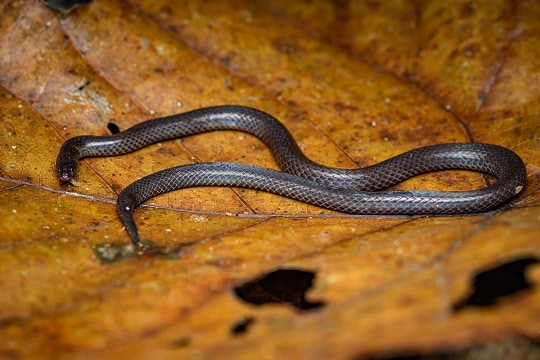
Number – 215
A country owned by the snakes, not the people. Malaysia is divided between two main islands. Peninsular Malaysia is attached to the Asian mainland, and is bordered by Thailand to the north and Singapore to the south. The rest of Malaysia consists of the huge island of Borneo, shared with Brunei, and a portion of Indonesia.
Despite the gulf between them, the two portions share many snake species, due to sea level fluctuations which once united them. King cobras, gold-ringed catsnakes, equatorial spitting cobras, and pink-headed reed snakes can be found on both Malaysian landmasses.
It’s only been 21,000 years since Java, Sumatra, Borneo and the Malay Peninsula were united in a giant landmass. The oceans between the Indo-Malaysian landmasses are wide, but especially shallow. The now-sunken zones are dubbed the “Sunda shelf”, and the whole connected land mass “Sundaland”. It’s believed that these sunken areas had a savannah-style ecosystem.
Longest snake – the reticulated python is one such snake that occupies both Malaysian landmasses, the peninsula and Borneo. The longest ever reticulated python was an individual spotted in 1999 feeding on a 50 pound sunbear. The scientists watched as it retreated to a hollow log, and crushed the meal with the sound of breaking bones, trying hard to digest the bear (eventually succeeding). Several weeks later, they measured the python at 6.95 metres.
Deadliest snake – Malaysia is packed with green pitvipers of the Trimeresurus clan, such as white-lipped pitvipers (Trimeresurus albolabris). While these deal out hundreds of bites yearly, they’re usually survivable, albeit with a patch of deformed skin on your shoulder. The deadliest snake is surely the Malaysian blue coral snake, which virtually never bites, but is so neurotoxic that it once killed a Singaporean man in 5 minutes.