
| 1 | Australia’s most endangered snake |
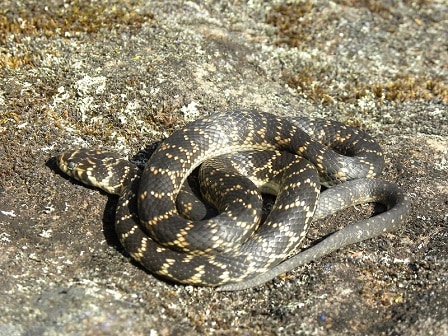
The broad-headed snake (Hoplocephalus bungaroides) is a species of eastern Australia, which averages at 60cm and is recognisable by its black body overlaid with starry black bands. It’s a moderately venomous species, and possibly dangerous to humans, but very few bites have ever been recorded. In fact, very few people encounter this snake at all, for one simple reason: the broad-headed snake is one of the rarest snakes in the whole of Australia.
Out of all venomous Australian snakes, the broad-headed snake is easily the one conservationists are most focused on. The decline began in earnest in the mid-1800s, as Europeans gradually constructed ever more towns and cities along the east coast. These days, the species is restricted solely to rugged national parks such as Blue Mountains NP or Yengo NP.
Even 150 years ago, broad-headed snakes were relatively uncommon, appearing only in New South Wales, and human pressure has made them rarer still. As of the 2020s, they’re found exclusively in a 150km radius surrounding Sydney. They were once found in the suburbs of Sydney itself (including Randwick), but haven’t been spotted in the Sydney metropolitan area since the 1960s.
Broad-headed snakes have a couple of relatives in the Hoplocephalus genus they belong to, including the pale-headed snake (Hoplocephalus bitorquatus), which likes to live on leafy forest floors. However, this is by far the rarest of the three.
| 2 | Australia’s most endangered snake |
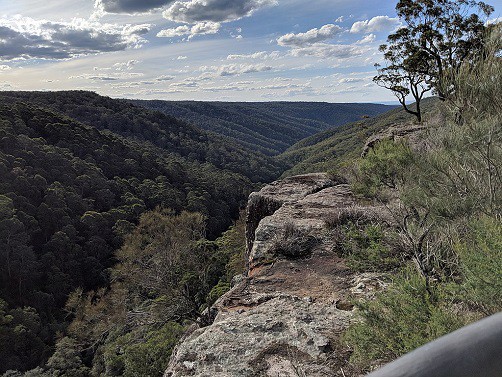
Broad-headed snakes are endangered for various reasons, but the main reason is their extremely specific habitat requirements. Broad-headed snakes not only require rugged national parks, but very specific areas within those parks.
Rather than grassy hillsides, this species requires rocky sandstone outcrops amidst open ridges in forests, the sort of place where you might stop for a picnic and admire the view. Within those ridges, they require dark crevices to lurk in, and loose rocks lying on the surface which they can hide beneath.
Even the angle of the rocky ridges is important, as broad-headed snakes have a strong preference for southeast-facing ridges, which maximise their sun exposure during cool winter afternoons. Broad-headed snakes require not just rock, but “rock on rock” habitats. They’re rarely found below rock slabs resting on soil, or grassy clearings. It has to be sandstone rock slabs resting on a ridge rock base – nothing else will do.
| 3 | Lives a lazy life |
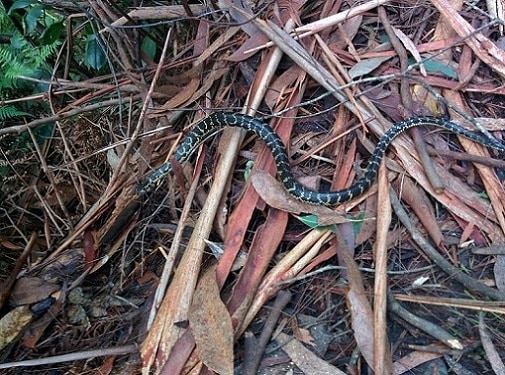
During summer, broad-headed snakes venture further afield, slithering around forests adjacent to their ridges. They occasionally stash themselves inside hollow trees as well. Nevertheless, without these ultra-rocky sandstone outcrops, they cannot survive winter and spring.
These rocky outcrops are also important for their hunting style, which is purely ambush. Rather than exploring aggressively for prey, broad-headed snakes lurk comfortably under a warm rock and wait for oblivious reptiles to wander past. They then lunge in an explosion of speed, defying the motionless statue they were previously imitating.
After grabbing hold, broad-headed snakes begin injecting their venom, and they never let go until all struggling ceases. In the meantime, they press their prey against a hard rock, holding it firmly in place. Less commonly, they apply a couple of constricting coils.
Broad-headed snakes can remain motionless in a dark crevice for days, or even weeks. Although their colours are bright when viewed in a photograph, they blend with rugged bush rock much better than you’d expect.
| 4 | Threatened by bush rock poachers |
Broad-headed snakes have strongly declined over recent decades, and habitat destruction is the main reason why. The problem isn’t just rugged countryside being absorbed by agriculture, but something more specific – the theft of natural bush rock, often scraped directly from the remote ridges they call home.
Bush rock is a wildly popular ornament in the gardens of Sydney, and has been for over 150 years. It’s designed to mimic the ruggedness of the wilderness, but with home comforts metres away, with all the usual competition to see who can have the fanciest garden.
You can buy legal sandstone boulders, but it’s equally common to see flatbed lorries speeding away from Sydney’s national parks, with sheets of flat rock strapped to their backs. Opportunists will park along national park roads, walk a few hundred metres, and begin stripping the natural rock from ridges, oblivious to the snakes below.
This practice is now illegal, as it completely destroys natural bushland habitats. No species has suffered more than the broad-headed snake, as its habitats coincide perfectly with the rock slabs poachers are attempting to steal. Conservationists are taking the threat seriously, as many lorry drivers have been caught and prosecuted, but others manage to sneak under the radar.
| 5 | Threatened by hikers |
Broad-headed snakes have such delicate requirements that pinching even small amounts of rock can wreak havoc, causing them to vanish. However, ignorant hikers are also a problem. Their exposed rocky ridges are the perfect site for a roaring campfire, and many explorers shift loose rocks in order to create cairns. Additionally, the species’ rocky outcrops are inherently more likely to be near walking trails, because of the excellent views they offer.
The biggest remaining base of broad-headed snakes is Morton National Park, where they can reach concentrations of 33/km². Wollemi National Park is their most untouched hotspot, as it’s so remote that hikers and rock poachers cannot reach certain areas on foot.
In a 2005 study, researchers flew into the depths of Wollemi using a helicopter, and fought their way to the rugged rock ridges. They return home with good news: that broad-headed snakes were still thriving in these remote areas, locked away from mankind’s influence.
| 6 | Simple to recognise |
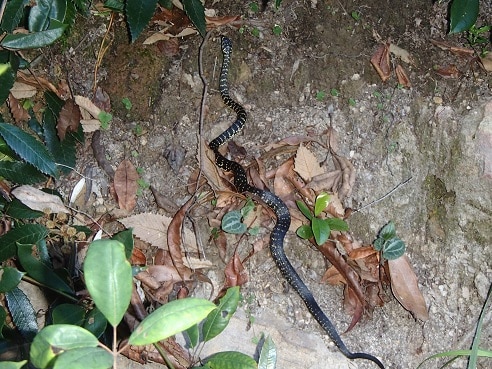
If you’re lucky enough to find their secret ridges, then your work is complete, as broad-headed snakes are very simple to recognise. They have a black body overlaid with thin white bands, which are always vastly outnumbered by the black scales in coverage, but contrast vividly.
The maximum length for a museum broad-headed snake is 75cm, though one scientist reported an 87cm snake from the wild in 1981, out of 100 measured. 90cm has also been mentioned.
Broad-headed snakes are much darker than their fellow Hoplocephalus members, the pale-headed snake and Stephen’s banded snake. All members have a slender body followed by a wider head.
The biggest lookalike of this species is easily the diamond python. This is a subspecies of the common carpet python which is centred around Sydney, and has midnight black scales overlaid with vividly contrasting yellow spots.
The difference is that broad-headed snakes have a consistently grey belly, with no patterns. Diamond pythons have a pale belly, matching the colour of their light blotches, with occasional black markings scattered about. Up close, diamond pythons also have labial pits near their snout for infrared heat-seeking, which broad-headed snakes lack.
| 7 | Venomous, but easily treatable |
Broad-headed snakes are venomous to a middling level. They’re neither the harmless chewer of a garter snake, nor the kidney-melting horror of an Indian Russell’s viper.
The broad-headed snake’s venom primarily causes blood clotting chaos, but is a procoagulant rather than anticoagulant. Instead of disabling blood clotting by destroying the ingredients, it causes mass activation of fibrinogen and fibrin. Eventually, this depletes clotting supplies so far that normal clotting of wounds becomes impossible. This is called venom-induced consumption coagulopathy (VICC), and is also the route taken by its Hoplocephalus relatives: Stephen’s banded snake and the pale-headed snake.
Broad-headed snakes also have mild neurotoxic dangers, including slurred speech, drowsiness, and weak muscle control. The free bleeding can kick in less than one hour after being bitten. This snake lacks a dedicated antivenom, but luckily, Australia’s standard tiger snake antivenom works like a charm. One one death has ever been recorded.
Broad-headed snakes have a highly strung personality. When bothered, they shift into S-shaped coils, and snap at intruders with a determined stare in their eyes.
| 8 | Teeters over cliffs |
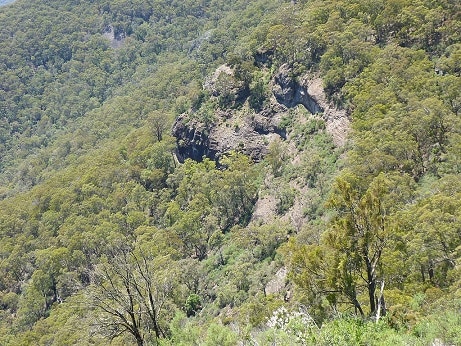
Broad-headed snakes are often found with a pair of neighbours in their rocky outcrops: the small-eyed snake and yellow-faced whipsnake. These species thrive among sandstone bushrock, yet are barely affected when thieves remove it. Only the broad-headed snake suffers.
In these rocky environments, broad-headed snakes tend to stay closer to cliff edges than other snakes. They can rest on severely steep mountainsides, and even survive snowfall. Winter is their laziest time, when they spend much of the day resting on rock slabs, basking in the unending cool sunshine. The crevices they lurk in make finding them difficult even if you’ve reached the correct sunny ridge. A 1998 study only managed to find 11 broad-headed snakes over 54.5 hours, equating to one snake ever 5 hours.
Broad-headed snakes travel very little distance, moving less than 1km from the rocky crevice of their birth. They more than match the laziness of an emerald tree boa, except that they lurk in rock crevices rather than on rainforest branches.
| 9 | Favourite prey: velvet geckos |
The diet of a broad-headed snake shifts with age. As youths, they’re dependent on velvet geckos, a 10cm species which also loves rocky ridges, and is the most common gecko in rural Sydney. As they grow, they still primarily eat reptiles, but diversify to eastern water skinks, and mammals such as the house mouse and brown antechinus. They keep their taste for velvet geckos, though in dramatically reduced proportions.
Velvet geckos are yet another link in the chain that holds this species in place. A 2005 study found that broad-headed snakes were clearly most abundant on the rocky ridges where velvet geckos also thrived. Without this tasty gecko, broad-headed snakes struggle to prosper.
Velvet geckos have also evolved in response to this hungry predator, learning to avoid the broad-headed snake’s scent. This is probably why broad-headed snakes rely on ambush, as less travelling means less spreading their scent around.
Broad-headed snakes have their own dietary niche to some extent. They share their rocky ridges with small-eyed snakes, another reptile muncher, but the latter relies mainly on skinks, skipping geckos entirely, for mysterious reasons. This leaves a wide open buffet for the broad-headed snake to enjoy.
| 10 | Can’t replenish itself |
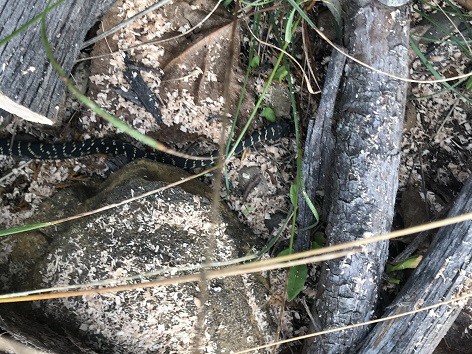
Yet another characteristic which makes broad-headed snakes endangered is their breeding cycle. This rare species reproduces very infrequently, and matures at a late date.
A large percentage of females don’t breed every year. In a study from Morton National Park, only 3 out of 7 females monitored were pregnant in 1992, 2 out of 5 in 1993, and 2 out of 8 in 1995. None of the tracked females reproduced more than once over the 4 year study.
Broad-headed snakes may be the slowest reproducing of any Sydney snake. This is linked to another secret characteristic: that broad-headed snakes feed very infrequently. A particularly large proportion are found with no food in their bellies, reducing the energy they can expend on reproducing.
The brutal reality might be that broad-headed snakes are inefficient, and evolution has left them behind. Or it’s possible that this slow nature wasn’t a problem until mankind moved in.
Either way, broad-headed snakes can’t order a mass breeding cycle to replenish their depleted outposts. The recovery of individual rocky ridges happens only slowly.
| 11 | Why hope remains |
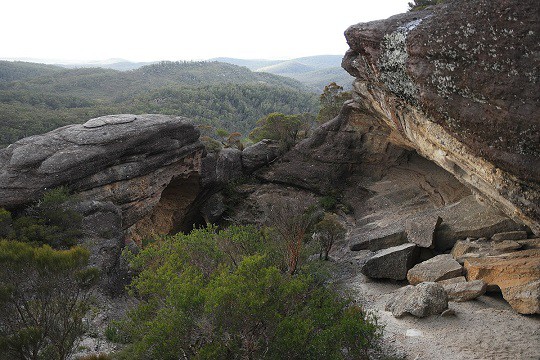
The most adventurous time for broad-headed snakes is summer (December-February). This is when they finally leave their rocky outcrops, and venture to nearby forests, occasionally stashing themselves in tree trunk hollows where they continue the ambush game. Broad-headed snakes are spotted on roads occasionally, with one example being Woronora Dam Road, near Darkes Forest south of Sydney.
Broad-headed snakes happily gobble up pinkie mice in captivity. Despite eating reptiles as well, they’re one of the easier snakes to feed – just fling them a hairless frozen mouse and they’ll love you. One snake enthusiast kept a broad-headed snake for 19 years on a diet consisting mostly of mice.
New South Wales lists the broad-headed snake as “endangered”, though some believe that it’s more widespread than previously believed. Estimates range from 10,000 to 100,000 surviving in the wilds of Sydney.
One boast of this species is being totally immune to wildfires. In bushland devastated by flickering flames, the broad-headed snake emerges unscathed, probably because it vanishes into dark crevices so effortlessly. A study found that in the same area, the local small-eyed snakes were decimated by wildfires, while the broad-headed snakes were barely affected. Worldwide, another wildfire dodger is the Louisiana pinesnake.