
| 1 | Desert adaptions |
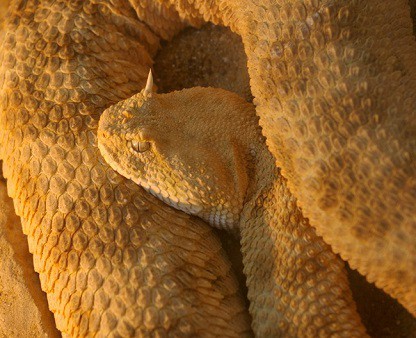
Snakes slithering among cacti is reasonably common in Arizona and Chihuahua, yet there’s also snakes which chose millions of years ago to venture into true deserts, even those with rolling sand dunes. The longer they stayed in the desert, the more mutated, strange and extreme their lifestyles and bodies became, to survive in some of the harshest environments on Earth.
For example, the sidewinder rattlesnake has two fleshy horns, one above each eye, which are theorised to be for blocking the sun’s rays. Sidewinding itself is a classic desert adaption. By moving with only two small points of their body touching the ground at once, desert snakes can minimise contact with the searing desert floor.
Sidewinding is used by several desert snakes, including the Saharan horned viper of Libya, and the Peringuey’s adder of Namibia. The latter has its own desert adaption, as it can gain its entire weekly water supply from the lizards it eats. This 30cm sand glider can be found on white sand dunes, and also licks its own scales for moisture, after fog moves in from the Atlantic Ocean and condenses.
Sidewinders commonly collect water droplets on their scales, on the rare occasion that rain strays into Death Valley. Some snakes even exploit the desert for hunting, burying themselves in sand up to the eyeballs, then leaping out at unsuspecting prey. If you dropped a garter snake into the Mojave Desert, it wouldn’t last days.
| 2 | Snake islands |
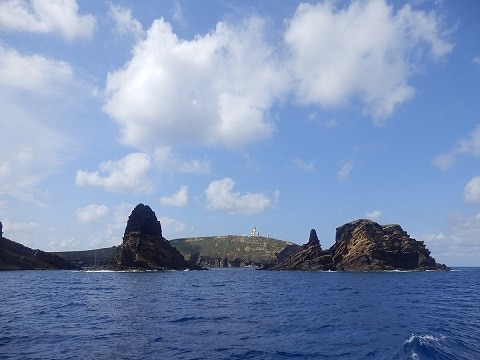
No matter where you are in the world, from north to south, from tropical to temperate, one fact holds true: snake islands.
Islands that are infested with one species or another have been recorded throughout history, and still exist today. All it takes is for sea levels to fall and for snakes to be trapped on a small pocket of land, with bountiful resources, so that the snakes can multiply and multiply until it’s a place that nobody in their right mind would visit, except a grizzled old lighthouse keeper.
Snake islands worldwide include Chappell Island off the Tasmanian coast, home to a rare melanistic population of tiger snakes. These snakes eat for only 6 weeks of the year, when mutton birds make their annual landings and lay their chicks (fortunately, a large proportion survive). The rest of the year, they wait aimlessly on the rocky islet, brooding.
Off the Baja California coast, Isla Tortuga is home to a unique rattlesnake, simply called the Isla Tortuga rattlesnake, an offshoot of the western diamondback that became stranded and diverged. There’s so many rattlesnakes on the island’s beautiful beaches that tourists are practically stepping on them, so most keep a safe distance in boats.
| 3 | Urban lovers |
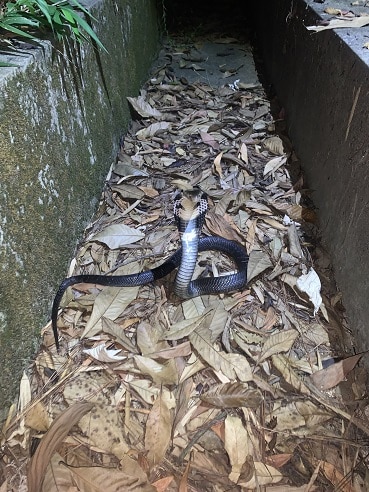
Some snakes run for the hills the moment tarmac is laid down, and almost never appear in towns. These include the rock rattlesnake (Arizona) and red adder (South Africa). Then you have the opposite extreme: snakes that survive and thrive in urban environments, even poking their heads out of sewers.
In the case of reticulated pythons, the world’s longest snake, this is literal; two Singapore coffee shop owners nearly had a heart attack in 2021 when one poked its head out of the backroom toilet. For some reason, reticulated pythons cope superbly with urbanisation, using water culverts and underground pipe networks to get around.
In the US, the northern watersnake is the most common river snake of all. This species likes peaceful countryside, but also stone-sided canals and polluted dams in the hearts of towns. In fact, a 2009 study that released captive northern watersnakes found that more headed to a river adjacent to a factory than the countryside.
Then you have the large-eyed pitviper, which has a simple condition of its existence – bushy vegetation. Towns and cities are fine, it just needs plant matter to rest on, and consequently, an overgrown alleyway or bush outside a hotel is perfectly acceptable. Large-eyed pitvipers are a common sight in Bangkok.
| 4 | Bedroom invaders |
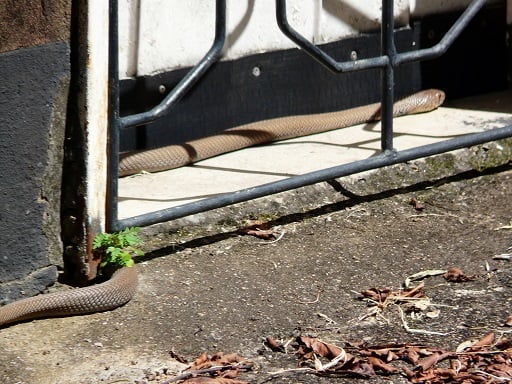
Snakes are very difficult to understand at times. Some stay in the hearts of forests well away from buildings, but others take a keen interest in people’s homes. A smaller number still take a disproportionate interest in people’s bedrooms.
Cobras are notorious bedroom invaders, and especially the Mozambique spitting cobra of southern Africa. According to a 1982 study, 94% of bites from this species happened indoors, and 81% in bedrooms. In 2018, a South African mother was sprayed in the eyes when she opened her daughter’s bedroom to find out why she was screaming. The daughter had been bitten on the chin in her bed (both survived with no lasting injuries).
Many a South African has been woken up with a swishing cobra on their duvet, wondering whether their nightmares are starting to blend with reality. In Australia, the mulga is statistically the top bedroom invader, though nobody is sure why.
Some snakes go a floor higher, and love to stash themselves in people’s roofs. These include the golden flying snake of Thailand and the beauty ratsnake of China, plus bat hunters like the Amazon tree boa.
| 5 | Swamp dwellers |
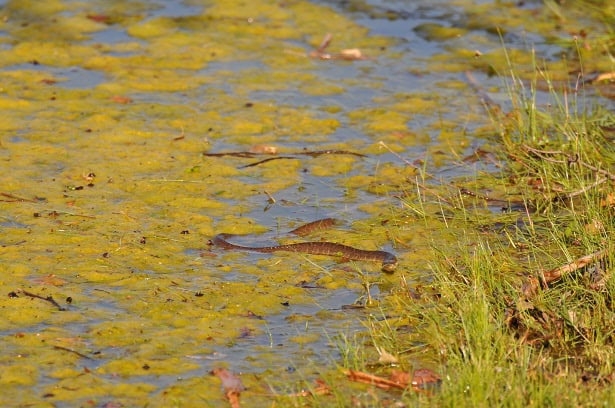
If a habitat is empty, then snakes will find a way to occupy it, even the sand dunes of the Sahara Desert. There’s no way they’ll let a swamp go to waste, and the bad news is that the gloomy, murky swamp in your local forest could be occupied too.
Most people don’t go swimming in swamps, so a grisly death is a small risk. But if nightmares are your worry, then a menacing snake head thrusting out of a swamp might be what pushes you over the edge.
Examples of swamp snakes include the cottonmouth, found in Louisiana, Mississippi, Alabama and Florida. Cottonmouths are fish-eating water specialists, but avoid fast-flowing rivers, preferring stagnant, stationary water bodies. Cottonmouths sometimes share these swamps with the mud snake, a non-venomous species.
Over in Thailand, wading into a swamp could bring you face to face with the tentacled snake, which has bizarre facial appendages and can sense water vibrations of fish. Meanwhile, the blood python of Indonesia rarely enters swamps, but lurks menacingly by the shores, possibly hoping to push someone in.
| 6 | Treetop climbers |
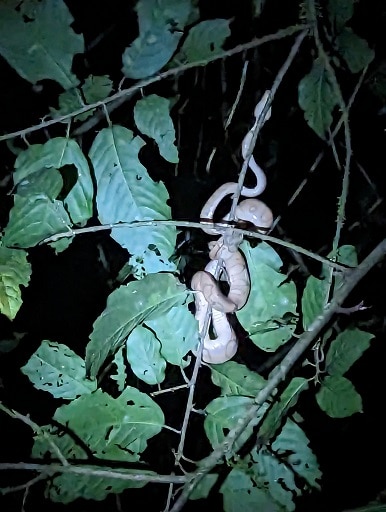
If snakes find themselves outcompeted on the forest floor, they can simply move upwards instead. Even the bulkiest rattlesnake is capable of grinding 150cm up a tree, and some spend their lives moving through upper canopies where they can barely see the ground. With tree frogs and anoles skirting along thin branches, some snakes can stay in the treetops for weeks, crossing effortlessly between spindly branches using their thin bodies.
Some snakes slither so high that their survival instincts seem to have been deactivated. Stephen’s banded snake of Australia lives in tree trunk hollows, and was once recorded 25 metres above ground. The South American sipo reaches 16 metres, while the obscure March’s palm pitviper is perfectly comfortable looking down on people from 25 metres high, if it can even make them out.
There’s 4000 snake species worldwide, but only one can hold the all-time record. That species may be the ringed tree boa, a dweller of Central American rainforests which was once recorded 40 metres above ground on a branch.
Ringed tree boas measure 1.5 metres and can climb slowly, but patiently, slithering around thick trunks like a hosepipe. Compared to the boa constrictor (less of a tree climber), their bodies are far thinner.
| 7 | Symbiotic habitats |
Everyone knows about the food chain, which includes all living creatures, and which humans believe themselves to be at the top of (when it’s actually the great white shark). However, creatures are connected in subtler ways as well. There are several snake species alive today which would go extinct if one mammal disappeared.
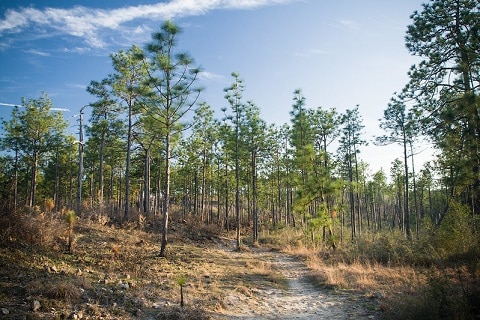
Louisiana pinesnakes are the best example. This 140cm snake is severely endangered in the US, as it’s completely dependent on longleaf pine ecosystems. These forests have just the right foliage density and soil firmness for Baird’s pocket gophers to move in and dig their burrows, and it’s these burrows which Louisiana pinesnakes are hopelessly reliant on. Up to 98% of longleaf pine has been lost in the southern US, converted to manmade slash pine plantations.
Another symbiotic relationship involves the prairie rattlesnake, which loves to hide in prairie dog burrows above all else. In Africa, the 6 metre African rock python is constantly found in aardvark burrows, as this anteater-like mammal is one of the few to dig burrows large enough.
| 8 | No river is safe |
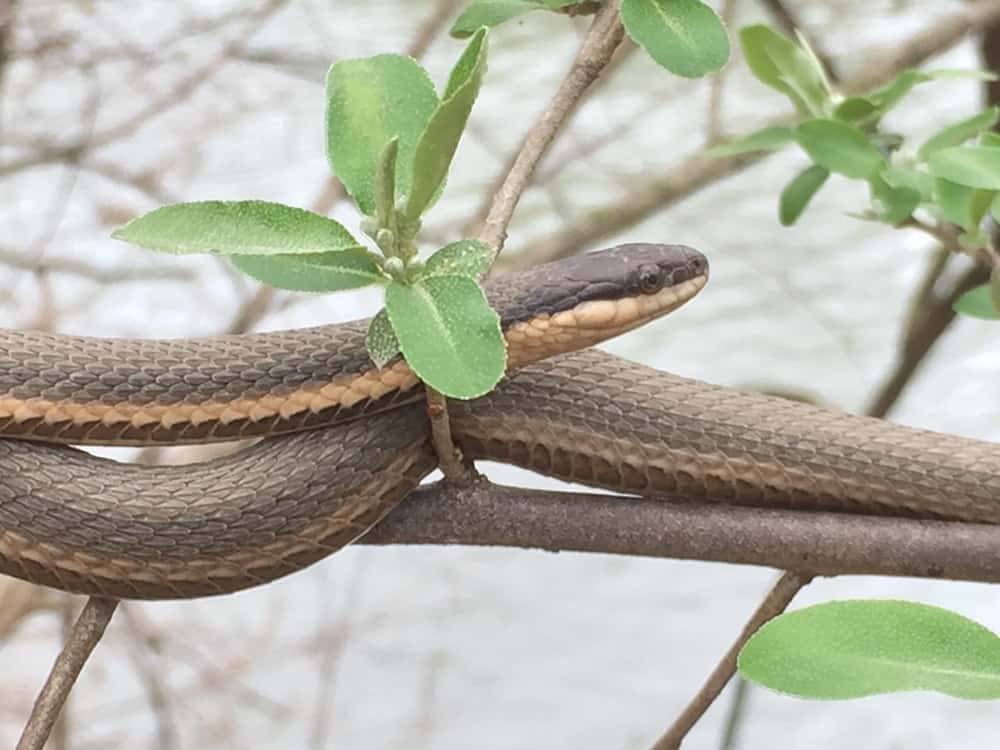
While the ice cold rivers of Canada and Alaska are free from serpents, and therefore safe to paddle in (possibly), anywhere south of that is doomed. Aside from New Zealand and Ireland, there’s virtually no country on Earth where the rivers can’t potentially host snakes. A scenic fishing river bordered by flowery meadows, or a river below a steel bridge in a town – it doesn’t matter, snakes are a possibility.
For example, the grass snake is really more of a watersnake, and any UK river could contain one. The temperate northern US holds not just northern watersnakes, but eastern ribbon snakes and queen snakes. The latter is particularly powerful at withstanding strong currents, and appears in rapidly flowing streams.
Like swamps, rivers are a vacant ecosystem, which is ready to be exploited if only one snake can evolve enough. It would be foolish not to have a go, when all it takes is evolving nostrils slightly further up your head, and red blood cells that carry additional oxygen.
In Brazil, you’d probably be swallowed the moment your toe touches the water, while Thailand has too many watersnakes to list. Many countries also have land snakes which are nevertheless superb swimmers, including king cobras and oriental ratsnakes.
| 9 | Coffee plantations |
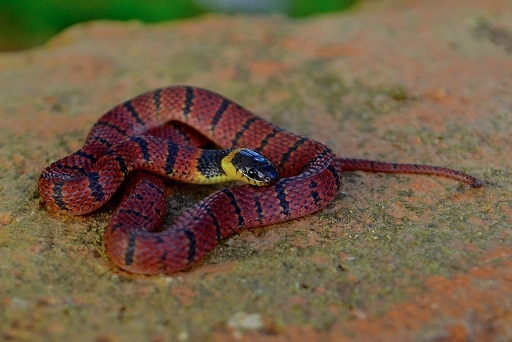
If you’re sitting at home drinking coffee right now, there’s a good chance that the beans in it were once 2 metres from a boa constrictor. From Brazil to India, coffee plantations around the world are hotspots for snake activity. Many farmers are practically stepping on them as they attempt to yank off beans.
Boa constrictors are especially common invaders in the Americas, as are red coffee snakes and salmon-bellied racers. One reason is the rodents scurrying around, making for an easy meal, but coffee plantations also offer an excellent balance between cool shade and warm sunlight for basking. Every day could bring a new snake; farmers have no idea what to expect. If a country is hot and humid enough to grow coffee, then it’s hot and humid enough to have 20-250 snake species.
Coffee isn’t the only crop affected, as coastal taipans in Australia are notorious for inhabiting sugar plantations, to the extent that in the 1950s, the sugar industry hired snake expert Ram Chandra to convince reluctant workers that the fears were overstated.
Some snakes have interesting preferences. Gaboon adders (Africa) like coffee and tea plantations, yet are rarely found in sugar plantations. Despite this, no serpenticides have been invented yet by chemical companies.
| 10 | Altitude addicts |
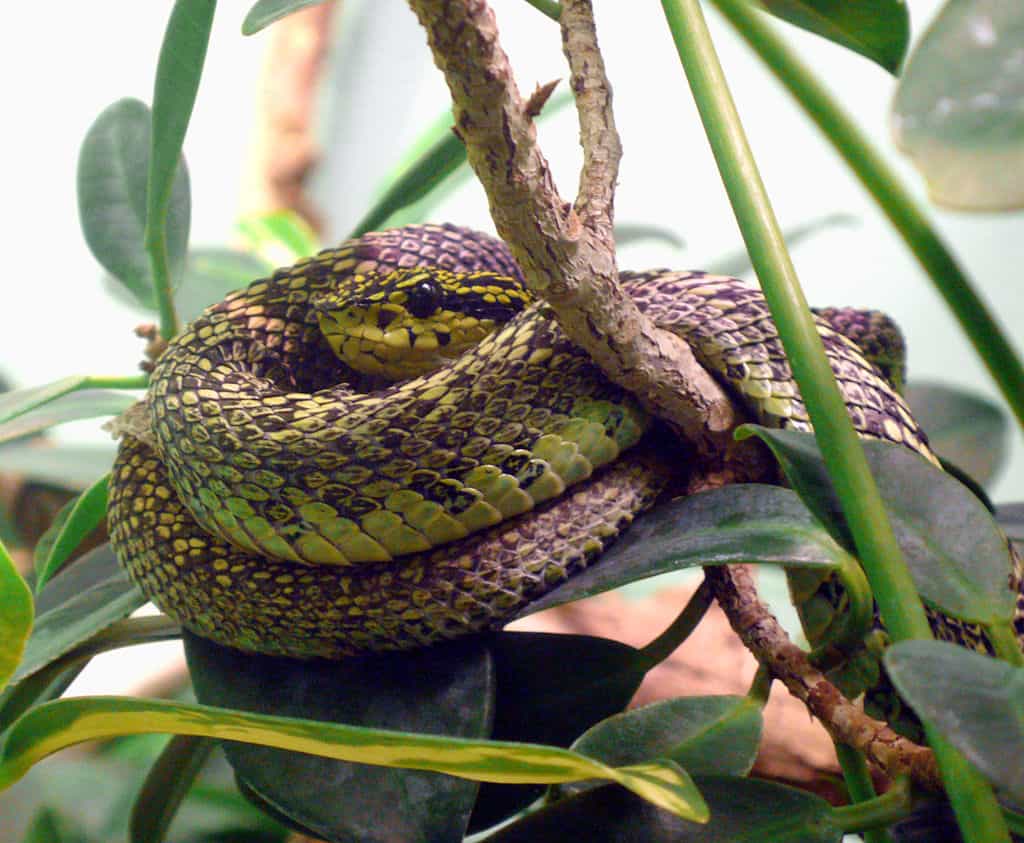
Several snakes venture to very high altitudes, like the terrestrial garter snake, which slithers on and on until it eventually reaches 3993 metres (its confirmed record). But there are also snakes that appear solely in high mountains and shy away from anything lower.
The best example is the Arizona black rattlesnake. This extremely dark species lives in high, mountainous pine-oak forests from 1500-2700 metres. These are far cooler than the surrounding deserts, and the rattlesnakes thrive there in seclusion, but appear nowhere else. The lowest confirmed sighting was made at 914 metres, and below 1500m is rare. This means that Arizona has a sharp dividing line: Arizona black rattlesnakes on their mighty sky islands, and tiger rattlesnakes in the parched, cacti-filled deserts below, with the two virtually never intermingling.
Another example is the black-speckled palm pitviper of Costa Rica, which lives in the Central, Tilarán and Talamanca Cordilleras (mountain ranges). This venomous species sticks solely to altitudes of 1150-3000 metres. Explore the humid lowlands surrounding them, and you might find coral snakes and hognose pitvipers, but this branch-dwelling viper will be nowhere to be seen. There are many snakes like this which disappear completely at low altitudes, preferring their mighty mountain kingdoms.