
| 1 | Found in 23 US states |
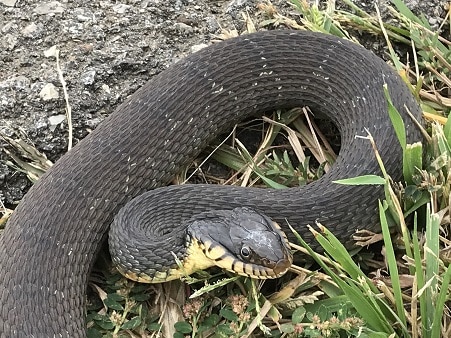
The plain-bellied watersnake (Nerodia erythrogaster) is a common species of the southeastern USA, which averages at 75-120cm, with an all-time record of 163.6cm. It’s a completely non-venomous species, which can nevertheless turn aggressive if picked up, nipping and slashing at the palm of your hand, and even drawing blood in some cases.
This species belongs to the Nerodia watersnake genus, which has 10 members across the USA. Like other members, it’s a semi-aquatic species, which spends its days in swamps, lakes and small rivers, while regularly straying to land in order to rest and digest food. Plain-bellied watersnakes are skillful swimmers, and can submerge for long periods of time without breathing.
Despite not being particularly famous, plainbelly watersnakes are found in 23 US states overall, controlling vast swathes of Georgia, South Carolina, Louisiana, Arkansas, Mississippi and Alabama alike. On the east coast, they reach as far north as Delaware, while in the central US, they climb as high as southern Michigan. To the south, they’re everywhere in central and eastern Texas, and even cross the border into Mexico.
Within the USA, this is the 2nd most widespread Nerodia watersnake overall, after the almighty northern watersnake. The least common is the Brazos watersnake, an endangered species which is found solely in its namesake river in central Texas.
| 2 | The easiest watersnake to recognise |
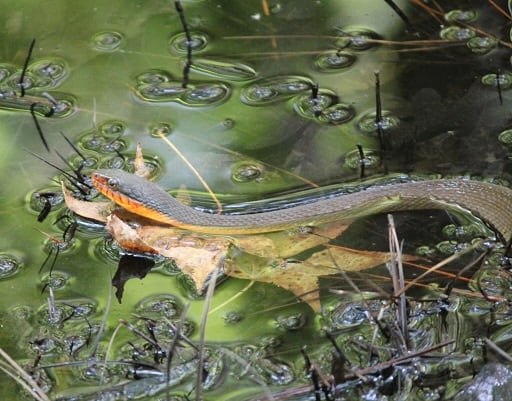
Plainbelly watersnakes overlap with several other Nerodia members in the eastern US, particularly the ultra-common northern watersnake (Nerodia sipedon). Yet this species is always easy to distinguish, thanks to one physical feature: its namesake belly.
The northern watersnake has complex patterns, featuring dark bands overlaid on a murky grey base. Likewise, its belly is adorned with complex dark markings. Meanwhile, the plainbelly watersnake has a single colour on its belly, with no patterns. This is often a bright pastel colour like orange, which contrasts vividly against its body.
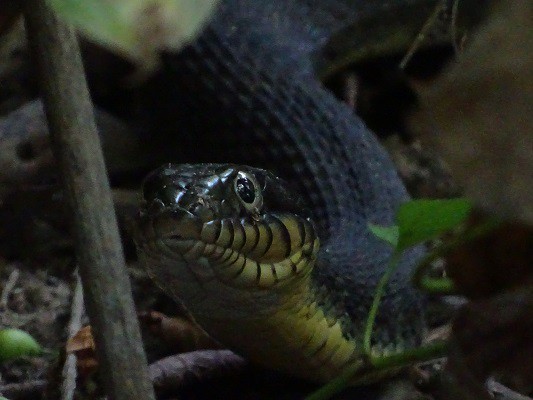
The plainbelly watersnake’s bright underside can be recognisable from some distance, making identification simple for a layman. Its main body also has simpler patterns than the northern watersnake, as it’s typically a solid dark brown or dark grey (see above). Meanwhile, the northern watersnake is usually covered in complex blotches, some of which have a tornado shape when viewed from the side.
The one caveat is that as juveniles, plain-bellied watersnakes are generally much messier, and browner rather than near black. It’s only after 1 or 2 years that they gain the consistently dark sheen of adulthood. Fortunately, size is the great guide – if it’s over 50cm and blotchy, then it’s probably the northern watersnake instead.
| 3 | The most adventurous watersnake |
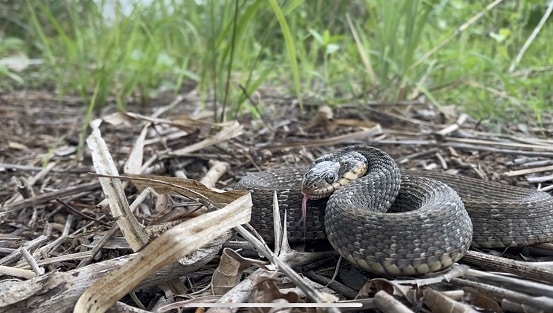
Plainbelly watersnakes are most commonly found in lakes, ponds, swamps and mixed wetlands. They can appear in small rivers, but generally prefer stationary water bodies over fast-flowing ones. They appear in typical areas for a US watersnake, such as riverside burrows, and on tree branches by lakes, where they drape themselves in a state of relaxation, allowing them to drop down into the water instantly if spooked.
Nevertheless, there’s one big difference to their relatives: the plain-bellied watersnake is the most terrestrial (land-dwelling) out of the 10 Nerodia watersnake members. It ventures the furthest from water, as some individuals have been found 250 metres from the nearest water source.
Northern watersnakes stay very close to rivers and lakes, whereas plainbelly watersnakes regularly embark upon expeditions through the nearby forests and fields. This brings them into people’s gardens, near agricultural areas, and onto nearby roads, where they’re sometimes killed by screeching car tyres.
Plainbelly watersnakes can be found in small, green bogs within forests, poking their heads up and startling passers-by. They can appear in tiny local pools and drainage ditches, and even the smallest, most insignificant garden ponds.
| 4 | Migrates long distances |
In 2003, a study analysed northern watersnakes and plainbelly watersnakes in northwest Ohio and southern Michigan, to see how their habitat preferences compared. Plainbelly watersnakes were far more restless, and continually sought out new locations. In the average season, they moved between wetlands 9.1 times. This was three times more than the northern watersnake, at a mean of 2.8 migrations.
In the average migration, they moved 143.1 metres, while northern watersnakes were less adventurous at 96.8 metres. Some travelled several hundred metres away from their wetlands, to drier upland areas away from water.
One statistic was that plainbelly watersnakes were spotted in upland areas 11 times more commonly than the northern watersnake. 30% of sightings were in upland areas for the former, versus less than 3% for the latter. Plainbelly watersnakes were often found over 100 metres from their watery base, while northern watersnakes were rarely found 30 metres away.
In other words, the two species partition their habitats, each sticking to their own niche. Otherwise, they would be in heavy competition with each other, and one watersnake would dominate the other, forcing it into extinction.
| 5 | Common in the eastern USA |
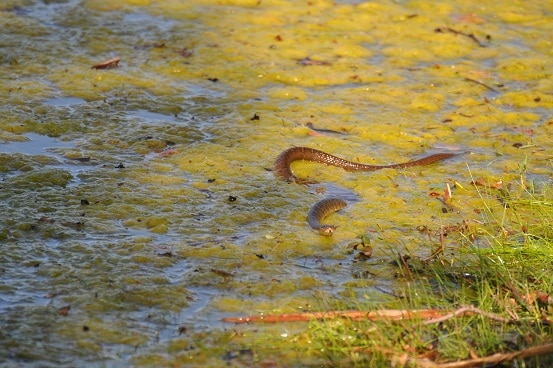
Plainbelly watersnakes are very common in the eastern half of the USA. Their heartlands include Georgia, the Carolinas, Mississippi, and Louisiana, among others. Their westernmost point lies in New Mexico, with a tiny colony in the southeast. Near Dallas and Austin, there’s so many sightings that you can barely move without jumping over them. Yet over a thousand miles away, they’re just as common near Raleigh, South Carolina.
Plainbelly watersnakes are found in Florida, but only in the panhandle. Further south in peninsula Florida, the brown watersnake becomes too powerful to compete with.
The northernmost colony of plainbelly watersnakes lies in Ohio, Pennsylvania, and Michigan, which is separated from the rest of the range. Plainbelly watersnakes are far from endangered overall, but this northern enclave is in severe decline. By 1997, there were just 5 small northern pockets remaining, whereas the northern watersnake is still thriving in the same area.
Part of the problem is the plainbelly watersnake’s adventurous nature. While northern watersnakes are happy with one river or lake, plainbelly watersnakes require a buffer of up to 165 metres from the nearest large water source, to protect their ecosystems, allowing them to move around freely. Housing developments won’t swallow up whole rivers, but they might swallow up small, obscure wetlands which plainbelly watersnakes quietly depend on.
| 6 | Appears in small forest swamps |
In the comparison study from earlier, there were only 5 individual snakes that stuck permanently to one wetland. 4 of those were northern watersnakes, and just one a plainbelly watersnake.
In smaller wetlands, the plainbelly watersnakes would sometimes make only a brief stop-off, lasting two or three days. They regularly appeared in obscure forest wetlands which were far too small to be discovered by satellite, or appear on any map.
Despite their differences, the two species used very similar hibernacula. In fact, a northern watersnake and plainbelly watersnake were found hibernating in the same crayfish burrow one year. Numerous species members hibernated in close proximity to each other. Crayfish burrows were particularly popular overall.
Plainbelly watersnakes will also hibernate in rock piles by streams, natural hollows, and vacant burrows of other animals. This is mainly a solitary snake, rarely gathering in writhing communal piles like the common garter snake. That said, a couple can occasionally become peas in a pod, as this heartwarming picture shows. The main time they gather is during mating season, when several males will slither towards one female. Plainbelly watersnakes are active from March to early November, disappearing during the winter.
| 7 | Diet: primarily amphibians |
Plainbelly watersnakes also differ to their US relatives in that they mainly eat frogs and toads. Northern watersnakes eat a vast variety of fish, while brown watersnakes are pickier and eat over 60% catfish.
A 1977 study from Louisiana followed 4 Nerodia members within the state. 3 species ate mostly fish: Mississippi green watersnakes, diamond watersnakes, and banded watersnakes. Plain-bellied watersnakes were the sole exception, eating mainly amphibians.
A more recent study from 2019 examined a location in western Kentucky. It studied 3 watersnakes found in the area, and assigned different food groups a technical score of relative importance within the diet. With the plainbelly watersnake, frogs and toads received a 78.3, and fish just 14.4. Northern watersnakes and diamond watersnakes were the reverse, scoring 87.3 and 94.5 for fish respectively.
Plainbelly watersnakes are confirmed to eat a variety of species, including squirrel treefrogs, American bullfrogs, southern toads, and gulf coast toads. Eastern newts are also confirmed, while their fish prey include green sunfish and western mosquito fish.
| 8 | Figure of 8 hunting |
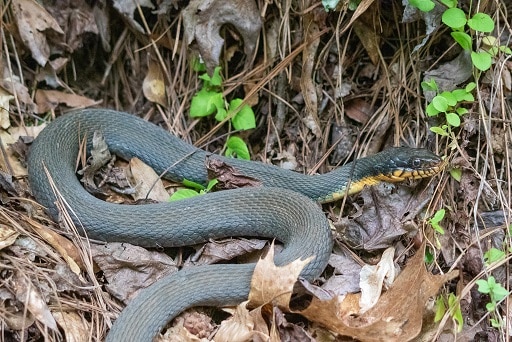
One of a plainbelly watersnake’s strategies is to swim continuously on the surface of water bodies, with its mouth gaping open. The hungry snake continually makes turns without ever stopping, in a pattern forming figures of 8. By subtly changing direction each time, it eventually covers the entire surface of ponds. In 2006, one was observed using this figure of 8 strategy to capture a small fish.
Plainbelly watersnakes will also drag their prey onto land in an attempt to immobilise them. They’ll even anchor their coils around a rock and hold steady, to prevent a thrashing catfish from dragging them both back into the water.
Plainbelly watersnakes much prefer to swallow prey by the head, but sometimes must seize them by the tail, ripping them out of streambed crevices. If so, they’ll “walk” their jaws up the body gradually, so that they don’t release their hold, until they reach the head. This strategy is sometimes used for elongated amphibians such as lesser sirens. Plainbelly watersnakes can be so distracted while wrestling prey that they pass by observers’ feet without ever noticing their presence.
| 9 | Hard, painful bites |
The plain-bellied watersnake has a hard bite, which it will use without hesitation if manhandled. While non-venomous, this species is similar to the northern watersnake in that it rapidly becomes aggressive if provoked. Its other strategies include flattening its head to create an illusion of size, and producing a vile snake odour.
As a more land-dwelling snake, scientists have noticed another difference to its relatives: rather than fleeing into water when spooked, plain-bellied watersnakes often flee to land, disappearing into undergrowth.
Another difference with Nerodia erythrogaster is larger eyes than its relatives. One study found that plainbelly watersnakes have larger heads than northern watersnakes. Their skull shape is narrower, which is theorised to be for moving through undergrowth on land, where they spend more time.
Their eyes differ as well, as they’re spaced further apart than in northern watersnakes, which again relates to water – aquatic snakes typically have tightly spaced eyes, to see from below the water surface with just a small part of their head poking out.
| 10 | Preyed on by cottonmouths |
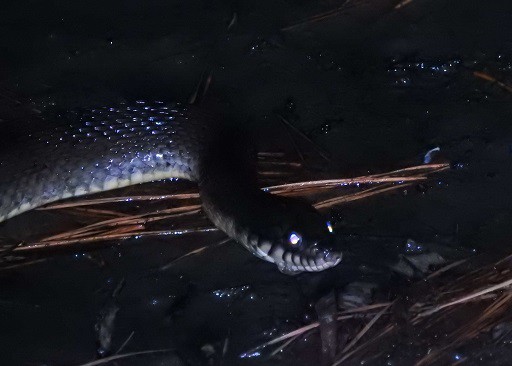
Plainbelly watersnakes are confirmed prey for fellow snakes, including cottonmouths and common kingsnakes. Their bird predators are plentiful, including red-shouldered hawks and herons. Snapping turtles will also do their thing and snap down on them.
Plainbelly watersnakes may possess an advanced defensive tactic: autohaemorraging. This is deliberate bleeding, as reported by scientists in Cherokee County, Oklahoma.
In March 1991, the team picked up a medium-sized plainbelly watersnake, which began to squirm and released its foul smell. When gripped behind the head, it produced droplets of blood from its mouth, similarly to the dice snake, which releases blood to convince predators of its premature demise. Plainbelly watersnakes may also make mock strikes in the direction of an aggressor.
Plain-bellied watersnakes are unusual in two ways: preying on far more frogs and venturing to dry locations more often. However, the two are actually connected, as smaller pools within forests and woods are often home to spawning colonies of frogs, while large rivers tend to contain more fish.
| 11 | Lays up to 55 newborn |
The plainbelly watersnake is a prolific breeder, though slightly less so than the brown watersnake of Florida, which has been recorded producing 63 newborns (all Nerodia watersnakes lay live young). Plainbelly watersnakes average at 17.8 newborns, with a range of 2 to 55.
Those newborns measure 18-30cm, with a weight of just 3.5-10.9 grams. Mothers aren’t caring at all, abandoning their young instantly. As for lifespan, plainbelly watersnakes tend to live for 8-15 years in captivity, nothing exceptional.
Plainbelly watersnakes were once thought to contain 5 subspecies, which included the likes of yellow bellied watersnakes from Mississippi (N. erythrogaster flavigaster), and blotched watersnakes (N. e. transversa) from Kansas. But a 2010 study found that across their vast range, there was surprisingly little genetic variation. Even with huge geographic barriers like the Mississippi River, there was little variation on either side (probably because they’re great swimmers).
Consequently, Nerodia erythrogaster is now considered to be one massively widespread subspecies. According to the study, there was “little support for the recognized subspecies as… independent evolutionary lineages“.