
| 1 | Underwater oxygen exchange |
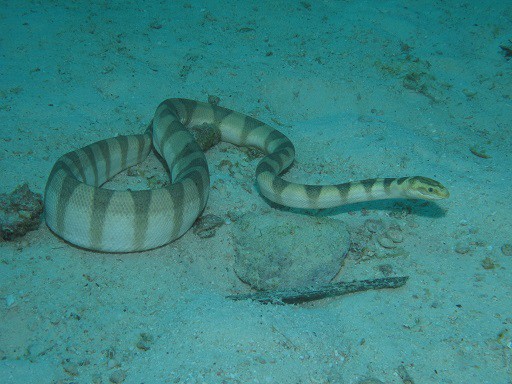
Around the world, there’s at least 70 species of sea snake, including 46 members of the Hydrophis true sea snake genus, and 8 members of the Laticauda sea krait genus. These are all based in the Pacific and Indian oceans, and virtually all venomous, making the ocean an even more terrifying place to wade into than it was already. But how exactly do they stay alive?
If a black mamba tried to enter the ocean, it wouldn’t last an hour, yet sea snakes can spend years and years in the sea if they dodge its various obstacles (tiger sharks, albatrosses, etc). Sea snakes have evolved many adaptions since they diverged, and the first is hyper-oxygenated blood.
Like all reptiles, sea snakes must surface regularly to take a breath. They have no gills, and like a dolphin, they can’t stay underwater forever. Yet sea snakes are able to stay underwater for much longer than the average snake, often for several hours,
The first oxygen delivery enhancement is cutaneous gas exchange. Sea snakes have the power to supply a decent portion (though not all) of their oxygen while underwater, absorbing molecules through their skin, and exchanging them for carbon dioxide, which they later release.
For example, the elegant sea snake of Australia can supply 20% of its oxygen requirements though underwater gas exchange. The yellow-bellied sea snake can supply 33%, and the turtle-headed sea snake was also estimated at 33%, while expelling 94% of its carbon dioxide directly through water. This is the only the beginning…
| 2 | Enlarged lungs |
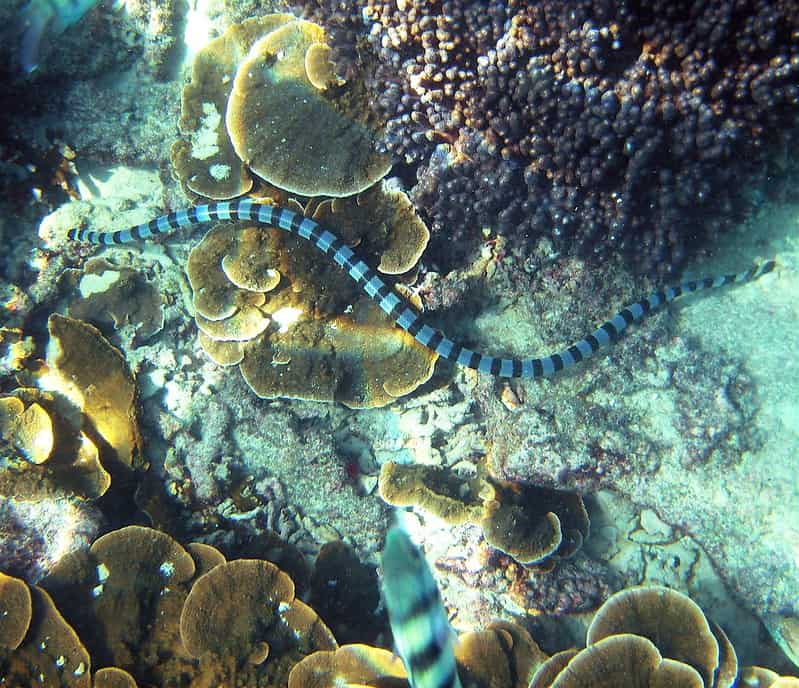
Fancy gas exchange is one thing, but sea snakes also have a much more basic method: enlarged lungs. Some sea snakes have truly gigantic lungs in order to store more oxygen, most infamously the yellow-bellied sea snake. This is the truest sea snake of all, with the ability to drift aimlessly for hundreds of miles across the open ocean. The elegant sea snake sticks to coastlines, but this species can appear on stormy seas with no landmasses visible for miles.
Consequently, the yellow-bellied sea snake has evolved one of the largest lungs in the entire snake kingdom. This lung is estimated to comprise 11.8% of its total body weight, allowing for much greater oxygen storage, and that’s before factoring in the cutaneous gas exchange.
A yellow-bellied sea snake’s lungs can contain so much air that when surfacing, it shoots up like a life raft. Among reptiles, the only comparable species are sea turtles, such as the mata mata turtle and pond slider turtle, which have lungs comprising 15% and 10-12% of their body weight respectively.
| 3 | Thicker blood, more blood |
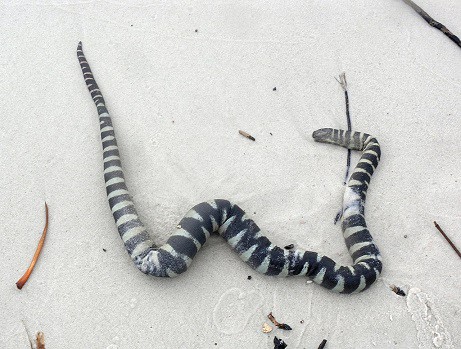
Some individual species take the oxygen scavenging to all new levels. One of the weirder aquatic species is the little filesnake. This occupies a distant offshoot when it comes to sea snakes, belonging to the 3-member Acrochordus genus, which have no close connection to the true sea snakes. Yet this species might be the second most adapted to oceans after the yellow-bellied sea snake.
For one thing, the little filesnake’s blood is adapted to contain twice as many red blood cells as usual. Furthermore, those red blood cells have a greater affinity for haemoglobin than average, allowing it to carry far more oxygen than usual.
Even better, the little filesnake has far higher amounts of blood in its veins than average. Like the true sea snakes, it possesses the usual cutaneous gas exchange skills, allowing it to absorb some oxygen underwater. All this adds up to make the little filesnake an oxygen-harvesting machine, which is capable of staying underwater for hours at a time.
You can find the little filesnake off the coastlines of Indonesia, northern Australia, etc. It’s highly likely that other sea snakes have similar alterations to haemoglobin and red blood cells, though there’s many sea snakes which have barely been studied.
| 4 | Paddle tail/cylindrical body |
Some sea snake adaptions don’t involve complex physiological changes, but basic changes in physical shape.
The first is a feature found in virtually all sea snakes worldwide: nostrils positioned higher on the head. This feature is even found in US watersnakes (swamps, lakes), and allows an aquatic snake to surface instantly, take a rapid breath, and dive back down again without any surface creatures detecting its presence. The likes of olive sea snakes can take just a few seconds to inhale a breath.
The nostrils of a sea snake also have valves, opening and shutting with extreme efficiency to prevent water infiltration. Virtually all sea snakes have an altered core body shape as well, more cylindrical in order to reduce drag while swimming underwater.
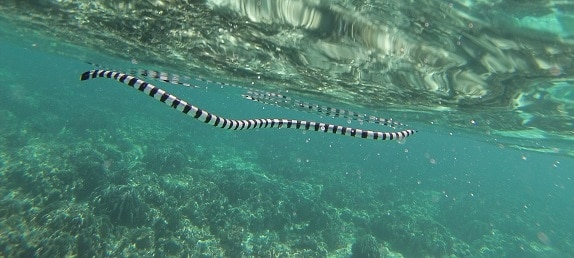
Then there’s the tail of a sea snake. This is shaped like a paddle in most species, in order to allow greater swimming force. The image above shows a banded sea krait, and its tail couldn’t be more different to the thin, tapering tail of a US coachwhip or even black mamba. Sea snakes have the instincts to swim, but also the raw ability, as their flat tail propels them forward through the beautiful yet lethal coral reef wonderland.
| 5 | Light-detecting tails |
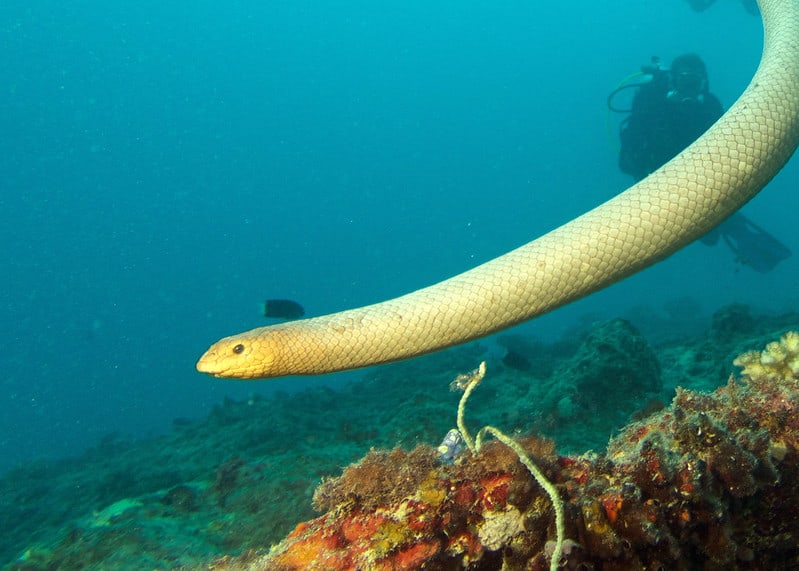
Another tail adaption in sea snakes was discovered in the olive sea snake, one of the more widespread species. This might be the most abundant coal reef sea snake in Australian waters, moving not just through the colourful chasms, but the open water above, where it regularly comes into contact with scuba divers (completely harmlessly). Olive sea snakes eat a variety of fish, but they also have predators, such as tiger sharks…
In 2019, scientists discovered a possible defense mechanism: a tail studded with sensitive photoreceptors. The scientists synthesised the snake’s RNA, and found light-detecting genes in the tail, encoding a protein called melanopsin, which is normally found in retinal cells. Somehow, this species had developed the light-sensing proteins in its tail instead.
When the scientists shone a light on the tail, the olive sea snake fled for shelter. It was theorised that the tail acted a defence against predators like sea eagles or tiger sharks, possibly if the reverse happened and their presence blocked out the light. One possibility is that the tail reacts to a sudden change in light, rather than in one direction or the other.
The scientists found this light-sensitive tail in three other snakes, all members of the same Aipysurus genus. Those were the brown-lined sea snake (Aipysurus tenuis) and Dubois’s sea snake (Aipysurus duboisii).
| 6 | Severely neurotoxic venom |
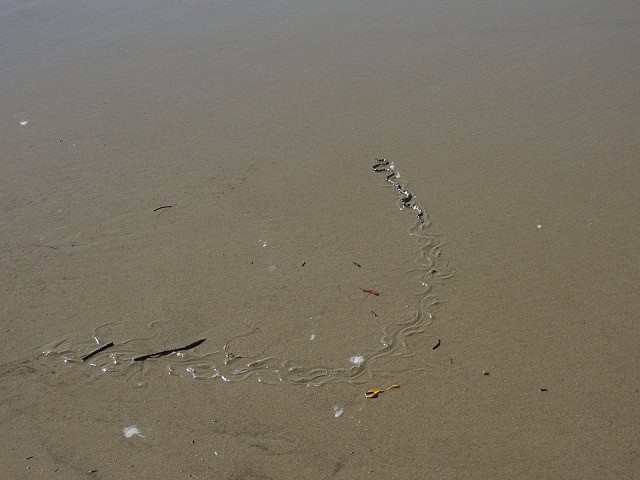
Something we haven’t discussed yet is the venom of sea snakes, and good news, at least for them: they have the most powerful venom on average of any snake group on Earth. This is yet another adaption to their watery worlds.
Sea snakes are elapids, just like the mambas, coral snakes and brown snakes of Australia. Those snakes are already extremely lethal, but sea snakes seem to have potentiated even further as they slithered into the sea and began their transformation.
By far the main reason for this is their diet. Fish are slippery customers, and have the ability to change course and swim away instantly. A weaker venom would allow the fish to escape, and only die minutes later in a dark crevice of a coral reef, successfully subdued, but completely out of sight of the snake. The sea snake has lost its meal, and its attempt was pointless.
So instead, sea snakes have an extremely neurotoxic venom, allowing for instant paralysis. A second, more minor reason is simply being underwater; this can dilute venom, which is never injected 100% efficiently.
The US cottonmouth has an LD50 toxicity score of 2.04mg, while the olive sea snake, banded sea krait and yellow-bellied sea snake score 0.22mg, 0.4mg and 0.067mg respectively, comparable to a black mamba at 0.05mg. The redeeming factor with sea snakes is their tiny yield, e.g. just 3-10mg per bite, versus 80-170mg for a cottonmouth.
| 7 | Shedding skin more commonly |
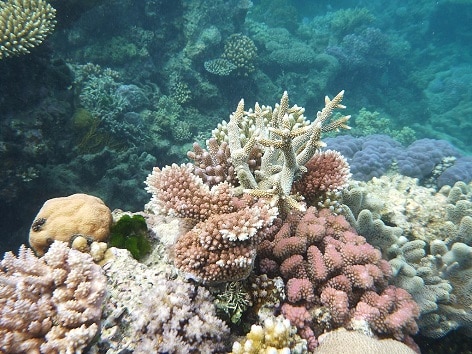
One of the perils of being an underwater creature is becoming covered in algae and barnacles. Coral reefs are some of the densest ecosystems on the planet, and sea snakes often end up coated in colourful coral life forms. If a human being had this barnacle/algae coating, then they’d probably look like a cursed pirate on board Davy Jones’ legendary ghost ship, but sea snakes experience this overgrowth routinely.
The problems include reduced mobility in water, and more perilously, reduced eyesight, with algae even covering their eyeballs. So sea snakes have evolved a solution: shedding their skin more commonly.
For example, the greater sea snake sheds its skin roughly every 2-6 weeks, far more commonly than land snakes. It even uses an innovative method, rubbing its face against jagged rocks or reef edges, snagging the scales, and peeling them off as they swim away. The result is the complete removal of the algae and barnacle layer, creating a sleek, nimble sea snake once more.
| 8 | Tiger shark dodging |
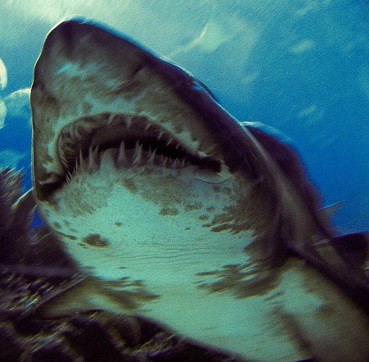
Sea snakes do encounter sharks in their various travels, but only really one species. A study covered 7000 individuals over 19 shark species in Queensland, and found that just one ate sea snakes regularly – the tiger shark. This species hunts underwater serpents across its range, also in places such as Shark Bay in Western Australia. Many snakes fall victim, but others have evolved intelligent systems to dodge this terrifying predator.
Take the elegant sea snake. This is Australia’s most common sea snake alongside the greater sea snake. In a study from Shark Bay, scientists found that elegant sea snakes only tended to hunt on the shallow sandy sea beds during low tide, when the tiger sharks were unable to access those waters. During high tide, when tiger sharks were more abundant, the elegant sea snakes retreated to the safety of inner seagrass beds, away from the patrolling predators.
The same was true for greater sea snakes nearby. The local tiger sharks had a clear correlation with warm weather, mostly disappearing during cooler times. During warm periods, the local greater sea snakes shifted position to the seagrass beds, avoiding the open flats, where they could be gobbled up. The elegant sea snakes had a prey disadvantage in the inner sea grass beds, as their eels (their main prey) were less abundant there, but they prioritised avoiding roaming sharks over a completely full stomach.
| 9 | Extreme dehydration |
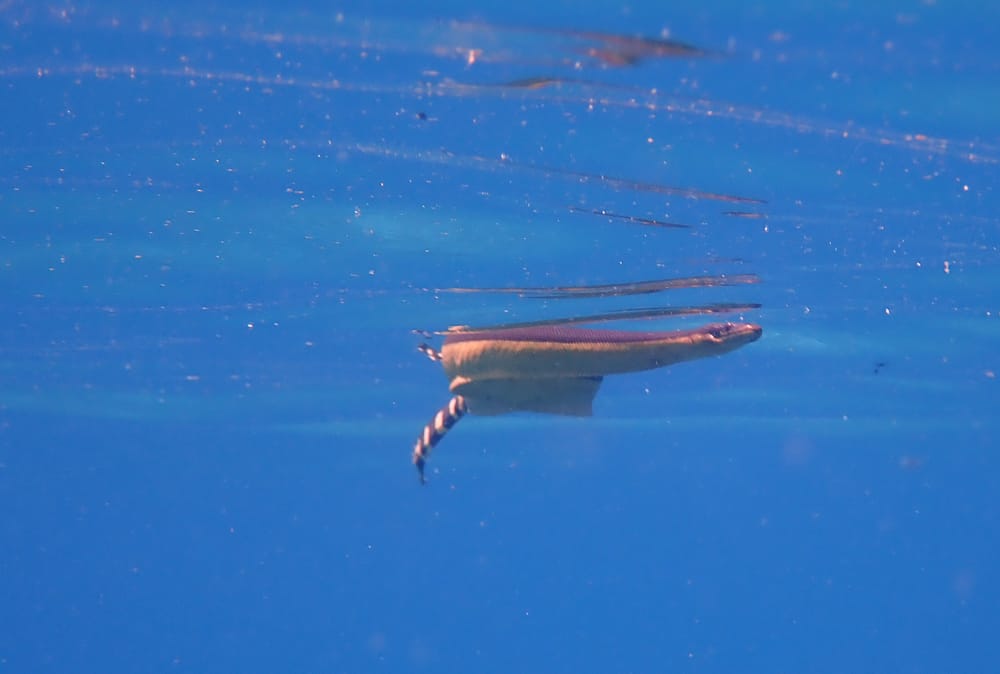
One ability which sea snakes completely lack is the ability to drink salt water. Despite their oceanic ways, they’re forced to drink freshwater like any species, but this can be hard to come by. So sea snakes have a neat adaption to compensate: the ability to cope with far more extreme dehydration than other snakes.
A study analysed various sea snakes from Australia. The elegant sea snake was able to lose 29% of its overall body mass, purely from water loss, before it had to begin drinking again. Its tolerance for dehydration was extreme, and other species were even tougher, including Peron’s sea snake and the mosaic sea snake, which could cope with nearly 40% loss.
According to the scientists: “Thirst in these species is significantly less sensitive than in other species”. Likewise, the yellow-bellied sea snake can lose at least 20% of its body weight through moisture loss.
To acquire fresh drinking water, sea snakes are equally adapted: they have the ability to detect freshwater pools formed on the ocean surface via rainwater. This would be impossible for a human, yet snakes can identify these freshwater “lenses” which stay afloat on the ocean temporarily, and drink from them. The one obstacle is weeks of dry weather, but that’s where their dehydration skills come in.
| 10 | Touch receptors on face |

One discovery about sea snakes has only emerged over the past 15 years, yet was always fairly logical: extra sensitivity to water currents. The evidence arrived in 2016, when the beaked sea snake (Hydrophis schistosus) was analysed, and found to have sensory domes on each scale on its face. Land-based snakes also possess these nodules, but in the beaked sea snake they were far more developed.
The scientists were unable to analyse their exact function underwater, but a likely explanation is sensing water currents. This could include those of predators, but also fish, allowing sea snakes to anticipate the line of their future meals, and adjust their ambush position accordingly.
In 2021, the exact same sensory bumps on scales were discovered in the turtle-headed sea snake. Again, they were far more developed than those of an eastern brown snake or tiger snake, its distant Australian relatives. The sensory bumps were even clearly visible in images.

This time, a new theory was that turtle-headed sea snakes use them to sense females approaching. Another clue was that turtle-headed sea snakes eat no moving prey – their entire diet consists of fish eggs stashed in coral reef hollows. Predator detection was still a possibility as well, but either way, sea snakes have sensitivity to water currents that a human being couldn’t possible dream of.
| 11 | Super-dense blood vessels |

To finish off, we have another freaky oxygen adaption. Sea snakes already have larger lungs, underwater gas exchange powers, and occasionally red blood cells with a high affinity for haemoglobin. So what’s the final step? Simple – a massively dense network of enlarged blood vessels.
Scientists discovered this in 2005, in the skull of Shaw’s sea snake, a common species found from India to Australia. The scientists were attempting to cut into the species in order to analyse its receptivity to underwater vibrations, yet when they applied their scalpels, it was impossible to make an incision without triggering an outpouring of blood.
The scientists discovered an unusually dense network of blood vessels in the snake’s head, which was almost certainly for supplying additional oxygen. A separate study found something similar in the annulated sea snake (Hydrophis cyanocinctus), found near India and southern China. This time, they found a freakishly dense layer of blood vessels in the skull, which led directly to the brain. This blood vessel network allowed it to absorb copious oxygen from above, in the split second that it surfaced from below.
The study began when scientists found a strange hole in the annulated sea snake’s skull. At first, they had just theories – that the snake had a “pineal eye” similar to many lizards, which grants them sensitivity to light changes. This turned out to be completely false, as the hole turned to be a passageway for a massively enlarged network of blood vessels.