
| 1 | European worm snake |
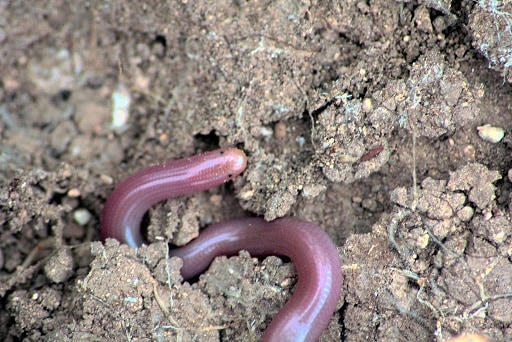
Maximum length: 47cm.
At 18-30cm, the European worm snake (Xerotyphlops vermicularis) eats small insects and worms, yet ants seem to be its favourite meal of all. This species is found in southeast Europe, particularly in open areas such as grassy hillsides and rocky plains.
European worm snakes pose no threat to human beings, even if you tempt one to bite your finger. For ants, it’s another story. The scent apparatus of this species is focussed strongly towards ants, and to acquire them, it simply open its mouth and swallows.
This is a species of Greece and Bulgaria, and is quite common, but not encountered often, as it typically lurks in underground tunnel galleries. It’s a mystery what came first – whether European worm snakes converted to ants because of their underground habits, or whether their love of ants dragged them into subterranean worlds.
European worm snakes can disappear underground for 6 months of the year, and are virtually impossible to find. The best bet is after heavy rains in summer, when they sometimes appear under stones on the surface. Though not heavily researched overall, this blind snake has a great advantage for scientists – its body is so transparent that you can see prey still in its belly, as well as its internal organs.
| 2 | Texas blind snake |
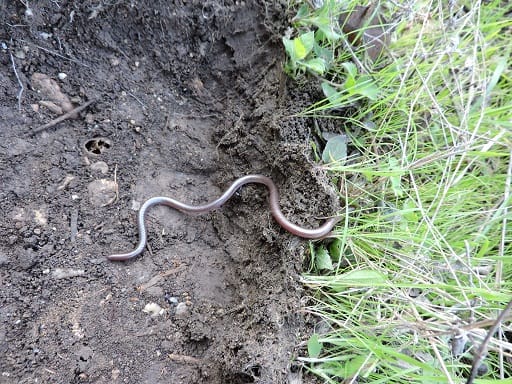
Maximum length: 29.3cm.
The Texas blind snake (Rena dulcis) might be the best researched of all ant-eating snakes worldwide. This species lives in the southern US, and has a brown body with no noticeable patterns. Its eyes are small and dark, and its scales are sleek and smooth.
Texas blind snakes live in a world incredibly far removed from our own, a world of tiny soil tunnels and towering anthills. They’re encountered fairly commonly in the southern US, and their tendency to feast on ants has been known since the 1960s.
Scientists have found that ants are repelled by this species’ scent, and that when attacked by the swarm, the Texas blind snake will produce a foul-smelling liquid, writhe around, and smear it everywhere so that the ants are deterred.
Studies have found that Texas blind snakes derive 54-64% of their meals from ants and termites in total, with soft younglings being their favourite. However, there’s still lots to learn. We don’t know whether they have a favourite type of ant (probably not fire ants). We don’t know their exact hunting methods, as it’s possible that Texas blind snakes follow the trail of ants across the forest floor, back to their anthill. Alternatively, they might head to anthills immediately, as these would have the highest concentration of scent particles.
| 3 | Ringneck snake |
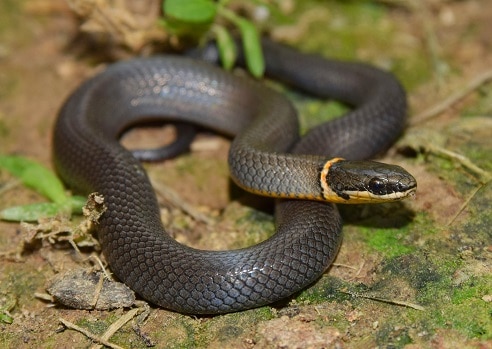
Maximum length: 85.7cm.
Ringneck snakes not only eat ants, but have the audacity to slither right into anthills and start feasting. This is a widespread American species found in at least 20 states, which is easily recognisable by its namesake ring, and is itself eaten by copperheads and hawks.
Ringneck snakes live in rich forests and grassy hillsides, and average at just 30cm, forcing them to veer small for their prey. One day, they might unluckily find an empty anthill, like an old abandoned base. But with excellent tongue flecking for scents, they’ll inevitably find a rich ant vein sooner rather than later.
Ringneck snakes even live in anthills sometimes, resting snugly in the base. Sometimes, the ants continue to construct and build on top of them. Anthills are a great place to hide, with free food and effective shelter against larger predators like kingsnakes. Ringneck snakes swallow their ant prey whole, and possess the nimble movements required to grab them as they crawl around.
As a 30cm dweller of mossy forests, ringneck snakes are infinitely more equipped to hunt ants than falcons or bears. They’re also more equipped than eastern racers or coachwhips, which are far too fast and impatient.
| 4 | Reticulated worm snake |
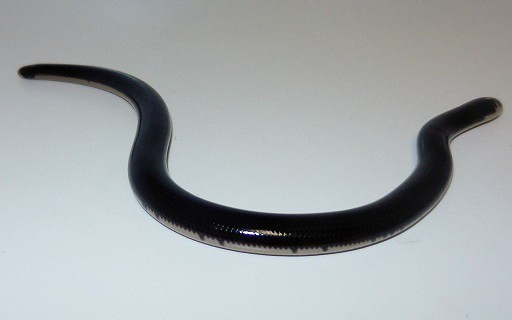
Maximum length: 52.2cm.
The reticulated worm snake (Amerotyphlops reticulatus) only measures 50cm, yet to tiny ants, there’s nothing more terrifying in the world. This species is another semi-blind snake, with tiny eyes, and lives in northern South America: Venezuela, French Guiana, and Colombia.
This species is distinguished by a snowy white head and belly, against a largely black body. That said, reticulated worm snakes never see their own reflection, and probably have no idea how they look. They’re only concerned with one thing: getting their next ant fix.
Ants are easily the reticulated worm snake’s main prey, with one favourite being the bullet ant (Paraponera clavata). Exactly how they locate ants is a mystery, but they spend their entire lives on the forest floor.
Amerotyphlops reticulatus hasn’t necessarily won the war the moment it finds an anthill. It will inevitably swallow a handful, but reticulated worm snakes are so slow that the ant swarm might even outrun them. Additionally, reticulated worm snakes can’t start swallowing indiscriminately, as they don’t want to eat chunks of anthill as well. Like any ant-eating snake, they require accuracy if they want a truly satisfying meal.
| 5 | Freiberg’s blind snake |
Maximum length: 23cm.
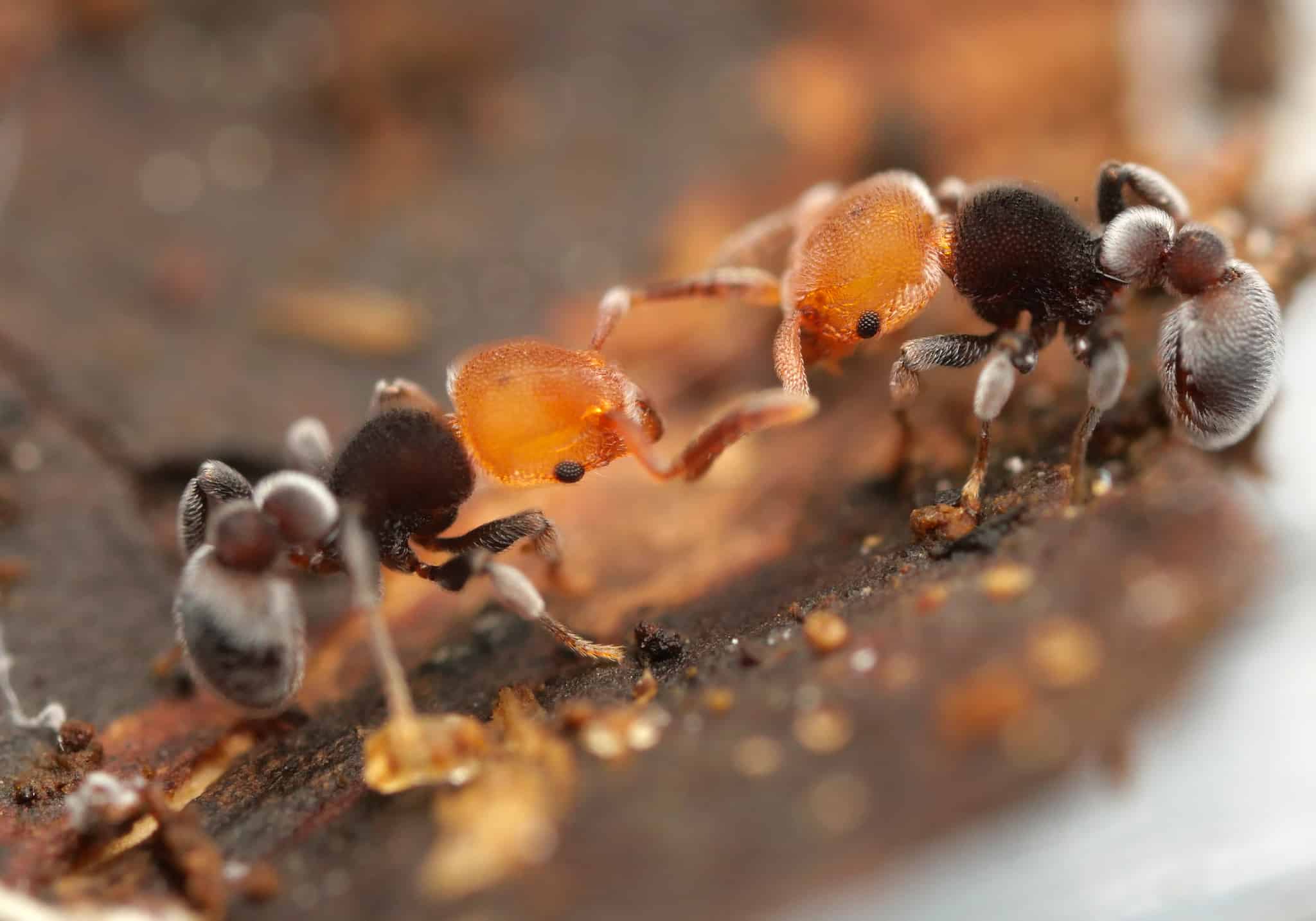
It’s a normal day in the anthill. Hundreds of ants are assembling their captured leaves and twigs, constructing a new anthill greater than any they’ve built before. Suddenly, the walls shift, light blares in, and an enormous, greedy serpent face is staring at them.
This brutal scenario occurs regularly in the northern reaches of Argentina. Freiberg’s blind snake (Epictia australis) is one of the most exclusively ant-eating snakes around, as ants comprised 100% of its diet according to a 2020 study. This is a harmless species of Argentinian grasslands, which lives underground and is often found sheltering under rocks.
This snake has a simple life, revolving around hoovering up ants, finding mates and sleeping. This is a story of one 30cm antagonist versus 500 0.3cm protagonists. Sometimes, Freiberg’s blind snake wins, swallowing many mouthfuls of ants and lying peacefully for 2 weeks digesting. Sometimes, the ants win, with a base so well designed that Epictia australis can get its head stuck, and have to back off in disgrace.
That’s not the only danger; Freiberg’s blind snake could also be picked up by a burrowing owl moments before it reaches the anthill. This owl is one of South America’s most notorious snake-eating birds. The possibilities for doom are endless in the Argentinian plains, although when hunting ants below the surface, Freiberg’s blind snakes are far safer.
| 6 | Amaral’s blind snake |
Maximum length: 36.2cm.
This snake doesn’t know the taste of mice, and has never experienced the scaly flavours of a lizard. Instead, it’s an insect-eater through and through, and ants are one meal on its menu. Amaral’s blind snakes (Trilepida koppesi) live in southern Brazil, including Goiás, Bahia, and Mato Grosso states. They’re most common in cerrado, sweeping grassland interspersed with tree clumps, which have plentiful opportunities for ants to construct their bases.
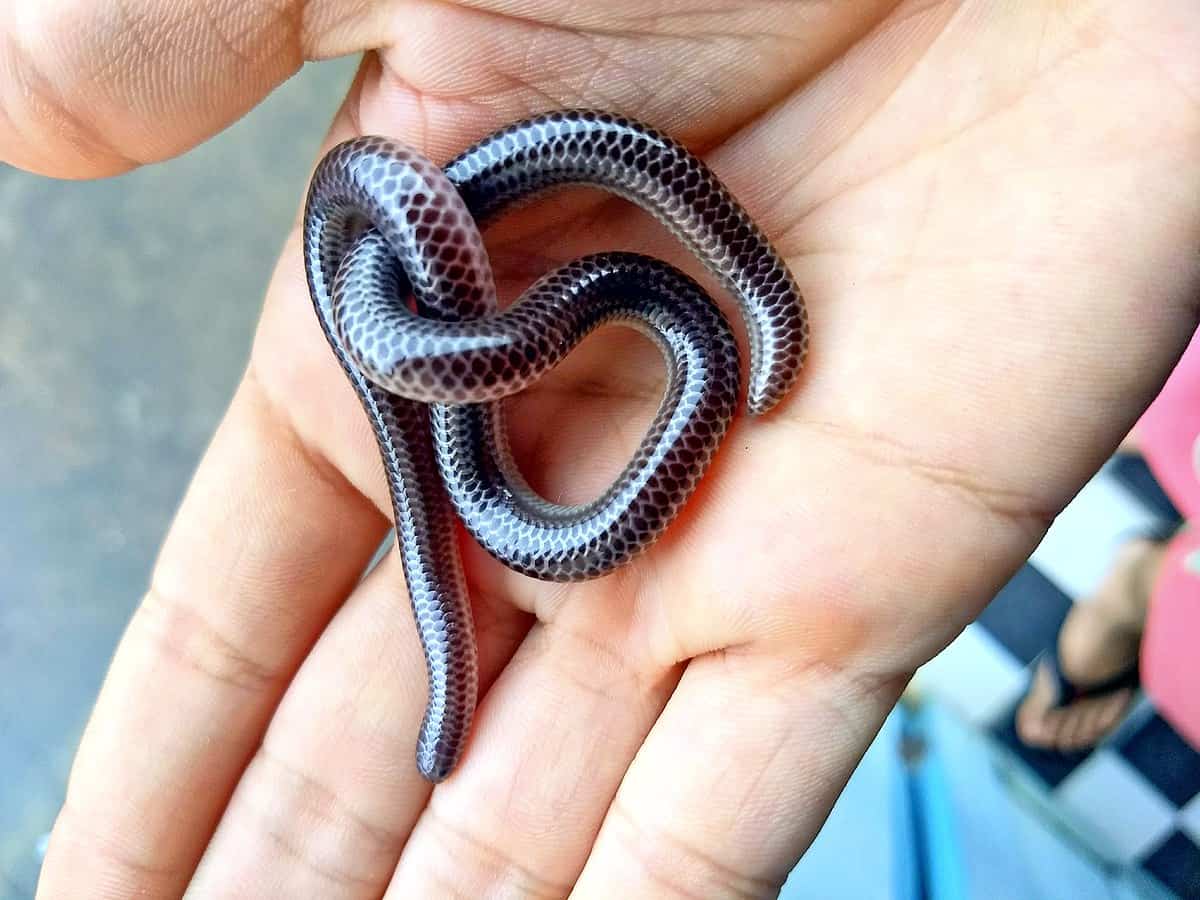
Amaral’s blind snakes are non-venomous, but may spike a human’s hand with their tail if picked up. Ants probably look like the size of a small rabbit to an Amaral’s blind snake, and when they find one, they will follow stealthily, until they find its home base. This species is black with small eyes and a white webbing pattern, and shiny reflective scales. It’s generally so distracted by ants that it doesn’t notice humans.
Amaral’s blind snakes spend much of their time underground, mostly in the upper 30cm of soft soil. After carefully analysing scents, they might find one ant, and then another. This stream gradually thickens, until suddenly, they’ve found a hidden underground ant base. Ants encounter this snake often, but humans only rarely.
| 7 | Blackish blind snake |
Maximum length: 75cm.
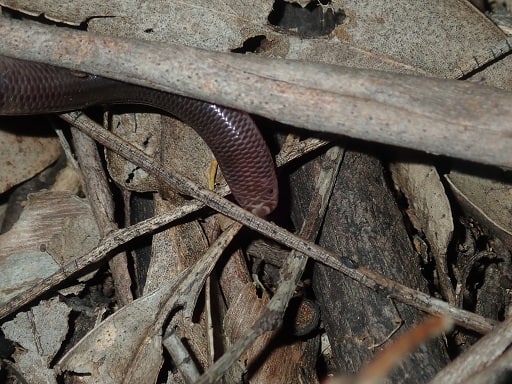
A blind snake found in southeast Australia, including civilised areas, which poses no threat to humanity. The blackish blind snake has two missions in life: eating ants, and avoiding bandy-bandys, its main predator.
Blackish blind snakes are well researched compared to most ant-eating snakes. Their style is known, as they first sniff out individual ants using their advanced scent apparatus. Once they arrive, they swallow huge amounts of ants using a special raking manoeuvre. Their snout is slender, and weaves through narrow tunnels with ease, uncovering hidden ant chambers, which immediately rouse to action when they see a hungry snake staring at them.
Blackish blind snakes (Anilios nigrescens) are mainly found in soft soils, even though ants often crawl out of cracks in dry soil. If a cobra tried this ant-eating lifestyle, then it would be constantly cursing and shaking dirt off its face. The cobra would remember its trusty venom and lunge, only to snap down on thin air, as the nimble ants dodge with ease. It would then stab at the ground so fast that it would miss all but a couple of ants. Finally, the cobra would give up and go back to hunting its usual rodent prey.
Hunting ants isn’t for any snake, no matter how powerful; it requires a particular set of skills, which the blackish blind snake more than possesses.
| 8 | Ternetz’s blind snake |
Maximum length: 41.3cm.
Another humble blind snake. In the grasslands of southern Brazil, Ternetz’s blind snake (Liotyphlops ternetzii) is feared by the local ants, much more so than human beings. This snake measures 30-40cm and has no venom whatsoever. Its lot in life is moving slowly through tunnels just below the surface of grassland, trying hard to pick up ant trails, but it knows nothing else, and is therefore perfectly happy.
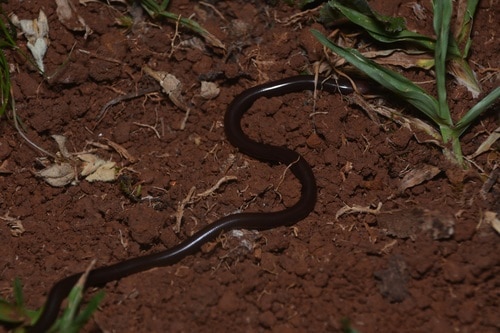
Ternetz’s blind snakes have a pointy tail, and a lighter face contrasting sharply against a black body. They inhabit southern Brazil, Argentina and Paraguay, and are most often sighted by humans after heavy rains. Ants and termites form the majority of their diet.
50 million years ago, the ancestor of Ternetz’s blind snake was probably a lizard eater just like its Brazilian neighbours. This ancestor was starting to die out, as other snakes were evolving funky new skills and acrobatics which it couldn’t dream of competing with. Then one day, it ate an ant, and a whole new world opened up. It had found a food source that no other snake was exploiting, and at that moment its path was written, and its survival was assured.
| 9 | Smooth green snake |
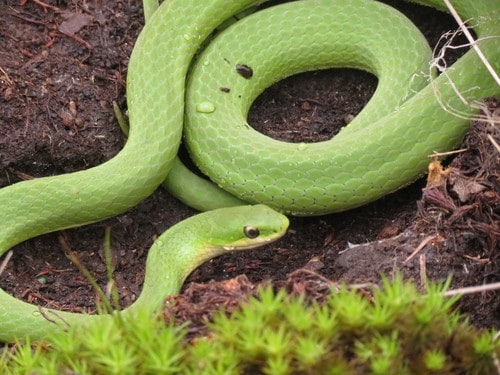
Maximum length: 79.7cm.
Being 30-40cm instantly means that snakes have to eat tiny creatures. The sharp-tailed snake mainly eats slugs, while lined snakes are addicted to earthworms. The smooth green snake is a rare American species to throw in ants as well, invading anthills and eating the occupants while they try hastily to organise and fight back. Though not a vast proportion, a study found that 10% of its diet consisted of ants, with 37% being caterpillars.
Smooth green snakes are mainly found in the northeastern USA, and have no ability to hurt a human being. Their camouflage is exceptional, and they can be invisible while hiding between blades of grass. If ants are nearby, then it’s highly likely that the smooth green snake will find them. This snake probably looks as large as a killer whale to an individual ant.
The leafcutter ant has the most disproportionate strength of any animal on Earth, easily beating a silverback gorilla. It’s capable of lifting leaves and twigs the size of pianos. Would a 40cm smooth green snake be too much? For one ant, yes, but if they teamed up, the story would change.
At the moment, this is probably beyond their reach, but their teamwork skills are legendary. After humans and chimps, ants are a rare group known to organise and wage war on each other. It’s conceivable that as smooth green snakes and ants evolve in tandem, constantly pressurising each other, ants might learn how to pick the hungry serpent up, and carry it far away from the anthill, perhaps dumping it in an open spot where it’s more likely to be eaten by birds. Right now, this is just a theory.
| 10 | Redbelly earth runner |
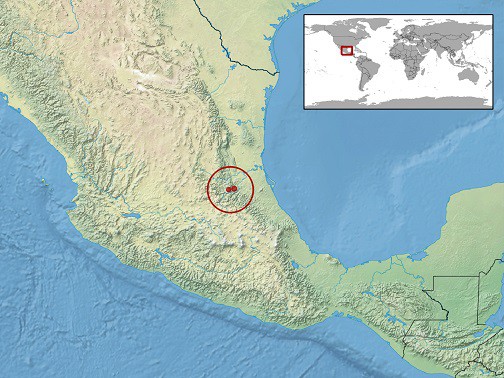
Maximum length: 34.9cm.
The redbelly earth runner is the opposite of the African rock python. The latter slithers through savannahs and eats hyenas, while the redbelly earth runner (Chersodromus rubriventris) hides in forests and eats ants. An anthill is this 30cm snake’s favourite sight on Earth, as it slithers over and starts greedily eating the inhabitants.
This species lives in the Hidalgo region of southern Mexico, hiding in montane forests such as pine-oak and cloud forests. It’s simply too small to eat rats or mice, and so it must stick to tiny insects, although to this species’ taste buds, they probably taste amazing. A study on redbelly earth runners found that beetles and adult ants formed the majority of their diet.
Redbelly earth runners are red in colour, with a recognisable white neck collar, and are extremely rare. Until the 1980s, only 3 had ever been discovered, and they lead a subterranean lifestyle, coming above ground at night. It’s believed that this Mexican snake is at strong risk of going extinct, and if it did, the local ants would probably breathe a sigh of relief.