
| 1 | South American rattlesnake |
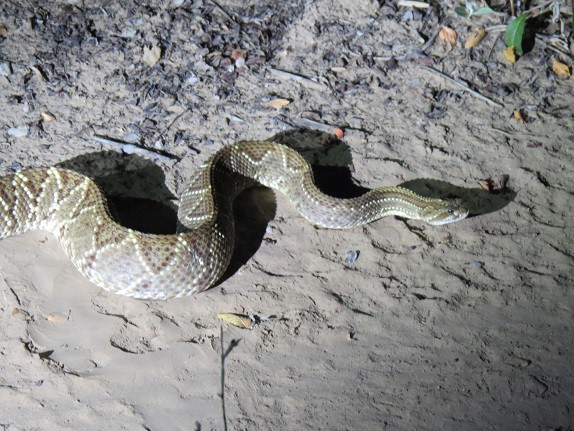
Maximum length: 180cm.
Worldwide, there are around 55 true rattlesnakes of the Crotalus genus, plus an extra three in the offshoot Sistrurus genus (e.g. the pygmy rattlesnake). Several are extremely rare, like the Tancítaro rattlesnake, which appears near a single dormant volcano in central southern Mexico. Others cover vast swathes of land, and the most widespread of all is the South American rattlesnake (Crotalus durissus).
South America is something of an anomaly when it comes to rattlesnakes. Despite the vast number of species, the entire continent only hosts 3. One exists only in mainland Venezuela, the Uracoan rattlesnake, while another is critically endangered and exists only on Aruba, the Aruba rattlesnake (Crotalus unicolor). The South American rattlesnake covers the rest of the continent, and its territory is enormous. This species inhabits 10 confirmed countries: Argentina, Paraguay, northern Uruguay, Brazil, Bolivia, extreme southern Peru, Suriname, Colombia, Venezuela, Guyana, plus the territory of French Guiana.
Like most rattlesnakes, this species favours drier terrain, including open fields, woodlands, villages and cerrado savannah. Hence, there’s a large gap in its territory where the Amazon rainforest lies, but to the north and south it’s everywhere. Its southernmost point lies in northern Argentina.
South American rattlesnakes are also highly neurotoxic, which is rare for rattlesnakes. They’re believed to be the 2nd most lethal rattlesnake overall behind the tiger rattlesnake of Arizona. They’re recognisable as well, with beige/grey scales and dark body blotches, which gradually converge into thin stripes as the neck approaches.
| 2 | Timber rattlesnake |
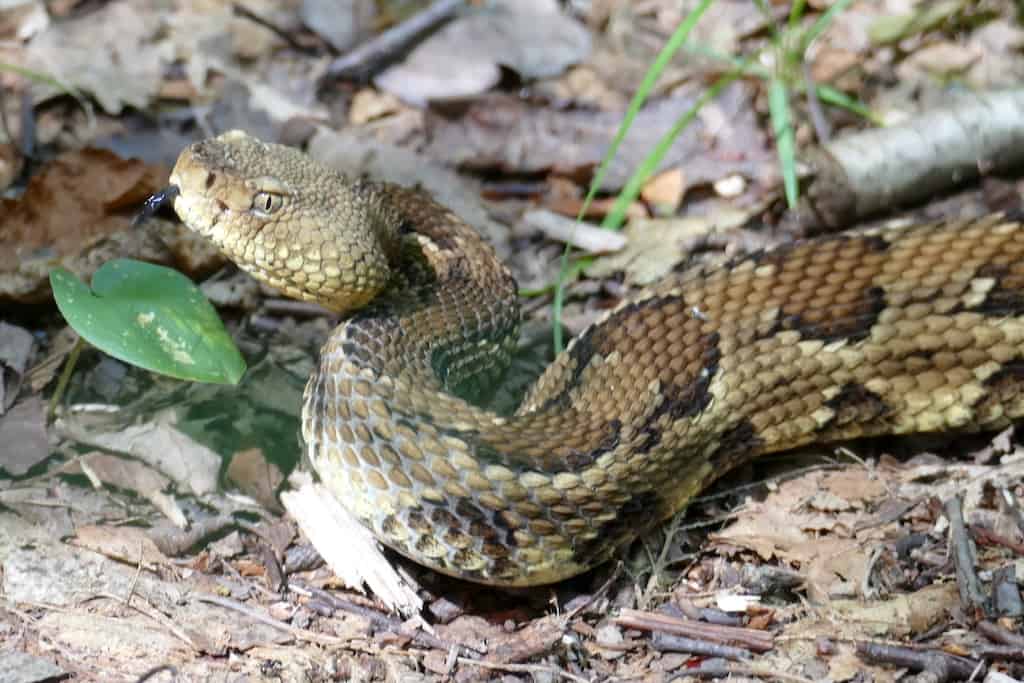
Maximum length: 189.2cm.
The most widespread rattlesnake on US soil. The timber rattlesnake dominates the eastern half of the US, whereas the prairie rattlesnake rules the Midwest and the pacific rattlesnake rules the west coast. The timber rattlesnake is slightly more widespread than both, and covers an enormous 31 states overall. Its westernmost point in the USA is central Texas, while on the east coast, it reaches the panhandle of Florida, and as far north as Vermont and New Hampshire.
Timber rattlesnakes are slightly less common than they used to be, as they’re extirpated (regionally extinct) in Delaware, Rhode Island, Maine and Michigan. Nevertheless, they rule the forests of the eastern USA. Timber rattlesnakes, as you’d expect, favour forests with an abundance of large logs, fallen branches, and other forest debris. They lurk in these piles of rotting forest matter, waiting for rodents and squirrels (one of their top prey) to walk past.
Timber rattlesnakes have the ability to kill, with deaths occurring every few years. A recent one happened in 2025, and the victim was a hiker in Savage Gulf State Park, Tennessee. This species fails to reach Mexico to the south, though it spreads a decent way into Texas.
| 3 | Prairie rattlesnake |
Maximum length: 151.5cm.
A rattlesnake whose venom transforms with age. Juvenile prairie rattlesnakes have a venom rich in metalloproteinases, shock and awe weapons which digest proteins en masse, including skin tissue and the lining of capillaries, causing spontaneous bleeding. With age, their toxins become more targeted, as the venom develops more myotoxins, which preferentially target muscle tissue.
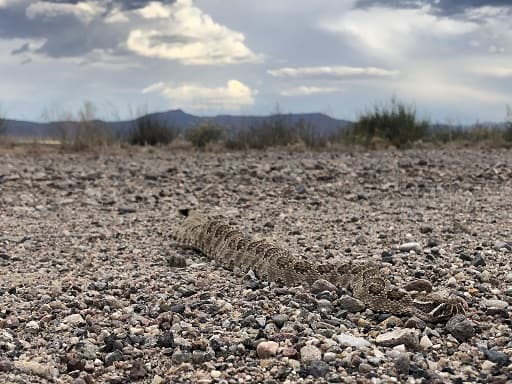
The prairie rattlesnake is a highly social species, appearing in old caves and underground chambers in colonies of several hundred. Its camouflage is fantastic against dry, wispy grasses, or old dirt roads not far away (as seen above).
Thanks to these skills, the prairie rattlesnake has achieved a huge territory, becoming the 3rd most widespread rattlesnake by territory covered. In the US, it covers 14 states, which sounds less impressive than the timber rattlesnake, but as it lives primarily in the Midwest, the states it covers tend to be larger.
This is also the most northerly rattlesnake in the world, as prairie rattlesnakes reach a northerly latitude of 51.149 in Alberta, Canada. To the south, they just reach the northern Mexican states of Chihuahua and Sonora. Deaths are rare for prairie rattlesnakes, as their venom is significantly less lethal than the South American rattlesnake’s. They also tend to live in more remote locations. However, one confirmed victim was a 4 year old girl in 1915 who was playing near her house in South Dakota.
| 4 | Pacific rattlesnake |
Maximum length: 162.6cm.
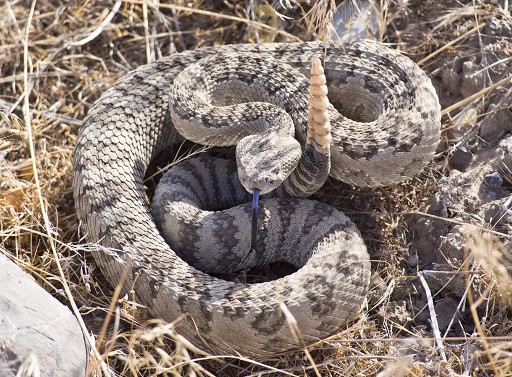
The Pacific rattlesnake (Crotalus oreganus) utterly dominates the west coast of America, occupying California, Oregon, Washington and British Columbia. It also covers Utah, Nevada, northern Arizona and western Colorado, with the main dividing line with the prairie rattlesnake (its closest relative) being the Rocky Mountains. This species has a beige-brown colour, but a vivid purple tongue. Its rattle scales are as well developed as any.
A 50 year old man was killed by this species in 2003, after mistaking it for a log. The location was San Bernardino County, one of many which Pacific rattlesnakes fully control. Pacific rattlesnakes spread a decent way into Canada, and are the second most northerly rattlesnake. They also enter Mexico, but only the Baja California peninsula directly south of US California.
A great ID sign for this species is especially round brown blotches down its spine on the upper body, which gradually transition to bands/stripes as the tail approaches. The Pacific rattlesnake also contained one of the oldest rattlesnakes on record, and vipers. The rattlesnake was named Striker, and scooped up from the wild in 1982, and kept as a classroom pet for decades. It finally died in 2015 at age 34.
| 5 | Western diamondback rattlesnake |
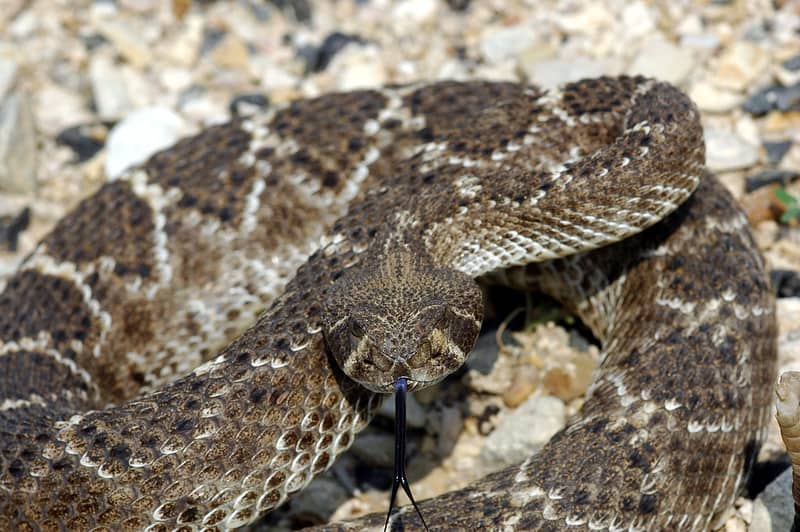
Maximum length: 233.7cm.
The most widespread rattlesnake across the US south. The western diamondback (Crotalus atrox) is blessed with endless rattlesnake superpowers. It can adjust the hertz frequency of its rattle as animals stray closer, gather rainfall using a special coil formation, and can even “walk” by shifting backwards using two alternating positions of its coils like a pair of feet.
The western diamondback also causes the highest number of US snakebite fatalities annually, although there’s one record it can never achieve, much to its frustration: the longest rattlesnake of the 58. The eastern diamondback has that covered, although the western diamondback is the 2nd longest, and has a more aggressive personality.
Western diamondbacks cover 8 states of the US South: southern California, Arizona, New Mexico, Texas, Oklahoma, southern Nevada, Louisiana, Kansas (very uncommon) and central Arkansas. They also spread deep into Mexico, reaching as far as Mexico City. Western diamondbacks are abundant wherever they appear, occurring in plentiful populations. This is because of their habitat flexibility, as compared to the black-tailed rattlesnake, this species is more comfortable near human towns and on regular dog walking trails.
Western diamondbacks seem to vary in personality, so caution should be your default. One ID sign is a black and white-coloured tail, like a checkerboard, before the beige rattle segments kick in.
| 6 | Mojave rattlesnake |
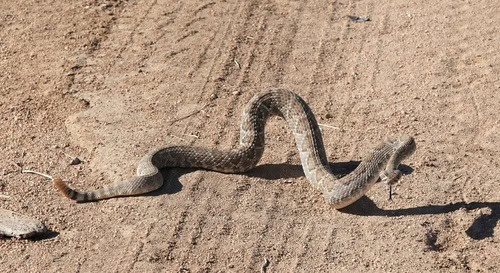
Maximum length: 137.3cm.
A feared species, both among the general population and scientists who have researched it. The Mojave rattlesnake straddles the border of the US and Mexico, covering slightly more land to the south, but plenty to the north. Mojave rattlesnakes appear in flat desert areas, coping with particularly hot temperatures. They prey on a mixture of mammals and lizards, varying the proportions based on their location, giving them the power of adaptability.
In the USA, Mojave rattlesnakes are found in California, Arizona, New Mexico and Texas. In Mexico, they cover numerous states, including border areas like Chihuahua, but even as far south as Mexico City.
In terms of danger, this rattlesnake’s speciality is utterly destroying the lungs. Firstly, the Mojave rattlesnake is highly neurotoxic, containing a rare neurotoxin called Mojavetoxin, first discovered in 1975. This disables the connection between the brain and muscles cells, but also the lungs, removing their ability to inflate and deflate, like most neurotoxic snakes (e.g. a cobra).
Secondly, the Mojave rattlesnake’s venom directly assaults cells within the lungs. Analysis of mice injected with the venom revealed microscopic haemorrhaging in the alveoli, the millions of spaces in the lungs which store oxygen. These mice also had visible damage to muscle tissue across the body, which appeared within 72 hours.
| 7 | Black-tailed rattlesnake |
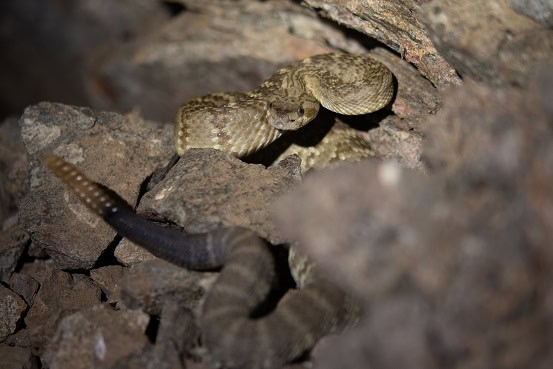
Maximum length: 152.4cm.
One of the simpler rattlesnakes to ID, and one which prefers rocky slopes rather than arid desert flats. This is the most widespread rattlesnake on Mexican soil, but on US soil, it covers less ground, appearing mainly in Arizona, with some territory in western New Mexico.
This species reaches Mexico City and spreads well beyond. It’s one of the most easily recognisable rattlesnakes due to its black tail, which contrasts against the beige body and the beige rattle which follows. Most of its diet consists of mammals, such as kangaroo mice, pocket mice and woodrats, but birds such as sparrows have been recorded as well.
Like most members, the black-tailed rattlesnake produces a terrifying S-coil when threatened, with a sharp kink at the neck, so that its menacing eyes face the aggressor directly. Fortunately, its venom is relatively mild, and not a single death has been recorded. Most bites so far have involved painful swelling. This is a medium-sized rattlesnake, occasionally reaching 1.5 metres.
| 8 | Pygmy rattlesnake |
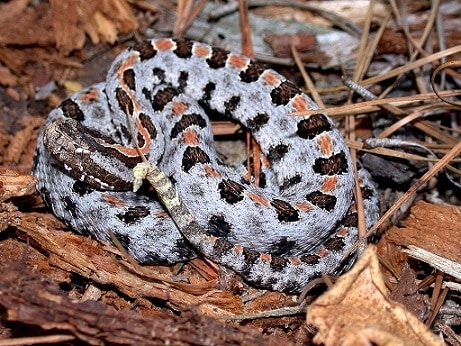
Maximum length: 80.3cm.
One interesting fact is that while Mexico is home to the most rattlesnake species by far (over 30), its species tend to be rarer and cover less ground. Mexico has numerous species like the Tancítaro rattlesnake and Sinaloan long-tailed rattlesnake which cover only narrow areas of land, separated by plateaus and mountain ranges. Instead, the US contains most of the mega-widespread species (except the South American rattlesnake), and another is the pygmy rattlesnake.
This is one of 3 members of the offshoot Sistrurus genus, the others being the two massasaugas. The pygmy rattlesnake is a striking species found all over the US southeast. It’s the most commonly encountered rattlesnake in Florida, and appears as far north as North Carolina and Missouri. It isn’t quite the smallest rattlesnake, exceeding the ridge-nosed rattlesnake, but its rattle is the least developed, producing more of an insect buzzing than a piercing racket.
Being small hasn’t hindered this species’ ability to spread and conquer. Its superior ambush tactics are one reason, as pygmy rattlesnakes love to lurk in thick forests and hide near logs. They can wait for hours for a small mammal to run along the surface of the log, before leaping up and gulping them down. Another strategy is lurking in overgrown grasses directly next to clearings.
Though deaths are rare, pygmy rattlesnakes are capable of hospitalising even adults, and children could easily be killed.
| 9 | Western massasauga |
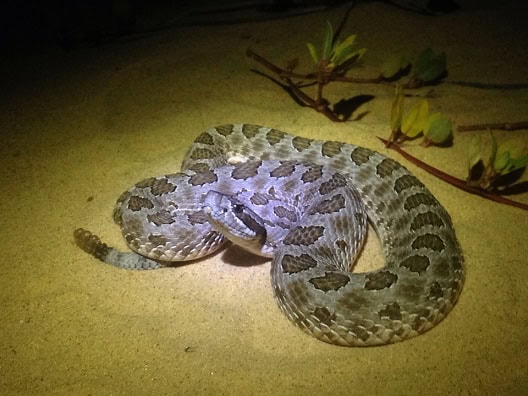
Maximum length: 88.3cm.
Another member of the offshoot Sistrurus rattlesnake genus. This species is recognisable by its sharply contrasting patterns. The base colour is beige or grey, overlaid with rounded blotches of a much darker colour. The rattle scales are in place, and contrast against a paler tail. Another ID sign is a thick stripe stretching back from the eye.
Western massasaugas are found in the central USA. Their heartlands are Texas and Oklahoma, while their northern reaches may spread into Iowa. They just cross the border into Mexico, in Monterrey and Coahuila states, but in fairly low numbers.
This species occupies relatively open habitats, unlike the timber rattlesnake. It avoids barren deserts, but can appear in open grassland, shrubland, woodlands and rocky slopes alike.
This rattlesnake isn’t especially deadly, with no confirmed human deaths on record. Its diet is flexible, consisting of mammals and reptiles, but in every-varying proportions depending on location. Unusually for a rattlesnake, some snake meals have also been recorded – DeKay’s brown snake and a lined snake.
| 10 | Rock rattlesnake |
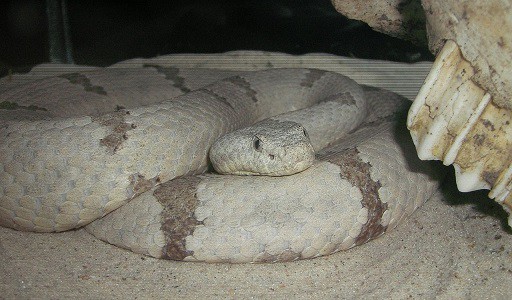
Maximum length: 82.8cm.
A moderately dangerous rattlesnake, which never reaches 1 metre. This species is a lover of scenic, rocky slopes in high altitude forests, typically above 1000 metres and often well over 2000 metres. In Arizona, New Mexico and Texas, its 3 US states, it typically appears near popular hiking trails, well away from towns and cities.
These 3 states are the tip of the iceberg, as the rock rattlesnake (Crotalus lepidus) has a much larger area of land in Mexico to the south. It sticks to high altitude areas, which are relatively cool compared to the burning deserts below, but with much of central Mexico consisting of a high plateau, this allows it to spread well to the south. The rock rattlesnake doesn’t quite reach Mexico City, unlike the black-tailed or Mojave rattlesnakes.
One characteristic of this snake is its variability. This is one of the most variable in colour of the 55+ rattlesnakes, and it’s all down to its habitats. The colour varies according to rock type and substrate, and with such a huge empire, this has created endless opportunities for rare, exotic morphs to pop up. For example, this image shows a turquoise individual, an extreme rarity in the Crotalus rattlesnake genus. The image was taken in Aguascalientes state, central Mexico.
While most have widely spaced bands, as shown above, some rock rattlesnakes have messier spotted morphs. The diet of this species focuses more heavily on reptiles, including Chihuahuan night snakes, spiny lizards, and hooknose snakes.