
| 1 | Brazilian waterfall dangers |
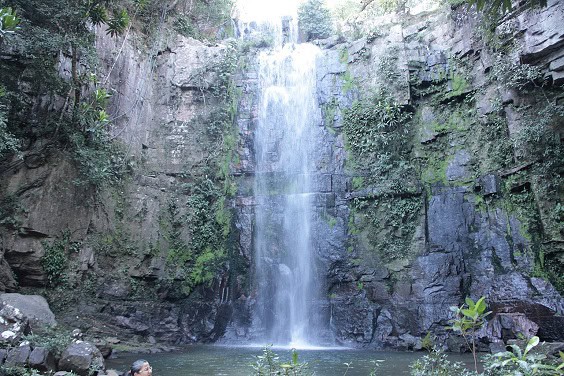
Humans have a strange tendency to forget to look up, whether it’s an assailant clinging to a ceiling, or in the snake world, a dangerous pitviper clinging to a tree branch just above your head. In September 2020, Brazilian doctor Dieynne Saugo was enjoying a swim in a scenic lagoon in Mato Grosso state, below the scenic Serra Azur Waterfall (pictured above). The outing went well, until her friends suddenly heard a piercing scream from the waterfall, which they captured on video.
A venomous snake had been washed over the waterfall, falling 45 metres. It landed in the pool, and immediately inflicted a venomous bite on the unsuspecting swimmer. The snake was a Bothrops lancehead, a venomous group with over 30 members in Brazil.
Saugo received three bites, first on the chin. The lancehead tried to slither down her swimsuit, and as she dragged it away, she was bitten twice on the hand. Her friends rode to the rescue, but she didn’t receive antivenom until 4.5 hours after being bitten, at which point she was haemorrhaging badly. One of her friends made sure to identify the snake as a viper, allowing the correct antivenom to be used.
The woman spent a week in intensive care. She had to relearn how to walk and talk, but made a full recovery. She planned to continue her hobby of swimming near towering, humid waterfalls whose waters could contain unwanted co-swimmers.
| 2 | Snakes crash through Australian roof |

Generally, being inside means that you’re safe from snakes. It’s a bargain offered to us by nature: venture into the woodlands and forests and you may get eaten, but stay indoors, stay out of nature’s way, and we’ll at least spare you from vicious snakes. Unfortunately, that bargain was broken in 2020, when Australian man David Tate entered his house to find that two carpet pythons had crashed through his roof.
The pythons measured 2.8 metres and 2.5 metres, and were now slithering around his house. One was in his living room and the other in his bedroom. Tate lived in Queensland, and had earlier seen two large snakes basking on his roof. There were large pieces of ceiling in his kitchen where the pair had crashed through; Tate was lucky he hadn’t been inside.
It’s believed that the snakes were fighting over a female snake, wresting ritualistically as pythons are known to do. Tate called the local snake handlers, and they removed the intruder pythons without a fuss.
| 3 | Snake in a Russian woman’s throat |
Our next shocking headline may be shocking because it’s a massive exaggeration, or because it illustrates the natural disturbing consequences of humans and snakes living on the same planet.
The setting was the Republic of Dagestan, southern Russia, a rural location called Levashi. In the local hospital, doctors performed an operation where they extracted a 4 foot snake from inside a woman’s body. The snake had apparently slithered down the innocent lady’s throat while she slept in the yard of her home.
The doctors placed the woman under general anaesthesia. In an operation captured on video, doctors inserted a black tube down the woman’s throat, while she lay unconscious in the operating theatre.
The tube latched onto the snake, and the male and female doctors successfully extracted the snake, placing it in a clear plastic tub. It clearly measured around 4 feet, but people on the internet soon debated its true identify. Some claimed it was a giant worm or parasite, while others insisted it was too large to be a parasite.
The exact species of the snake, if it was one, was never confirmed, nor whether the “snake” was still alive after being extracted.
| 4 | Record-breaking mother snake |
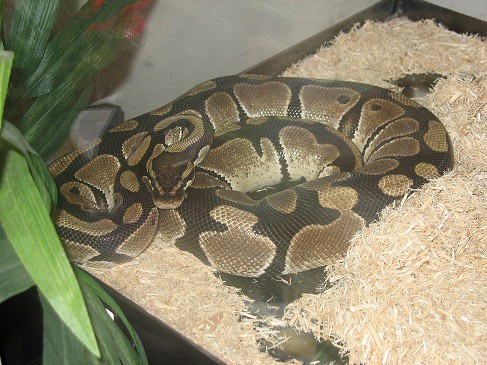
Meanwhile, there’s nothing unverified about our next shocking story, in which not one but two snake records were broken. The subject was an elderly ball python, aged 62, based in Saint Louis Zoo in Missouri. This was already the oldest known snake in the world, and the next shocking development occurred when she gave birth, laying a clutch of 7 eggs.
Somehow, this elderly female snake laid eggs without having been in contact with a male for 15 years (unless one sneaked in through the plumbing).
3 of the eggs survived, and were expected to hatch within one month. The eggs were laid in September 2020, and the python’s age was verified to a high degree of accuracy. She was given to the zoo by a private donor in 1961, at which point she was estimated to have been 3 years old.
The ball python is relatively short for a python, at an all-time record of 182cm, and an average of 100cm. Yet it reaches a higher confirmed age record than the green anaconda, the 2nd longest snake in the world, whose oldest individual was a male called Oliver aged 40 (which died in 2024).
| 5 | Cottonmouth’s feast |
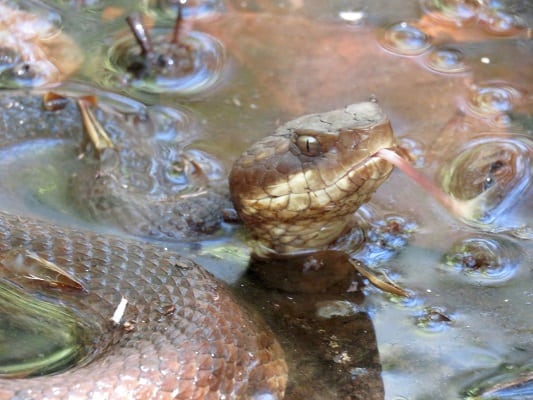
The next story originated from a Facebook post and demonstrated the complex, some would say terrifying reality of nature in North Carolina. The location was Hatteras Island, a scenic place where all wildlife is protected by the Hatteras Island Wildlife Rehabilitation group, regardless of its danger levels.
This led the clinic to aid a cottonmouth, which had become stuck in a thorny bush and suffered 5 lacerations. The cottonmouth would have died without medical attention, so the team cleaned its wounds and sewed them shut. But not before the cottonmouth regurgitated its last meal, which was actually 3 meals – two eastern ribbon snakes and a leopard frog.
The latter is common in the eastern USA. The eastern ribbon snake belongs to the garter snake family, and is harmless to humans, mainly appearing in ponds.
Cottonmouths have a flexible diet, including mammals, reptiles and amphibians, but finding one with 3 meals inside its stomach is rare. The team planned to release the greedy cottonmouth back into the local undergrowth, but first, they posted photos of the gruesome meal on the internet for everyone to enjoy.
| 6 | King cobra’s unrelenting grip |
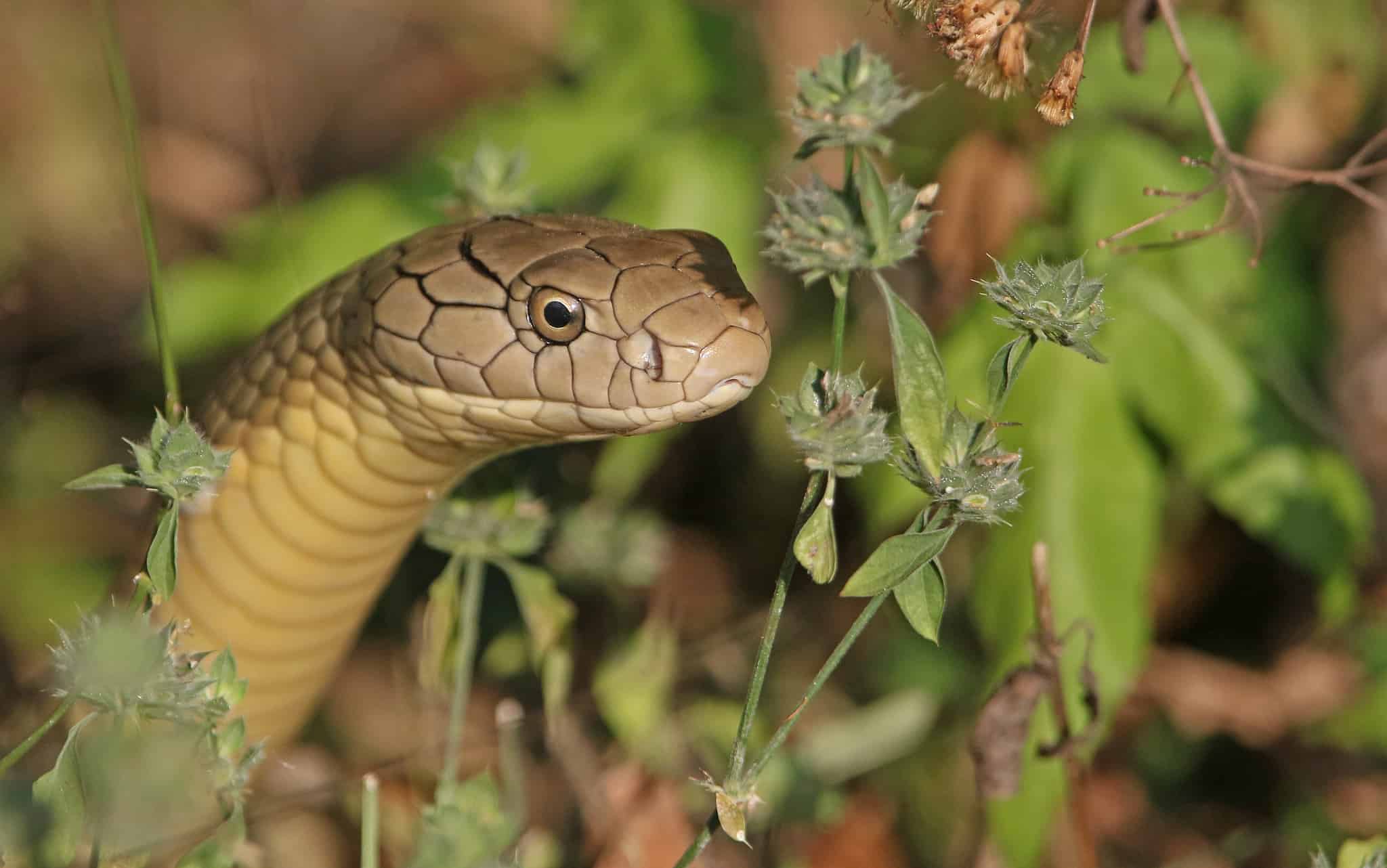
The king cobra is disturbing not just for its lethal venom (much stronger than a cottonmouth’s), but its tendency to latch onto victims’ arms, injecting multiple pulses of venom. This was taken to a new extreme in 2020 when a Vietnamese man arrived in hospital with a king cobra still attached to him.
38 year old P.V.T. was in his garden 90km northwest of Ho Chi Minh City, when he and his son spotted a king cobra at 7:00am. He attempted to catch the large snake, but was bitten on the leg. Undeterred, he grabbed the king cobra by the head. and maintained his grip, but all the while, the king cobra was wrapping itself steadily around his arm.
The man’s family tied elastic bands around his leg, to prevent the venom from spreading. He reached a local hospital, where doctors removed the 2.5 metre king cobra, still firmly attached.
He was then transferred to Cho Ray hospital in Ho Chi Minh City, where he was experiencing quadriplegic paralysis, loss of reflexes and dilated pupils, all classic neurotoxic symptoms. After receiving 10 doses of antivenom, the man regained the use of his arms and legs. The king cobra has a cardiotoxic venom as well, and the doctors closely monitored his heartbeat, but the man ceased to be in a critical condition.
| 7 | Sewer python makes its move |
Cave snakes exist, rainforest snakes exist, even supermarket snakes exist in Thailand and Australia. A 2020 story proved beyond doubt that sewer snakes are another grave threat you need to watch out for.
The location was Mangalore in Karnataka state, southwest India, home to the damp and hilly Western Ghats mountain range. A 10 year old boy called Sankalp would often visit Urvi Krishna Math, his local temple. The temple was located near his house, but to reach it he had to pass over a stormwater drain.
One day in October 2020, the well-worn route had a subtle difference: the stormwater drain cover was broken. As Sankalp walked past obliviously, an aggressive python lunged out and grabbed his leg. There was no prior warning of the massive snake in the shadowy tunnel within.
The python sank its fangs into Sankalp’s right leg. The boy struggled, and using his free leg, managed to kick the python in the head. The dazed serpent released its hold, and retreated into the dark pipe from whence it came.
Sankalp had an injured leg, but alerted neighbours to the python’s presence, and they dragged it from the pipe in a timely response. The culprit was almost certainly an Indian python, which can reach 4.6 metres, and is found across virtually all of India. Meanwhile, king cobras are proven to inhabit the sewer systems of Singapore.
| 8 | Sea snakes lurking in white foam |

Sea snakes can be very difficult to identify, as several are murky grey (e.g. the beaked sea snake) and blend easily with shallow water if there’s even any loose sand floating around. The olive sea snake sticks to coral reefs, but the greater sea snake and elegant sea snake have a strong tendency to appear on Australia’s beaches. December 2020 arrived with a dire new warning – that sea snakes were disguising themselves in foam on the sea surface.
It was the beginning of the Australian summer, and storms pummelling the east coast of Australia had whipped up large amounts of sea foam, leading to many social media videos of kids and locals wading through the white froth. One video went viral of a woman searching for her lost dog in the foam at Byron Bay.
It all seemed like an innocent social media phenomenon, but officials warned of the venomous threat within. One warned that sea snakes “seem to be attracted” to the foam and that back in 2008, a mass of foam at an East Ballina beach had contained 21 sea snakes.
The new foaming episode was concentrated in New South Wales and along the populous Gold and Sunshine coasts. Another foam threat was large algal blooms, spewing toxins, but disguised under the frothy whiteness.
| 9 | Burmese python, latest update |
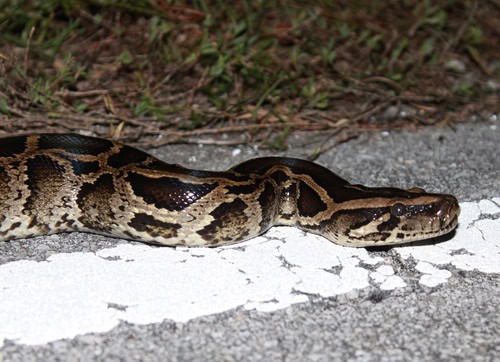
The Burmese python has been an invasive species in Florida’s fragile Everglades ecosystem since the 1990s. By the 2000s they numbered up to 500,000, and were swallowing up native mammals on an industrial scale. Schemes were hatched from the noughties onwards such as cooking them in pizza, hiring mystical Indian snake trackers, and even spreading a virus through the population, which was ruled out as far too risky.
In 2020, the efforts continued with the annual “Python Bowl” challenge, when hunters and volunteers from across the country waded into the Everglades and took part in a 10 day hunting frenzy. With 662 people registered to take part, the Burmese python’s days were surely numbered.
If each person caught 5 pythons then over 3000 would be eliminated… but the actual result was a disappointing 80 killed. This was still an improvement on the 68 recorded in 2013.
Much better results arrived later in the year. Florida state officials announced that over the first 8 months of 2020, nearly 2000 Burmese pythons were located and killed, which was far higher than in 2019. This was part of an official government elimination program which had killed 6278 since its initiation in 2017. Rather than rabble from all over, this contracted the job to a more limited number of professional python assassins.
| 10 | Russell’s viper: diary of dread |

The Russell’s viper is one of the most dangerous snakes in the world, killing thousands of Indians per year, with a high proportion being agricultural workers. It’s always appearing in grim headlines, and a couple from 2020 added disturbing new twists to the species.
Generally, Russell’s vipers don’t invade human habitation, which is a saving grace, but local man Manoharan found one inside his bathroom, in his house in Tamil Nadu, India’s most southwesterly state. He summoned local snake catcher Mr Murali, who placed the Russell’s viper in a bag, but soon noticed that it was giving birth.
Murali placed the bag under a tree. When he returned two hours later, he was greeted with 35 newborns. All 36 vipers were released into the forest of Sathyamangalam, but had the timing been delayed, all 36 could have been slithering around Manoharan’s house.
Disturbing as this was, it was within normal boundaries for the species. But the next discovery was a two-headed Russell’s viper, an unspeakable aberration of nature. This was found outside a house in Maharashtra state, western India, before being taken to a local facility. Whether both heads could inject venom wasn’t established, because nobody volunteered to test it (thankfully).
| 11 | Air conditioner snakes (40 of them) |
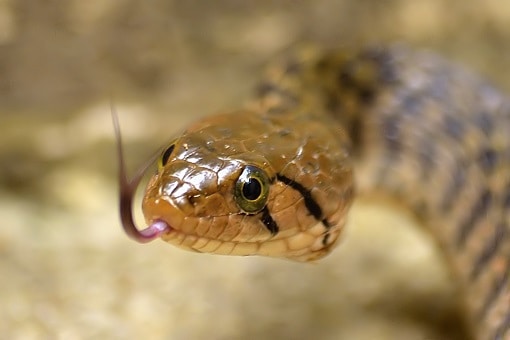
Continuing the theme of swarms of next generation snakes, we have a report of 40 newborn snakes hiding inside a man’s air conditioning unit. The location was again in India, this time in Meerut district of Uttar Pradesh state, northern India (bordering Nepal).
The story began when local farmer Shradhanand entered his bedroom and found a baby snake on the floor. He promptly removed it, but when he returned to sleep, he found 3 baby snakes on his bed. He then noticed several snakes slithering out of the air conditioning unit, which hadn’t been serviced in several months.
The family removed the unit’s cover and were shocked to find dozens more snakes. The total number was 40 hatchlings, and locals from the village were soon gathering around. The species was thankfully non-venomous – the checkered keelback, a water-lover which averages at 1 metre and is probably the most abundant snake by headcount in all of India. The mother had obviously used the secret, safe spot to keep her babies safe from predators, and succeeded beyond her wildest dreams.
The story ended happily, as the man placed the newborn snakes in a bag and released them in a nearby forest.