| 1 | Venomous but never fatal (yet) |
Australia is full of lethal killers like the eastern brown snake, most of which only attack if provoked, but there’s several moderately dangerous snakes as well. These include the broad-headed snake of sandstone outcrops, and the Lake Cronin snake found exclusively near one lake in western Australia.
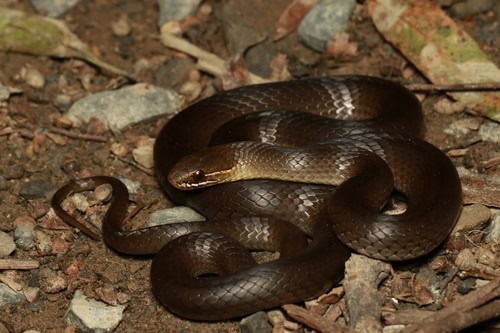
One of these species commonly exists near towns and cities on the east coast – the marsh snake, AKA Hemiaspis signata. This is a relatively small species, at 50-80cm, with an absolute maximum of around 1 metre. No deaths in humans are known, but its venom still contains powerful procoagulant toxins.
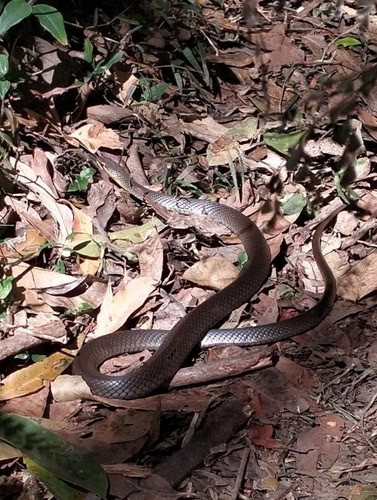
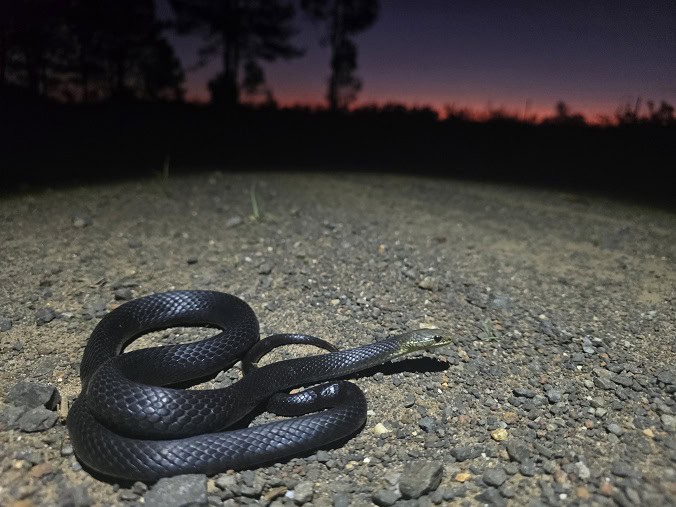
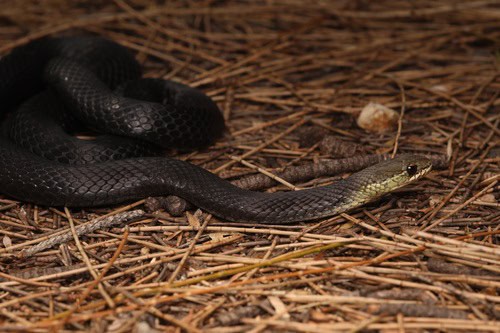
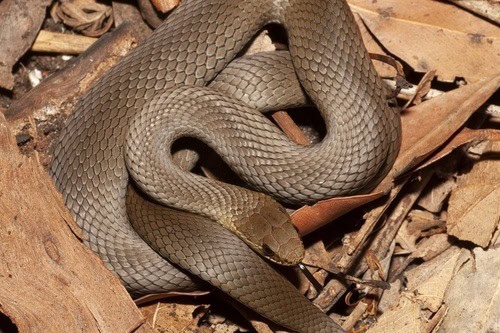
This species is mostly one consistent colour, usually olive brown, greyish or near black. Its head and face tend to be paler, with two distinct white lines on each side of the face, one beginning behind the eye and another above the upper lip. This species is often confused with the white-lipped snake of southern Australia, but the dual white lines are a distinguishing factor, and a range located further north overall.
The marsh snake belongs to the Hemiaspis genus, with just two members, the other being the grey snake (Hemiaspis damelii), which also appears in New South Wales and Queensland, but is rarer and lives further inland. Marsh snakes derive most of their prey from lizards and frogs, avoiding mammals.
| 2 | Location: always moist places |
Marsh snakes inhabit just two states of Australia: New South Wales and Queensland. The latter has a disjunct, separated population to the north, an isolated outpost located around Cairns which is hundreds of miles north of its remaining territory.
The real stronghold of Hemiaspis signata lies around the populous northern New South Wales and southeast Queensland, the most developed areas of the whole country. Marsh snakes are abundant near Sydney, Newcastle and Brisbane. They can reach very high populations in some areas, and are often found together in mass gatherings.
Marsh snakes appear in marshes sometimes, but not always. However, they have a very close correlation with moisture, the more the better.
You’ll never find this species in the parched outback. Marsh snakes inhabit the following habitats: wet forests, wooded sand dunes, the well-vegetated edges of dams, marshes and creeks, patches of moist forests near towns, heaths and wet grasslands. They sometimes appear on roads and even in school playgrounds.
Marsh snakes rarely climb trees, sticking to the ground. They’re commonly found resting beneath roots of trees, fallen logs, grass tussocks and occasionally manmade objects.
| 3 | Diet and predators |
The marsh snake preys on amphibians and reptiles, and has a large number of confirmed meals to its name. These include the eastern water skink, three-toed earless skink, brown froglet, tusked frog, rainbow skink, spotted grass frog, and common garden skink.
No mammals and birds are involved, just cold-blooded creatures like itself. The marsh snake’s habit of rummaging slowly through overgrown, lush vegetation by marshes and creeks gives it the perfect opportunity to find these meals. All the marsh snake’s needs are fulfilled by a humid, overgrown river shore, with no need to invade a mammal burrow or climb 5 metres up a tree.
One quirk is that while they enjoy reptiles, marsh snakes almost completely avoid geckos. According to one study, geckos comprise less than 1% of their diet. Nor have any fellow snake meals been discovered. Instead, their diet is dominated by skinks and small frogs, with no toads.
The marsh snake also has a confirmed predator in the much larger red-bellied black snake, another semi-aquatic species (Australia’s most dangerous swamp snake). These two species likely encounter each other regularly in moist areas near Sydney and Newcastle. However, they’re easily distinguished due to the red-bellied black snake’s namesake underside, which is a vivid volcanic red.
| 4 | Procoagulant through a sneaky mechanism |
A 2019 study analysed various Australian snake venoms, while testing tiger snake antivenom against several of them. Aside from the marsh snake (Hemiaspis), the study included whipsnakes (Demansia), small-eyed snakes (Cryptophis) and the broad-headed snake (Hoplocephalus bungaroides) among others.
The first find was that the marsh snake had a powerfully procoagulant venom – a venom which accelerates the production of clotting to form numerous tiny, weak clots throughout the bloodstream, therefore depleting the supplies of clotting elements like fibrinogen available for genuine clotting. This is the opposite of an anticoagulant venom, which directly cleaves through fibrin and fibrinogen, but is just as effective for causing spontaneous bleeding.
The specific mechanism in the Hemiaspis group was mimicking factor Xa. This is a key part of the ordinary clotting chain, converting prothrombin to the active enzyme thrombin, which itself coverts inactive fibrinogen to fibrin, the backbone of blood clotting. The marsh snake accelerates this to dangerous levels.
Worldwide, the Phillipine pitviper is also known to alter factor Xa, but in the opposite way. It cleaves through FXa instead, destroying its activity, preventing the clotting activities of thrombin from taking place (anticoagulant).
| 5 | Analysing the venom |
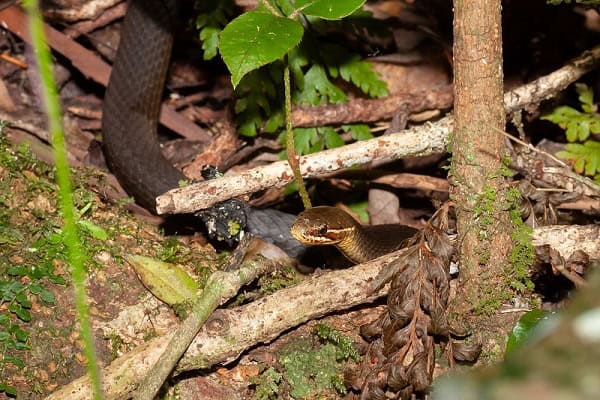
Rather than altering the human body’s own levels, the marsh snake contains a toxin which is a mutated form of factor Xa. This mutant FXa mimic is found in several Australian elapids, including the small-eyed snake, curl snake (Suta suta) and red-bellied black snake. It’s theorised that the factor Xa mimic was present at the evolutionary stem of Australian elapids millions of years ago, but in lower levels, before becoming dramatically amplified on several occasions.
The study also tested the basic lethality of the marsh snake. They concluded that its potency was within the range of the infamous tiger snake, a species found all over southern Australian and Tasmania, which has been known to kill humans on several occasions.
The difference was body size, and therefore venom yield. The tiger snake reaches up to 1.8 metres and 2.4 metres on outlying islands (Chappell Island), with a corresponding venom yield of 74mg (average).
Meanwhile, the marsh snake peaks at 100cm, but averages at around 50cm. Its venom yield is low, and consequently, no human deaths are known from this species. That said, it’s possible that children or unusually sensitive people could succumb, or small dogs.
| 6 | Phase 3: no antivenom |
The next phase of the large study was testing the tiger snake’s antivenom on various other species. Several other procoagulant snakes from Australia were tested, including the red-bellied black snake, small-eyed snake, and the marsh snake, which isn’t too distant on the evolutionary tree.
Most venomous snakes worldwide don’t have their own dedicated antivenom, but can be treated effectively with closely related species, like the toad-headed pitviper of Ecuador, which can be treated with an antivenom designed for the Central American bushmaster, Central American rattlesnake and fer-de-lance. The toad-headed pitviper belongs to a completely different genus (the uncommon Bothrocophias), but has a sizeable toxin overlap with its viper cousins. Would the same rule apply to the tiger snake and marsh snake? That was the scientists’ question…
…and the answer was no. The venoms of several species were neutralised by the tiger snake’s antivenom, including the red-bellied black snake and little spotted snake (Suta punctata).
Meanwhile, the marsh snake, whipsnakes (Demansia) and small-eyed snake were only weakly counteracted by the antivenom. The scientists were surprised, given the marsh snake’s relatively close evolutionary relationship to the tiger snake. They were particularly surprised given that a more distant relative, the red-bellied black snake, was neutralised more effectively.
| 7 | Real life bites |
Marsh snakes are only moderately venomous, but if you are bitten, there’s no vial of miracle elixir waiting for you in hospital.
Luckily, bites aren’t likely, as this species is very shy. Marsh snakes aren’t completely reluctant to bite, but are much more likely to flee when agitated. The venom also contains proven alpha-neurotoxins, but these have yet to manifest as neurotoxic effects.
Actual bites in humans have been relatively minor, as shown by a study on two kids. The first was a 12 year old boy, bitten by a marsh snake which had slithered into a school building in the Lake Macquarie region. The boy picked the marsh snake up by the tail and carried it to the principal’s office, but the marsh snake objected to this and bit the boy on his right index finger. The symptoms mainly involved coagulation, as the boy developed low fibrinogen levels, with degradation products of fibrinogen in his bloodstream. The symptoms reversed within 8 hours of being bitten.
The 2nd boy was aged 7, and bitten on the left thumb. He arrived at hospital at 12 hours post bite, and his main symptoms were local swelling and swollen lymph nodes. Children have a lower body size, and are therefore more vulnerable to low quantities of venom, but neither bite was severe.
| 8 | ID guide: brown snake confusion |
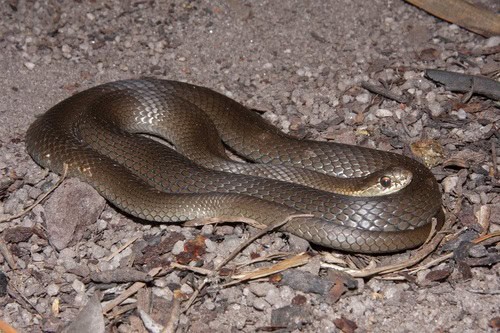
Among ID requests of snakes on Facebook, the marsh snake is confused with one species the most – the eastern brown snake. The two share an identical range in northern New South Wales and southern Queensland. Plumbers and workmen have even refused to work due to a misidentified “eastern brown” waiting to spring at them.
The confusion is easy, due to the plain body patterns of both. Eastern brown snakes are typically olive-coloured, but marsh snakes can be as well, as they vary from near black to olive to grey.
One ID key is that eastern brown snakes are far longer, reaching up to 2.4 metres. Marsh snakes peak at 1 metre, and are typically 50-80cm, so if the snake exceeds 1 metre it’s almost certainly an eastern brown.
However, juvenile eastern browns are potentially lethal as well. Therefore, the best ID sign lies with the facial patterns. The eastern brown snake has a completely plain olive face in virtually all individuals. There are no marks around the lips, eyes or head.
The marsh snake is famous for the two distinctive markings on each side of the face, above the lip and behind the eye. These are paler markings, and vary in visibility depending on the base colour. In black marsh snakes they stand out vividly, while in olive individuals they’re harder to detect. However, they’re nearly always present in some form.
| 9 | Drags its meals to a safe location |
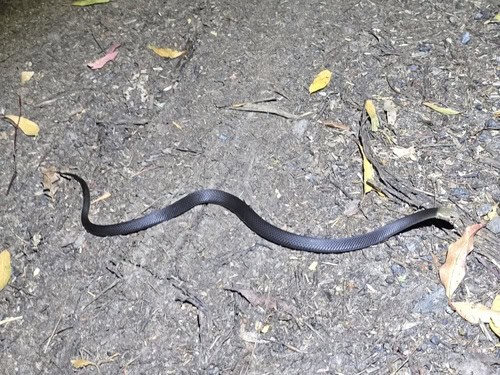
One hunting event of this species was observed on September 25th 2020 in Newcastle. The victim was a three-toed skink (Saiphos equalis), a species that like the marsh snake, often exists quietly in suburban Sydney.
The one-sided battle took place on a cycle path, 600 metres away from Blackbutt Reserve, a nature conservation area. The first part was the most interesting, as the scientists first encountered the marsh snake dragging its lizard meal from the path and deeper into long grass. The goal seemed to be bringing its meal to a more secure, concealed location before swallowing, out of sight from predators.
The lizard was clearly already dead, as it didn’t struggle or even twitch. The marsh snake had grabbed the skink by the hind legs with a secure fang hold. The lizard’s tail was missing, possibly detached in an attempt to escape.
The snake travelled 40cm with its meal, but clearly seemed to be aiming for a disguised location to begin its feast. The Puerto Rican racer is another species known to drag its defeated meals to more optimal dining locations.
| 10 | Live young rather than eggs |
Marsh snakes can appear in open areas and marsh shores with densely packed vegetation alike. The main determiner of their presence is moisture, and there’s one habitat which has plenty – beaches.
Multiple marsh snakes have been found on the beaches of New South Wales and Queensland, in areas like Main Beach in Surfer’s Paradise along the Gold Coast, and Belmont near Newcastle. No amphibians live in the sea, but skinks are plentiful in the dunes nearby. Sandy woodlands near beaches are another top habitat for Hemiaspis signata.
Other beach snakes in Australia include the red-bellied black snake, eastern brown snake (found on Main Beach as well) and carpet python. Marsh snakes occasionally invade schools, as shown by the 12 year old boy’s bite case. A few have been recorded in swimming pools.
Another characteristic of Hemiaspis signata is laying live young rather than eggs. These arrive in litters of up to 20.
| 11 | Immune to toad invaders |
The cane toad is the single biggest threat to amphibian-eating snakes of Australia. It’s an invasive species which was introduced by sugar cane farmers in the 1930s, with the intention of eating beetle pests, before ignoring the beetles and instead conquering most of Queensland. The cane toad is toxic, riddled with lethal bufotoxins, which stop the heart. It’s one of the largest toads worldwide as well.
A 2004 study examined 4 snakes from Queensland: the red-bellied black snake, common keelback, marsh snake and green tree snake. All 4 have a strong tendency to eat amphibians, and could therefore be vulnerable.
Two snakes were highly affected. The red-bellied black snake and common tree snake die rapidly after eating cane toads, and could originally swallow them easily. The scientists found an amazing transformation, as since the 1930s when the cane toad was introduced, these species had developed 1) larger bodies, for greater toxin dispersal, but also 2) smaller heads, to reduce their gape size, and prevent them from swallowing the toads.
Meanwhile, the marsh snake was completely resistant to this, as was the common keelback. The latter had basic physiological resistance to the cane toad’s toxins. The marsh snake was a little different; it had a strong taste for amphibians, but was too physically small to eat the huge cane toad. Consequently, its body shape hadn’t changed over the decades.
It was estimated that to die from toxin exposure, a marsh snake would have to swallow a cane toad of 108% of its own body mass, far too much to handle. The frogs marsh snakes eat tend to be far smaller. The cane toad is a lethal pest in Australia, but the marsh snake is immune.