
| 1 | US soldiers stop drinking cobra blood |
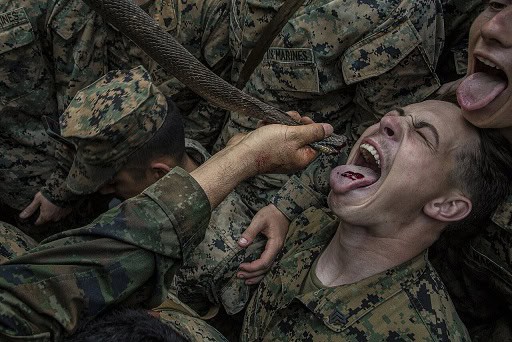
It was one of the more bizarre annual exercises in the US military’s repertoire. The US and Thailand are staunch military allies, and as part of the “Cobra Gold ” program formed in 1982, US soldiers travel to Thailand once per year to exchange military knowledge and training sessions.
One of the main goals is jungle survival, taught in a course lasting for 10 days. But just as important is forging bonds of friendship and comradery between the two countries. The ultimate way to achieve this was by making the US soldiers experience the true Thailand up close – by drinking king cobra blood.
The US soldiers didn’t just sip tentatively from the decapitated snakes’ necks, but opened their mouths wide, held the snake high in the air and let large drops drip onto their tongue. Images went viral in 2018 of soldiers sipping from the spicy, exotic elixir while other soldiers gathered around enthusiastically.
Fortunately, the blood isn’t dangerous, as snake toxins are confined purely to their venom glands. By 2021, PETA had taken notice, dubbing the ceremony a “frat party-like event“. Various objectors wrote to defence secretary Lloyd Austin, claiming that the practice posed a “serious zoonotic disease threat“.
In 2021, it was announced that the cobra blood-drinking delights wouldn’t be available to new visitors to Thailand. That said, this wasn’t the only creepy-crawlie delight on the menu, as soldiers would also swallow live scorpions and tarantulas. Footage from 2020 showed US soldiers cutting a gecko into several pieces and eating them. Whether these glorious traditions live on wasn’t mentioned.
| 2 | Black mamba investigates beach |
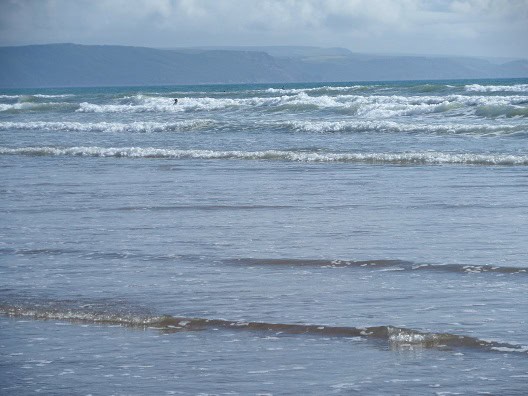
The black mamba’s normal habitat is the savannah, where it rustles through dry bushes and sometimes climbs trees. But beaches are another possibility, as proven in 2021.
Snake catcher Jason Arnold received a call from Glenashley Beach near Durban, where a fisherman had spotted a black mamba bopping up and down in the ocean. A wave had just crashed onto the shore, spilling not just salty water but a 2.3 metre venomous snake onto the beach. The tide had then sucked the mamba out to sea again. The fisherman had sent photographs, proving the venomous snake’s identity.
Arnold began driving to the beach, but was caught in heavy traffic at Verula. When he arrived at Glenashley beach, another wave had crashed, re-depositing the mamba. Arnold picked up his prize, and recruited a local woman to pick up the mamba by the tail. Tilting it vertically, there was a large gurgling sound as salt water issued from its mouth. Once Arnold had drained all the water, he stashed the mamba in a large duvet cover.
An advantage of the situation was that the black mamba was exhausted, having been swimming for so long. Arnold theorised that heavy rains had washed the black mamba down a storm pipe and into the open ocean.
| 3 | The greatest snake climber |
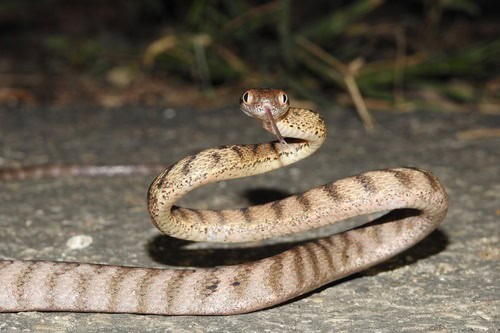
The brown tree snake is the most infamous invasive snake in the world alongside the Burmese python (Florida). It’s native to northern Australia and New Guinea, but has conquered the US Pacific territory of Guam, eradicating 10 out of 12 native bird species, and multiplying to hundreds of thousands. The infestation began in the 1940s, and removing them has proven to be impossible.
Another consequence of the invasion is regular power cuts, as the brown tree snakes ascend pylons and weave across cables. In 2021, scientists discovered a unique climbing method, a lasso-like manoeuvre, which allowed the brown tree snake to ascend unusually thick and smooth trees.
Many snakes climb by exploiting fissures in rough bark covering tree trunks. Other snakes climb using a “concertina” manoeuvre, with two body coils in a loop, shifting upwards gradually. However, the brown tree snake was able to shift upwards using one bodily loop lower down, circling the entire tree, with the rest of its body thrust upwards – hence the lasso shape.
According to the scientists, this pushed the snakes to the absolute limits of their climbing ability, but they were still able to shift upwards, with great effort. Sometimes the brown tree snakes slipped down, breathed heavily and stopped to rest, before resuming the ascent.
This unique climbing method explained how brown tree snakes have wreaked such havoc on Guam’s birds. The study meant that as of 2021, the brown tree snake is the most advanced known climber in the entire snake kingdom.
| 4 | New Zealand snake encounters |

New Zealand has no native snakes – on land, that is. The yellow-bellied sea snake washes ashore on the North Island occasionally, often enough to be considered native. This species is the only sea snake to live on the open seas, appearing on stormy oceans with no land visible for hundreds of miles. Bites are rare, but its venom is highly neurotoxic, triggering paralysis.
In May 2021, Samantha Cooper was exploring Tokerau Beach in the Northland when she came across an unusual piece of wildlife. Mixed with the salty sand was a snake, with the telltale purely black body contrasting vividly against a yellow underside.
Cooper attempted to place the snake back into the sea, but it kept moving back onto land. Cars regularly drove along Tokerau Beach and she was concerned about the innocent snake being run over. But she was in more danger than she may have realised, had the snake sank its fangs into her finger while she attempted a benevolent rescue.
2021 turned out to be a fruitful year for NZ snake sightings, with another yellow-bellied sea snake washing up on Tangimoana Beach on North Island. An 11 year old boy found the snake, cut its head off and placed it in a bag. Another sighting was made at Tapuae Estate Beach, just south of New Plymouth.
| 5 | Infamous giant snake video |
Another 2021 headline took the form of a video, which spiralled into a mystery which still hasn’t been solved. The subject is a colossal snake, being lifted out of the earth by a construction digger, during deforestation of the surrounding jungle.
This video spread like wildfire on social media, enrapturing readers on Facebook and Reddit alike. The snake looks truly enormous, but the first discrepancy began with its apparent size.
Media outlets such as The Sun and New York Post declared the snake to be “the world’s biggest”, yet simultaneously declared it to be a minimum of 10 feet, which is nothing special whatsoever. Many outlets claimed the video to be from the Dominican Republic, on the Caribbean Island of Hispaniola, but another claimed it to be from the northeast Indian state of Jharkhand. Various viewers identified the “monster” snake as a reticulated python, which doesn’t exist in Jharkhand state and definitely not Dominican Republic (or the entire western hemisphere).
Social media users argued that the snake wasn’t massive after all, and the video had been subjected to “forced perspective”, the tactical positioning of a cameraman to create a false illusion of size. This has previously been used to create monster cottonmouths and eastern diamondbacks alike.
Our judgement? The patterns closely resemble a reticulated python’s, rather than a boa constrictor’s as several articles claimed. The video could have been from Indonesia, a hub of deforestation, where a very similar video was taken in 2024.
But 5 years on, there’s still no answer to this strange mystery. If the snake was a reticulated python (the world’s longest snake species), then it could have been as massive as the articles originally claimed; the falsehood would have been the location.
| 6 | COVID cure in snake venom? |

2020 was the year COVID-19 swept across the world after an initial outbreak in a Wuhan market in January. Snakes made a brief appearance in the story when the Chinese cobra, a non-venomous species from China, was proposed as a potential carrier, after possibly slithering out of a batcave and into the arms of a hunter. 2021 was the year of rapid vaccine development, but snakes were still hopeful of making a contribution, as the jararacussu was investigated as a potential cure.
The jararacussu is the largest of the 30 Bothrops lanceheads found in Brazil. It reaches up to 2.2 metres and can inject 500mg of haemotoxic, cytotoxic venom. According to Brazilian researchers, a peptide found in the venom slowed the multiplication of COVID-19 by 75% in the cells of monkeys.
Specifically, the viper molecule acted on PLPro, an enzyme found in the virus’ molecular structure. Their next goal was to test whether the remedy prevented COVID-19 from entering cells in the first place.
The peptide from the venom was already known to be antibacterial, but the researchers were worried too. They were wary of random COVID-19 sufferers seeking out jararacussus in the wild, seeking their venom, and perhaps suffering a much worse fate in the process.
| 7 | Saw-scaled viper travels continents |

The saw-scaled viper is one of the deadliest snakes in the world when judged by annual fatality count. It’s one of the “big 4” venomous snakes in India and mostly appears in dry or rocky areas, including near villages. It lives nowhere west of eastern Iraq, but a British stonemason got a big surprise in Essex in 2021 when he opened a shipment to find one hissing at him.
The stonemason had ordered a delivery of rocks from India, which arrived as expected. The unexpected part was a viper hitching a ride for thousands upon thousands of miles, before finally reaching the UK.
When he opened the crate, the saw-scaled viper was sluggish, due to cool temperatures in the lorry. The stonemason wasted no time in phoning the local animal hospital.
The snake was brought to South Essex Wildlife Hospital, where it was “hissing and spitting” aggressively. The team placed the viper in a locked box, and placed a white piece of paper on the room’s door saying “do not enter! dangerous animal!“. There was no update on whether the staff listened to the notice, but the snake was due to be given to a “responsible” owner who understood the species’ requirements.
| 8 | Burmese python migrates northwards |
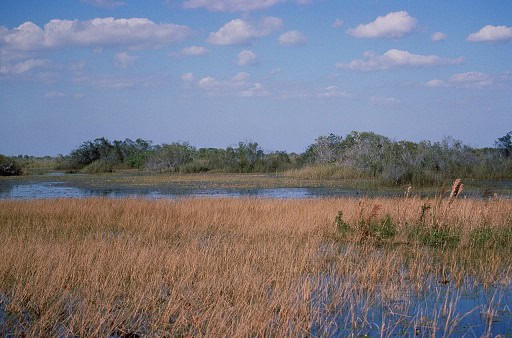
Burmese pythons first arrived in Everglades National Park (southern Florida) in the 1980s, and began multiplying until reaching up to 500,000 by the 2010s. By 2021, efforts to eradicate them were becoming slightly more successful, with schemes such as deploying dogs, tracking males to find hidden females, and employing more professional hunters rather than a ragtag band of weekend warriors.
Nevertheless, the gator-swallowing, rabbit-endangering pythons were continuing their march northwards. The worst fear of conservationists was that Burmese pythons could spread across the entire Gulf of Mexico coastline.
In 2021, conservationists announced the first sightings in Arthur R. Marshall Loxahatchee National Wildlife Refuge, which lies north of Everglades National Park. Biologists had already discovered DNA fragments indicating the presence of pythons, but now the first live individuals had been observed.
In response, the refuge granted hunters $15 per hour within the refuge, higher than other refuges at $10 per hour. Another incentive was $50 per python measuring 4 feet, and an extra $25 per additional feet of length captured afterwards.
Given the species’ record length of 5.79 metres (19 feet), the hunters stood to make a killing. The catch was that compared to Everglades National Park further south, the pythons were still far less numerous. The goal was to cut them off before they could establish a northern outpost, and then another, and then another.
| 9 | Cottonmouths duel in a swamp |
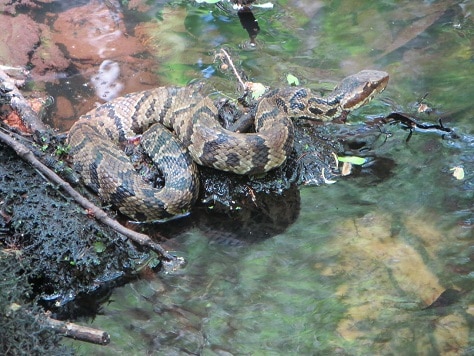
The cottonmouth is an object of fear for people in Louisiana, Georgia, Mississippi and the 13 other states it’s confirmed to exist in. It regularly hospitalises humans and dogs alike, and makes gloomy swamps even spookier than they should be. An 8 minute video captured in 2021 showed 2 male cottonmouths wrestling, coiling around each other sinuously in an attempt to establish dominance.
The location was Bulloch County, southeast Georgia, The battle was filmed by wildlife technician Matthew Moore, who had already witnessed 2 previous cottonmouth duels. These two cottonmouths had already fought, and the previous victor rediscovered his rival at the base of a bald cypress tree.
The battle immediately resumed, leading the snakes from the bank and into the water itself. For 8 minutes they coiled, intertwined and attempted to force each others’ heads lower, in a furious attempt to prove which was the superior cottonmouth.
Like with most wrestling snakes, the goal was almost certainly to woo local females. In fact, Moore suspected that a female was lurking unseen in the swampy undergrowth nearby. The cottonmouths’ identity was obvious from their triangular heads, thick viper bodies, and jet black facial markings. The classic swampy location helped with the ID as well.
| 10 | Copperhead defeated in backyard |
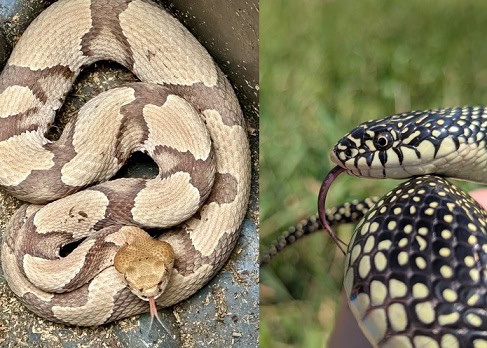
In places like Alabama or Florida, all you need to encounter the snake kingdom in full battle is a backyard. Karen Vick Scarbrough was a resident of Camden, Alabama, whose dog suddenly started barking and dashed into the corner of her garden. When she arrived, she found two snakes locked in a battle for survival: a venomous copperhead and a speckled kingsnake.
The former causes the highest number of US snakebites annually, though rarely death. The latter is a constrictor with a reputation for eating fellow snakes. Scarbrough’s dog had actually been bitten by a copperhead just 1 month earlier, which possibly explained its alertness; perhaps it was now hyper-attuned to the rustling presence of any copperhead. The two snakes were well-disguised by a thick bed of leaves, or would have been if they weren’t fighting so aggressively.
The battle raged on for an hour, until the kingsnake finally got the upper hand. Unlike the cottonmouth battle, this was a battle for survival, not dominance.
Despite lacking any venom, the kingsnake successfully swallowed the copperhead, acquiring a hefty meal. It was totally immune to swallowing an entire venom gland whole. The video soon went viral, racking up 250,000 views.