
| 1 | Central American boa |
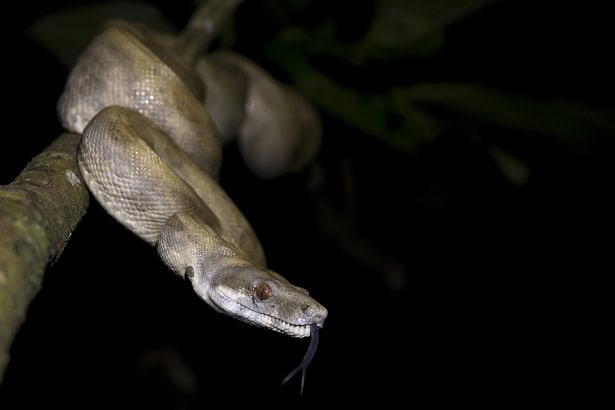
Maximum length: 3.7 metres.
The official longest snake species in Costa Rica isn’t that surprising – the Central American boa constrictor, AKA Boa imperator, a species which was once a subspecies of the main boa constrictor, but found to be genetically separate. Its lifestyle, hunting tactics and appearance are similar, albeit with a slightly paler, more silvery appearance overall.
Boa imperator is found all over Central America, as well as in western Colombia, and Costa Rica lies at the centre of this empire. This species appears in grassland, villages, and woodlands alike. It can turn aggressive if manhandled, but generally poses no threat to humans.
Being such a large species, this snake swallows many large meals. Its reptile prey include green iguanas, Oaxacan spiny-tailed iguanas and Lesser Antillean iguanas, while one individual in August 2020 was spotted constricting and hunting a squirrel.
Boa imperator is even large enough to hunt turkeys, or attempt to. In 2018, scientists stumbled across a large Boa imperator (at least 2.5 metres) coiled around a turkey, which was exhausted and unable to escape. The skin on the boa’s head and body was broken, with numerous bloody marks probably inflicted by clawing and pecking. A great struggle had clearly taken place, and the boa was waiting for the turkey to succumb, but it released its catch when the scientists approached, startled by their presence.
| 2 | Central American bushmaster |
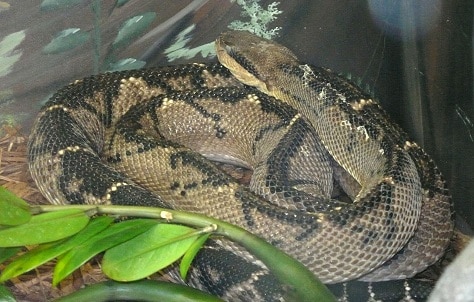
Maximum length: 360cm.
The official largest venomous snake in Costa Rica, and the 4th longest venomous snake worldwide. Among vipers, this species is only beaten by the South American bushmaster (max: 3.65 metres).
There are 4 bushmaster species, and this is the most common in Costa Rica and Panama, but it’s one of the country’s more rarely sighted venomous snakes overall, despite its size. Central American bushmasters are potentially lethal, injecting hundreds of milligrams of venom. Their venom grows more potent with age, as according to a 1990 study, snakes aged 5+ were more lethal, haemorrhagic, myotoxic and edema-forming than those aged 1.
Fortunately, an antivenom is manufactured using this species’ venom: PoliVal-ICP, which is commonly used in Costa Rica, and also contains antibodies raised against the fer-de-lance and Central American rattlesnake.
One thing to know is that size doesn’t automatically equal aggression in snakes. The Central American bushmaster might be huge, but it’s much shier than venomous snakes which are shorter, including the Central American rattlesnake and notoriously aggressive fer-de-lance. It prefers to hide in burrows within rainforests, and even uses several sneaky tactics like waving its tail in an undulating fashion to lure in curious prey. It would much rather lurk among fallen leaves or by a tantalising fruit tree than slither around the open countryside, exposed to the predators above.
| 3 | Middle American indigo snake |
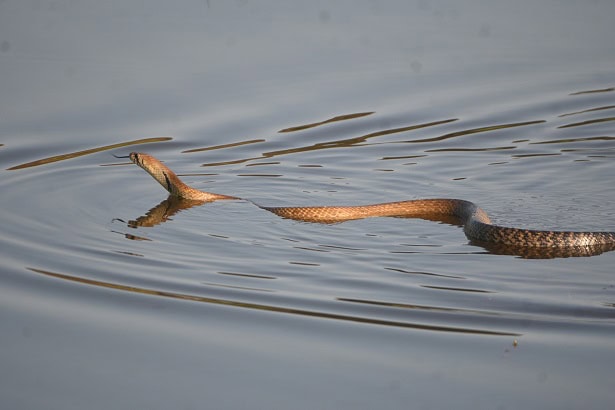
Maximum length: 295.0cm.
A relative of the eastern indigo snake found in Florida. This species is found in spacious forests, cultivated areas, and woodlands, where it often appears close to water bodies. This is a mega-widespread species in Central America, ranging from Ecuador to southern Texas.
Compared to other large snakes in Costa Rica, this species is easy to recognise. Its upper body is beige or orange-coloured, but the lower half gradually darkens, until the tail is a consistent midnight black. This has led to the alternative name of black-tail cribo.
Middle American indigo snakes are non-venomous, and harmless to humans unless picked up. The longest ever individual had a tail measuring 50cm, equating to 16.9% of the 295cm body length. This individual was a male, and the longest ever female measured 281.5cm.
As a constrictor, this species has a fairly thick body as well, increasing its size further. This snake is confirmed to eat 3 other members of our list: Boa imperator, the tiger ratsnake, and the venomous fer-de-lance. Its diet is flexible overall, also including hawks, swamp eels, mammals, and even turtles.
| 4 | Mussurana |
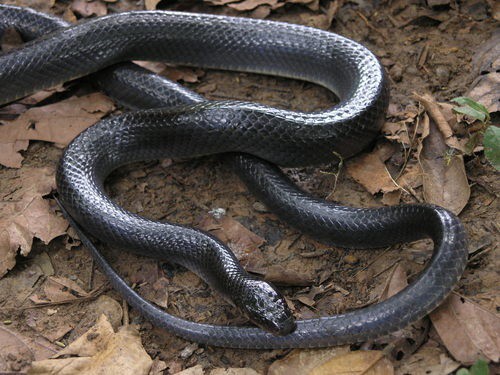
Maximum length: 275cm.
The main predator of venomous pitvipers in Costa Rica. Mussuranas prey on fer-de-lances and perhaps even Central American bushmasters. They appear not in forests, but mixed areas of grassland and tree clumps, and are fairly common all over Costa Rica.
This species is memorable for its diet, but also a sharp ontogenetic colour change: a sharp transformation from birth to adulthood. The mussurana undergoes a shocking metamorphosis, as juveniles are completely red, except for a black head and white neck collar. Over time, the black scales spread from the head, until eventually, the entire body is a shiny black, with no patterns at all. The last pattern to fade is usually the white neck collar.
While mussuranas are venomous, no serious bite cases are known in human beings. In fact, the mussurana is a rare snake to be more dangerous to venomous pitvipers than human beings. This species tends to move slowly and patiently rather than hyperactively, and it’s relatively comfortable in manmade environments such as villages and farmyards.
| 5 | Ecuador sipo |
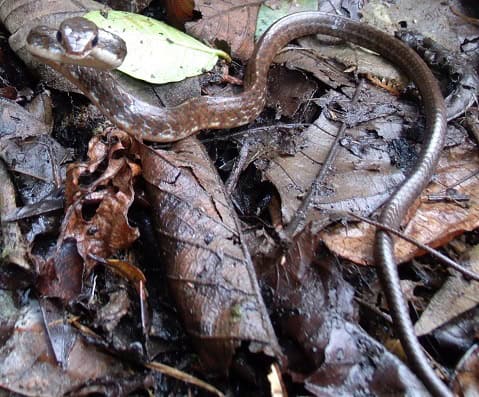
Maximum length: 271.8cm.
A non-venomous, but fast-moving and potentially aggressive species. Ecuador sipos (Chironius grandisquamis) prey heavily on amphibians, including white-lipped frogs and salamanders. They move along the ground, but are flexible, as they rely on active foraging rather than ambush, and are always investigating their humid Costa Rican surroundings.
Like the mussurana, this species undergoes an ontogenetic colour transformation. As a juvenile, it’s tricky to recognise, with messy, blotchy patterns of brown, black and white. As an adult, it’s extremely easy to recognise; its body becomes a constant shiny black, contrasting sharply against a snowy white underside. Most of its patterns disappear completely after a few years. While Costa Rica is full of shiny black snakes, this is easily the largest alongside the mussurana.
This species is also the largest of the Chironius sipo members across the Americas, among 23 members overall. Ecuador sipos are diurnal rather than nocturnal, and can be seen leaping from branches, slithering across tarmac roads, and poking their heads up from lakes alike.
The northernmost point of this species lies in Honduras, while the southernmost point lies in southern Ecuador, close to the Peruvian border. Costa Rica is full of this species, though not quite overrun (unlike with the fer-de-lance).
| 6 | Tiger ratsnake |
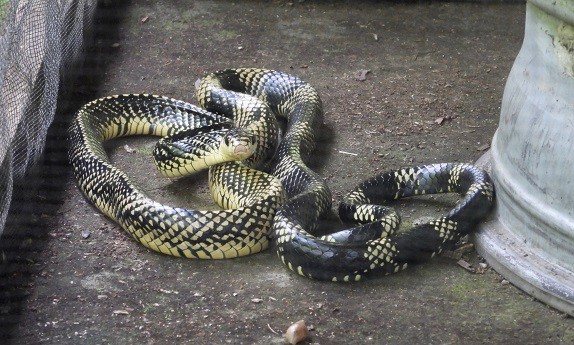
Maximum length: 270cm.
A non-venomous snake, but one with many defensive techniques. Tiger ratsnakes first have the option of biting humans aggressively. Another option is fleeing, and a secret method is vibrating their tail rapidly against leaf litter, to create a buzz like a rattlesnake.
Then there’s the species’ signature trick: inflating its throat to grotesque proportions, like a pelican in serpent form. Tiger ratsnakes use this trick regularly, if they feel at all threatened, and with their large body size, it’s easy to witness; in a 50cm snake, the freakish throat would be much harder to notice.
Tiger ratsnakes are common across Central and South America, and Costa Rica has just as many sightings as anywhere. They’re easily recognisable by their vivid black and yellow colours, which contrast sharply. However, there’s still decent variety in this species.
While the colours themselves are consistent, the exact ratios vary strongly, and the patterns. Some have stripes, others messy bands, while the black sometimes pushes the yellow black to tiny restricted areas (and vice versa). This is a variable snake, but easily recognisable, as no other snake in Costa Rica has this colour scheme and regularly exceeds 2.5 metres.
| 7 | Neotropical whipsnake |
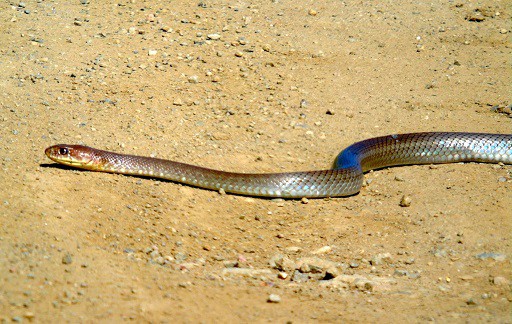
Maximum length: 252cm.
A thin, fast-moving snake with a black tongue and a very long tail. This species mainly sticks to the ground, climbing trees occasionally, and moves around the Costa Rican countryside confidently rather than hiding away in burrows. It possesses a mild venom, which has no (known) power to hurt human beings.
Neotropical whipsnakes are never black and shiny; instead, they’re olive or dull brown, with virtually no patterns, at least from a distance. Up close, there’s a subtle dark edge to each scale, but neotropical whipsnakes are too fast and agile to be approached closely (unless you have snake-whispering skills).
To the north, neotropical whipsnakes reach Sonora state, falling short of the US by a few hundred miles. They’re everywhere in southern Mexico, Guatemala and El Salvador, but are less abundant in Costa Rica. They mainly inhabit one state: Guanacaste in the northwest, but here, they’re very common.
Neotropical whipsnakes often eat fellow snakes, including false coral snakes and road guarders, as well as silky anoles.
| 8 | Fer-de-lance |
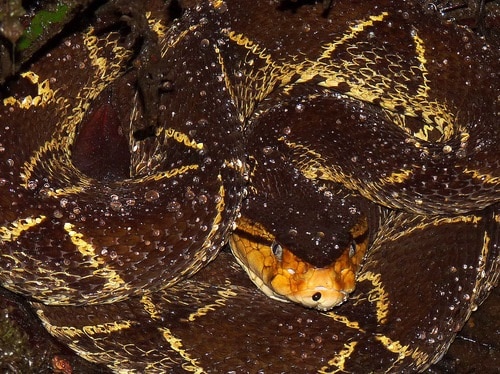
Maximum length: 250.1cm.
One of the most feared snakes in the world. The fer-de-lance, or terciopelo is the most widespread venomous snake in Costa Rica when judged by overall land covered, beating the eyelash viper into second place. It’s also the 2nd longest dangerously venomous snake and viper, behind the Central American bushmaster.
The skills of the fer-de-lance include sudden directional changes, unpredictable lunges after previously appearing calm, and suddenly becoming hyperactive after a previous immobile ambush posture. Fer-de-lances can inject 600mg per bite, and are far more aggressive than the larger Central American bushmaster. This is one of the most aggressive members of the 40+ Bothrops pitviper genus it belongs to.
Fer-de-lances prey on meals such as opossums, rice rats, cotton rats, spiny-tailed iguanas and grass frogs. Their number one nemesis in the wild is our fellow list entrant: the mussurana, which is immune to the venom of pitvipers, and commonly preys on them.
Deaths are common from fer-de-lance bites, as the venom wreaks utter havoc on the kidneys. Fortunately, Costa Rica’s common PoliVal-ICP antivenom uses this species, injecting its venom into hyperimmunised horse to generate powerful antibodies in response.
| 9 | Ruschenberg’s tree boa |
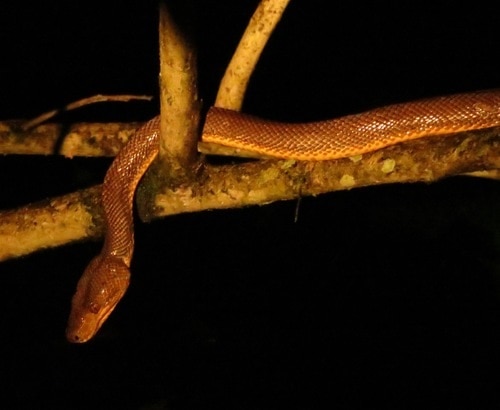
Maximum length: 250cm.
The second longest boa in Costa Rica after the Central American boa. This species differs significantly in its habitats, clinging to tree branches for most of its life, waiting patiently for mammal prey. It’s perfectly equipped to slither over ground, but would rather drape itself over a comfortable branch perch, 3, 10 or even 20 metres high in the air.
Within Costa Rica, Ruschenberg’s tree boas hug the Pacific coast, where they’re very common. On the Caribbean coast to the north, they’re virtually non-existent, and are replaced with their shorter cousin the ringed tree boa (max 172.5cm). Ruschenberg’s tree boas range from yellow to bronze, to brown interspersed with complex black blotches. A consistent rule is that their upper body is paler, while their tail is almost black, with a gradual darkening between the two.
Ruschenberg’s tree boas inhabit forests, but are flexible about the precise type. They can appear in lowland rainforests, mangroves and riparian forests alike, at altitudes ranging from 0 to 1000 metres.
| 10 | Black-headed bushmaster. |
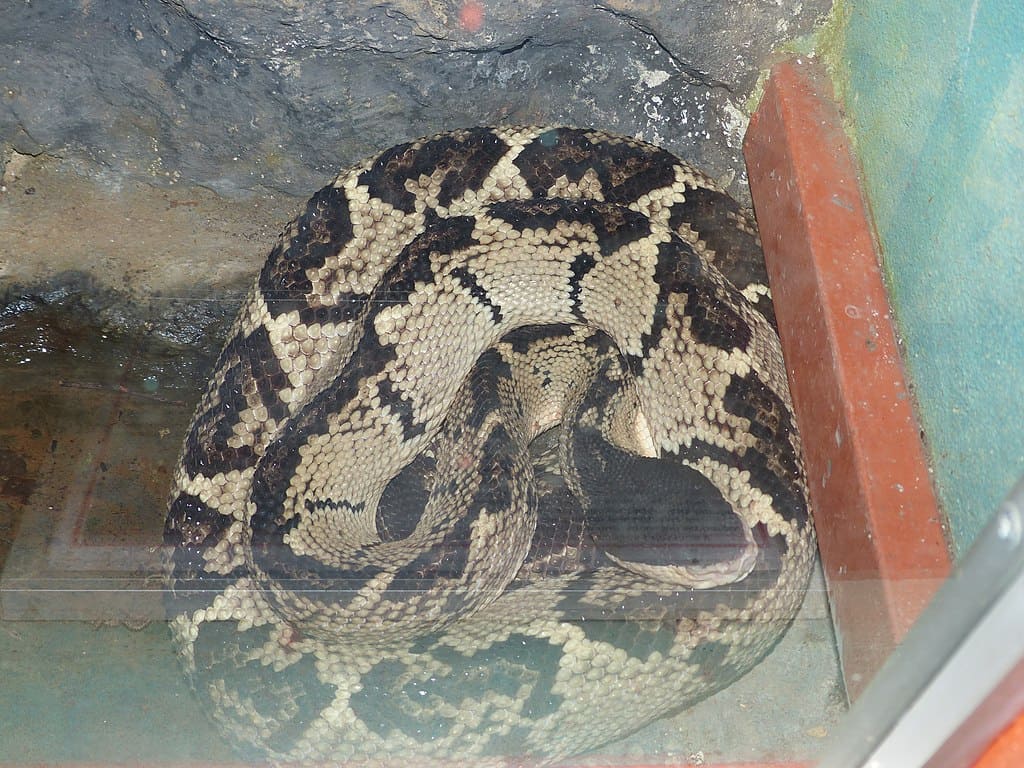
Maximum length: 240cm.
This species exists only in far southern Costa Rica, and perhaps a tiny portion over the border with Panama. The black-headed bushmaster is the 4th and least common of the Lachesis bushmaster genus. It’s recognisable by its black head, and is also short compared to its cousins, though still hefty at well over 2 metres.
Black-headed bushmasters diverged from the Central American bushmaster an estimated 3 million years ago. Like other bushmasters, they mainly appear in wet lowland rainforest and cloud forests, and very rarely in human-modified areas, except on the very edges of rainforests.
This species is poorly researched, but a 2020 study found black-headed bushmasters to be more nervous and alert than Central American bushmasters, often raising their head and angling it towards interlopers. Nevertheless, this is still a relatively calm species overall, which rarely attacks. The Lachesis bushmaster genus is considered to be one of the calmest viper groups worldwide; maybe their large size has granted them confidence, and reduced the need to be pointlessly aggressive.